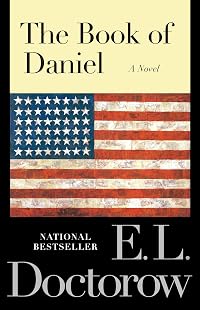
The Book of Daniel: A Novel
by E. L. Doctorow
On This Page
Description
Fiction. Literature. HTML:The central figure of this novel is a young man whose parents were executed for conspiring to steal atomic secrets for Russia.His name is Daniel Isaacson, and as the story opens, his parents have been dead for many years. He has had a long time to adjust to their deaths. He has not adjusted.
Out of the shambles of his childhood, he has constructed a new life—marriage to an adoring girl who gives him a son of his own, and a career in scholarship. It is a life show more that enrages him.
In the silence of the library at Columbia University, where he is supposedly writing a Ph.D. dissertation, Daniel composes something quite different.
It is a confession of his most intimate relationships—with his wife, his foster parents, and his kid sister Susan, whose own radicalism so reproaches him.
It is a book of memories: riding a bus with his parents to the ill-fated Paul Robeson concert in Peekskill; watching the FBI take his father away; appearing with Susan at rallies protesting their parents’ innocence; visiting his mother and father in the Death House.
It is a book of investigation: transcribing Daniel’s interviews with people who knew his parents, or who knew about them; and logging his strange researches and discoveries in the library stacks.
It is a book of judgments of everyone involved in the case—lawyers, police, informers, friends, and the Isaacson family itself.
It is a book rich in characters, from elderly grand- mothers of immigrant culture, to covert radicals of the McCarthy era, to hippie marchers on the Pen-tagon. It is a book that spans the quarter-century of American life since World War II. It is a book about the nature of Left politics in this country—its sacrificial rites, its peculiar cruelties, its humility, its bitterness. It is a book about some of the beautiful and terrible feelings of childhood. It is about the nature of guilt and innocence, and about the relations of people to nations.
It is The Book of Daniel.
Cover art: Jasper Johns, Flag, 1954-55. Art ( c ) Jasper Johns/Licensed by VAGA, New York, NY.. show less
Tags
Recommendations













Member Reviews
This book informed me about a part of history I knew little. The account of the trial of the Isaacsons was the best part of the book. Daniel himself; I did not like so much. The sexual politics of this book are objectionable. Daniel sees every woman as a sexual object (including his own sister!) and thinks every woman wants to have sex with him too. This stopped me from really enjoying the novel.
This is a novelization of the events surrounding the trial and execution of Julius and Ethel Rosenberg, who were convicted of conspiring to give information on the atomic bomb to the USSR in the 1950s. The differences between the book and what really happened are minor. In the book, Paul and Rochelle Isaacson’s arrest, trial, and execution is seen through the eyes of their oldest child, Daniel (an adult at the time of the narration), as he tries to come to terms with what happened. He must also cope with his younger sister’s mental illness (a direct result of the trauma of their childhood). There’s a lot of historical information included, and at times it’s hard to distinguish between fact and fiction.
Reading this book made me show more uncomfortable, but I think that’s part of what makes it so good and worth reading. It also prompted me to do a bit of research so I could figure out how much of the book was based on fact as opposed to fiction. The U.S. has done some really deplorable things in its history and, regardless of what the Isaacsons/Rosenbergs were actually guilty of, the hysteria of the McCarthy era resulted in some major violations of human rights. It’s easy to think of the novel as dated, however, I think it’s still very relevant today, especially in light of recent events in Crimea. This was a difficult book to give a star rating to because while it was well written enough to deserve 5 stars for quality, it was so uncomfortable to read that I only wanted to give it 3 stars for enjoyment. The 4 star rating was my compromise. show less
Reading this book made me show more uncomfortable, but I think that’s part of what makes it so good and worth reading. It also prompted me to do a bit of research so I could figure out how much of the book was based on fact as opposed to fiction. The U.S. has done some really deplorable things in its history and, regardless of what the Isaacsons/Rosenbergs were actually guilty of, the hysteria of the McCarthy era resulted in some major violations of human rights. It’s easy to think of the novel as dated, however, I think it’s still very relevant today, especially in light of recent events in Crimea. This was a difficult book to give a star rating to because while it was well written enough to deserve 5 stars for quality, it was so uncomfortable to read that I only wanted to give it 3 stars for enjoyment. The 4 star rating was my compromise. show less
This is not a Biblical story. It’s about the execution of Julius & Ethel Rosenberg, but even so, it’s not much of a political story either. It’s more about history; how history’s made, written, who tells it, its helping to cope and make sense of actions, the events around us, which is exactly Daniel Isaacson’s reason for sitting down at his university library in 1967 to look back 14 years to his early bar mitzvah: the death of his parents Paul & Rachel, attempting to write his metahistorical thesis for Ronald Sukenick and understand just what the hell happened to him, his sister and his parents in 1953, why his parents were taken from him as part of the infamous McCarthy hunt for the Red American.
Daniel employs every obnoxious show more literary trick he can to dig and shift through his own history whether it be addressing directly the reader, even straight out yelling at us, the prick, taking Faulknerian liberties with the use of pronouns, throwing in some very real details on the history of torture and death, the tools used by societies up to modern times, how they worked, &c., or going back and forth in time from the present to his childhood, often even midsentence, from his own fucked up ‘60s life and disturbing attempts to feel anything at all for his teenage wife and child to his own fucked up childhood starting from before his father’s arrest and the night his very innocent mother vanished talking often of his father’s naïve political beliefs, his unwavering trust in justice especially, and his backwards relationship with the government even after their hopes to pin treasonous charges on him become transparent; both these story threads go side by side, ending together in The Book’s last few pages, with Daniel finally finding (sort of) a sense of peace and understanding with the former family friend that pointed his finger at the Isaacson’s in order to get a lax prison sentence and the death of his parents, the actual action presented to the reader in gruesome unwanted detail, down to Rachel/Ethel not exactly dying on the first go…
Daniel’s day deconstructing Disneyland was the novel’s highlight. I mean, damn, those nine pages provide one of the most powerful postmodern passages these eyes have seen. Daniel’s here at Anaheim's Disneyland to meet—finally—the indirect executioner of his parents, the man whose finger pointed the Isaacsons to their electric deaths in June ’53 to satisfy the socially predominant America v. Russia Cold War Hysteria. Disneyland’s used to, despite the intense and obvious change of colors/scenery, work alongside the rest of TBOD’s bleakness, extending both the antagonistic personification of electricity and the idea of social simulation. Disneyland’s womb is cut into numerous zones—Adventureland, with a plasticized imagining of Mark Twain’s river boat “Life on the Mississippi” experience, Frontierland, Fantasyland, Main Street USA, and, where Mindish, mind now far gone from SDAT, spends his remaining days, Tomorrowland—each with its own individual concentrated sentimental focus of simulation.
Everything’s a simulation. The Cold feud between the Red White & Blue and the just Red is a simulation of war, both sides holding the other at bay threatening and boasting their own nuclear arms supply. The trial Daniel’s parents were pushed through was a simulation of a trial, a bullshit stage show put on by our own government to appease the social demand for justice. The whole American way of life, man, consuming and seeking out entertainment, it’s a sham, an illusion, transparent in its banality and its unreal hunt for that particular sentimental high. No one even reads Carroll or Twain anymore, they just watch Disney’s romanticized vision—a technique Doctorow refers to as an “abbrieviated shorthand culture for the masses”—anything as long as it has the Disney stamp of approval, an ounce of that cultural respectability that makes this harvesting of icons so worthwhile on behalf of the Corporation…
I only wish I got the chance to spend more time with Doctorow’s brilliant novel, a lot more time with that trip to Disneyland. I’m going to cut this short here. Highly recommended, &c.&c.&c.
80%
[619] show less
Daniel employs every obnoxious show more literary trick he can to dig and shift through his own history whether it be addressing directly the reader, even straight out yelling at us, the prick, taking Faulknerian liberties with the use of pronouns, throwing in some very real details on the history of torture and death, the tools used by societies up to modern times, how they worked, &c., or going back and forth in time from the present to his childhood, often even midsentence, from his own fucked up ‘60s life and disturbing attempts to feel anything at all for his teenage wife and child to his own fucked up childhood starting from before his father’s arrest and the night his very innocent mother vanished talking often of his father’s naïve political beliefs, his unwavering trust in justice especially, and his backwards relationship with the government even after their hopes to pin treasonous charges on him become transparent; both these story threads go side by side, ending together in The Book’s last few pages, with Daniel finally finding (sort of) a sense of peace and understanding with the former family friend that pointed his finger at the Isaacson’s in order to get a lax prison sentence and the death of his parents, the actual action presented to the reader in gruesome unwanted detail, down to Rachel/Ethel not exactly dying on the first go…
Daniel’s day deconstructing Disneyland was the novel’s highlight. I mean, damn, those nine pages provide one of the most powerful postmodern passages these eyes have seen. Daniel’s here at Anaheim's Disneyland to meet—finally—the indirect executioner of his parents, the man whose finger pointed the Isaacsons to their electric deaths in June ’53 to satisfy the socially predominant America v. Russia Cold War Hysteria. Disneyland’s used to, despite the intense and obvious change of colors/scenery, work alongside the rest of TBOD’s bleakness, extending both the antagonistic personification of electricity and the idea of social simulation. Disneyland’s womb is cut into numerous zones—Adventureland, with a plasticized imagining of Mark Twain’s river boat “Life on the Mississippi” experience, Frontierland, Fantasyland, Main Street USA, and, where Mindish, mind now far gone from SDAT, spends his remaining days, Tomorrowland—each with its own individual concentrated sentimental focus of simulation.
Everything’s a simulation. The Cold feud between the Red White & Blue and the just Red is a simulation of war, both sides holding the other at bay threatening and boasting their own nuclear arms supply. The trial Daniel’s parents were pushed through was a simulation of a trial, a bullshit stage show put on by our own government to appease the social demand for justice. The whole American way of life, man, consuming and seeking out entertainment, it’s a sham, an illusion, transparent in its banality and its unreal hunt for that particular sentimental high. No one even reads Carroll or Twain anymore, they just watch Disney’s romanticized vision—a technique Doctorow refers to as an “abbrieviated shorthand culture for the masses”—anything as long as it has the Disney stamp of approval, an ounce of that cultural respectability that makes this harvesting of icons so worthwhile on behalf of the Corporation…
I only wish I got the chance to spend more time with Doctorow’s brilliant novel, a lot more time with that trip to Disneyland. I’m going to cut this short here. Highly recommended, &c.&c.&c.
80%
[619] show less
This is not an easy book to read on many counts, mostly due to its historic truths and ability to turn larger narratives into personal mirrors. Doctorow does not resort to victimizing the Isaacsons (who represent Julius and Ethel Rosenberg), and there are no heroes. He unfolds the layers of complexity in the Rosenberg case by re-framing it more intimately, primarily from the perspective of the fictional Daniel. This is perhaps where the reader is the most sympathetic because he reminds us that traitors, villains, conspirators are also mothers, fathers, spouses, siblings. Daniel's character is the sum total of the worst consequences of American anti-Communism in the 1950s, carrying the current of the electric chair far beyond the show more execution room. show less
I can tell just how much I love an author's writing mostly the days after I've finished reading one of his books. When I start writing an e-mail to a friend and after a couple of sentences think"wait a minute, this is not my style, where did I get this from?". When an author is that good, his way of using punctuation or syntax, his unusual metaphors or sentences or a certain attitude and tone behind the words inevitably work their way into your own writing style. Doctorow is that kind of author. His voice stuck inside your head for days and days. Using language and writing in a way that constantly undermines the reliability o language and writing. "The early morning traffic was wondering - I mean the early morning traffic was light, but show more not many drivers could pass them without wondering who they were and they were going" Or if you prefer: "In any event, my mother and father, standing in for them, went to their deaths for crimes they did not commit. Or maybe they did commit them. Or maybe my mother and father got away with false passports for crimes they didn’t committ. How do you spell comit?" And if you think all this is postmodern mumble-jumble and where's the plot, the story? The story, I will let you know, is wonderful. Wonderful and sad and infuriating and thought-provoking and suspenseful and everything you could wish for. This is the story of the execution of Ethel and Julius Rosenberg (renamed in the book Paul & Rochelle Isaacson) seen from the point of view of their son - Daniel in the book. Our protagonist. Trying to make sense of something that could not and should not make sense for any person calling himself/herself a human being. I could go on with this review but I find that all I want to do is not describe the book (which would be doing it an injustice) but quote passages from it. So I'll just say for me this is a must-read. And stop there.
"The difference between Socrates and Jesus is that no one has ever been put to death in Socrates’ name. And that is because Socrates’ ideas were never made law." show less
"The difference between Socrates and Jesus is that no one has ever been put to death in Socrates’ name. And that is because Socrates’ ideas were never made law." show less
I struggled at the start to engage with this book, but was glad to have persevered by about half way through and then compelled to the end. The eponymous Daniel starts off as a fiercely dislikeable, rebellious young man, angry and taking out his anger on those around him - the teenage wife he sexually humiliates, the baby whose life he risks and the adoptive parents he goads and taunts. Stylistically Doctorow veers between first and third person, individual stories and geopolitics, present and past, creating further dislocation and dissonance. But as the book focuses more on the betrayal of Daniel's Isaacson parents, naively strong individuals caught up in events beyond their control, and the devastating effects such loss has on the show more children they leave behind, it is emotionally wrenching, fierce and sad. The end gives an unexpected, and uneasy closure; the future will not be untroubled, but is at least possible. show less
Picked this up at Powell's some time ago after greatly enjoying Ragtime. Attempting to slowly read Doctorow forward. Hard Times was OK. This was next.
This is a difficult/uncomfortable novel to read. Our hero Daniel isn't very nice. There are amazing echoes of the sibling relationship (younger sister lust, institutionalization) in McCarthy's latest two books, to the point that I wonder at the influence.
I suppose this novel captures the madness of the moments, the heights of Cold War hysteria & hippiedom in levitating the Pentagon. I wasn't there, it is all historical/hysterical to me.
Given the political moments I have experienced, I no longer forswear nothing from the possible.
Ragtime was better, I am very hopeful of Waterworks, but show more have a few novels to get there. show less
This is a difficult/uncomfortable novel to read. Our hero Daniel isn't very nice. There are amazing echoes of the sibling relationship (younger sister lust, institutionalization) in McCarthy's latest two books, to the point that I wonder at the influence.
I suppose this novel captures the madness of the moments, the heights of Cold War hysteria & hippiedom in levitating the Pentagon. I wasn't there, it is all historical/hysterical to me.
Given the political moments I have experienced, I no longer forswear nothing from the possible.
Ragtime was better, I am very hopeful of Waterworks, but show more have a few novels to get there. show less
Members
- Recently Added By
Lists

1001 Books You Must Read Before You Die
1,448 works; 1,137 members

The Guardian's 1000 Novels Everyone Must Read
1,005 works; 552 members

Novels from The Guardian's Great American Novelist Tournament
148 works; 24 members

1970s
657 works; 23 members

National Book Award Finalists - Fiction
377 works; 12 members
1,001 BYMRBYD Concensus
723 works; 27 members

Swinging Seventies
255 works; 18 members

Read
293 works; 4 members
Harold Bloom - The Western Canon: D. The Chaotic Age
833 works; 24 members

My TBR
371 works; 3 members

living room bookshelf
150 works; 1 member
Canon de la narrativa universal del s. XX (cicutadry)
499 works; 3 members

Fiction with Men's Given Names in the Title
302 works; 10 members
Author Information

58+ Works 25,197 Members
E. L. (Edgar Lawrence) Doctorow was born on January 6, 1931, in the Bronx, New York. He received an A.B. in philosophy in 1952 from Kenyon College and did graduate work at Columbia University. He served in the U.S. Army Signal Corps from 1953-1955. He began his career as a script reader for CBS Television and Columbia Pictures and as a senior show more editor for the New American Library. He was editor-in-chief for Dial Press from 1964 to 1969, where he also served as vice president and publisher in his last year on staff. It was at this time that he decided to write full time. He wrote novels, short stories, essays, and a play. His debut novel, Welcome to Hard Times, was published in 1960 and was adapted into a film in 1967. His other works include, Loon Lake, The Waterworks, The March, Homer and Langley, and Andrew's Brain. He won the National Book Award for Fiction in 1986 for World's Fair and the National Book Critics Circle Award for fiction in 1976 for Ragtime, which was adapted into a film in 1981 and a Broadway musical in 1998. Billy Bathgate received the PEN/Faulkner Award, the National Book Critics Circle Award, and the William Dean Howells Medal in 1990. The Book of Daniel and Billy Bathgate were also adapted into films. He received the 2013 Medal for Distinguished Contribution to American Letters for his outstanding achievement in fiction writing. He died of complications from lung cancer on July 21, 2015 at the age of 84. (Bowker Author Biography) show less
Some Editions
Awards and Honors
Awards
Distinctions
Series
Belongs to Publisher Series
Keltainen kirjasto (142)
Work Relationships
Is contained in
Common Knowledge
- Canonical title*
- Das Buch Daniel
- Original title
- The Book of Daniel
- Original publication date
- 1971
- People/Characters
- Fanny Ascher; Jacob Ascher; Boris Brill; Howard 'Red' Feuerman; Thomas 'Talking Tom' Fleming; Judge Barnet Hirsch (show all 17); Paul Isaacson; Rochelle Isaacson; Daniel Lewin (Daniel Isaacson); Lise Lewin; Phyllis Lewin; Robert Lewin; Susan Lewin (Susan Isaacson); Linda Mindish; Sadie Mindish; Dr. Selig Mindish; Artie Sternlicht
- Important places
- USA; New York, New York, USA
- Related movies
- Daniel (1983 | IMDb)
- Dedication
- for Jenny and Caroline and Richard
- First words
- On Memorial Day in 1967 Daniel Lewin thumbed his way from New York to Worcester, Mass., in just under five hours.
- Quotations
- The difference between Socrates and Jesus is that no one has ever been put to death in Socrates’ name. And that is because Socrates’ ideas were never made law.
- Last words
- (Click to show. Warning: May contain spoilers.)Go thy way Daniel: for the words are closed up and sealed till the time of the end.
- Original language
- English
*Some information comes from Common Knowledge in other languages. Click "Edit" for more information.
Classifications
Statistics
- Members
- 1,690
- Popularity
- 13,248
- Reviews
- 26
- Rating
- (3.82)
- Languages
- 9 — Dutch, English, Finnish, French, German, Hungarian, Italian, Spanish, Swedish
- Media
- Paper, Audiobook, Ebook
- ISBNs
- 41
- ASINs
- 16