
Ronald Searle (1920–2011)
Author of Molesworth
About the Author
Ronald Searle was born in Cambridge, England on March 3, 1920. At the age of 15, he paid for his own art school classes by working for a cartoonist at The Cambridge Daily News. In 1939 he passed a government drafting test and joined the Army as an architectural draftsman. During this time, he also show more made impressionistic watercolor sketches of fellow soldiers and cartoons poking fun at military conventions. His work was first published in the magazine Lilliput in 1941. During the war, he was captured by the Japanese and sent to Changi prison, which provided forced labor for building the Burma railway. He recorded the deplorable conditions of his camp and the fates of fellow soldiers by drawing with crude implements and scraps of paper. After he was released in 1945, his drawings were exhibited in Cambridge and were later published in 1986 as a book entitled To the Kwai - and Back: War Drawings 1939-1945. In 1948, he began writing and illustrating parodies about the students at a fictional English girls' school called St. Trinian's and publishing them in Lilliput. This led to a series of popular books, which included Hurrah for St. Trinian's, The Terror of St. Trinian's, and The St. Trinian's Story. His other books included Searle's Cats, The Square Egg, Hello - Where Did All the People Go?, The Secret Sketchbook, and More Cats. He also drew illustrations for numerous magazines and newspapers including The New Yorker, TV Guide, Le Monde, Life magazine, The New York Times, and the International Herald Tribune. He died on December 30, 2011 at the age of 91. (Bowker Author Biography) show less
Series
Works by Ronald Searle
Too many songs by Tom Lehrer with not enough drawings by Ronald Searle [score] (1981) — Illustrator — 361 copies, 2 reviews
Slightly Foxed but Still Desirable: Ronald Searle's Wicked World of Book Collecting (1989) 211 copies, 6 reviews
The Terror of St Trinian's and Other Drawings (Penguin Modern Classics) (2000) 116 copies, 2 reviews
The Great Fur Opera : Annals of the Hudson's Bay Company, 1670-1970 (1970) — Illustrator, some editions — 42 copies, 1 review
Those Magnificent Men in their Flying Machines; or, How I Flew from London to Paris in 25 Hours 11 Minutes (1965) — Illustrator — 15 copies
Monte Carlo-or Bust: Those Daring Young Men in Their Jaunty Jalopies (1969) — Illustrator — 8 copies, 1 review
OS BONS VELHOS TEMPOS 3 copies
Poezenhumor. Eerste deel 2 copies
Chats, chats, chats. 2 copies
Le nouveau ballet anglais 2 copies
Entre vieilles connaissances — Illustrator, some editions — 2 copies
Poezenhumor. Tweede deel 2 copies
Russia for Beginners 1 copy
How To Open A Bottle of Wine 1 copy
How to be Top 1 copy
Filles de Hambourg 1 copy
I disegni di Ronald Searle. 1 copy
Searle, Ronald, Die Welt heute. Karikaturen. (Kunstkatalog). Ausstellung: 14. März - 25. April 1 copy
Pardong M'sieur 1 copy
Tiens! il n'y a personne? 1 copy
Hommage à Toulouse-Lautrec 1 copy
Forty Drawings 1 copy
Searle in America 1 copy
Hvad siger etiketten 1 copy
Have We Met Before Somewhere 1 copy
Associated Works
Illustration Magazine, Autumn 2005 Issue 5. Ronald Searle's Imaginary Friends (2005) — Contributor — 2 copies
Tagged
Common Knowledge
- Legal name
- Searle, Ronald William Fordham
- Birthdate
- 1920-03-03
- Date of death
- 2011-12-30
- Gender
- male
- Education
- Cambridge College of Arts and Technology
- Occupations
- artist
cartoonist - Organizations
- Royal Engineers (WWII)
New Yorker (contributor)
Holiday (contributor) - Awards and honors
- Reuben Award (1960)
Order of the British Empire (Commander)
Royal Designers for Industry - Agent
- Rachel Calder
- Relationships
- Webb, Kaye (spouse, 1946-1966)
- Nationality
- UK
- Birthplace
- Cambridge, Cambridgeshire, England, UK
- Places of residence
- Cambridge, Cambridgeshire, England, UK
Paris, France
Haute Provence, France - Place of death
- Draguignan, France
- Map Location
- England, UK
Members
Discussions
Folio Archives 346: The Compleet Molesworth by Geoffrey Willans 2007 in Folio Society Devotees (October 2023)
Reviews

I teach school, which means that I am forever being serenaded with laments of how much better education was in some bygone era. Students were more respectful; students were more intelligent; most of all, students were more devoted to learning.
These experiences provide me just one more reason to love Down with Skool! Geoffrey Willans’ book purports to be the extended description by one young Nigel Molesworth of his English boarding school, St. Custard’s. Published in the 1950s, Down with show more Skool! proves what we all secretly suspect: that students have always been as fidgety, rebellious, ignorant, lazy, and pigheaded as they are today. As a schoolmaster himself, Willans had plenty of experience with early 20th century ignoramuses.
Nigel Molesworth, the self-described “curse of St. Custard’s,” is a blockhead, not to put it too finely. (He is known as Molesworth 1 at St. Custard’s in order to distinguish him from his even stupider younger brother, Molesworth 2.) Nigel’s spelling, punctuation, and syntax are atrocious, and he finds French, Latin, English (especially poetry), mathematics, geography, science — actually, anything academic — a complete waste of his valuable time. He finds his schoolmasters “weedy” and “wet,” and he devotes an entire chapter of the book to strategies for getting his masters off-task and for avoiding work.
But allow me to quote Molesworth himself on Macbeth:
I could join Molesworth’s English master in weeping.
Seriously, though, at just 114 pages, a reader can knock off this pretty funny book in just a few hours. Molesworth’s rantings will delight even a hard-hearted schoolteacher like me, while giving one an appreciation for all of the non-Molesworths in one’s class. Lastly, it provides this excellent explanation for endless supply of idiots in the world:
It hapens very often that parents think they are worred about the progress a boy is making. they do not realise that all boys are numskulls with o branes which is not surprising when you look at the parents really the whole thing goes on and on and there is no stoping it it is a vicious circle.
Thus shall it be ever. show less
These experiences provide me just one more reason to love Down with Skool! Geoffrey Willans’ book purports to be the extended description by one young Nigel Molesworth of his English boarding school, St. Custard’s. Published in the 1950s, Down with show more Skool! proves what we all secretly suspect: that students have always been as fidgety, rebellious, ignorant, lazy, and pigheaded as they are today. As a schoolmaster himself, Willans had plenty of experience with early 20th century ignoramuses.
Nigel Molesworth, the self-described “curse of St. Custard’s,” is a blockhead, not to put it too finely. (He is known as Molesworth 1 at St. Custard’s in order to distinguish him from his even stupider younger brother, Molesworth 2.) Nigel’s spelling, punctuation, and syntax are atrocious, and he finds French, Latin, English (especially poetry), mathematics, geography, science — actually, anything academic — a complete waste of his valuable time. He finds his schoolmasters “weedy” and “wet,” and he devotes an entire chapter of the book to strategies for getting his masters off-task and for avoiding work.
But allow me to quote Molesworth himself on Macbeth:
Sometimes we hav to recite which is girly in the extreme and there is no chance to read famous CRIB which you copied out in prep, when I recite it is something like this:Tomow and tomow and tomow
Um ah um ah
Tomow and tomow and tomow
Um — ah creeps creeps in the last syll–
No!
Tomowandtomowandtomow
Creeps in this um um
Out!
OUT!
Brief candle
Yes i kno sir half a mo sir
Yes
fie
O fie!
Um um tis an unweeded syllable an un–
No!
Tomowandtomowandtomow etc.
In other words quite frankly i just don’t kno it.
Also quite frankly
I JUST COULDN’T CARE LESS
What use will that be to me in this atomic age?
Occasionally english masters chide me for this point of view o molesworth one you must learn the value of spiritual things until i spray them with 200 rounds of my bakterial gun. i then plant the British in the masters inkwell and declare a whole holiday for the skool. boo to shakespeare.
So much for English masters.
I could join Molesworth’s English master in weeping.
Seriously, though, at just 114 pages, a reader can knock off this pretty funny book in just a few hours. Molesworth’s rantings will delight even a hard-hearted schoolteacher like me, while giving one an appreciation for all of the non-Molesworths in one’s class. Lastly, it provides this excellent explanation for endless supply of idiots in the world:
It hapens very often that parents think they are worred about the progress a boy is making. they do not realise that all boys are numskulls with o branes which is not surprising when you look at the parents really the whole thing goes on and on and there is no stoping it it is a vicious circle.
Thus shall it be ever. show less

An epic in prose (wrote Kildare Dobbs, Esq), an overview of the venerable Hudson's Bay Company in business since 1670. And it is indeed that: an epic tale enlivened with utterly wonderful caricatures by Ronald Searle.
The facts (there are many, in between the asides, the digressions and back-handed compliments) are essentially true ~ tales of grim hardships, European disagreements between the French and British, rivalries amongst bands of natives all eager to sell furs or trade for the HBC show more trade goods over the 300-year history of the oldest merchandising corporation in the world. A completely irreverent history book: the backstairs view, rather than the aristocratic board rooms and palaces of the elite owners.
Warning to the politically-sensitive: allowances should be made for a book written in the standards acceptable at the time. All the people are stereotypes. A politically-correct rendering á la 2020 is entirely absent. It is a history with its underpants showing. The men arehilariously atrociously lampooned. There is copious use made of caricature in the illustrations: the Kings of France and England, the explorers, the Indians (as they are named in this narrative), the women, and the representatives of the Hudson's Bay Company. Even the wildlife comes in for their share of Searle's wickedly-amusing parody. show less
The facts (there are many, in between the asides, the digressions and back-handed compliments) are essentially true ~ tales of grim hardships, European disagreements between the French and British, rivalries amongst bands of natives all eager to sell furs or trade for the HBC show more trade goods over the 300-year history of the oldest merchandising corporation in the world. A completely irreverent history book: the backstairs view, rather than the aristocratic board rooms and palaces of the elite owners.
Warning to the politically-sensitive: allowances should be made for a book written in the standards acceptable at the time. All the people are stereotypes. A politically-correct rendering á la 2020 is entirely absent. It is a history with its underpants showing. The men are
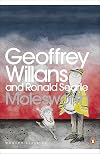
I adored Down With Skool!, the first of four books featuring observations from that consummate blockhead, Nigel Molesworth, the self-described “curse of St. Custard’s,” an English boarding school in the 1950s. When I had the chance to buy Molesworth, an omnibus of all four books for a pittance, I jumped at the chance. “As any fule kno,”* what could be more fun?
Molesworth 1 (so called by his schoolmasters and peers to distinguish him from his younger and stupider brother, Molesworth show more 2) remains as ignorant, lazy, and pig-headed as ever in How to Be Topp, Whizz for Atomms, and Back in the Jug Agane, Down With Skool!’s three sequels. Molesworth’s spelling, punctuation, and syntax remain just as atrocious, too. Chiz, chiz!** What also remains the same 60 years later, thankfully, are author Geoffrey Willans’ hilarious satire and illustrator Ronald Searle’s masterful caricatures from the original books.
Molesworth rants about the lack of importance of Latin, French, maths, and even English in the nuclear age; the perfidy and cruelty of schoolmasters; the disappointment in discovering that Americans aren’t all gangsters and cowboys; and the impertinence of “new bugs” (a.k.a. first-year pupils), who Molesworth feels should tremble in the face of the upperclassmen. He spends much of his time daydreaming about life as a Roman, an Elizabethan, and an evolved egg-shaped being from centuries in the future. He good-naturedly razzes his “grate friend” (and fellow philistine) Timothy Peason and less good-naturedly denigrates that paragon, Basil Fotherington-Tomas*** [sic].
While the sequels aren’t as hilarious as Down with Skool!, they’re still pretty good, particularly Whizz for Atomms, which is nearly its equal. That book is the most hilarious when Molesworth waxes eloquent about life outside of St. Custard’s: The bits about Christmas, the summer holidays, the dread of “[a]nother weedy party and a lot of weedy little gurls,” and the schizophrenic nature of grandmothers will make readers laugh out loud. Nigel Molesworth, despite being an uncultured, dim-witted slacker, really captured my heart. Here’s to remembering that we, like Molesworth and his “felow oiks, cads, bulies, and dirty roters,” overcame the superficiality and stupidity of youth, and to cut some slack to the next generation.
* As any fool knows
** Variously, What an outrage! or What a swindle!
** I cannot tell if Molesworth is misspelling Fotherington-Thomas, or if it’s actually Fotherington-Tomas, and Basil has a Portuguese or Spanish ancestor. show less
Molesworth 1 (so called by his schoolmasters and peers to distinguish him from his younger and stupider brother, Molesworth show more 2) remains as ignorant, lazy, and pig-headed as ever in How to Be Topp, Whizz for Atomms, and Back in the Jug Agane, Down With Skool!’s three sequels. Molesworth’s spelling, punctuation, and syntax remain just as atrocious, too. Chiz, chiz!** What also remains the same 60 years later, thankfully, are author Geoffrey Willans’ hilarious satire and illustrator Ronald Searle’s masterful caricatures from the original books.
Molesworth rants about the lack of importance of Latin, French, maths, and even English in the nuclear age; the perfidy and cruelty of schoolmasters; the disappointment in discovering that Americans aren’t all gangsters and cowboys; and the impertinence of “new bugs” (a.k.a. first-year pupils), who Molesworth feels should tremble in the face of the upperclassmen. He spends much of his time daydreaming about life as a Roman, an Elizabethan, and an evolved egg-shaped being from centuries in the future. He good-naturedly razzes his “grate friend” (and fellow philistine) Timothy Peason and less good-naturedly denigrates that paragon, Basil Fotherington-Tomas*** [sic].
While the sequels aren’t as hilarious as Down with Skool!, they’re still pretty good, particularly Whizz for Atomms, which is nearly its equal. That book is the most hilarious when Molesworth waxes eloquent about life outside of St. Custard’s: The bits about Christmas, the summer holidays, the dread of “[a]nother weedy party and a lot of weedy little gurls,” and the schizophrenic nature of grandmothers will make readers laugh out loud. Nigel Molesworth, despite being an uncultured, dim-witted slacker, really captured my heart. Here’s to remembering that we, like Molesworth and his “felow oiks, cads, bulies, and dirty roters,” overcame the superficiality and stupidity of youth, and to cut some slack to the next generation.
* As any fool knows
** Variously, What an outrage! or What a swindle!
** I cannot tell if Molesworth is misspelling Fotherington-Thomas, or if it’s actually Fotherington-Tomas, and Basil has a Portuguese or Spanish ancestor. show less
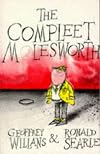
The Compleet Molesworth by Geoffrey Willans and Ronald Searle (co-creator and illustrator) had been on my TRL for ages. I was intrigued by the illustrations that were depicted on the cover and its comparison to my dear Roald Dahl. This is a classic children's series (bound together in its entirety here) about a boy named Nigel Molesworth who narrates his time in a boy's boarding school called St. Custard's. Willans captures the spirit of boyhood in a private boarding school especially well show more owing to his being a Headmaster himself. (This is even funnier once you get to know Headmaster Grimes who is particularly fond of the cane.) This book is replete with bad spelling (evidenced in the title) and absolutely stunning illustrations by Searle who was a satirical cartoonist (perfect for this series). Molesworth and his buddies get up to many hi-jinks and shenanigans which are generally instigated by our hero. Amidst all of this tomfoolery Willans and Searle have taken jabs at the inequalities of the classes by showcasing the Head Boy Grabber as only being placed in such a prestigious position because his parents shell out lots of money. (The Headmaster is greedy and generally does all he can to cut corners most notably with the selection of food offered to the students.) If you can get used to the bad spelling, grammatical errors, made-up slang, and seemingly arbitrary abbreviations for everything you will see why this has held up as a true children's classic. It's witty, cutting in its bluntness, and in general everything I hoped it would be. 10/10 show less
Lists
Favourite Books (2)
Awards


You May Also Like


Associated Authors
Statistics
- Works
- 94
- Also by
- 21
- Members
- 3,936
- Popularity
- #6,425
- Rating
- 4.0
- Reviews
- 56
- ISBNs
- 160
- Languages
- 9
- Favorited
- 6
