On This Page
Description
Set in a small-town North Carolina amusement park in 1973, Joyland tells the story of the summer in which college student Devin Jones comes to work as a carny and confronts the legacy of a vicious murder, the fate of a dying child, and the ways both will change his life forever.Tags
Recommendations
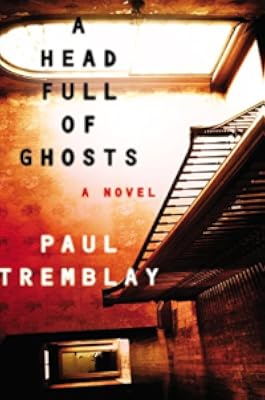
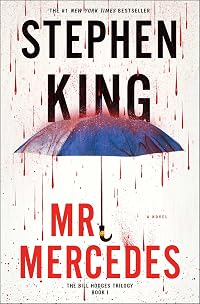
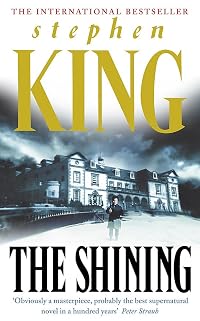
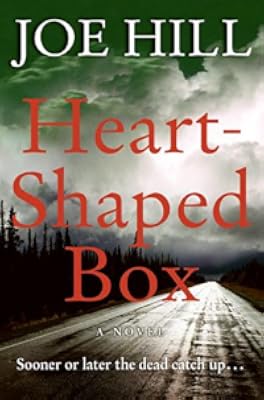



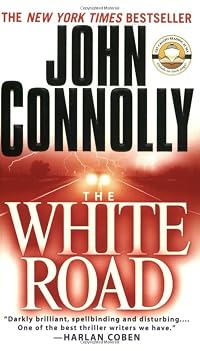
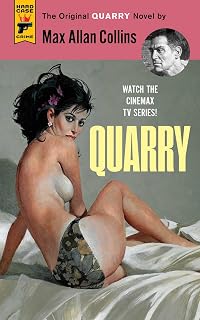

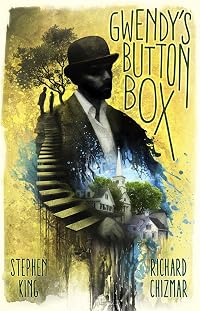
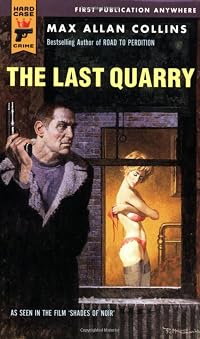



Member Recommendations
sturlington Elements of carnival in both novels.
Member Reviews
This is a gem of a story. More mystery or crime than the horror a lot of readers would expect from King, this is built wholly on atmosphere and character and a few ghastly unsolved crimes. Call it crime fiction or ghost story or general fiction, though, and the result is the same. This is a fast and fun read with some wonderfully atmospheric illustrations, and escaping into it over the last few days was enchanting. The story here took me back to the Hardy Boys books I read as a kid (yep, I read Hardy Boys, not Nancy Drew, girl or no)--feeling-wise, this is the adult version of those escapades, but told in a manner that brings each wonderful scene to life and leaves the characters mumbling their worries in your brain.
All told, this is a show more King book for King fans and readers who haven't delved into his work, but enjoy mysteries and the occasional ghost. It's full, it's fun, and I can't recommend it highly enough. show less
All told, this is a show more King book for King fans and readers who haven't delved into his work, but enjoy mysteries and the occasional ghost. It's full, it's fun, and I can't recommend it highly enough. show less
This is the second book that Stephen King has written for the "Hard Case Crime" imprint and it is initially difficult to see how it fits with the pulpy, hard-boiled noir that the imprint does so well. By the end, however, the novels noir credentials become clear, but for the most part the story runs like a charming character study alongside both a coming of age yarn and a melancholic yearning for lost youth. The story focuses on young student Dev, who gets a summer job working at the Joyland amusement park. In his first weeks at the park he gets a "Dear John" from his girlfriend back home, which leads him into questioning everything about his future. To add to his worries he learns that a young girl had been murdered at the park some show more years previously and that some old-timers say her ghost is haunting Joyland. He begins to learn and enjoy the carny lifestyle and along the way makes the acquaintance of Mike, a seriously ill youngster and his foxy young mother. All these different strands come together in a hurricane bound climax. Although the basic narrative plot of "Joyland" is relatively straightforward, the story hides a range of complexities about the fragility of life. King weaves these in and out of the main plot and handles both with effortless and consummate ease. As with most of his books there is a subtle political under-current with King's deep concern about the human condition and with societal injustice never far from the surface. It is that concern that makes his characters so real and so believable that no matter what fantastical situation they may find themselves King makes the reader feel deeply about their plight. Unusually for a crime story the criminality in "Joyland" take place "off screen" and for a horror novel there is next to no blood, gore or violence. What there is, however, in common with most of King's work, are characters so beautifully written and so elaborately drawn you almost feel as if you know them. King's brilliance at building character and getting us to live alongside them and emphasise with them is almost uncanny. All this helps immeasurably as King builds his story slowly and purposefully to a riveting climax that is perfectly developed and deeply honest – this is the first novel in a very long time where I actually cried at the end and had to read the last few pages through a haze of tears. "Joyland" is a deeply touching bitter-sweet story and an absolute joy to read from beginning to end. show less
Stephen King Visits the Carnival
* Caution: Minor spoilers ahead! *
"Those are things that happened once upon a time and long ago, in a magical year when oil sold for eleven dollars a barrel. The year I got my damn heart broke. The year I lost my virginity. The year I saved a nice little girl from choking and a fairly nasty old man from dying of a heart attack (the first one, at least). The year a madman almost killed me on a Ferris wheel. The year I wanted to see a ghost and didn't...although I guess at least one of them saw me. That was also the year I learned to talk a secret language, and how to dance the Hokey Pokey in a dog costume. The year I discovered that there are worse things than losing the girl.
"The year I was twenty-one, show more and still a greenie."
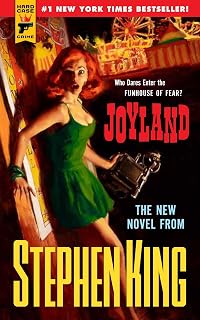
Ghost story, murder mystery, coming of age story, supernatural thriller - Joyland is all of this and then some, spanning a variety of genres stitched together in a way that's uniquely Stephen King. While the book's artwork suggests a dime store pulp novel (and yes, there is a bit of that), Joyland is so much more: spooky and at times unexpectedly touching, with plenty of Scoobie Gang fun thrown in.
It's the summer of 1973, and college student Devon Jones has taken a job at Joyland, a mom and pop amusement park/carnival in North Carolina, to help pay his tuition and get over a girl. (There's always a girl!) In addition to discovering an unexpected talent for "wearing the fur," Devon soon finds that Madame Fortuna - Joyland's resident psychic - isn't completely full of bullshit: just as she predicted, he meets a young girl in a red hat and a little boy with a dog. And, yes: one of them has "the sight."
I won't spoil the plot beyond the details revealed in the passage quoted above (which was, I think, a lovely way to wrap up the book), but suffice to say that I was pleasantly surprised by the novel's varied plot lines, and the way they dovetailed together by story's end. I listened to the audio version immediately after finishing Lisey's Story, and was struck by the similarities between the two. While distinctly different, Joyland and Lisey's Story have a number of elements in common: ghosts, other worlds, men who hate women - and the strong (yet far from flawless), well-rounded female characters who ultimately vanquish them. I especially loved Annie Ross (she's an atheist, yo!), who (along with the help of her dying son and a cranky old ghost) comes to our hero's rescue in the story's climax.
As for the audio edition, reader Michael Kelly doesn't exactly have a voice made for narration (too scratchy, with an aversion to clear enunciation), but I've heard worse.
Four stars, in part because the story does get off to a rather slow start.
http://www.easyvegan.info/2013/11/06/joyland-by-stephen-king/ show less
* Caution: Minor spoilers ahead! *
"Those are things that happened once upon a time and long ago, in a magical year when oil sold for eleven dollars a barrel. The year I got my damn heart broke. The year I lost my virginity. The year I saved a nice little girl from choking and a fairly nasty old man from dying of a heart attack (the first one, at least). The year a madman almost killed me on a Ferris wheel. The year I wanted to see a ghost and didn't...although I guess at least one of them saw me. That was also the year I learned to talk a secret language, and how to dance the Hokey Pokey in a dog costume. The year I discovered that there are worse things than losing the girl.
"The year I was twenty-one, show more and still a greenie."
Ghost story, murder mystery, coming of age story, supernatural thriller - Joyland is all of this and then some, spanning a variety of genres stitched together in a way that's uniquely Stephen King. While the book's artwork suggests a dime store pulp novel (and yes, there is a bit of that), Joyland is so much more: spooky and at times unexpectedly touching, with plenty of Scoobie Gang fun thrown in.
It's the summer of 1973, and college student Devon Jones has taken a job at Joyland, a mom and pop amusement park/carnival in North Carolina, to help pay his tuition and get over a girl. (There's always a girl!) In addition to discovering an unexpected talent for "wearing the fur," Devon soon finds that Madame Fortuna - Joyland's resident psychic - isn't completely full of bullshit: just as she predicted, he meets a young girl in a red hat and a little boy with a dog. And, yes: one of them has "the sight."
I won't spoil the plot beyond the details revealed in the passage quoted above (which was, I think, a lovely way to wrap up the book), but suffice to say that I was pleasantly surprised by the novel's varied plot lines, and the way they dovetailed together by story's end. I listened to the audio version immediately after finishing Lisey's Story, and was struck by the similarities between the two. While distinctly different, Joyland and Lisey's Story have a number of elements in common: ghosts, other worlds, men who hate women - and the strong (yet far from flawless), well-rounded female characters who ultimately vanquish them. I especially loved Annie Ross (she's an atheist, yo!), who (along with the help of her dying son and a cranky old ghost) comes to our hero's rescue in the story's climax.
As for the audio edition, reader Michael Kelly doesn't exactly have a voice made for narration (too scratchy, with an aversion to clear enunciation), but I've heard worse.
Four stars, in part because the story does get off to a rather slow start.
http://www.easyvegan.info/2013/11/06/joyland-by-stephen-king/ show less
This book epitomizes the main issue that a lot of people have with Stephen Kings works, and it's that he doesn't know how to end a story.
King writes characters like no other. The cast of people in this story are no different. From about fifty pages in until near the end, I read in one morning. Because of who King can create and how lovable or dislikable he can make people. It is his greatest trait as a writer, and he does it on par with Cormac McCarthy and William Faulkner. Yet, he falls short when it comes to story resolutions somewhat often.
Here, the story ending is impossible to believe. I can suspend my disbelief when it comes to supernatural psychic abilities when they appear in the story. It's Stephen King for a reason. But I show more can't seem to do it when there is an impossible sequence of events outside that psychic stuff. It was disappointing. show less
King writes characters like no other. The cast of people in this story are no different. From about fifty pages in until near the end, I read in one morning. Because of who King can create and how lovable or dislikable he can make people. It is his greatest trait as a writer, and he does it on par with Cormac McCarthy and William Faulkner. Yet, he falls short when it comes to story resolutions somewhat often.
Here, the story ending is impossible to believe. I can suspend my disbelief when it comes to supernatural psychic abilities when they appear in the story. It's Stephen King for a reason. But I show more can't seem to do it when there is an impossible sequence of events outside that psychic stuff. It was disappointing. show less
I LOVED this. Once again, Mr. King proves that, above all else, he is a consummate storyteller. This is the best kind of book: the kind that amuses, rouses sympathy, pushes you to the edge of your seat, and ultimately churns up all kinds of emotions about what it means to be a kid, with a broken heart, who's surviving a 'lost year' of youth.
Devin Jones chronicles what happened during his 'lost year' of 1973, when he took a summer job at an independent amusement park on the beaches of North Carolina. He's just been dumped by his first true love, and is nursing a broken heart and the jumble of emotions that comes with that. The park he's working at, Joyland, has its own secrets, including a grisly murder mystery and a haunted House of show more Horrors, but this is very much a secondary story. This is more of a story of Devin finding out about himself and what it means to be an adult in a turbulent period of time. He has the ultimately escape into a world of fun and games and a summer camp atmosphere with new friends to help him forget Real Life. Joyland truly brings a lot of joy to its customers and its workers alike.
Devin is warned by the park's resident gypsy psychic that he will meet two children that summer, one of whom has The Sight. He's upset that the resident ghost shows itself to his friend instead of him. He's able to stay on beyond the summer season with the park, and soon finds himself entwined in the lives of the local black sheep/ice queen and her son, who knows way more about what's going on around him than any ten-year-old should. The murder mystery rears its head as the story goes on, and all of the threads are woven together in a beautiful way, with just enough suspense and the perfect touch of the supernatural to make the whole thing unputdownable.
These are the best kinds of books: the kind that keep you up past your bedtime for "just one more page" - the kind that take you out of our shitty world into the escape of summers past - the kind that leave you with some food for thought.
DAMN, but this man can tell a good story! show less
Devin Jones chronicles what happened during his 'lost year' of 1973, when he took a summer job at an independent amusement park on the beaches of North Carolina. He's just been dumped by his first true love, and is nursing a broken heart and the jumble of emotions that comes with that. The park he's working at, Joyland, has its own secrets, including a grisly murder mystery and a haunted House of show more Horrors, but this is very much a secondary story. This is more of a story of Devin finding out about himself and what it means to be an adult in a turbulent period of time. He has the ultimately escape into a world of fun and games and a summer camp atmosphere with new friends to help him forget Real Life. Joyland truly brings a lot of joy to its customers and its workers alike.
Devin is warned by the park's resident gypsy psychic that he will meet two children that summer, one of whom has The Sight. He's upset that the resident ghost shows itself to his friend instead of him. He's able to stay on beyond the summer season with the park, and soon finds himself entwined in the lives of the local black sheep/ice queen and her son, who knows way more about what's going on around him than any ten-year-old should. The murder mystery rears its head as the story goes on, and all of the threads are woven together in a beautiful way, with just enough suspense and the perfect touch of the supernatural to make the whole thing unputdownable.
These are the best kinds of books: the kind that keep you up past your bedtime for "just one more page" - the kind that take you out of our shitty world into the escape of summers past - the kind that leave you with some food for thought.
DAMN, but this man can tell a good story! show less
The rare author can create brief moments of sentimental nostalgia that aren’t sickeningly saccharine. But the author who can immerse you in a time and place that seems familiar, that connects you to your own past without losing the truth and pain of the time, is a master. Sherwood Anderson was able to cast that spell in [Winesburg, Ohio] and Ray Bradbury cast the same spell repeatedly in his career with [Dandelion Wine] and [Something Wicked This Way Comes], to name just a couple. Stephen King has managed the feat so many times in his stories that we have begun to expect it when we pick up a book. Anyone who has read “The Body” in [Different Seasons] or [It] or [11/22/63] knows. Those stories orient the reader to a specific time show more and place, but also to long past feelings in their own lives, in a way that bring memories down like a cool summer rain. [Joyland], King’s newest, rains hard and sweet.
Devin Jones is at sea, having experienced and lost his first love in his first year of college. He takes a job at Joyland, a small-town carnival in North Carolina. Devin learns that a ghost haunts one of the rides, trapped in the dark after a brutal murder.
To say more about the plot of the book is not necessary, as the real meat of the story is Devin’s journey into manhood – his becoming. He mourns the loss of love and learns what it means to live fully, connected to everything and everyone around him rather than obsessed with one person or one feeling. He learns that love takes many forms and can be found in many places – a revelation sets his course for life.
One of the beauties of King’s writing is his uncanny ability to tap into human emotion in a simple and straightforward way. He drops thoughts onto the page that cut deep. Let me show you – this one is Devin processing the loss of his first love through a 60 year old mind, one that should be able to work through the idea that his loss likely had little to do with him. But his inner demons won’t let him make that leap.
“I’m not sure anybody ever gets completely over their first love, and that still rankles. Part of me still wants to know what was wrong with me. What was I lacking. I’m in my sixties now, my hair is gray and I’m a prostate cancer survivor, but I still want to know why I wasn’t good enough for Wendy Keegan.”
Through the story, Devin learns a lot about himself, but he never learns enough to completely work through the loss. Do any of us? Isn’t that why looking back at our younger selves is so bittersweet? 60-year-old Devin says as much:
“When you’re twenty-one, life is a road map. It’s only when you get to be twenty-five or so that you begin to suspect you’ve been looking at the map upside down, and not until you’re forty are you entirely sure. By the time you’re sixty, take it from me, you’re fucking lost.”
“That room was where I sat up some nights with my stereo turned down low, playing Jimi Hendrix and the Doors, having those occasional thoughts of suicide. They were sophomoric rather than serious, just the fantasies of an over-imaginative young man with a heart condition … or so I tell myself now, all the years later, but who really knows? When it comes to the past, everyone writes fiction.”
There are other little nuggets, like when Devin recounts a dinner with his father where the old man never says anything about the absence of his son’s girlfriend. “I’m not sure men know how to talk about women in any meaningful way.” Or when a character expresses confusion about religion, “I can’t understand why people use religion to hurt each other when there’s already so much pain in the world. Religion is supposed to comfort.”
What’s powerful about all of this insight, as well as the rest of the story, is the simplicity that King uses to recount it all. King is often criticized as pulp writer, writing in genres that are meant only to entertain and doing so in an artless way. But art doesn’t have to be complicated – sometimes the simple is more artful for its bareness.
Bottom Line: Artfully simple and nostalgic story – I dare you to read this and not be carried back to your own past.
5 bones!!!!!
A favorite for the year – duh! show less
Devin Jones is at sea, having experienced and lost his first love in his first year of college. He takes a job at Joyland, a small-town carnival in North Carolina. Devin learns that a ghost haunts one of the rides, trapped in the dark after a brutal murder.
To say more about the plot of the book is not necessary, as the real meat of the story is Devin’s journey into manhood – his becoming. He mourns the loss of love and learns what it means to live fully, connected to everything and everyone around him rather than obsessed with one person or one feeling. He learns that love takes many forms and can be found in many places – a revelation sets his course for life.
One of the beauties of King’s writing is his uncanny ability to tap into human emotion in a simple and straightforward way. He drops thoughts onto the page that cut deep. Let me show you – this one is Devin processing the loss of his first love through a 60 year old mind, one that should be able to work through the idea that his loss likely had little to do with him. But his inner demons won’t let him make that leap.
“I’m not sure anybody ever gets completely over their first love, and that still rankles. Part of me still wants to know what was wrong with me. What was I lacking. I’m in my sixties now, my hair is gray and I’m a prostate cancer survivor, but I still want to know why I wasn’t good enough for Wendy Keegan.”
Through the story, Devin learns a lot about himself, but he never learns enough to completely work through the loss. Do any of us? Isn’t that why looking back at our younger selves is so bittersweet? 60-year-old Devin says as much:
“When you’re twenty-one, life is a road map. It’s only when you get to be twenty-five or so that you begin to suspect you’ve been looking at the map upside down, and not until you’re forty are you entirely sure. By the time you’re sixty, take it from me, you’re fucking lost.”
“That room was where I sat up some nights with my stereo turned down low, playing Jimi Hendrix and the Doors, having those occasional thoughts of suicide. They were sophomoric rather than serious, just the fantasies of an over-imaginative young man with a heart condition … or so I tell myself now, all the years later, but who really knows? When it comes to the past, everyone writes fiction.”
There are other little nuggets, like when Devin recounts a dinner with his father where the old man never says anything about the absence of his son’s girlfriend. “I’m not sure men know how to talk about women in any meaningful way.” Or when a character expresses confusion about religion, “I can’t understand why people use religion to hurt each other when there’s already so much pain in the world. Religion is supposed to comfort.”
What’s powerful about all of this insight, as well as the rest of the story, is the simplicity that King uses to recount it all. King is often criticized as pulp writer, writing in genres that are meant only to entertain and doing so in an artless way. But art doesn’t have to be complicated – sometimes the simple is more artful for its bareness.
Bottom Line: Artfully simple and nostalgic story – I dare you to read this and not be carried back to your own past.
5 bones!!!!!
A favorite for the year – duh! show less
"Joyland", an Amusement Park in Nor2th Carolina in 1973, sells fun to all the rubes conies who walk through its gates. In "Joyland" the novel, Stephen King sells his readers a total immersion in a time long past, in a youth long-lost and in a Carnie culture now extinct. He sells the possibility of abilities beyond the normal and most of all he sells the possibility that ordinary young people can do things that make the world better.
Part of King's power to immerse us in "Joyland" is that he doesn't just set his story in 1973 and hope to take you there. He has the story told as what the now-sixty-year-old Devin Jones remembers of the summer, forty years earlier, that changed the life of his younger self.
This looking back changes the show more nature of the telling. It gives us the views and experiences of Devin then and Devin now. It gifts us with both intimacy and distance. It also allows the sixty-year-old Devin to be wiser and more articulate than a young man in his twenties was likely to be, which means king can stud his prose with pleasing phrases, that enhance the text the way herbs and spice enliven food. Here's an example that says something I know to be true better than I would be able to say it and yet is still a phrase that fits neatly in the story and comes believably off the tongue of the narrator.
"When it comes to the past, everyone writes fiction."
Although this book is short by Stephen King standards (283 page) it is as richly textured as any of his novels.
The background is given by the "Carnie" world which exists as an invisible overlay on the world the visitors see. It has its own language, rituals, roles and rules and King brings them all to life the eyes of a young man hungry for something to become part of.
The plot is driven partly by a murder mystery, with Devin trying to discover who killed the pretty girl who is now thought to haunt the House of Horror ride and by a strong sense of foreboding imparted by a the predictions of Carnie fortune teller,' who may actually have flashes of The Sight, for people Devin needs to look out for.
The emotional impact of the book comes from Devin Jones' coming of age story. We see him fall in love with Carnie life because it allows him to become someone more than he has been. When he "wears the fur" and becomes a loveable dog character, he discovers that he can make kids light up with joy, He finds that he wants to be the bringer of all good thing and this leads him to fall in love first with a dying boy he sees each day on the boardwalk and then with the boy's mother because of her love for the boy and her strength and of course, because she's hot.
As I read this book, I was so pleased with it that I wondered whether King's normal "woo-woo" topics would spoil my pleasure by force-fitting the supernatural onto a story that was already compelling. I should have had more faith. As he did with "The Girl Who Loved Tom Gordon", King weaves the supernatural in to enhance the story, rather than letting it become the story. He makes The Sight and ghosts feel as real as the rides in Amusement Park.
King avoids clichéed romance and tacky nostalgia by being deeply truthful. He also fits every emotional button available with merciless skill, leaving his readers feeling they too have been for a hell of a carnie ride.
I listened to the audiobook version of "Joyland" which is expertly performed by Michael Kelly who manages to give just the right mix of innocence and regret to Devin Jones. show less
Part of King's power to immerse us in "Joyland" is that he doesn't just set his story in 1973 and hope to take you there. He has the story told as what the now-sixty-year-old Devin Jones remembers of the summer, forty years earlier, that changed the life of his younger self.
This looking back changes the show more nature of the telling. It gives us the views and experiences of Devin then and Devin now. It gifts us with both intimacy and distance. It also allows the sixty-year-old Devin to be wiser and more articulate than a young man in his twenties was likely to be, which means king can stud his prose with pleasing phrases, that enhance the text the way herbs and spice enliven food. Here's an example that says something I know to be true better than I would be able to say it and yet is still a phrase that fits neatly in the story and comes believably off the tongue of the narrator.
"When it comes to the past, everyone writes fiction."
Although this book is short by Stephen King standards (283 page) it is as richly textured as any of his novels.
The background is given by the "Carnie" world which exists as an invisible overlay on the world the visitors see. It has its own language, rituals, roles and rules and King brings them all to life the eyes of a young man hungry for something to become part of.
The plot is driven partly by a murder mystery, with Devin trying to discover who killed the pretty girl who is now thought to haunt the House of Horror ride and by a strong sense of foreboding imparted by a the predictions of Carnie fortune teller,' who may actually have flashes of The Sight, for people Devin needs to look out for.
The emotional impact of the book comes from Devin Jones' coming of age story. We see him fall in love with Carnie life because it allows him to become someone more than he has been. When he "wears the fur" and becomes a loveable dog character, he discovers that he can make kids light up with joy, He finds that he wants to be the bringer of all good thing and this leads him to fall in love first with a dying boy he sees each day on the boardwalk and then with the boy's mother because of her love for the boy and her strength and of course, because she's hot.
As I read this book, I was so pleased with it that I wondered whether King's normal "woo-woo" topics would spoil my pleasure by force-fitting the supernatural onto a story that was already compelling. I should have had more faith. As he did with "The Girl Who Loved Tom Gordon", King weaves the supernatural in to enhance the story, rather than letting it become the story. He makes The Sight and ghosts feel as real as the rides in Amusement Park.
King avoids clichéed romance and tacky nostalgia by being deeply truthful. He also fits every emotional button available with merciless skill, leaving his readers feeling they too have been for a hell of a carnie ride.
I listened to the audiobook version of "Joyland" which is expertly performed by Michael Kelly who manages to give just the right mix of innocence and regret to Devin Jones. show less
Members
- Recently Added By
Lists

Best Crime Fiction
262 works; 39 members

Top Five Books of 2013
1,562 works; 715 members

Best Horror Books
281 works; 85 members

Crime and Mysteries to Read
746 works; 31 members
Stephen King Bibliography
77 works; 3 members

Best 21st Century Books (So Far)
670 works; 86 members

Best Beach Reads
99 works; 61 members

North Carolina
1 work; 2 members

Books Set in North Carolina
84 works; 7 members

100 Hemskaste
81 works; 1 member

#ReadingBingo2022
25 works; 1 member

Fiction With Familiar Settings
280 works; 93 members

Ghost Stories That Thrill Us
256 works; 115 members

READ IN 2021
239 works; 4 members

Stories Set at Carnivals, Circuses, and Theme Parks
39 works; 6 members

Books Read in 2015
3,299 works; 126 members
Books Read in 2016
4,666 works; 199 members

2010s
241 works; 3 members

Books I've Read
5 works; 1 member

Favorite Coming of Age Novels.
164 works; 51 members

2016 Book Club Choices
52 works; 7 members

Fiction For Men
142 works; 11 members

Summer Books
82 works; 9 members

Jarett's Books
86 works; 1 member

Kirkus Reviews Best Fiction of 2013
99 works; 6 members

Books Read in 2013
1,630 works; 51 members

Stephen King books
81 works; 1 member
Talk Discussions
Past Discussions
Oct. 2014's SK Flavor of the Month - Joyland in King's Dear Constant Readers (June 2016)
Author Information

Stephen King was born in Portland, Maine, on September 21, 1947. After graduating with a Bachelor's degree in English from the University of Maine at Orono in 1970, he became a teacher. His spare time was spent writing short stories and novels. King's first novel would never have been published if not for his wife. She removed the first few show more chapters from the garbage after King had thrown them away in frustration. Three months later, he received a $2,500 advance from Doubleday Publishing for the book that went on to sell a modest 13,000 hardcover copies. That book, Carrie, was about a girl with telekinetic powers who is tormented by bullies at school. She uses her power, in turn, to torment and eventually destroy her mean-spirited classmates. When United Artists released the film version in 1976, it was a critical and commercial success. The paperback version of the book, released after the movie, went on to sell more than two-and-a-half million copies. Many of King's other horror novels have been adapted into movies, including The Shining, Firestarter, Pet Semetary, Cujo, Misery, The Stand, and The Tommyknockers. Under the pseudonym Richard Bachman, King has written the books The Running Man, The Regulators, Thinner, The Long Walk, Roadwork, Rage, and It. He is number 2 on the Hollywood Reporter's '25 Most Powerful Authors' 2016 list. King is one of the world's most successful writers, with more than 100 million copies of his works in print. Many of his books have been translated into foreign languages, and he writes new books at a rate of about one per year. In 2003, he received the National Book Foundation Medal for Distinguished Contribution to American Letters. In 2012 his title, The Wind Through the Keyhole made The New York Times Best Seller List. King's title's Mr. Mercedes and Revival made The New York Times Best Seller List in 2014. He won the Edgar Allan Poe Award in 2015 for Best Novel with Mr. Mercedes. King's title Finders Keepers made the New York Times bestseller list in 2015. Sleeping Beauties is his latest 2017 New York Times bestseller. (Bowker Author Biography) Stephen King is the author of more than thirty books, all of them worldwide bestsellers. Among his most recent are "Hearts in Atlantis", "The Girl Who Loved Tom Gordon", "Bag of Bones", & "The Green Mile". "On Writing" is his first book of nonfiction since "Danse Macabre", published in 1981. He served as a judge for Prize Stories: The Best of 1999, The O. Henry Awards. He lives in Bangor, Maine with his wife, novelist Tabitha King. King's book, The Bazaar of Bad Dreams: Stories, made the 2015 New York Times bestseller list. (Publisher Provided) show less
All Editions
Awards and Honors
Awards
Distinctions
Series

Belongs to Publisher Series
Common Knowledge
- Canonical title
- Joyland
- Original title
- Joyland
- Original publication date
- 2013-06-04
- People/Characters
- Devin Jones; Mike Ross; Fred Dean; Lane Hardy; Rosalind Gold; Emmalina Shoplaw (show all 19); Wendy Keegan; Brad Easterbrook; Erin Cook; Tom Kennedy; Annie Ross; Eddie Parks; Linda Gray; Gary Allen "Pops"; Ronnie Houston; Dottie Lassen; Hallie Stansfield; Brady Waterman; Milo (dog)
- Important places
- North Carolina, USA; Joyland (amusement park); Heaven's Bay, North Carolina, USA
- Dedication
- For Donald Westlake
- First words
- I had a car, but on most days in that fall of 1973 I walked to Joyland from Mrs. Shoplaw's Beachside Accommodations in the town of Heaven's Bay.
- Last words
- (Click to show. Warning: May contain spoilers.)I wanted to see that, too.
- Publisher's editor
- Ardai, Charles
- Blurbers*
- Scheck, Denis
- Original language*
- Anglais (Etats-Unis) (Etats-Unis)
- Canonical DDC/MDS
- 813.54
- Canonical LCC
- PS3561.I483
*Some information comes from Common Knowledge in other languages. Click "Edit" for more information.
Classifications
Statistics
- Members
- 5,688
- Popularity
- 2,312
- Reviews
- 283
- Rating
- (3.91)
- Languages
- 17 — Danish, Dutch, English, Finnish, French, German, Greek, Hungarian, Italian, Norwegian, Polish, Portuguese, Russian, Slovak, Spanish, Turkish, Ukrainian
- Media
- Paper, Audiobook, Ebook
- ISBNs
- 71
- UPCs
- 1
- ASINs
- 21