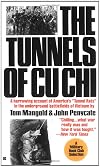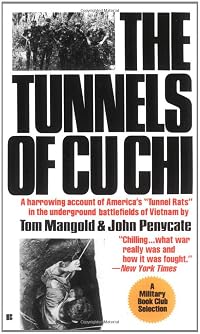
The Tunnels of Cu-Chi
by Tom Mangold (Author), John Penycate (Author)
On This Page
Description
At the height of the Vietnam conflict, a complex system of secret underground tunnels sprawled from Cu Chi Province to the edge of Saigon. In these burrows, the Viet Cong cached their weapons, tended their wounded, and prepared to strike. They had only one enemy: U.S. soldiers small and wiry enough to maneuver through the guerrillas' narrow domain. The brave souls who descended into these hellholes were known as "tunnel rats." Armed with only pistols and K-bar knives, these men inched their show more way through the steamy darkness where any number of horrors could be awaiting them-bullets, booby traps, a tossed grenade. Using firsthand accounts from men and women on both sides who fought and killed in these underground battles, authors Tom Mangold and John Penycate provide a gripping inside look at this fearsome combat. The Tunnels of Cu Chi is a war classic of unbearable tension and unforgettable heroes. Praise for The Tunnels of Cu Chi "A claustrophobic but fascinating tale."--The Wall Street Journal "Chilling . . . what war really was and how it was fought."--The New York Times "Gripping . . . highly recommended."--The Philadelphia Inquirer "Remarkable."--The Washington Post show lessTags
Recommendations































Member Reviews
Do you think you're hard? Do you think you're some sort of Tier Zero Modern Warfare Elite Ops Deniable Badass? Do you even think you know about such people? Until you've read this book, you don't know shit.
Cu Chi was a district just 25 miles from Saigon. Starting from the French Indochina War, local guerrillas carved tunnels out of the strong laterite clay that made up the district. By 1968, the Iron Triangle had over 200 miles of tunnels, with three and four level base camps including barracks, hospitals, and weapons shops. This book covers the Vietnamese men and women who lived and fought in the tunnels, and the American soldiers tasked with going in and smoking them out, the stone crazy tunnel rats.
The authors have compiled an show more extensive body of interviews with veterans on both sides of the conflict, bring forth the survivors own words as they describe living without sunlight or fresh air for months on end, and the terror of chasing the enemy into the bowels of the Earth. A secondary topic is weapons, from madcap high-tech schemes to destroy the tunnels, to the trained wasps and snakes that the VC used to defend their bases. Both the human and military elements are well-represented.
In the end, America never learned how to fight in the tunnels. Instead, in the wake of the Tet offensive, the army simply obliterated the entire district, first with defoliants, then with Rome plows, then with B-52 strikes that blew 10m craters in the ground. The guerrillas were essentially destroyed, but only at the cost of the entire region. The Tunnels of Cu Chi is a fascinating micro-history that amply demonstrates the fractally fucked up nature of the war. show less
Cu Chi was a district just 25 miles from Saigon. Starting from the French Indochina War, local guerrillas carved tunnels out of the strong laterite clay that made up the district. By 1968, the Iron Triangle had over 200 miles of tunnels, with three and four level base camps including barracks, hospitals, and weapons shops. This book covers the Vietnamese men and women who lived and fought in the tunnels, and the American soldiers tasked with going in and smoking them out, the stone crazy tunnel rats.
The authors have compiled an show more extensive body of interviews with veterans on both sides of the conflict, bring forth the survivors own words as they describe living without sunlight or fresh air for months on end, and the terror of chasing the enemy into the bowels of the Earth. A secondary topic is weapons, from madcap high-tech schemes to destroy the tunnels, to the trained wasps and snakes that the VC used to defend their bases. Both the human and military elements are well-represented.
In the end, America never learned how to fight in the tunnels. Instead, in the wake of the Tet offensive, the army simply obliterated the entire district, first with defoliants, then with Rome plows, then with B-52 strikes that blew 10m craters in the ground. The guerrillas were essentially destroyed, but only at the cost of the entire region. The Tunnels of Cu Chi is a fascinating micro-history that amply demonstrates the fractally fucked up nature of the war. show less
"Not only were they confronting an army of moles, but they had to deal with them in mole holes, perhaps the most extraordinary battleground the American soldier would ever encounter."
During the Vietnam War American soldiers would be amazed that the Viet Cong could appear, engage in fire, and then fade away. This was due in large part to the networks of underground tunnels in which they hid, and even lived, sometimes for years at a time. In the Cu Chi area, which is a far suburb of Saigon, the tunnels were part of a complex of tunnels stretching from Saigon to near the Cambodian border. There were hundreds of miles of tunnels, connecting villages, serving as storage for weapons caches as well as providing hiding places for the soldiers. show more Some of the tunnels contained hospital wards and even operating rooms. There were workshops to build booby traps and other weapons. There were conference rooms and entertainments stages. (One chapter of the book reports on a North Vietnamese troupe of entertainers who lived in the tunnels in the south for years, entertaining the soldiers.)
Many of the tunnels were built during the time of the struggles with the French, and by the time the Americans arrived in 1965 there were more than 200 kms of tunnels. At first, the Americans discovered, and attempted to destroy the tunnels on an ad hoc basis. Soon, however, the need for a better strategy arose, and the "tunnel rats," a all-volunteer group of soldiers, was formed. They were charged with entering the tunnels when they were found, routing out inhabitants of the tunnels, and destroying the tunnels. Much easier said than done.
The tunnels had evolved as a natural response of poorly equipped guerillas facing a technologically superior enemy. The CuChi tunnels were in a free fire zone near a major US base, and were used for infiltrating Saigon. The Tet Offensive was planned and executed from these tunnels.
The book is told from both sides, primarily through interviews and descriptions of those who experienced the tunnels, on both sides of the conflict. There is almost more information from the North Vietnamese point of view than the American, since many of the American tunnel rats were reluctant to discuss their experiences. This was a fascinating read, and it definitely gives one a clear sense of why the United States could never have won the Vietnam War.
3 stars show less
During the Vietnam War American soldiers would be amazed that the Viet Cong could appear, engage in fire, and then fade away. This was due in large part to the networks of underground tunnels in which they hid, and even lived, sometimes for years at a time. In the Cu Chi area, which is a far suburb of Saigon, the tunnels were part of a complex of tunnels stretching from Saigon to near the Cambodian border. There were hundreds of miles of tunnels, connecting villages, serving as storage for weapons caches as well as providing hiding places for the soldiers. show more Some of the tunnels contained hospital wards and even operating rooms. There were workshops to build booby traps and other weapons. There were conference rooms and entertainments stages. (One chapter of the book reports on a North Vietnamese troupe of entertainers who lived in the tunnels in the south for years, entertaining the soldiers.)
Many of the tunnels were built during the time of the struggles with the French, and by the time the Americans arrived in 1965 there were more than 200 kms of tunnels. At first, the Americans discovered, and attempted to destroy the tunnels on an ad hoc basis. Soon, however, the need for a better strategy arose, and the "tunnel rats," a all-volunteer group of soldiers, was formed. They were charged with entering the tunnels when they were found, routing out inhabitants of the tunnels, and destroying the tunnels. Much easier said than done.
The tunnels had evolved as a natural response of poorly equipped guerillas facing a technologically superior enemy. The CuChi tunnels were in a free fire zone near a major US base, and were used for infiltrating Saigon. The Tet Offensive was planned and executed from these tunnels.
The book is told from both sides, primarily through interviews and descriptions of those who experienced the tunnels, on both sides of the conflict. There is almost more information from the North Vietnamese point of view than the American, since many of the American tunnel rats were reluctant to discuss their experiences. This was a fascinating read, and it definitely gives one a clear sense of why the United States could never have won the Vietnam War.
3 stars show less
I've had this book for a long time but I have finally gotten around to reading it and was quite impressed. It tells the story of the Cu Chi tunnels located near Saigon. Why they existed, how they were used and how they were defeated. What I particularly liked was that the story was told from the Communist and American sides and when it told that sides story it was 100% from their perspective. I also liked that it was a mixture of personal stories, tactics and techniques, a great read.
Postwar study of deep triple layer tunnels which included barracks and a hospital. Author interviewed US tunnel rat veterans and Viet Cong veterans. Intense hand to hand fighting. Documents declassified to allow for this publication.
not so great writing, fascinating topic
I bought my counterfeit copy on the streets of Sai Gon. After visitng the tunnels, the book holds even more importance. A good treatment.
best book ever 10/10
Members
- Recently Added By
Lists

THE WAR ROOM
813 works; 24 members
Author Information


Some Editions
Common Knowledge
- Canonical title
- The tunnels of Cu Chi: a remarkable story of war in Vietnam; The Tunnels of Cu-Chi
- Original title
- The tunnels of Cu Chi: a remarkable story of war in Vietnam
- Alternate titles
- Tunnels of Cu Chi
- Original publication date
- 1985-03-12 (1e édition originale américaine, Mass Market Paperback) (1e édition originale américaine, Mass Market Paperback); 1986-03-04 (1e traduction et édition française | Albin Michel) (1e traduction et édition française | Albin Michel)
- Important places
- Vietnam
- Important events
- Vietnam War (1959 - 1975)
- Dedication
- For Sarah, Abigail, Jessica, and Lucian
- and all those still young enough to learn.
T.C.M.
For Eve.
J.V.G.P - Original language*
- Anglais (Etats-Unis) (Etats-Unis)
*Some information comes from Common Knowledge in other languages. Click "Edit" for more information.
Classifications
- Genres
- History, Nonfiction, General Nonfiction
- DDC/MDS
- 959.70434 — History & geography History of Asia Southeast Asia: Myanmar, Thailand, Laos, Cambodia, Vietnam Vietnam 1949- 1961–1975 Vietnamese War Military operations and units
- LCC
- DS559.8 .T85 .M37 — History of Europe, Asia, Africa and Oceania Asia History of Asia Southeast Asia French Indochina Vietnam. Annam Vietnamese Conflict
- BISAC
Statistics
- Members
- 537
- Popularity
- 55,321
- Reviews
- 8
- Rating
- (3.78)
- Languages
- Dutch, English, French, Polish
- Media
- Paper, Audiobook, Ebook
- ISBNs
- 15
- ASINs
- 14