On This Page
Description
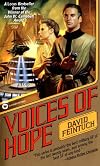
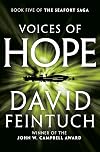
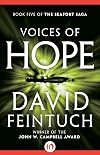
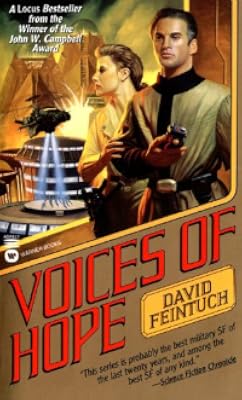
Decades have passed since Nick Seafort battled the vicious aliens. Now, in the fifth installment of the celebrated Seafort Saga, it's trouble on Earth that looms . . . Everyone knows Nick Seafort as "the Fisherman"--the hero who stopped the merciless, fishlike aliens when they attacked Earth. Voices of Hope picks up with Seafort decades later, after he's retired as the Secretary General of the United Nations. Despite his trappings of power, he has been unable to aid the so-called transpops, show more desperate people who live in the dangerous lower levels of New York City. When Seafort's son, Philip, follows a friend into the streets of New York, he encounters the transpop culture--one evolved to exist in the shadows and operate with ruthless efficiency. The trannies are a powder keg ready to blow, and a water shortage appears to be the spark to prove that humans can be far more dangerous than any outer-space alien. Long ago, Seafort had braved these violent streets to find his wife; now he must return to save his son. show lessTags
Recommendations



















Member Reviews
It's best not to go into the book thinking of it as a continuation of the Seafort Saga, but more of a stand-alone novel set in the same universe. While it is true that it advances the story of Nicholas Seafort, for the majority of the story he is almost entirely in the background, making only minor appearances. Instead of being from his viewpoint, we are treated instead to five different perspectives - those of Phillip (his son), Jared (son of his aide), Rob (assemblyman, son of Senator Boland), Pook (a New York tribesman), and of course Pedro Chang ("Neut" trader).
In a previous review I mentioned how it felt as if Feintuch was experimenting - and it is felt even more strongly in "Voices of Hope." The impression I get is that Feintuch show more wanted to write different characters, but he or his publisher knew that what his readers wanted was more Seafort, and this novel arose as a compromise between the two positions. While I appreciate having the different perspectives, I miss Seafort's inner monologue, and his viewpoint, as opposed to inferring it through the eyes of others. Two of the viewpoints, Pook & Chang's, (likely close to 40% of the book) are almost entirely in New York Tribesman dialect. As a writer it was no doubt a challenge, and as a reader even moreso - at times I struggled between wanting to continue the story and putting the book down because I had no desire to read another sentence in that dialect!
Of the three remaining viewpoints, Philip's was the one I enjoyed the most - he is like his father in some ways, though is very much his own person. Rob's was disappointing in the sense that I was continually disappointed in the character's choice, hoping he would be the person he wished to be rather than the person he was. That leave's Jared - a character I developed an immediate dislike for.
The novel starts off slower than I would like, and I can understand why some readers made the decision not to persevere and finish the book. Despite my above misgivings, the final act has all the hallmarks of the best of Feintuch's writing from his previous works in the series.
The one aspect which did not age particularly well was when it came to the portrayal of computers. In the previous novels we have sometimes complex portrayals of artificial intelligence (e.g. Danny & William), programming languages (NAVDOS), and those who work with computers (Dosmen). This worldbuilding is largely set aside, to engage with futurist trends which were all the rage in the 90s: the internet & hacking. It all feels very awkward: e-friends, email, "nets", hacking lingo taken from downhill skiing (seriously). It all feels very dated, and would have been well-meaning but out of touch at the time of its writing. Likely another writing experiment by Feintuch, but one which I don't personally feel was very successful.
It's a flawed work, but it does proved alternative perspectives on Nicholas Seafort which while interesting, mostly serve to highly how much more strength and depth his character has compared to any of the other viewpoints in the novel. show less
In a previous review I mentioned how it felt as if Feintuch was experimenting - and it is felt even more strongly in "Voices of Hope." The impression I get is that Feintuch show more wanted to write different characters, but he or his publisher knew that what his readers wanted was more Seafort, and this novel arose as a compromise between the two positions. While I appreciate having the different perspectives, I miss Seafort's inner monologue, and his viewpoint, as opposed to inferring it through the eyes of others. Two of the viewpoints, Pook & Chang's, (likely close to 40% of the book) are almost entirely in New York Tribesman dialect. As a writer it was no doubt a challenge, and as a reader even moreso - at times I struggled between wanting to continue the story and putting the book down because I had no desire to read another sentence in that dialect!
Of the three remaining viewpoints, Philip's was the one I enjoyed the most - he is like his father in some ways, though is very much his own person. Rob's was disappointing in the sense that I was continually disappointed in the character's choice, hoping he would be the person he wished to be rather than the person he was. That leave's Jared - a character I developed an immediate dislike for.
The novel starts off slower than I would like, and I can understand why some readers made the decision not to persevere and finish the book. Despite my above misgivings, the final act has all the hallmarks of the best of Feintuch's writing from his previous works in the series.
The one aspect which did not age particularly well was when it came to the portrayal of computers. In the previous novels we have sometimes complex portrayals of artificial intelligence (e.g. Danny & William), programming languages (NAVDOS), and those who work with computers (Dosmen). This worldbuilding is largely set aside, to engage with futurist trends which were all the rage in the 90s: the internet & hacking. It all feels very awkward: e-friends, email, "nets", hacking lingo taken from downhill skiing (seriously). It all feels very dated, and would have been well-meaning but out of touch at the time of its writing. Likely another writing experiment by Feintuch, but one which I don't personally feel was very successful.
It's a flawed work, but it does proved alternative perspectives on Nicholas Seafort which while interesting, mostly serve to highly how much more strength and depth his character has compared to any of the other viewpoints in the novel. show less
Found this book difficult to read. Quite a different story line, compared to the rest of the series. The N'York slang was difficult to read and this combined with the constant changing of the characters lost the series initial magic.
Ratings
Members
- Recently Added By
Author Information

15 Works 4,767 Members
Some Editions
Series

Work Relationships
Common Knowledge
- Original publication date
- 1996-10
- People/Characters
- Nicholas Seafort; Philip Tyre Seafort
- Dedication
- To Betsy Mitchell
- First words
- In the soft summer evening, Senator Richard Boland paced the den of our Washington compound.
- Last words
- (Click to show. Warning: May contain spoilers.)Filmateleven.
Philip Tyre Seafort - Original language
- English
Classifications
Statistics
- Members
- 531
- Popularity
- 56,506
- Reviews
- 2
- Rating
- (3.31)
- Languages
- English
- Media
- Paper, Ebook
- ISBNs
- 4
- ASINs
- 2