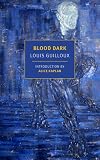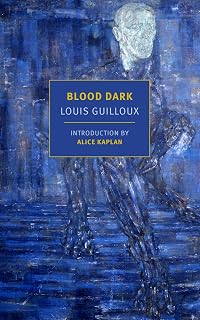
Blood Dark
by Louis Guilloux
On This Page
Description
"Set during World War I, this monumental philosophical novel about human despair inspired Albert Camus' own writing and prefigured the greater existential movement. Louis Guilloux's novel Blood Dark tells the story of a brilliant philosopher trapped in a provincial town and of his spiraling descent into self-destruction. Cripure, as his students call him, the name a mocking contraction of The Critique of Pure Reason, despises his colleagues, despairs of his charges, and is at odds with his show more family. The year is 1917, and the First World War continues its relentless course, with French soldiers not only dying by the tens of thousands but also beginning to desert in protest. Cripure, having seen student after student go to his death, finds himself literally up in arms at the complacent patriotism of his fellow teachers as he challenges one of them to a duel. Unfolding over the course of a single day, Blood Dark describes how Cripure manages to embroil himself in this ridiculous "affair of honor." Guilloux's novel, an important inspiration to the young Albert Camus, is an unflinching attack on the hypocritical pieties of a middle-class society and a tragic portrait of a man at war with the world and himself"-- show lessTags
Recommendations









Member Reviews
As if Flaubert, instead of puzzling over every word and cutting and trimming and defining and refining, had written the satirical chapters of Bovary in one three month long period, without cutting anything, and then stitched them together as best he could. The provincial satire is strong, but when your main character is named after Kant's first critique, I'm going to need more intellectual weight than this to fill out 500 pages.
Le sang noir est un roman magistral, un de ceux qui prend aux tripes, qui touche la fibre humaine avec la douleur d'un scalpel sur un nerf à vif. Il y a peu de romans qui touchent aussi juste sur les absurdités de la vie, sur les médiocrités et les grandeurs de l'âme humaine. La tragédie classique est à l'oeuvre dans ce roman : unité de lieu et de temps, et une purge terrible des passions dans la personne de Cripure. Comment oublier ce professeur informe, mal dans sa peau avec ses grands pieds et sa peau de bique, un personnage, un grand monsieur qui intériorise fortement des douleurs et pour qui la vie n'a plus de sens. Cripure qui est le miroir de la bêtise des autres, des petites vies grisâtres, des douleurs aussi que l'on show more ne montre pas. Comment oublier aussi cette figure secondaire qu'est Marchandeau, hagard à la recherche d'un train pour sauver son fils qui va se faire fusiller ? Nous sommes en 1917 et il faut des exemples pour sauver l'esprit nationaliste français dans cette saignée terrible que fut la Grande Guerre. Marchandeau offre une figure de pietà dans un chapitre qui est dans doute le plus émouvant du roman. A l'opposé, il y a l'imbécillité triomphante et son esprit de clocher ratatiné, représentée par Nabucet. Oui, vraiment, le "sang noir" est un très grand livre. On pense à Céline bien entendu, mais on pense à tous les écrivains qui ont fouaillé l'âme humaine jusqu'à son tréfonds : Dostoïovsky, Hugo, Proust, les moralistes du XVIIème siècle. Dans ma bibliothèque, ce roman cotoie les plus grands. show less
Jun 5, 2016French
Grand écrivain régionaliste et socialiste qui fut résistant pendant la guerre. Ce livre a reçu le prix Goncourt en 1935.
Dec 12, 2025French
Ratings
Members
- Recently Added By
Lists

Pleasant Surprises: Books That Exceeded Our Expectations
418 works; 143 members

Books featuring alcoholics
103 works; 18 members
Author Information

34+ Works 415 Members
Awards and Honors
Series
Belongs to Publisher Series
Common Knowledge
- Canonical title
- Blood Dark
- Original title
- Le Sang Noir
- Original publication date
- 1935
- People/Characters*
- François Merlin, "Cripure"
- Important events*
- Première Guerre mondiale (1914 | 1918)
*Some information comes from Common Knowledge in other languages. Click "Edit" for more information.
Classifications
Statistics
- Members
- 246
- Popularity
- 132,545
- Reviews
- 3
- Rating
- (3.68)
- Languages
- 5 — Dutch, English, French, Norwegian, Spanish
- Media
- Paper, Ebook
- ISBNs
- 8
- ASINs
- 6