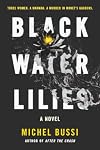
Black Water Lilies
by Michel Bussi
On This Page
Description
From the author of the wonderfully ingenious novel After the Crash, a thrilling tale of a murder that takes place in Claude Monet's garden and the mystery that surrounds it. Giverny, France. During the day, the town is the home of the famous artist Claude Monet and the gardens where he painted his Water Lilies. But once the tourists have gone, there is a darker side to the peaceful French village. This is the story of thirteen days that begin with one murder and end with another. Jérôme show more Morval, a man whose passion for art was matched only by his passion for women, has been found dead in the stream that runs through the gardens. In his pocket is a postcard of Monet's Water Lilies with the words: Eleven years old. Happy Birthday. Entangled in the mystery are three women: a young painting prodigy, the seductive village schoolteacher, and an old widow who watches over the village from a mill by the stream. All three of them share a secret. But what do they know about the discovery of Jérôme Morval's corpse? And what is the connection to the mysterious, rumored painting of Black Water Lilies? show lessTags
Recommendations










































Member Recommendations
Member Reviews
I was absolutely gobsmacked by the ending of this book. Nothing had prepared me for the way the author had played with various time frames, and with my mind. Initially I was left feeling that perhaps I hadn't read it carefully enough. But then as I looked back over the pages I could see how he had done it.
We see most of the book's action through the eyes of an elderly woman, a recluse who lives in the water mill next to stream that runs through Monet's Garden. She lives on the 4th floor, a vantage point that allows her to observe most of what goes on in the small village. Nothing escapes her attention it seems.
We are so taken up with the investigation into the death of Jerome Morval and the possibility of a lost Monet painting that we show more don't recognise the signs that our path meanders. I wonder if the author has played fair with the reader? What strikes at the end though is that the novel is itself a tribute to impressionism. show less
We see most of the book's action through the eyes of an elderly woman, a recluse who lives in the water mill next to stream that runs through Monet's Garden. She lives on the 4th floor, a vantage point that allows her to observe most of what goes on in the small village. Nothing escapes her attention it seems.
We are so taken up with the investigation into the death of Jerome Morval and the possibility of a lost Monet painting that we show more don't recognise the signs that our path meanders. I wonder if the author has played fair with the reader? What strikes at the end though is that the novel is itself a tribute to impressionism. show less
Michel Bussi is a renowned crime fiction writer and winner of many awards in his native France, BLACK WATER LILIES being the second of his books translated into English. It would appear from both of them (the first was AFTER THE CRASH) he is particularly good at unusual, absolutely enthralling scenarios.
Start reading BLACK WATER LILIES and you could be forgiven for double-checking the classification of this book. It doesn't read at all like a crime novel, but then it's not immediately clear where this is heading at all. You're introduced to three female characters - the young girl, the beautiful older woman and the all-seeing old, wise woman. There's also a feeling of overwhelming doom associated with each of these characters, show more disconcerting when it's so easy to become immediately engaged with these women, more so as the narrative progresses. From the young, artistically gifted girl, through to the slightly more shadowy older woman, trapped in a loveless marriage, onto the strongest and most prevalent voice - the old woman invisible in her community, at the centre of everything. The context immediately becomes unclear - at points it feels like it might be heading into family saga territory, but there's something "other" about it as well - mystical or supernatural. But there's also a murder and it's obvious somebody knows a lot about that, and there are secrets everywhere.
The setting, Monet's home village of Giverny, is gloriously depicted. From the gardens and the water sources from his paintings, to the narrow winding streets this small village sits in the middle of farmland which also weaves its way into the story, as it did Monet's paintings. There is the beautiful and mysterious mill; the hotels and the bars and cafes; and the village school with its lovely and popular young teacher. Into this scenario a couple of policemen step when the body of a local man is found in the river in the town. The local cop, with his pregnant wife and bbq collection, the younger and more senior in the force, from another part of France - an outsider whose job it is to get inside the heads of the locals.
BLACK WATER LILIES weaves an hypnotic tale around these three women, the town, Monet's work, murder and the tourism that threatens to overwhelm this small place. It pulls in threads from the art world, and the obsession with collection and ownership that great artworks engender in people. It balances the competing priorities of place and circumstances with strong, clever and believable characters. It subtly draws the readers eye to the biases and perceptions that can be built up about people - young girls with single mothers, old women who disappear into the background, loveless marriages, convenience, and those secrets. Always at the bottom of everything in BLACK WATER LILIES there are secrets. Along with manipulation and self-interest.
But BLACK WATER LILIES's greatest strength is in the homage to all things impressionistic. Just like the great paintings of that school, different viewpoints reveal different aspects, and what is seen in close up is very different to that from some distance. Just like with those paintings, for a large part of this novel, shapes swirl and patterns move across the eye. Just as the reader feels that everything is falling into place, a step back, and the story solidifies into something unexpected. It's cleverly done, elegantly presented, a case of pitch-perfect show don't tell, ensuring that the reader is unlikely to come away feeling manipulated or cheated. Emotional and a bit like you've been put through a wringer sure, but not manipulated.
http://www.austcrimefiction.org/review/review-black-water-lilies-michel-bussi show less
Start reading BLACK WATER LILIES and you could be forgiven for double-checking the classification of this book. It doesn't read at all like a crime novel, but then it's not immediately clear where this is heading at all. You're introduced to three female characters - the young girl, the beautiful older woman and the all-seeing old, wise woman. There's also a feeling of overwhelming doom associated with each of these characters, show more disconcerting when it's so easy to become immediately engaged with these women, more so as the narrative progresses. From the young, artistically gifted girl, through to the slightly more shadowy older woman, trapped in a loveless marriage, onto the strongest and most prevalent voice - the old woman invisible in her community, at the centre of everything. The context immediately becomes unclear - at points it feels like it might be heading into family saga territory, but there's something "other" about it as well - mystical or supernatural. But there's also a murder and it's obvious somebody knows a lot about that, and there are secrets everywhere.
The setting, Monet's home village of Giverny, is gloriously depicted. From the gardens and the water sources from his paintings, to the narrow winding streets this small village sits in the middle of farmland which also weaves its way into the story, as it did Monet's paintings. There is the beautiful and mysterious mill; the hotels and the bars and cafes; and the village school with its lovely and popular young teacher. Into this scenario a couple of policemen step when the body of a local man is found in the river in the town. The local cop, with his pregnant wife and bbq collection, the younger and more senior in the force, from another part of France - an outsider whose job it is to get inside the heads of the locals.
BLACK WATER LILIES weaves an hypnotic tale around these three women, the town, Monet's work, murder and the tourism that threatens to overwhelm this small place. It pulls in threads from the art world, and the obsession with collection and ownership that great artworks engender in people. It balances the competing priorities of place and circumstances with strong, clever and believable characters. It subtly draws the readers eye to the biases and perceptions that can be built up about people - young girls with single mothers, old women who disappear into the background, loveless marriages, convenience, and those secrets. Always at the bottom of everything in BLACK WATER LILIES there are secrets. Along with manipulation and self-interest.
But BLACK WATER LILIES's greatest strength is in the homage to all things impressionistic. Just like the great paintings of that school, different viewpoints reveal different aspects, and what is seen in close up is very different to that from some distance. Just like with those paintings, for a large part of this novel, shapes swirl and patterns move across the eye. Just as the reader feels that everything is falling into place, a step back, and the story solidifies into something unexpected. It's cleverly done, elegantly presented, a case of pitch-perfect show don't tell, ensuring that the reader is unlikely to come away feeling manipulated or cheated. Emotional and a bit like you've been put through a wringer sure, but not manipulated.
http://www.austcrimefiction.org/review/review-black-water-lilies-michel-bussi show less
Michel Bussi’s novel is a mixture of modern murder mystery and potted biography of Claude Monet along with an appreciation of his art (and in particular the series of painting of water lilies for which he is most famous). Set in Monet’s home village of Giverny, the novel opens with the discovery of a corpse that has been stabbed, then battered with a heavy rack and then plunged into the river as if to make absolutely sure.
The story alternatives between a first-person narrative from an old woman who is free to observe the comings and goings of the villagers while remaining largely unnoticed, and an omniscient author’s description of the police investigation into the murder, which is led by Inspector Laurenç Sérénac, a newcomer show more to the area who had previously lived in the deep south of France. A further narrative focuses on Fanette, a young girl who attends the local school in Giverny, and who is very gifted.
The murder victim had a reputation as a ladies’ man and the police identify this as the most probably cause of the murder. Shortly afterwards Sérénac receives a package, from an unknown sender, which contains photographs of the victim with several different women. Sérénac identifies one of these women as the local school teacher, and goers to interview her. She is beguilingly beautiful, and Sérénac falls utterly under her spell.
Meanwhile the investigation continues, described against a backdrop of Monet’s paintings. Bussi takes the opportunity to educate the reader about Monet’s life and art, though this is never obtrusive. It does, however, add to the hypnotic atmosphere.
I bought in to this novel completely, all the way until the last twenty or thirty pages. I was, though, unconvinced by the ending which I found too contrived. Judging by the critics’ comments quoted on the cover, I seem to have been in a minority of one in that regard. show less
The story alternatives between a first-person narrative from an old woman who is free to observe the comings and goings of the villagers while remaining largely unnoticed, and an omniscient author’s description of the police investigation into the murder, which is led by Inspector Laurenç Sérénac, a newcomer show more to the area who had previously lived in the deep south of France. A further narrative focuses on Fanette, a young girl who attends the local school in Giverny, and who is very gifted.
The murder victim had a reputation as a ladies’ man and the police identify this as the most probably cause of the murder. Shortly afterwards Sérénac receives a package, from an unknown sender, which contains photographs of the victim with several different women. Sérénac identifies one of these women as the local school teacher, and goers to interview her. She is beguilingly beautiful, and Sérénac falls utterly under her spell.
Meanwhile the investigation continues, described against a backdrop of Monet’s paintings. Bussi takes the opportunity to educate the reader about Monet’s life and art, though this is never obtrusive. It does, however, add to the hypnotic atmosphere.
I bought in to this novel completely, all the way until the last twenty or thirty pages. I was, though, unconvinced by the ending which I found too contrived. Judging by the critics’ comments quoted on the cover, I seem to have been in a minority of one in that regard. show less
Something didn't feel quite right about this book most of the time I was reading it. I couldn't put my finger on it. Maybe it was the nearly-but-not-quite omniscient narrator, maybe the storyline with the children who never seemed quite like real people and spoke in italics for no apparent reason, maybe the slightly unsavoury whiff that hung around a lot of the other characters too - the vomit inducing sexy schoolteacher, the police chief who came across as juvenile, out of his depth and at the mercy of his sex drive. Some of the reported conversations between the two cops were bizarre. But there are some very clever conjuring tricks at play here. Like the excellent "After the Crash", this delivers a proper turn-your-head-inside-out show more twist, and were I to read the whole thing again the issues I listed above would all have been resolved, and furthermore there was a massive clue hiding in plain sight throughout that I failed to spot. I love it when that happens. Bravo Monsieur Bussi, you have done it again. show less
Three women are linked by death in the village of Giverny. The embittered widow sees all, the beautiful teacher is locked in marriage to an obsessive husband and the talented schoolgirl looks for an escape. Giverny is the village famous for the work of Monet and other Impressionists but it is a small village with secrets and a history of unsolved deaths. When a rich doctor is murdered suspicion falls on those linked to his many mistresses and a newly appoint police inspector has to investigate.
Bussi's first novel translated into English (After The Crash) was an interesting take on the usual and this book is even more impressive. For most of the book it follows the lines of a standard police procedural, albeit a very good one. Then show more suddenly there is a seismic shift - if you read carefully the clues are all there, and if you are someone who knows about the history of Giverny then that will help - it caught me out. This lifted the story from being a good book in a certain genre to being something special. A love of art and literature pervades the book and the translation is excellent. show less
Bussi's first novel translated into English (After The Crash) was an interesting take on the usual and this book is even more impressive. For most of the book it follows the lines of a standard police procedural, albeit a very good one. Then show more suddenly there is a seismic shift - if you read carefully the clues are all there, and if you are someone who knows about the history of Giverny then that will help - it caught me out. This lifted the story from being a good book in a certain genre to being something special. A love of art and literature pervades the book and the translation is excellent. show less
Qualcuno può stupirsi che un giallo meriti come valutazione 5 stelle. Certo, un giallo non è paragonabile a romanzi come per esempio, "Il dottor Zivago" o "I fratelli Karamazov", per citare due capolavori assoluti e che io amo incondizionatamente.
Però credo che questo sia uno fra i più belli gialli che abbia mai letto. Una storia e una trama costruita magistralmente e che alla fine ti stupisce.
Anche se forse in certi momenti si dilunga un po' troppo.
E comunque, pur essendo un giallo, offre pure spunti di riflessione che fanno pensare.
Però credo che questo sia uno fra i più belli gialli che abbia mai letto. Una storia e una trama costruita magistralmente e che alla fine ti stupisce.
Anche se forse in certi momenti si dilunga un po' troppo.
E comunque, pur essendo un giallo, offre pure spunti di riflessione che fanno pensare.
Bellissimo e imprevedibile, un noir che è tutto una sorpresa, dall’inizio alla fine, un perfetto gioco di specchi che si muove tra presente e passato – sia prossimo che remoto - in un continuo rincorrersi di eventi che troveranno soluzione e spiegazione solo nello sconcertante finale.
Punto di forza del racconto tutti i diversi personaggi, sapientemente caratterizzati dall’autore, che danno vita a una vicenda drammatica e intricata a cui fa da sfondo Claude Monet, i suoi dipinti, la sua casa e il paese di Giverny in Normandia.
Una lettura che si è rivelata una bellissima sorpresa, avvincente, coinvolgente e appassionante.
Punto di forza del racconto tutti i diversi personaggi, sapientemente caratterizzati dall’autore, che danno vita a una vicenda drammatica e intricata a cui fa da sfondo Claude Monet, i suoi dipinti, la sua casa e il paese di Giverny in Normandia.
Una lettura che si è rivelata una bellissima sorpresa, avvincente, coinvolgente e appassionante.
Members
- Recently Added By
Author Information

41+ Works 2,587 Members
Some Editions
Awards and Honors
Awards
Distinctions
Series
Belongs to Publisher Series
Terres de France (Presses de la Cité)
Work Relationships
Has the adaptation
Common Knowledge
- Canonical title
- Black Water Lilies
- Original title
- Nymphéas noirs; Nymphéas noirs
- Original publication date
- 2011
- People/Characters*
- Stéphanie Dupain (Fanette Morel); Jérôme Morval (Camille); Laurenç Sérénac (Laurentin); Sylvio Bénavides; Béatrice Bénavides; Ludovic (Ludo) Maury (Ludo) (show all 21); Patricia Chéron Morval (Mary); James; Jacques Dupain (Vincent); Amadou Kandy; Alysson Murer; Albert Rosalba (Paul); Louise Rosalba; Achille Guillotin; Liliane Lelièvre; Aline Malétras; Patrick; Titou; Pascal Poussin; Richard Paternoster; Hervé Berger
- Important places
- Giverny, Eure, Normandy, France; Vernon, Normandie, France; Rouen, Normandie, France
- Epigraph*
- « Avec Monet, nous ne voyons pas le monde réel, mais nous en saisissons les apparences. »
F. Robert-Kempf, L'Aurore,1908
« Non! Non! Pas de noir pour Monet, voyons! Le noir n'est pas une couleur! »
G... (show all)eorges Clémenceau, au pied du cercueil de Claude Monet
(Michel de Decker, Claude Monet, 2009) - Dedication*
- À la mémoire de Jacky Lucas
- First words*
- Trois femmes vivaient dans un village.
- Last words*
- (Click to show. Warning: May contain spoilers.)Vivants, tellement vivants.
- Original language
- French
*Some information comes from Common Knowledge in other languages. Click "Edit" for more information.
Classifications
Statistics
- Members
- 467
- Popularity
- 64,825
- Reviews
- 21
- Rating
- (3.73)
- Languages
- 10 — Danish, Dutch, English, Estonian, French, Italian, Polish, Portuguese, Spanish, Swedish
- Media
- Paper, Audiobook, Ebook
- ISBNs
- 38
- ASINs
- 11