On This Page
Description
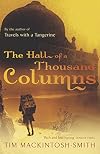
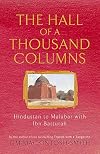
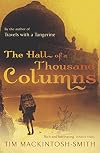
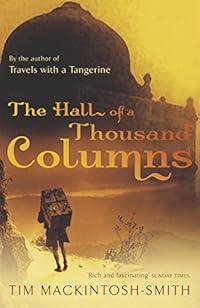
Tim Mackintosh-Smith's Travels with a Tangerine introduced the modern world to Ibn Battutah, 'Prince of Travellers'. Now they take to the road together once more for the next leg of Ibn Battutah's travels -- the great subcontinent of India. Born in 1304, Ibn Battutah left his native Tangier as a young scholar of law. He returned nearly thirty years later having visited most of the known world between Morocco and China. To many contemporaries his tales were received as Munchausian fantasies show more -- and it was India that stretched his readers' credulity beyond the limit. Tim Mackintosh-Smith traces in situ the dizzy ladders and terrifying snakes of Ibn Battutah's Indian career -- as judge and hermit, courtier and prisoner, ambassador and castaway. Over the course of his journey he also finds a dead Muslim posing as a Hindu deity, Jesus popping up in the pulpit of a mosque, and the rotten tooth of a mad sultan being revered as a saint. Ibn Battutah left India stripped to his underpants by pirates; but he took away a treasure of tales as rich as any in the history of travel. Back home they said the treasure was a fake. What Mackintosh-Smith returns with proves the sceptics wrong: India is the jewel in the Prince of Travellers' turban. show lessTags
Recommendations






































Member Reviews
Mackintosh-Smith at first seems to be rather less at ease with the chaos of India than with the more orderly Islamic world he describes in Travels with a Tangerine, but ultimately the interaction between his variety of islamophile Englishness and the Hobson-Jobsonness of postcolonial India is a very fertile one. This is very much the India of R.K. Narayan, rather than that of Salman Rushdie: we are shown small-scale stories and learn about the big issues as marginal notes to the local history that Mackintosh-Smith is really interested in. He doesn't conceal the death and destruction of past or present, but he tries to put it into the context of a country where people of different faiths have mostly managed quite successfully to live show more side-by-side and learn from each other.
What we don't get in this book is a great deal of Ibn Battutah: try as hard as he might, Mackintosh-Smith finds very few actual traces of the 14th century in modern India, and even fewer that he can link confidently to IB. He does come up with plausible solutions to a couple of minor mysteries along the way, but by and large either IB's descriptions of this part of his travels are too vague to go on, or there is simply nothing left. In Mangalore the coast has moved; elsewhere everything has been obscured by new building in the Mughal period and later. show less
What we don't get in this book is a great deal of Ibn Battutah: try as hard as he might, Mackintosh-Smith finds very few actual traces of the 14th century in modern India, and even fewer that he can link confidently to IB. He does come up with plausible solutions to a couple of minor mysteries along the way, but by and large either IB's descriptions of this part of his travels are too vague to go on, or there is simply nothing left. In Mangalore the coast has moved; elsewhere everything has been obscured by new building in the Mughal period and later. show less
Following in the footsteps of Ibn Battutah, the year was 1333 Battutah had now traveled to Delhi, India. Some 600+ years later and Tim Mackintosh-Smith is "hot" on his heels. Smith continues Hall of a Thousand Columns with the same wit and humor found in Travels with a Tangerine. For example here's a line that made me giggle, "For a ship supposed to be leaving on her maiden voyage, she was being annoyingly coy about her virginity" (p 17).
Mackintosh-Smith titled his continuation of Tangerine Hall of a Thousand Columns because he felt that when IB came face to face with the hall he also came face to face with his destiny (p 31). As much as I liked Tangerine is wasn't able to finish Hall.
Mackintosh-Smith titled his continuation of Tangerine Hall of a Thousand Columns because he felt that when IB came face to face with the hall he also came face to face with his destiny (p 31). As much as I liked Tangerine is wasn't able to finish Hall.
Author certainly has a way with words - puns that might be come off as "over the top" from others work brilliantly here! Terrific overview of current, and historical India, but, I'd recommend reading Tangerine first (if possible) for context.
Ratings
Members
- Recently Added By
Author Information

10+ Works 1,637 Members
Tim Mackintosh-Smith was born in 1961 and educated at Oxford, where he studied Arabic. Seduced at an early age by images of Yemen, he has lived there since 1982, earning the unofficial title "Shaykh of the Nazarenes." Steeped in the language and customs of his adopted land, he is both guest at the feast and fly on the wall
Series

Work Relationships
Reference guide/companion to
Common Knowledge
- Original publication date
- 2005
- People/Characters
- Ibn Battutah
- Important places
- India; Hindustan
- First words
- "You must be suffering from lack-of-culture- shock," Jay said as she removed the packaging of her beefburger.
- Last words
- (Click to show. Warning: May contain spoilers.)"Come on then. Let's get going."
Classifications
Statistics
- Members
- 200
- Popularity
- 163,009
- Reviews
- 3
- Rating
- (3.64)
- Languages
- Dutch, English
- Media
- Paper, Ebook
- ISBNs
- 4
- ASINs
- 3