On This Page
Description
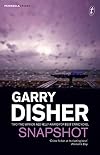
Fiction. Mystery. HTML:It takes months for Australian social psychologist Janine McQuarrie to succumb to her husband’s pressure to attend spouse-swapping parties, but eventually she gives in. Then, driving with her young daughter one day, she gets out of her car to ask directions and is shot and killed. The little girl escapes when the gunman's pistol misfires.Inspector Hal Challis of the Crime Investigation Unit is assigned the case, but his efforts are thwarted by his boss. The dead show more woman was Superintendent McQuarrie’s daughter-in-law, and he seems to be more interested in protecting his son than in finding his daughter-in-law’s murderer. Who might have a motive to kill this attractive young wife and mother? One of her clients? One of the swingers she’d gotten together with at a party? Or, the obvious suspect, her husband? show less
Tags
Recommendations






























Member Reviews
Third outing in the Hal Challis series of Australia-set crime novels. I was taken by the crimes in this book, their casually brutal execution (!) and their grimdark motivation...greed. That said, there wasn't one victim of whom I did not think, "about damned time" or "yeah, well..." which to me means I'm in tune with Author Disher's choices. Far from glorifying murder and desensitizing the reader to its unspeakable cruelty and awfulness, this made me think extra hard about how I myownself respond to murder mysteries.
It's axiomatic that victims "R" us, or there'd be no more murder mysteries. We need to identify with the sleuth and the victim, as in recognize each one's ambiguous human qualities. Caricatures are seldom satisfying in this show more world of oft-told tales. Series mysteries are prone to that kind of series sag, the kind where a character becomes a caricature, because the entire charm of a series is familiarity. The setting, the sleuth, the choice of victims and perpetrators. The challenge for a writer of this genre's limited range of plots is to fit the skin of Series onto the bones of Plot without stretching either too hard, too far, too awkwardly. Any of these will lead to series sag, in addition to fatiguing the reader's suspense of disbelief muscles.
I'm an old hand at reading in this genre. I've been doing it for over 40 years. I'm not likely to miss the clues the author plants, though I'm far from infallible at connecting the dots as the author does. In this read, I had the right address but the wrong resident as the perpetrator of these cruel crimes. That's more than enough for me to feel a sparking pleasure in being fooled! I want to re-experience the pleasures of puzzling out a solution without the numbing almost-certainty of being correct each and every time.An Aussie friend clued me in to the way South African whites who emigrated to Australia in the Nineties are viewed. Likely fearful of retribution from the new government and/or the newly empowered black majority. Likely perpetrators of and/or sympathizers with violent, terroristic acts against the black people of their homeland, they run to a racist and safe haven. There wasn't a lot of doubt in my mind about the killer's motives, but my identification of them was pleasurably off.
The setting of these stories is one I like as much as I do the plots. I am always interested in fiction set in Australia because it's so hugely different from the US. The plants and animals are all like something out of science fiction, the people are startlingly diverse, the politics revoltingly familiar. The Mornington Peninsula has the agreeable quality of being familiar, the morphing from working communities to leisure centers is happening to my own South Shore of Long Island. The tensions between haves and have-nots are eternal and relatable. Inspector Challis and his struggles to do as much or more than ever with less and less in the way of support and resources rings sadly true fourteen years after this book was written.
Eternal and relatable as well are Challis's relationships, and that's really what hooks readers on particular series mystery reads. If we don't care about the people the sleuth cares about, we're not involved enough in the world they inhabit to come back for regular visits. Hal's relationships are interesting, a woman or two plus his colleagues; given the history Hal has, it's no surprise that he's undergoing big changes in this novel. One of those changes is forced by actions from without; it's the biggest change, and will have ramifications for a long time.
That bloody Dragon Rapide got a tiny thread as well. I'm ready for that to stop. But overall I'm a reader now, a happy consumer of these familiar-yet-different exemplars of ma'at. show less
It's axiomatic that victims "R" us, or there'd be no more murder mysteries. We need to identify with the sleuth and the victim, as in recognize each one's ambiguous human qualities. Caricatures are seldom satisfying in this show more world of oft-told tales. Series mysteries are prone to that kind of series sag, the kind where a character becomes a caricature, because the entire charm of a series is familiarity. The setting, the sleuth, the choice of victims and perpetrators. The challenge for a writer of this genre's limited range of plots is to fit the skin of Series onto the bones of Plot without stretching either too hard, too far, too awkwardly. Any of these will lead to series sag, in addition to fatiguing the reader's suspense of disbelief muscles.
I'm an old hand at reading in this genre. I've been doing it for over 40 years. I'm not likely to miss the clues the author plants, though I'm far from infallible at connecting the dots as the author does. In this read, I had the right address but the wrong resident as the perpetrator of these cruel crimes. That's more than enough for me to feel a sparking pleasure in being fooled! I want to re-experience the pleasures of puzzling out a solution without the numbing almost-certainty of being correct each and every time.
The setting of these stories is one I like as much as I do the plots. I am always interested in fiction set in Australia because it's so hugely different from the US. The plants and animals are all like something out of science fiction, the people are startlingly diverse, the politics revoltingly familiar. The Mornington Peninsula has the agreeable quality of being familiar, the morphing from working communities to leisure centers is happening to my own South Shore of Long Island. The tensions between haves and have-nots are eternal and relatable. Inspector Challis and his struggles to do as much or more than ever with less and less in the way of support and resources rings sadly true fourteen years after this book was written.
Eternal and relatable as well are Challis's relationships, and that's really what hooks readers on particular series mystery reads. If we don't care about the people the sleuth cares about, we're not involved enough in the world they inhabit to come back for regular visits. Hal's relationships are interesting, a woman or two plus his colleagues; given the history Hal has, it's no surprise that he's undergoing big changes in this novel. One of those changes is forced by actions from without; it's the biggest change, and will have ramifications for a long time.
That bloody Dragon Rapide got a tiny thread as well. I'm ready for that to stop. But overall I'm a reader now, a happy consumer of these familiar-yet-different exemplars of ma'at. show less
A woman who took some snapshots at a swingers club orgy and then mailed them to several of the men there, with no note or demand of any kind, is murdered and Inspector Challis, in this third of the series, investigates. The dead woman just happens to be the daughter-in-law of the Chief Superintendent who insists on meddling in the investigation. The question that begins to bother the DI and Ellen, his sergeant, is whether Janine was the intended victim. Federal officers show up when they inquire after the god-daughter of one of the neighbors. It seems she was in witness protection and is now on the run from a gangster she had informed on. As is typical in any investigation red herrings abound.
Talk about an incestuous department: Challis show more has the hots for Ellen, his sergeant, who is married to a senior traffic constable, Alan. Alan and Ellen are constantly at each other's throats, with Alan accusing Ellen of sleeping with Challis. Alan, in turn, is using his position to pick on Pam, a constable on Ellen's team and charge her with reckless endangerment in the death of bystander. Pam's partner is the misogynistic John Tankard who can't take a hint. They are charged with driving around and awarding citations to good drivers. Challis, in the meantime, had had an affair with a local newspaper celebrity, so the superintendent has reason to suspect him of leaking information about the shooting. And by the way, his wife had tried to have him killed because she was fooling around with another cop. And all of this interpersonal rigmarole clearly influences the way they perform their jobs. If I were the supervisor of all these folks there would be a serious re-organization.
Nevertheless, in spite of the rather abrupt ending, it's a good series, but I'm a sucker for anything Australian. show less
Talk about an incestuous department: Challis show more has the hots for Ellen, his sergeant, who is married to a senior traffic constable, Alan. Alan and Ellen are constantly at each other's throats, with Alan accusing Ellen of sleeping with Challis. Alan, in turn, is using his position to pick on Pam, a constable on Ellen's team and charge her with reckless endangerment in the death of bystander. Pam's partner is the misogynistic John Tankard who can't take a hint. They are charged with driving around and awarding citations to good drivers. Challis, in the meantime, had had an affair with a local newspaper celebrity, so the superintendent has reason to suspect him of leaking information about the shooting. And by the way, his wife had tried to have him killed because she was fooling around with another cop. And all of this interpersonal rigmarole clearly influences the way they perform their jobs. If I were the supervisor of all these folks there would be a serious re-organization.
Nevertheless, in spite of the rather abrupt ending, it's a good series, but I'm a sucker for anything Australian. show less
Snapshot by Australian author Garry Disher is the third volume in his police procedural series featuring Inspector Hal Challis and is another excellent entry in this series that delivers both on the flavor of “down under” and the details that go into the tracking a contract killer.
Hal Challis and his team are called out when a woman is horrifically shot in front of her young daughter in the driveway of an isolated house. It turns out that this woman, Janine McQuarry is the daughter-in-law of Hal’s Superintendent which puts a lot of pressure on the investigation. The Superintendent is very protective of his son and becomes very “hands-on” with the investigation causing Hall to have to work around his boss. Finding both a motive show more for the killing and the actual murderer is not straight forward especially when details of her private life are revealed. Meanwhile the marriage of Detective Sergeant Ellen Destry is reaching the breaking point and she and Hal are growing closer.
Snapshot is an interesting crime story and the author also continues to develop his characters a little more with each book. Obviously this is a series where it is beneficial to read in order as the character’s private life is a good part of the story. Snapshot is a solid police procedural and I am looking forward to continuing on with the series. show less
Hal Challis and his team are called out when a woman is horrifically shot in front of her young daughter in the driveway of an isolated house. It turns out that this woman, Janine McQuarry is the daughter-in-law of Hal’s Superintendent which puts a lot of pressure on the investigation. The Superintendent is very protective of his son and becomes very “hands-on” with the investigation causing Hall to have to work around his boss. Finding both a motive show more for the killing and the actual murderer is not straight forward especially when details of her private life are revealed. Meanwhile the marriage of Detective Sergeant Ellen Destry is reaching the breaking point and she and Hal are growing closer.
Snapshot is an interesting crime story and the author also continues to develop his characters a little more with each book. Obviously this is a series where it is beneficial to read in order as the character’s private life is a good part of the story. Snapshot is a solid police procedural and I am looking forward to continuing on with the series. show less
The further adventures of Inspector Hal Challis, Sergeant Ellen Destry and the sometimes hapless, sometimes conscience-less uniformed and plain clothes officers of the Waterloo Criminal Investigation Unit. (This title is No. 3 in the series.) If you're a fan of police procedurals, and you haven't sampled this Australian series, you're missing out. The action is intense, the characters are more believable than some of their American counterparts, the setting (both coastal and outback) is intriguing, and the pages turn themselves.
Another good example of detective fiction.
With descriptions of 20 year old tech, I found myself thinking - this is dated! And then I thought about Agatha Christie and then further back to Victorian era detective fiction - they were dated, but I don't react negatively to them?? So there must be a step change - recent life depictions are dated; older life depictions are interesting!
With descriptions of 20 year old tech, I found myself thinking - this is dated! And then I thought about Agatha Christie and then further back to Victorian era detective fiction - they were dated, but I don't react negatively to them?? So there must be a step change - recent life depictions are dated; older life depictions are interesting!
The third Hal Challis novel opes with the team in somewhat of a disarray - Hal is grieving for Kitty, his wife and Tessa (all for various reasons and at least Tessa is still alive), Ellen's is getting progressively worse at home, Tankard is back from a 6 months off (and shattered and weird is the mild way to explain his condition). At the opening of the novel Pam and Tank are seconded to the traffic police (Ellen's husband department) so things are more intermingled than ever.
But crime does not wait for the police force to sort its issues and a woman is killed in front of her husband. It does not help that she turns out to be the Super's daughter-in-law and an overall awful person. Add the sex parties scene which gets mingled into the show more death and things start getting weird. Especially when the boss seems to be doing his best to impede the investigation. Add more dead people and the usual few false leads and the story is well under way.
Disher has a special way when writing the stories in this series - the cops are not always the brightest bulbs (if ever) but they are not caricatures (although Tank comes close to being one). The missed connections are almost a trademark - as are all the threads that the police end up pulling and unraveling. It feels real - things get in the mix when someone dies - although having witness protection involved again was a bit strange. On the other hand the Peninsula is such a remote place that people hiding there won't be implausible.
A few pages before the end of the novel I was not sure how Disher was planning to finish this book - short of a sudden revelation, there was no way to wrap it up in 10 pages. And somehow he did - with a murderer that made sense thinking back at what happened and at the same time so unexpected.
Like the other books in the series, the book is very Australian. The crimes solving is almost taking back seat in some cases (less than in the previous books) to show the life in that part of Australia. And even of the language had not changed, after 2 earlier books, it is a lot easier to reconcile the Australian expressions with their American ones. Although reading about the winter and the cold of July is still tripping me off - I had lived my whole life in the northern hemisphere and even if logically I know that the southern is the opposite, it still comes off as a surprise sometimes. At least this time it was not around one of the holidays. show less
But crime does not wait for the police force to sort its issues and a woman is killed in front of her husband. It does not help that she turns out to be the Super's daughter-in-law and an overall awful person. Add the sex parties scene which gets mingled into the show more death and things start getting weird. Especially when the boss seems to be doing his best to impede the investigation. Add more dead people and the usual few false leads and the story is well under way.
Disher has a special way when writing the stories in this series - the cops are not always the brightest bulbs (if ever) but they are not caricatures (although Tank comes close to being one). The missed connections are almost a trademark - as are all the threads that the police end up pulling and unraveling. It feels real - things get in the mix when someone dies - although having witness protection involved again was a bit strange. On the other hand the Peninsula is such a remote place that people hiding there won't be implausible.
A few pages before the end of the novel I was not sure how Disher was planning to finish this book - short of a sudden revelation, there was no way to wrap it up in 10 pages. And somehow he did - with a murderer that made sense thinking back at what happened and at the same time so unexpected.
Like the other books in the series, the book is very Australian. The crimes solving is almost taking back seat in some cases (less than in the previous books) to show the life in that part of Australia. And even of the language had not changed, after 2 earlier books, it is a lot easier to reconcile the Australian expressions with their American ones. Although reading about the winter and the cold of July is still tripping me off - I had lived my whole life in the northern hemisphere and even if logically I know that the southern is the opposite, it still comes off as a surprise sometimes. At least this time it was not around one of the holidays. show less
Psychologist Janine McQuarrie is shot and killed in front of her young daughter in an apparently random incident. It turns out that she is the daughter-in-law of Police Superintendent McQuarrie. It also turns out that she had recently been coerced by her husband into participating into some mate-swapping parties. She had in her possession many photos taken by her that certain prominent people might not want exposed. This is the latest case for Detective Hal Challis, Ellen Destry, and the other familiars at the Mornington Peninsula police department.
This mystery series is a police procedural, but it is very character-driven, starring Hal, but with a very important ensemble cast and with multiple story lines. I really enjoy the series and show more it deserves to be more widely read.
3 1/2 stars show less
This mystery series is a police procedural, but it is very character-driven, starring Hal, but with a very important ensemble cast and with multiple story lines. I really enjoy the series and show more it deserves to be more widely read.
3 1/2 stars show less
Members
- Recently Added By
Author Information

67+ Works 3,669 Members
Series

Common Knowledge
- Original title
- Snapshot
- Original publication date
- 2005
- Important places
- Australia
- Dedication
- For Chris
- First words
- On Saturday she watched Robert have sex with four women.
Classifications
Statistics
- Members
- 171
- Popularity
- 190,875
- Reviews
- 13
- Rating
- (3.71)
- Languages
- Chinese, English, German, Spanish
- Media
- Paper, Audiobook, Ebook
- ISBNs
- 18
- ASINs
- 4