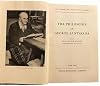
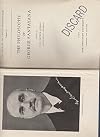
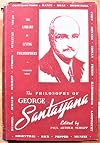
The Philosophy of George Santayana
by Paul Arthur Schilpp, George Santayana
Library of Living Philosophers (2)
On This Page
Description
Part of a series of studies of contemporary philosophers, this volume focuses on George Santayana.Tags
Recommendations





















Members
- Recently Added By
Author Information

39+ Works 1,046 Members
Born in Germany, Schilpp, in 1926, became a naturalized citizen of the United States, where he was educated. He received his M.A. from Northwestern University, his B.D. from Garrett Theological Seminary, and his Ph.D. from Stanford University. After a few years as a Methodist minister, Schilpp served a brief term as a professor of psychology and show more religious education at the College of Puget Sound. From that time, however, he taught in the position of professor of philosophy at various universities throughout the United States. From 1965 to 1980, he was Distinguished Research Professor in Philosophy at Southern Illinois University at Carbondale. Over the course of his career, Schilpp has published books on a diversity of topics, including issues in higher education, theology, and the relation of religion to science. Although he would like to be remembered as a teacher, his most influential academic contribution has been his Library of Living Philosophers series, which now contains more than 20 volumes. Although the two most recent volumes in this series, one on Charles Hartshorne and the other on Sir Alfred Ayer, were edited by Lewis E. Hahn, Schilpp put together nearly all of the earlier volumes without collaborative help. The Library of Living Philosophers series was inspired by Schilpp's realization that many past philosophers have been deeply misunderstood. In the hope of fostering a better grasp of the thought of those prominent philosophers still living, he planned each volume to include both expository and critical essays written by scholarly academics about the work of some specific, active philosopher. Then he asked the philosopher under discussion to formulate a written reply to these interpretations and critiques. Whenever possible, Schilpp also included an intellectual autobiography of the philosopher in question. Finally, Schilpp prepared a relevant bibliography for each volume. It may be debated, of course, whether Schilpp's strategy could ever provide an effective antidote to the perennial penchant for misunderstanding among practicing philosophers. Nevertheless, there can be little doubt that the structured format of his Library of Living Philosophers series has been a fruitful one. Schilpp's persuasive insistence that important philosophers interact within an environment of carefully developed written exchanges has produced permanent collections of valuable, and frequently innovative, philosophical reflection. (Bowker Author Biography) show less

123+ Works 3,723 Members
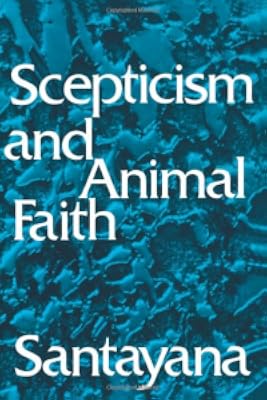
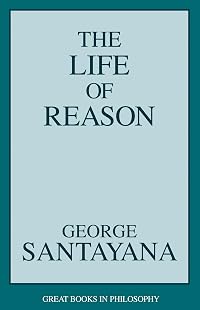
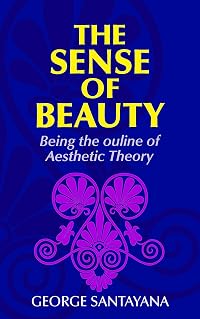
A gentle philosopher-poet, born and reared in Spain, educated at Harvard University and later professor of philosophy there, George Santayana resided in England, France, and Italy after 1914. At the beginning of World War II, he entered the nursing home in Rome managed by nuns known as the Blue Sisters and remained there until his death. His last show more book, The Poet's Testament (1953), contains a few unpublished lyrics, several translations, and two plays in blank verse. The title comes from the poem read at his funeral, which begins: "I give back to the earth what the earth gave/All to the furrow, nothing to the grave." Santayana wrote philosophy in an inimitable prose, enriched with imagery and metaphor. His meanings were always complex and often ironic. In this style, so untypical of the professionalized philosophy common in the English-speaking world during his lifetime, Santayana nevertheless articulated an epistemological critical realism and an ontology of essence and matter that drew the attention and admiration of philosophers and scholars. His first published philosophical book, The Sense of Beauty (1896), was an important contribution in aesthetics, a classic text that is still in use. His multivolume work The Life of Reason expresses his naturalistic philosophy of history and culture. It states the essence of his attitude toward nature, life, and society. Scepticism and Animal Faith (1923) presents his theory of knowledge and also serves as an introduction to his system of philosophy, Realms of Being (1927--40). The titles of the separate volumes of this remarkable work, now out of print, reveal the lineaments of his system: Realm of Essence (1927), Realm of Matter (1930), Realm of Truth (1937), and Realm of Spirit (1940). His ideas were "popularized" in his only novel, The Last Puritan, which became a surprise bestseller overnight. According to the New York Times, "He came into a changing American scene with a whole group of concepts that enormously enriched our thinking. He gave a moving vitality to what had often been obscure abstractions . . . he made the whole relationship of reason and beauty, each to the other, come alive and stay alive." Although Santayana's Complete Poems (1975) is out of print, several volumes of his poetry are available and are listed below. Publication of The Complete Works of George Santayana, under the general editorship of Herman J. Saatkamp, Jr., is in progress. Conforming to the guidelines of a critical edition, The Complete Works is a long-range multivolume project of which a few volumes have already appeared to critical acclaim. (Bowker Author Biography) show less
Series

Common Knowledge
- People/Characters
- George Santayana
Classifications
- Genres
- Philosophy, Nonfiction, Biography & Memoir, History
- DDC/MDS
- 191.9 — Philosophy & psychology Modern western philosophy Philosophy of United States and Canada Other American philosophical writers
- LCC
- B945 .S24 .S35 — Philosophy, Psychology and Religion Philosophy (General) By period Modern By region or country
- BISAC
Statistics
- Members
- 38
- Popularity
- 765,200
- Languages
- English
- Media
- Paper
- ISBNs
- 3
- ASINs
- 6