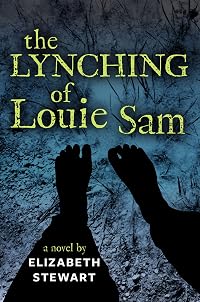
The Lynching of Louie Sam
by Elizabeth Stewart
On This Page
Description
Young Adult Fiction. Young Adult Literature. Between 1882 and 1968 there were 4,742 lynchings in the United States. In Canada during the same period there was one—the hanging of American Indian Louie Sam. The year is 1884, and 15-year-old George Gillies lives in the Washington Territory, near the border with British Columbia. In this newly settled land, white immigrants have an uneasy relationship with the Native Indians. When George and his siblings discover the murdered body of a local show more white man, suspicion immediately falls on a young Indian named Louie Sam. George and his best friend, Pete, follow a lynch mob north into Canada, where the terrified boy is seized and hung. But even before the deed is done, George begins to have doubts. Louie Sam was a boy, only 14—could he really be a vicious murderer? Were the mob leaders motivated by justice, or were they hiding their own guilt? As George uncovers the truth—implicating Pete's father and other prominent locals—tensions in the town rise, and he must face his own part in the tragedy. But standing up for justice has devastating consequences for George and his family. Inspired by the true story of the lynching, recently acknowledged as a historical injustice by Washington State, this powerful novel offers a stark depiction of historical racism and the harshness of settler life. The story will provoke readers to reflect on the dangers of mob mentality and the importance of speaking up for what's right. show lessTags
Recommendations











Member Reviews
"According to the Tuskegee Institute of Alabama, between 1882 and 1968, there were 4,742 lynchings in the United States. In Canada during the same period, there was one - the lynching of Louie Sam."
The Lynching of Louis Sam, although fiction, is based on a true story. Most of the facts in this book are taken from the records and from the documentary of the same name. They are as follows:
In 1884, near Nooksack, in the Washington Territory, a storekeeper named James Bell was murdered and his homestead set on fire. A witness claimed to have seen Louis Sam, a young Sto:lo boy of approximately 14 years near the scene and 'there was murder in his eyes'. Sam lived in British Columbia which was only a few kilometers away. The Canadian show more authorities were notified and Sam was taken into custody. However, they insisted that, before they would extradite Sam, he would be tried in Canada. Instead, a group of men from Nooksack disguised themselves, some in women's clothes, crossed the border and took Sam from where he was being held. Just a few metres from the border but on the Canadian side, Sam was lynched. The Sto:lo tribe threatened revenge and the Canadian government, fearing a border war, demanded the arrest of the mob leaders and even sent agents undercover to to try to find the guilty parties. Eventually, though, no one was ever charged with the lynching. Although the truth of Bell's murder has never been fully discovered, there is a great deal of evidence that Louie Sam was innocent but, due to the racism of the time and the fact that his father was in prison for killing cattle and was suspected of the murder of a settler, he made an easy scapegoat.
Author, Elizabeth Stewart stays very close to the facts. Although she makes it clear she believes Sam was innocent, she deliberately avoids trying to recreate Sam's thoughts or those of the Sto:lo tribe. Instead, the narrator of the story is George Gillies, the 14-year-old son of Scottish immigrants, and one of the children who first spotted the fire at the Bell house. When the lynch mob is being formed, George wants to go but his father, a member of the 'vigilance committee' tells him to stay home. Instead, George and a friend follow the mob and he is present at the lynching. He is surprised by the fact that Sam is just a boy. He also notices other things which make him think Sam is innocent.
He tries to convince others of this and, although his father agrees with him, it becomes very clear that no one else does or, at least, is willing to do anything. Many, in fact, have their own suspicions of who murdered Bell and why but see no purpose served by saying anything. After all, Sam was just an Indian and, anyway, the citizens of Nooksack are seeking statehood and revealing their role in the lynching could jeopardize this.
Although a work of fiction, by staying close to the facts, Stewart has a written a compelling tale of the dark side of both Canadian and American history. Too often, fictional accounts of the 'old west' show it as a period of unbridled freedom, a sort of surreal Star Warsesque time where men were men and the white hats always won. The Lynching of Louie Sam is aimed at a YA audience but, for anyone interested in the truth about frontier life, especially the idea of 'frontier justice', this novel gives an unflinching account of Lynch's Law. show less
The Lynching of Louis Sam, although fiction, is based on a true story. Most of the facts in this book are taken from the records and from the documentary of the same name. They are as follows:
In 1884, near Nooksack, in the Washington Territory, a storekeeper named James Bell was murdered and his homestead set on fire. A witness claimed to have seen Louis Sam, a young Sto:lo boy of approximately 14 years near the scene and 'there was murder in his eyes'. Sam lived in British Columbia which was only a few kilometers away. The Canadian show more authorities were notified and Sam was taken into custody. However, they insisted that, before they would extradite Sam, he would be tried in Canada. Instead, a group of men from Nooksack disguised themselves, some in women's clothes, crossed the border and took Sam from where he was being held. Just a few metres from the border but on the Canadian side, Sam was lynched. The Sto:lo tribe threatened revenge and the Canadian government, fearing a border war, demanded the arrest of the mob leaders and even sent agents undercover to to try to find the guilty parties. Eventually, though, no one was ever charged with the lynching. Although the truth of Bell's murder has never been fully discovered, there is a great deal of evidence that Louie Sam was innocent but, due to the racism of the time and the fact that his father was in prison for killing cattle and was suspected of the murder of a settler, he made an easy scapegoat.
Author, Elizabeth Stewart stays very close to the facts. Although she makes it clear she believes Sam was innocent, she deliberately avoids trying to recreate Sam's thoughts or those of the Sto:lo tribe. Instead, the narrator of the story is George Gillies, the 14-year-old son of Scottish immigrants, and one of the children who first spotted the fire at the Bell house. When the lynch mob is being formed, George wants to go but his father, a member of the 'vigilance committee' tells him to stay home. Instead, George and a friend follow the mob and he is present at the lynching. He is surprised by the fact that Sam is just a boy. He also notices other things which make him think Sam is innocent.
He tries to convince others of this and, although his father agrees with him, it becomes very clear that no one else does or, at least, is willing to do anything. Many, in fact, have their own suspicions of who murdered Bell and why but see no purpose served by saying anything. After all, Sam was just an Indian and, anyway, the citizens of Nooksack are seeking statehood and revealing their role in the lynching could jeopardize this.
Although a work of fiction, by staying close to the facts, Stewart has a written a compelling tale of the dark side of both Canadian and American history. Too often, fictional accounts of the 'old west' show it as a period of unbridled freedom, a sort of surreal Star Warsesque time where men were men and the white hats always won. The Lynching of Louie Sam is aimed at a YA audience but, for anyone interested in the truth about frontier life, especially the idea of 'frontier justice', this novel gives an unflinching account of Lynch's Law. show less
This book deserves a five on the VOYA scale for quality. It is superbly written in a first person narrative that captivated my attention and put me in the shoes of the protagonist, George Gillies. George's perspectives of life in late 1800s Washington Territory is illuminating, sometimes repulsive but in a necessary way. Stewarts' ability to capture the intolerance and secret corruption of white settlers to the West Coast was vividly expressed through the eyes of her protagonist. I found myself sighing with relief as George made breakthroughs in his understanding of humanity and morality towards ALL human beings. Stewarts' retelling of this true incident also inspired me by reminding me that although our society has come a long way show more towards enforcing liberty and justice for all, we still have a long ways to go. I think this novel will inspire most teens similarly, and give them an engaging lens through which to evaluate the institutionalized racism that lingers in this country today. I therefor assigned the novel a VOYA popularity rating of four. show less
5Q, 4P
The injustice and attitudes reflected in this book was startling, disturbing, and well done. I believe Stewart does a thorough job in bringing to life the casual arrogance and racism of the frontiersmen, and their warped sense of moral justice. The fact that the main protagonist, George Gillies does not question whether the accused murderer Louie Sam is innocent reveals much about the attitudes of the time and how skin color reflects guilt regardless of evidence, facts, or reason. The pacing of this book is face with easy to follow prose and thought provoking imagery. Although this book focuses only on the perspective of white frontiersmen and gives no outside perspective, Stewart still manages to cause the readers to question his show more or her own race based assumptions and the damages that such assumptions can cause. show less
The injustice and attitudes reflected in this book was startling, disturbing, and well done. I believe Stewart does a thorough job in bringing to life the casual arrogance and racism of the frontiersmen, and their warped sense of moral justice. The fact that the main protagonist, George Gillies does not question whether the accused murderer Louie Sam is innocent reveals much about the attitudes of the time and how skin color reflects guilt regardless of evidence, facts, or reason. The pacing of this book is face with easy to follow prose and thought provoking imagery. Although this book focuses only on the perspective of white frontiersmen and gives no outside perspective, Stewart still manages to cause the readers to question his show more or her own race based assumptions and the damages that such assumptions can cause. show less
One of the most intriguing aspects of this novel is the overwhelming sense of horror one has about the racism and injustice that has occurred. As a true story that attempts to stay as close to the facts as possible the author has chose to include derogatory remarks as they represent the true attitudes of American settlers of the era, but as a member of contemporary society this is absolutely shocking.
At one point in the novel near the beginning there is a quote that states "All he needed to do was follow the pack" (Stewart Location 708). While this quote was about a packhorse I couldn't help but apply this sentiment to the rest of the novel. I craved justice and felt the need to demand it much the same way the villagers did within the show more novel, but when the villagers got their justice i was overwhelmed by my own sense of injustice.
Prejudice and racism is a constant fixture in society whether we acknowledge it or not, but in this work Stewart forces us to experience racism on a level unimagined. Faced with a chronic system of injustice the reader comes to see that this aspect of our current society as one is made aware of similar current issues. show less
At one point in the novel near the beginning there is a quote that states "All he needed to do was follow the pack" (Stewart Location 708). While this quote was about a packhorse I couldn't help but apply this sentiment to the rest of the novel. I craved justice and felt the need to demand it much the same way the villagers did within the show more novel, but when the villagers got their justice i was overwhelmed by my own sense of injustice.
Prejudice and racism is a constant fixture in society whether we acknowledge it or not, but in this work Stewart forces us to experience racism on a level unimagined. Faced with a chronic system of injustice the reader comes to see that this aspect of our current society as one is made aware of similar current issues. show less
Great story, based on a true event, set in WA state before statehood. Told from the point of few of the oldest boy of six children in a hardworking mill owner's family. When a neighbor is murdered many of the townsmen cast blame on a local Indian boy who was seen near his cabin. The posse finds and lynches him. George Gillies has doubts about the justice of this act and, the more he learns, feels the need to set things right. His voice rang true and described the difficulty of making unpopular decisions that will affect your neighbors in a close knit society.
5Q, 4P
The power of this books lays in how the author tried to stay true to historical facts about the horrible things that occurred surrounding racism and scapegoating. We all like to think we would do the right thing and stand up for other people but history is littered with occasions were voices have not been raised and Elizabeth Stewart does a great job of touching on this.
The power of this books lays in how the author tried to stay true to historical facts about the horrible things that occurred surrounding racism and scapegoating. We all like to think we would do the right thing and stand up for other people but history is littered with occasions were voices have not been raised and Elizabeth Stewart does a great job of touching on this.
An interesting look into the small town mentality and racism present in old historical settlements in Washington, and a creative retelling of possible motivations and personalities behind a real historical event. I enjoyed it, but I did not love it. I found myself wishing that it were not based on real events so that it could have a more unrealistic but satisfying ending.
Members
- Recently Added By
Lists

CBC's 100 Young Adult Books
100 works; 4 members
Author Information
10 Works 175 Members
Awards and Honors
Awards
Common Knowledge
- Original publication date
- 2012
- People/Characters
- Louie Sam; George Gillies; Pete Harkness; James Bell; William Osterman; William Moultray (show all 8); Robert Breckenbridge; Bert Hopkins
- Dedication
- For Louie Sam
- First words
- My name is George Gillies. My parents are Scottish by birth and I was born in England, but since we immigrated, we're all Americans now.
- Last words
- (Click to show. Warning: May contain spoilers.)And I'd tell him that I pray for him to God, and to all the spirits of this valley.
Classifications
Statistics
- Members
- 53
- Popularity
- 574,402
- Reviews
- 11
- Rating
- (4.06)
- Languages
- English
- Media
- Paper, Ebook
- ISBNs
- 7
- ASINs
- 1