
Jim Fergus
Author of One Thousand White Women: The Journals of May Dodd
About the Author
Jim Fergus is an author born in 1950 in the U.S. He earned a degree in English from Colorado College. He works as a tennis teacher and freelance writer. He won the 1999 Fiction of the Year Award from the Mountains and Plains Booksellers Association for his first novel, One Thousand White Women: The show more Journals of May Dodd. His other titles include: The Sporting Road: Travels Across America in an Airstream Trailer- With Fly Rod, Shotgun, and a Yellow Lab Named Sweetzer, The Wild Girl, and The Vengeance of Mothers. (Bowker Author Biography) show less
Series
Works by Jim Fergus
Associated Works
Tagged
Common Knowledge
- Birthdate
- 1950-03-23
- Gender
- male
- Education
- Colorado College (1971 | English)
- Occupations
- tennis instructor
contributing editor (Rocky Mountain Magazine)
journalist - Nationality
- USA
- Birthplace
- Chicago, Illinois, USA
- Places of residence
- Chicago, Illinois, USA (birth)
Massachusetts, USA
Colorado, USA
Florida, USA
French West Indies
Idaho, USA (show all 9)
France
Arizona, USA
Rand, Colorado, USA - Associated Place (for map)
- USA
Members
Reviews

Suppose the U.S. government under President Grant, in order to promote peace with the Indians, traded a thousand white women, all volunteers, to the Cheyenne for a thousand horses. This never happened, but in his 1998 novel “One Thousand White Women” Jim Fergus makes you believe that it could have happened.
The novel takes the form of a journal kept by one of these volunteers, an attractive young woman named May Todd. May comes from a prominent Chicago family, but she makes the mistake of show more falling in love with the wrong man and having two children. Embarrassed, her family sends her to an insane asylum, where she expects to spend the rest of her life. Volunteering to become an Indian bride offers her a means of escape. Other women have their own reasons for volunteering. Their numbers never come close to reaching a thousand, and so the deal is probably doomed from the start.
In a western fort just before she and the other women are turned over to the tribe, May falls in love with the fort's commander, a man already engaged to marry someone else. Their affair is brief, but it colors the rest of the novel.
May is chosen by Little Wolf, the tribe's chief, and she comes to love him, too. Like most of the other white women, she soon finds herself pregnant. Will the many halfbreed children help bring peace between the whites and the Indians? Fat chance, it turns out, especially when gold is discovered in the Black Hills and all the land promised to the Indians forever gets reclaimed by the U.S. government. May's former lover in blue is among those under orders to rid the area of hostile Indians. That term now includes May herself.
This makes riveting reading, and it's easy to see why after more than two decades the novel continues to draw readers. show less
The novel takes the form of a journal kept by one of these volunteers, an attractive young woman named May Todd. May comes from a prominent Chicago family, but she makes the mistake of show more falling in love with the wrong man and having two children. Embarrassed, her family sends her to an insane asylum, where she expects to spend the rest of her life. Volunteering to become an Indian bride offers her a means of escape. Other women have their own reasons for volunteering. Their numbers never come close to reaching a thousand, and so the deal is probably doomed from the start.
In a western fort just before she and the other women are turned over to the tribe, May falls in love with the fort's commander, a man already engaged to marry someone else. Their affair is brief, but it colors the rest of the novel.
May is chosen by Little Wolf, the tribe's chief, and she comes to love him, too. Like most of the other white women, she soon finds herself pregnant. Will the many halfbreed children help bring peace between the whites and the Indians? Fat chance, it turns out, especially when gold is discovered in the Black Hills and all the land promised to the Indians forever gets reclaimed by the U.S. government. May's former lover in blue is among those under orders to rid the area of hostile Indians. That term now includes May herself.
This makes riveting reading, and it's easy to see why after more than two decades the novel continues to draw readers. show less
Strongheart: The Lost Journals of May Dodd and Molly McGill (One Thousand White Women Series, 3) by Jim Fergus
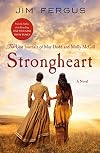
Strongheart is the final chapter of the western trilogy that Jim Fergus began in 1998 with One Thousand White Women. In that first novel, President Grant and Cheyenne Nation chief Little Wolf agreed on an exchange of one thousand white women for one thousand of the tribe’s best horses. But don’t be mislead by that one-horse-for-one-woman trade because the entire trilogy is a strong pro-feminism statement about the power of women to adapt to new challenges while at the same time show more influencing the dominant culture in positive ways.
All three books are based upon diaries and journals kept by some of the most influential women who joined the tribe: May Dodd, who was released from a Chicago mental institution so that she could be part of the initial trade; Irish twins Meggie and Susie Kelly; and Mollie McGill, whose words are so large a part of Strongheart. As a result, the reader experiences life with the Cherokee through the eyes of some of the strongest women imaginable exactly as they experienced it on a daily basis.
Contemporary characters in Strongheart include Molly Standing Bear, descendent of one of the diarists, and JW Dodd, son of the man who first published a portion of the diaries in a Chicago magazine called Chitown when JW was just a boy. Molly and JW shared a mutual crush as pre-teens, and because of that, Molly has decided now to share more of the historical diaries that have come into her possession so that JW, as the magazine’s current editor, can publish them as his father did before him.
Strongheart picks up the story shortly after the Battle of the Little Bighorn, a battle that would prove to be the short-lived immediate victory that would ultimately doom forever the way of life the tribes so precariously held on to. By this point in the story, the women have successfully married into the tribe and have children of their own. Sadly, however, many of the mothers and their children have been killed even before the Little Bighorn fight by surprise attacks on their villages by American soldiers. Now, the tribes have broken into smaller groups all in search of a place to safely make it through the coming winter.
Despite the odds against them, a group of white warrior women and the Cherokee women who trained them, is determined to take up the fight for survival alongside their men. Others in the tribe make a different decision for themselves and their children. This is their story.
Bottom Line: The One Thousand White Women trilogy is about a group of courageous women who learn that they are more equal in the world created by “savages” than they ever will be in the “civilized” world from which they came - and some of them are not ready to give up that life even if they have to die to keep it. The story is rightly sympathetic to the plight of the women and their new families, but it shares that sympathy, too, with the often-bewildered boy soldiers who oppose them. Note, also, that there is much here that those interested in the sociology of America’s indigenous people during this tragic era are certain to appreciate.
Review Copy provided by Publisher show less
All three books are based upon diaries and journals kept by some of the most influential women who joined the tribe: May Dodd, who was released from a Chicago mental institution so that she could be part of the initial trade; Irish twins Meggie and Susie Kelly; and Mollie McGill, whose words are so large a part of Strongheart. As a result, the reader experiences life with the Cherokee through the eyes of some of the strongest women imaginable exactly as they experienced it on a daily basis.
Contemporary characters in Strongheart include Molly Standing Bear, descendent of one of the diarists, and JW Dodd, son of the man who first published a portion of the diaries in a Chicago magazine called Chitown when JW was just a boy. Molly and JW shared a mutual crush as pre-teens, and because of that, Molly has decided now to share more of the historical diaries that have come into her possession so that JW, as the magazine’s current editor, can publish them as his father did before him.
Strongheart picks up the story shortly after the Battle of the Little Bighorn, a battle that would prove to be the short-lived immediate victory that would ultimately doom forever the way of life the tribes so precariously held on to. By this point in the story, the women have successfully married into the tribe and have children of their own. Sadly, however, many of the mothers and their children have been killed even before the Little Bighorn fight by surprise attacks on their villages by American soldiers. Now, the tribes have broken into smaller groups all in search of a place to safely make it through the coming winter.
Despite the odds against them, a group of white warrior women and the Cherokee women who trained them, is determined to take up the fight for survival alongside their men. Others in the tribe make a different decision for themselves and their children. This is their story.
Bottom Line: The One Thousand White Women trilogy is about a group of courageous women who learn that they are more equal in the world created by “savages” than they ever will be in the “civilized” world from which they came - and some of them are not ready to give up that life even if they have to die to keep it. The story is rightly sympathetic to the plight of the women and their new families, but it shares that sympathy, too, with the often-bewildered boy soldiers who oppose them. Note, also, that there is much here that those interested in the sociology of America’s indigenous people during this tragic era are certain to appreciate.
Review Copy provided by Publisher show less
One Thousand White Women: The Journals of May Dodd (One Thousand White Women Series Book 1) by Jim Fergus
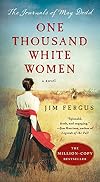
Blown away!
A reader friend recommended the book knowing I enjoy reading historical fiction. I downloaded the title without even reading the blurb. From the first pages of the "Introduction" written by J. Will Dodd, great-grandson of May Dodd and onward to the "Prologue" I was transported back in time to the mid-1870's. Due to a presentation gap of American history in my own education experience I have received no formal education/training of the time period between the end of the Civil War show more and personal awareness of American history that began on November 22, 2963, identifying that I have only a minuscule knowledge of the creation of American Indian reservations. Reading this book opened a window to the past and as with all historical fiction illuminates humanity or the lack thereof not merely the events listed in a nonfiction book.
With unparalleled creativity Jim Fergus presents a tale in journal format of the treatment by the government of indigenous people focusing on a Cheyenne tribe. I was riveted and immersed in the storyline that evoked a roller coaster of emotions that was at different twists haunting, blunt, heartbreaking, sensitive, scary, intriguing, humorous, and tear-jerking.
Blown away all over again in absolute shock at the reveal in the "Author's Note." Even recognizing the author’s disclosure the book brings to light pivotal history of the American West that some would prefer to stay in the past and for some eliminate as though it is not true. show less
A reader friend recommended the book knowing I enjoy reading historical fiction. I downloaded the title without even reading the blurb. From the first pages of the "Introduction" written by J. Will Dodd, great-grandson of May Dodd and onward to the "Prologue" I was transported back in time to the mid-1870's. Due to a presentation gap of American history in my own education experience I have received no formal education/training of the time period between the end of the Civil War show more and personal awareness of American history that began on November 22, 2963, identifying that I have only a minuscule knowledge of the creation of American Indian reservations. Reading this book opened a window to the past and as with all historical fiction illuminates humanity or the lack thereof not merely the events listed in a nonfiction book.
With unparalleled creativity Jim Fergus presents a tale in journal format of the treatment by the government of indigenous people focusing on a Cheyenne tribe. I was riveted and immersed in the storyline that evoked a roller coaster of emotions that was at different twists haunting, blunt, heartbreaking, sensitive, scary, intriguing, humorous, and tear-jerking.
Blown away all over again in absolute shock at the reveal in the "Author's Note." Even recognizing the author’s disclosure the book brings to light pivotal history of the American West that some would prefer to stay in the past and for some eliminate as though it is not true. show less
One Thousand White Women: The Journals of May Dodd (One Thousand White Women Series Book 1) by Jim Fergus
Jim Fergus's 1998 novel, One Thousand White Women, has much to recommend it.
An even-handed treatment of the Northern Cheyenne, whose culture, leadership, and peoples are consistently admirable and follow a code of conduct that makes sense to them. A strong lead female character, who isn't afraid to challenge the conventions of her age, but who is, in fact, influenced by her upbringing and belief systems and who never stops describing the Cheyenne as savages. And the sickening deviousness of show more the US government which promises one thing only to ignore its promises when they aren't convenient.
Yes, this is a novel; but its message about the greed of the invading white settlers and their lust for the Cheyenne's land (given to them forever) trumps all agreements, which, it may be observed, still is the modus operandi of the United States government and other governments when they deal with indigenous peoples. show less
An even-handed treatment of the Northern Cheyenne, whose culture, leadership, and peoples are consistently admirable and follow a code of conduct that makes sense to them. A strong lead female character, who isn't afraid to challenge the conventions of her age, but who is, in fact, influenced by her upbringing and belief systems and who never stops describing the Cheyenne as savages. And the sickening deviousness of show more the US government which promises one thing only to ignore its promises when they aren't convenient.
Yes, this is a novel; but its message about the greed of the invading white settlers and their lust for the Cheyenne's land (given to them forever) trumps all agreements, which, it may be observed, still is the modus operandi of the United States government and other governments when they deal with indigenous peoples. show less
Lists
Awards


You May Also Like


Associated Authors
Statistics
- Works
- 11
- Also by
- 2
- Members
- 5,429
- Popularity
- #4,586
- Rating
- 3.7
- Reviews
- 244
- ISBNs
- 108
- Languages
- 3
- Favorited
- 4