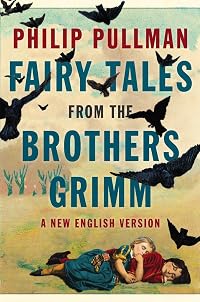
Fairy Tales from the Brothers Grimm: A New English Version
by Philip Pullman (Retelling)
On This Page
Description
Two centuries ago, Jacob and Wilhelm Grimm published the first volume of Children's and Household Tales. Now Philip Pullman, one of the most accomplished authors of our time, makes us fall in love all over again with the immortal tales of the Brothers Grimm.Tags
Recommendations

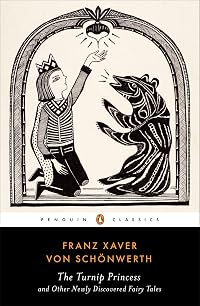
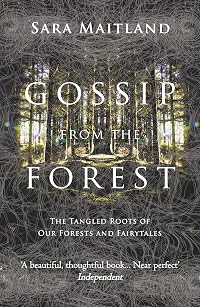
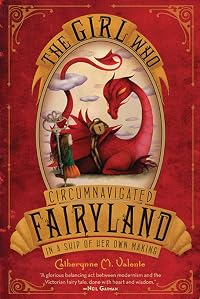
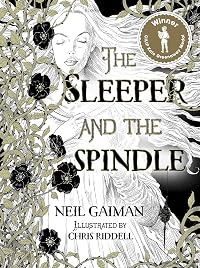









Member Recommendations
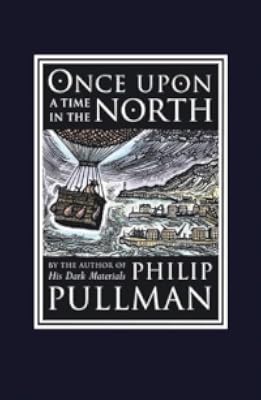
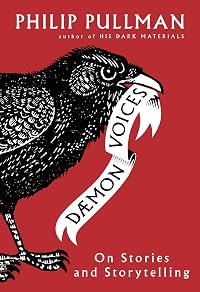
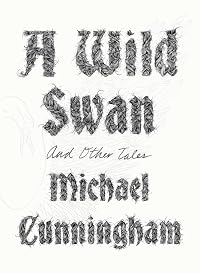
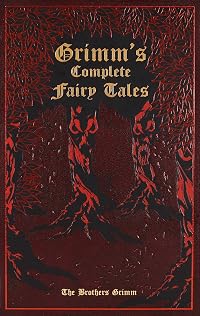
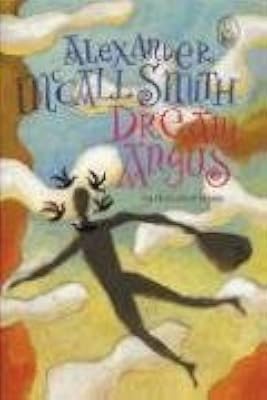
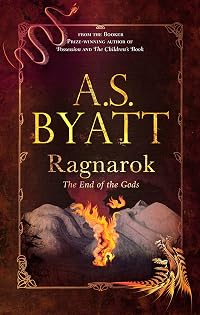
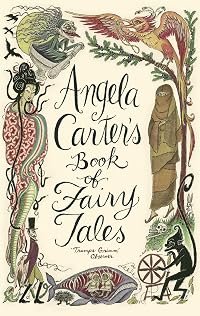
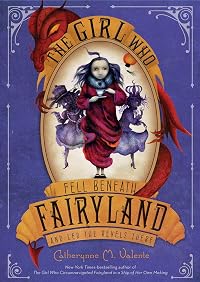
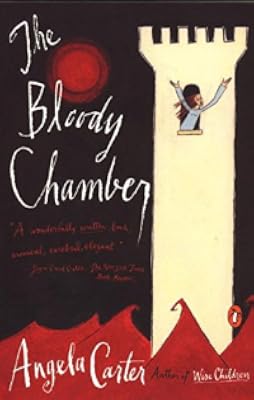
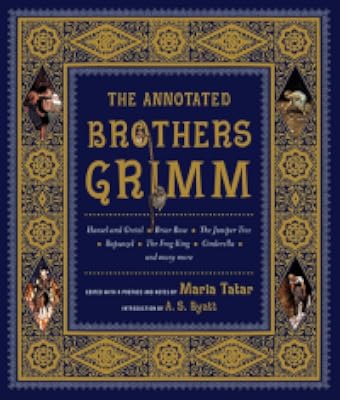
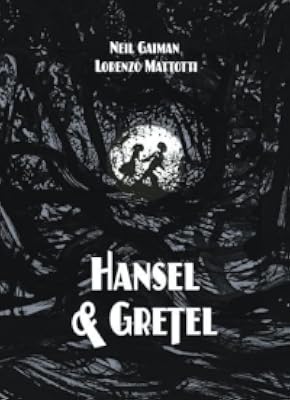
sturlington Two beautiful editions complement one another.
20
Member Reviews
Grimm Tales for Young and Old presents a collection of tales by the Brothers Grimm, creatively reimagined by Philip Pullman, author of His Dark Materials. Unlike the familiar bedtime stories of our childhood, Pullman takes us back to the darker roots of these tales. This collection is not intended for bedtime reading with children.
The book begins with an insightful introduction discussing the nature and origin of fairy tales, and each story is followed by a brief explanatory summary. Pullman’s easy writing style lends a refreshing twist to these timeless stories captivating the reader with their unique charm and ensuring accessibility for a modern audience.
These stories, however, mirror the values of their time, portraying women show more fixated on bearing children, cruel stepmothers, and men constantly falling in in love at first sight with beautiful women who are gifted to them by their fathers; hell, in Snow White, the woman doesn’t even need to be breathing for the prince to fall in love with her beauty!
Contrary to the title's implication of tales for the young, these narratives are not suitable for children. Pullman reminds us that the original tales served as cautionary fireside stories, exploring the darker aspects of the human soul, and providing warnings about the perils of the world. For this reason, the tales in this collection are better suited for mature readers, and I urge you to take note of the trigger warnings before embarking on your journey into the depths of these pages. show less
The book begins with an insightful introduction discussing the nature and origin of fairy tales, and each story is followed by a brief explanatory summary. Pullman’s easy writing style lends a refreshing twist to these timeless stories captivating the reader with their unique charm and ensuring accessibility for a modern audience.
These stories, however, mirror the values of their time, portraying women show more fixated on bearing children, cruel stepmothers, and men constantly falling in in love at first sight with beautiful women who are gifted to them by their fathers; hell, in Snow White, the woman doesn’t even need to be breathing for the prince to fall in love with her beauty!
Contrary to the title's implication of tales for the young, these narratives are not suitable for children. Pullman reminds us that the original tales served as cautionary fireside stories, exploring the darker aspects of the human soul, and providing warnings about the perils of the world. For this reason, the tales in this collection are better suited for mature readers, and I urge you to take note of the trigger warnings before embarking on your journey into the depths of these pages. show less
I have always loved fairy tales. Even before I could read, they caught my imagination in a way that other stories didn’t and, even as a child, I preferred the pre-Disney stories, the ones in which evil stepsisters were danced to death or locked cupboard contained Bluebeard’s murdered wives. As I grew older, I read them less but they never were far from my heart as I developed the same love for fantasy. And that, of course, led me to Philip Pullman’s Dark Materials. And now with this, his Fairy Tales from the Brothers Grimm, I am brought full-circle back to my first love.
Pullman has adapted fifty of these tales, some familiar like Cinderella and Rapunzel but others like The Boy Who Left Home to Find the Shivers and Hans-My-Hedgehog show more less so. Although he updates the language to make the tales more accessible to a modern audience and occasionally he adds his own touches to make the stories more cohesive, he never loses the original essence of the tales. Even with the more familiar stories like Cinderella, he takes it back to its origins. Instead of singing mice and fairy godmothers, there is a tree which grows from her mother’s grave.
At the end of each tale, he gives a bit of its history and the titles of other similar stories. But best of all, at least for me, he gives his own short critique of each tale. These critiques are sometimes funny, sometimes snarky but they are always smart and interesting. For anyone who loves fairy tales as much as I do, for the young and young at heart, this is a chance to discover or rediscover some of these wonderful tales. show less
Pullman has adapted fifty of these tales, some familiar like Cinderella and Rapunzel but others like The Boy Who Left Home to Find the Shivers and Hans-My-Hedgehog show more less so. Although he updates the language to make the tales more accessible to a modern audience and occasionally he adds his own touches to make the stories more cohesive, he never loses the original essence of the tales. Even with the more familiar stories like Cinderella, he takes it back to its origins. Instead of singing mice and fairy godmothers, there is a tree which grows from her mother’s grave.
At the end of each tale, he gives a bit of its history and the titles of other similar stories. But best of all, at least for me, he gives his own short critique of each tale. These critiques are sometimes funny, sometimes snarky but they are always smart and interesting. For anyone who loves fairy tales as much as I do, for the young and young at heart, this is a chance to discover or rediscover some of these wonderful tales. show less
Come for the fairy tales, stay for the waggish commentary.
When I first heard that Philip Pullman was to release a collection of Grimm’s fairy tales, I was super-excited. Not Book of Dust excited, but pretty stoked nonetheless. His Dark Materials is easily my favorite series of all time, and I’ll eagerly devour anything by or about Philip Pullman. Plus, fairy tales!
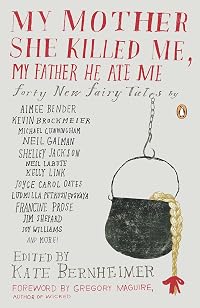
Alas, while I was hoping for a book of fairy tales from the Brothers Grimm as reimagined by Philip Pullman (e.g., along the lines of My Mother She Killed Me, My Father He Ate Me; the rampant sexism found in so many fairy tales is just screaming out for feminist retellings, don’t you think?), the resulting collection is mostly faithful to the originals. Pullman has show more tweaked the tales here and there – borrowing pieces from one version to improve upon another, for example, and occasionally correcting inconsistencies and mistakes, such as in “The Three Snake Leaves” (with three whacks, the prince cuts the snake into three pieces, rather than the four dictated by simple math) – but aside from some light housekeeping, the stories are highly reminiscent of those I enjoyed as a child.
Of course, I can’t fault Pullman for failing to live up to my misplaced expectations – and, for what it is, Fairy Tales from the Brothers Grimm: A New English Version is an engaging and nostalgic collection of classic Grimm fairy tales. While you’ll recognize many of the standards - Cinderella, Snow White, Sleeping Beauty, Rumplestiltskin, Rapunzel, Hansel and Gretal, and the especially lovely “The Juniper Tree” all make appearances – you may also discover a few new favorites.
I absolutely fell in love with one of the last entries, “The Moon,” a sort of fairy tale-cum-creation myth that tells how the moon came into being. First belonging to a town, then purchased by four brothers who each insisted that their share be buried with them upon death, St. Peter finally retrieved it from the underworld and hung it in the sky where it could shine over all the world’s creatures. Every day, he removes a piece of it to remind humans of their folly, finally restoring it at the end of each month. Hello lunar cycle!
Each of the fifty tales is followed by information about the tale type and source, as well as a paragraph or two – or, if we’re especially lucky, an entire page – of commentary about the preceding fairy tale. Fans of Pullman will love this last bit, as it’s here where his personality and humor shine through. Take, for example, this notation on “The Girl with No Hands”:
“However, the tale itself is disgusting. The most repellent aspect is the cowardice of the miller, which goes quite unpunished. The tone of never-shaken piety is nauseating, and the restoration of the poor woman’s hands is simply preposterous.
“‘But aren’t fairy tales supposed to be full of preposterous things?’
“No. The resurrection of the little boy in ‘The Juniper Tree’, for example, feels truthful and right. This feels merely silly: instead of being struck with wonder, here we laugh. It’s ridiculous. This tale and others like it must have spoken so deeply to many audiences, though, for it to spread so widely, or perhaps a great many people like stories of maiming, cruelty and sentimental piety.”
Ouch!
Whether you’re a fan of fairy tales or just plain love Philip Pullman, most likely you’ll find something to savor in this collection.
http://www.easyvegan.info/2013/02/07/fairy-tales-from-the-brothers-grimm-a-new-e... show less
When I first heard that Philip Pullman was to release a collection of Grimm’s fairy tales, I was super-excited. Not Book of Dust excited, but pretty stoked nonetheless. His Dark Materials is easily my favorite series of all time, and I’ll eagerly devour anything by or about Philip Pullman. Plus, fairy tales!
Alas, while I was hoping for a book of fairy tales from the Brothers Grimm as reimagined by Philip Pullman (e.g., along the lines of My Mother She Killed Me, My Father He Ate Me; the rampant sexism found in so many fairy tales is just screaming out for feminist retellings, don’t you think?), the resulting collection is mostly faithful to the originals. Pullman has show more tweaked the tales here and there – borrowing pieces from one version to improve upon another, for example, and occasionally correcting inconsistencies and mistakes, such as in “The Three Snake Leaves” (with three whacks, the prince cuts the snake into three pieces, rather than the four dictated by simple math) – but aside from some light housekeeping, the stories are highly reminiscent of those I enjoyed as a child.
Of course, I can’t fault Pullman for failing to live up to my misplaced expectations – and, for what it is, Fairy Tales from the Brothers Grimm: A New English Version is an engaging and nostalgic collection of classic Grimm fairy tales. While you’ll recognize many of the standards - Cinderella, Snow White, Sleeping Beauty, Rumplestiltskin, Rapunzel, Hansel and Gretal, and the especially lovely “The Juniper Tree” all make appearances – you may also discover a few new favorites.
I absolutely fell in love with one of the last entries, “The Moon,” a sort of fairy tale-cum-creation myth that tells how the moon came into being. First belonging to a town, then purchased by four brothers who each insisted that their share be buried with them upon death, St. Peter finally retrieved it from the underworld and hung it in the sky where it could shine over all the world’s creatures. Every day, he removes a piece of it to remind humans of their folly, finally restoring it at the end of each month. Hello lunar cycle!
Each of the fifty tales is followed by information about the tale type and source, as well as a paragraph or two – or, if we’re especially lucky, an entire page – of commentary about the preceding fairy tale. Fans of Pullman will love this last bit, as it’s here where his personality and humor shine through. Take, for example, this notation on “The Girl with No Hands”:
“However, the tale itself is disgusting. The most repellent aspect is the cowardice of the miller, which goes quite unpunished. The tone of never-shaken piety is nauseating, and the restoration of the poor woman’s hands is simply preposterous.
“‘But aren’t fairy tales supposed to be full of preposterous things?’
“No. The resurrection of the little boy in ‘The Juniper Tree’, for example, feels truthful and right. This feels merely silly: instead of being struck with wonder, here we laugh. It’s ridiculous. This tale and others like it must have spoken so deeply to many audiences, though, for it to spread so widely, or perhaps a great many people like stories of maiming, cruelty and sentimental piety.”
Ouch!
Whether you’re a fan of fairy tales or just plain love Philip Pullman, most likely you’ll find something to savor in this collection.
http://www.easyvegan.info/2013/02/07/fairy-tales-from-the-brothers-grimm-a-new-e... show less
REVIEW ALSO ON: http://bibliomantics.com/2012/11/23/best-combo-ever-cassie-la-is-enchanted-by-fa...
When I heard there was a new collection of fairy tales being rewritten by Philip Pullman I practically wet myself in excitement (I seem to do that a lot for the sake of these reviews). This collection combines two of my favorite things: classic fairy tales- particularly of the Grimm variety- and incredibly well-written fantasy, which is where Pullman comes in. If you have yet to do so, I highly recommend checking out the His Dark Materials series. It will amaze and break your heart simultaneously. Please don’t judge a book by its movie.
The collection opens with a lengthy introduction discussing the nature and tradition of oral stories show more (their prominence in the middle class) and how anyone could have ended up being the well known collector of fairy tales, the Grimms just happened to beat everyone else to the punch. Fun fact: the brothers also worked together on the first German dictionary and it was their interest in the nature of language that led them to collect the oral and written fairy tales in one place. I never thought I’d say this, but thanks linguistics!
There are 210 stories that the Grimm’s found and Pullman, “Set out to tell the best and most interesting of them.” He specifically states that the way in which he wrote the stories was the way he would tell them if he wanted to pass them down orally. No double entendre intended.
Furthermore, in this (did I mention it was lengthy?) opening, Pullman discusses the conventions of fairy tales. Characters have no ulterior motives, they’re explicitly bad or explicitly good, there is no “regret or doubt or desire”. Characters often don’t have their own names and are rather known by their profession: king, giant, shoemaker, kid who repeatedly drop golden balls into wells, etc. What happens to them is more important than who they are, and for that reason fairy tales rarely have any detail. It’s not the setting that matters, it’s the actions. This is why fairy tales are awesome. Minus the moralizing.
Within are some recognizable fairy tales: “The Frog King, or Iron Heinrich” (obviously the original version where the frog is thrown against a wall and transforms into a man), “Cinderella”, “Rapunzel”, “Hansel and Gretel”, “Little Red Riding Hood”, “Snow White”, “Rumpelstiltskin” and a whole bunch that are not as known to the majority of the population. For example, “Hans-my-Hedgehog”, “The Girl With No Hands”, “Thousandfurs” (a “Cinderella” variant with incest) and “Farmerkin” (an amazing trickster story) are not as well known in popular culture. Although they should be.
One story in particular, “The Boy Who Left Home to Find Out About the Shivers” is particularly intriguing. It stars a dimwitted boy who may or may not grow up to be a serial-killer who is non-plussed about everything and is unable to shiver when scared. As a result, he goes on an adventure to get the shivers. On his journey he hangs out with dead people, turns skulls into bowling bowls, wrestles corpses and is generally ridiculous. Favorite line: “Oh, that’s a pity. The ghosts have killed him. Such a handsome young man, too.”
“Faithful Johannes” is about the love and loyalty between a king and his servant. It also features bewitching portraits that are kept around for no reason, kidnapping, love based on royal power, nonsensical prophecies told by talking birds, boob poison, a double case of filicide and people who turn to stone. This is why I love fairy tales. They don’t have to make sense.
Finally of note (with the exception of “The Twelve Brothers” which is based on Juliet Marillier’s amazing Daughter of the Forrest) is “The Three Little Men”, a story that contains some shades of “Snow White” minus any huntsmen. In the story, a kind girl is sent into the woods by her stepmother to die when she stumbles across a cottage where three little men live. In exchange for being nice to them and helping with the housework, they gift her so that every time she talks a gold piece falls out of her mouth. This of course makes a prince fall madly in love with her (because that’s not distracting). Favorite quote (when the stepsister sees the gold pieces falling from her sister’s mouth): “Look at her showing off… I could do that if I wanted.”
While reading through these fairy tales, a lot of the same conventions kept popping up, particularly plots of revenge, child murder and the rule of three (not to mention evil stepmothers and stepsisters). While the rule of three- events and repetitions occurring three times for oral storytelling purposes- is a common convention in all fairy tales, it can get a little bit grating when encountered over and over again. CURSE YOU RULE OF THREE! ::shakes fist at the heavens::
Thankfully, the inhumane deaths more than make up for this. From characters who are put into barrels filled with snakes and boiling oil, girls left in the woods to be eaten, people who have their eyes pecked out, women forced to dance in hot iron shoes until they die and people being nailed into barrels and drowned in rivers (what’s with all the barrels?) there is no shortage of violent deaths in fairy tales. Damn middle class, you’re sick.
In addition to the stories themselves, Pullman ends each fairy tale with some helpful, occasionally humorous and always interesting commentary. He also has a tendency to launch into what could have made the tale better or possibly to just point out plot holes/other nonsensical additions, but his best moments are when he attacks the interpretations of fairy tales which he refers to as “sub-Jungian twaddle”. As Pullman explains, “What does that show? That the meaning preceded the story, which was composed to illustrate it like an allegory, or that the story fell accidentally into an interpretable shape? Obviously the latter.” Oh Mr. Pullman, I love you. show less
When I heard there was a new collection of fairy tales being rewritten by Philip Pullman I practically wet myself in excitement (I seem to do that a lot for the sake of these reviews). This collection combines two of my favorite things: classic fairy tales- particularly of the Grimm variety- and incredibly well-written fantasy, which is where Pullman comes in. If you have yet to do so, I highly recommend checking out the His Dark Materials series. It will amaze and break your heart simultaneously. Please don’t judge a book by its movie.
The collection opens with a lengthy introduction discussing the nature and tradition of oral stories show more (their prominence in the middle class) and how anyone could have ended up being the well known collector of fairy tales, the Grimms just happened to beat everyone else to the punch. Fun fact: the brothers also worked together on the first German dictionary and it was their interest in the nature of language that led them to collect the oral and written fairy tales in one place. I never thought I’d say this, but thanks linguistics!
There are 210 stories that the Grimm’s found and Pullman, “Set out to tell the best and most interesting of them.” He specifically states that the way in which he wrote the stories was the way he would tell them if he wanted to pass them down orally. No double entendre intended.
Furthermore, in this (did I mention it was lengthy?) opening, Pullman discusses the conventions of fairy tales. Characters have no ulterior motives, they’re explicitly bad or explicitly good, there is no “regret or doubt or desire”. Characters often don’t have their own names and are rather known by their profession: king, giant, shoemaker, kid who repeatedly drop golden balls into wells, etc. What happens to them is more important than who they are, and for that reason fairy tales rarely have any detail. It’s not the setting that matters, it’s the actions. This is why fairy tales are awesome. Minus the moralizing.
Within are some recognizable fairy tales: “The Frog King, or Iron Heinrich” (obviously the original version where the frog is thrown against a wall and transforms into a man), “Cinderella”, “Rapunzel”, “Hansel and Gretel”, “Little Red Riding Hood”, “Snow White”, “Rumpelstiltskin” and a whole bunch that are not as known to the majority of the population. For example, “Hans-my-Hedgehog”, “The Girl With No Hands”, “Thousandfurs” (a “Cinderella” variant with incest) and “Farmerkin” (an amazing trickster story) are not as well known in popular culture. Although they should be.
One story in particular, “The Boy Who Left Home to Find Out About the Shivers” is particularly intriguing. It stars a dimwitted boy who may or may not grow up to be a serial-killer who is non-plussed about everything and is unable to shiver when scared. As a result, he goes on an adventure to get the shivers. On his journey he hangs out with dead people, turns skulls into bowling bowls, wrestles corpses and is generally ridiculous. Favorite line: “Oh, that’s a pity. The ghosts have killed him. Such a handsome young man, too.”
“Faithful Johannes” is about the love and loyalty between a king and his servant. It also features bewitching portraits that are kept around for no reason, kidnapping, love based on royal power, nonsensical prophecies told by talking birds, boob poison, a double case of filicide and people who turn to stone. This is why I love fairy tales. They don’t have to make sense.
Finally of note (with the exception of “The Twelve Brothers” which is based on Juliet Marillier’s amazing Daughter of the Forrest) is “The Three Little Men”, a story that contains some shades of “Snow White” minus any huntsmen. In the story, a kind girl is sent into the woods by her stepmother to die when she stumbles across a cottage where three little men live. In exchange for being nice to them and helping with the housework, they gift her so that every time she talks a gold piece falls out of her mouth. This of course makes a prince fall madly in love with her (because that’s not distracting). Favorite quote (when the stepsister sees the gold pieces falling from her sister’s mouth): “Look at her showing off… I could do that if I wanted.”
While reading through these fairy tales, a lot of the same conventions kept popping up, particularly plots of revenge, child murder and the rule of three (not to mention evil stepmothers and stepsisters). While the rule of three- events and repetitions occurring three times for oral storytelling purposes- is a common convention in all fairy tales, it can get a little bit grating when encountered over and over again. CURSE YOU RULE OF THREE! ::shakes fist at the heavens::
Thankfully, the inhumane deaths more than make up for this. From characters who are put into barrels filled with snakes and boiling oil, girls left in the woods to be eaten, people who have their eyes pecked out, women forced to dance in hot iron shoes until they die and people being nailed into barrels and drowned in rivers (what’s with all the barrels?) there is no shortage of violent deaths in fairy tales. Damn middle class, you’re sick.
In addition to the stories themselves, Pullman ends each fairy tale with some helpful, occasionally humorous and always interesting commentary. He also has a tendency to launch into what could have made the tale better or possibly to just point out plot holes/other nonsensical additions, but his best moments are when he attacks the interpretations of fairy tales which he refers to as “sub-Jungian twaddle”. As Pullman explains, “What does that show? That the meaning preceded the story, which was composed to illustrate it like an allegory, or that the story fell accidentally into an interpretable shape? Obviously the latter.” Oh Mr. Pullman, I love you. show less
I have always been a fan of stories that are a bit gruesome, love thrillers and horror movies and have had a huge fascination with vampires. So reading the Grimm Brothers version of Cinderella was an obvious choice for me and I am so pleased that I did! This version is is wonderfully gruesome! There are many connections to the more popular versions where animals befriend Cinderella. However, there are numerous differences. For example, there is no fairy godmother, rather nature takes her place. In this version the wicked step sisters literally cut off parts of their feet in order to fit the shoe. I was also shocked by the Prince's ignorance as he actually believed the step sisters. He took them on his horse until the doves told him that show more he was being an idiot and he looked down to see blood dripping from the slipper. (I couldn't help but wonder what the Grimm brothers were saying about men here). I also very much appreciate that at the end of the story the author, Philip Pullman, takes some time to talk about the different versions of the story that have been written over the years. This book was published in 2012 but the original Grimm Brothers version was published in 1812. I very much look forward to seeing if I can get my hands on the original 1812 version! show less
Summary: The stories of the Grimm Brothers are familiar to most of us; they're the basis of our earliest picture books, we've seen the Disney-ified versions of them, we've seen them done and re-done, and we've maybe read the originals (or translations of the originals, more likely). In this book, Pullman gives us a new translation of fifty of the Grimms' stories - some very familiar, some much less so - and provides a little bit of commentary on each, particularly focusing on the role of the storyteller and how the elements of the story work together (or not, on occasion).
Review: I am of two minds about this book. Or maybe three. (Maybe that's a fairy tale in itself: The Girl Who Was of Three Minds.)
On the one hand, I enjoyed reading show more this book. Fairy tales have a power to them, a rhythm to their stories, that persists, and that makes them classics, that makes them enjoyable and relevant and interesting even after hundreds of years. As Pullman points out in the introduction to this book, they are stories in their barest form: no fancy language, no endless description, no internal monologuing, just action. (This is why I had so many problems with My Mother She Killed Me, My Father He Ate Me - it was embellishing the hell out of the classic stories, and in trying to be all "literary" about it, largely missed the soul of what a fairy tale was supposed to be.) Anyways, I am a big fan of fairy tales in all of their various incarnations, so obviously this book was going to be fun to read, and it was. I would read story after story, easily getting lost in the world of the Grimm brothers, peopled with deep dark forests and enchanted princesses and noble princes and honest millers and the occasional witch or sorceress (only a few actual fairies, though.)
On the other hand, though, I am a little unclear as to what this book adds to the world of fairy tale literature. These are tellings, not re-tellings; Pullman owns up when he makes "major" changes to a story, but he's clearly sticking fairly close to the Grimms' original source material, at least in intent if not in words. So while he is probably putting his own spin on things, it's very subtle, and not always apparent which bits are new vs. original, and I didn't feel like the storyteller's voice was that much different in this version than in the other translation of these stories I've read. But it's also not an academic work on fairy tales, at all. Each story has a paragraph or two of commentary, but it never really digs into the meat of analysis, so the result isn't entirely satisfying. Essentially, I wanted something more than a straight-up telling of these stories, some new perspective, but that's all that was on offer.
On the third hand, Pullman's a great storyteller, and these stories have stood the test of time on their own merits, so maybe he's right just to step out of their way and let them speak for themselves. I was just hoping for something new, but that's not what was on offer. 3.5 out of 5 stars.
Recommendation: Enjoyable, and worth reading if you like fairy tales. And if you're familiar with the stories, but haven't actually read the Brothers Grimm, this would be a great translation to start with. But I feel like there was a missed opportunity here for some more analysis, or a new perspective on these stories, rather than the basic and straight-forward presentation they're given. show less
Review: I am of two minds about this book. Or maybe three. (Maybe that's a fairy tale in itself: The Girl Who Was of Three Minds.)
On the one hand, I enjoyed reading show more this book. Fairy tales have a power to them, a rhythm to their stories, that persists, and that makes them classics, that makes them enjoyable and relevant and interesting even after hundreds of years. As Pullman points out in the introduction to this book, they are stories in their barest form: no fancy language, no endless description, no internal monologuing, just action. (This is why I had so many problems with My Mother She Killed Me, My Father He Ate Me - it was embellishing the hell out of the classic stories, and in trying to be all "literary" about it, largely missed the soul of what a fairy tale was supposed to be.) Anyways, I am a big fan of fairy tales in all of their various incarnations, so obviously this book was going to be fun to read, and it was. I would read story after story, easily getting lost in the world of the Grimm brothers, peopled with deep dark forests and enchanted princesses and noble princes and honest millers and the occasional witch or sorceress (only a few actual fairies, though.)
On the other hand, though, I am a little unclear as to what this book adds to the world of fairy tale literature. These are tellings, not re-tellings; Pullman owns up when he makes "major" changes to a story, but he's clearly sticking fairly close to the Grimms' original source material, at least in intent if not in words. So while he is probably putting his own spin on things, it's very subtle, and not always apparent which bits are new vs. original, and I didn't feel like the storyteller's voice was that much different in this version than in the other translation of these stories I've read. But it's also not an academic work on fairy tales, at all. Each story has a paragraph or two of commentary, but it never really digs into the meat of analysis, so the result isn't entirely satisfying. Essentially, I wanted something more than a straight-up telling of these stories, some new perspective, but that's all that was on offer.
On the third hand, Pullman's a great storyteller, and these stories have stood the test of time on their own merits, so maybe he's right just to step out of their way and let them speak for themselves. I was just hoping for something new, but that's not what was on offer. 3.5 out of 5 stars.
Recommendation: Enjoyable, and worth reading if you like fairy tales. And if you're familiar with the stories, but haven't actually read the Brothers Grimm, this would be a great translation to start with. But I feel like there was a missed opportunity here for some more analysis, or a new perspective on these stories, rather than the basic and straight-forward presentation they're given. show less
What's not to love about this. Grimm's fairy tales bear a lot of retelling, and that's all this is. But is is so nicely done. Pullman takes the bones of each story in this collection and puts it in his own words. None of them are updated in terms of their setting, or job (this is full of tailors and peasants and princes, as you would expect) but the words are contemporary. That sounds like it would be odd, but it isn't. In fact at times it works beautifully, in the tale of the idle pair, their speech patterns are those of the idle youf of today's society. He also takes the time to identify the base tale and where it crops up in other folk collections and what drew him tot he story, or how it could be modified. Some of the stories are show more familiar, some less so. The one things that stuck me again and again is how dark and violent some of the tales are; describing them as fairy tales puts a gloss on them that is not true to the source text. None of these is very long, but they are busy and vibrant and a joy to read. show less
Members
- Recently Added By
Published Reviews
ThingScore 50
This collection is issued as a "classic", so it is probably right to aim for a style free of the gothic extravagance of Angela Carter or the contemporary ethics of Jane Yolen or any other highly literary or individual interpretation, but for those who already know the stories this results in a collection which is very good, but not very interesting.
added by passion4reading
Lists

Classics you know you should have read but probably haven't
421 works; 408 members

Books Read in 2016
4,666 works; 199 members

Recommend the 20 best books you've read in the last five years
2,168 works; 606 members

Survey of Science Fiction and Fantasy
101 works; 13 members

Loan Library
38 works; 1 member

Reading LIst
648 works; 1 member

Favorite Fairy Tales
269 works; 103 members
Author Information

Philip Pullman was born in Norwich on October 19, 1946. He graduated from Oxford University with a degree in English. He taught at various Oxford middle schools and at Westminster College for eight years. He is the author of many acclaimed novels, plays, and picture books for readers of all ages. His first book, Count Karlstein, was published in show more 1982. His other books include: The Firework-Maker's Daughter; I Was a Rat!; Clockwork or All Wound Up; and The Good Man Jesus and the Scoundrel Christ. He is also the author of the Sally Lockhart series and the His Dark Materials Trilogy. He is the author of The Book of Dust, volume 1. He has received numerous awards including the Carnegie Medal and the Guardian Fiction Award for Northern Lights (The Golden Compass), the Whitbread Book of the Year Award for The Amber Spyglass, the Eleanor Farjeon Award for children's literature in 2002, and the Astrid Lindgren Award in 2005. (Bowker Author Biography) show less
All Editions
Some Editions
Awards and Honors
Series
Belongs to Publisher Series
Work Relationships
Is contained in
Is a retelling of
Is retold in
Common Knowledge
- Original title
- Kinder- und Hausmärchen
- Alternate titles
- Grimm Tales for Young and Old; Fairy Tales from the Brothers Grimm: A New English Version
- Original publication date
- 2012
- People/Characters
- Faithful Heinrich; Wilhelm Grimm; Faithful Johannes; Jacob Grimm; Benjamin; Little Brother (show all 40); Little Sister; Rapunzel; Hansel; Gretel; Ilsebill; Cinderella; Little Red Riding Hood; Grabber; Whisker Wiper; Grey Face; The Devil; God; Marleenken; Sleeping Beauty (Briar Rose); Snow White; Rumpelstiltskin; Farmerkin; Thousandfurs; Jorinda; Joringel; Gambling Hans; Falada; Conrad; Bearskin; Hans-my-Hedgehog; One Eye; Two Eyes; Three Eyes; Iron Hans; Lazy Heinz; Big Trina; Strong Hans; Pine Twister; Rock Smasher
- Important places
- Bremen, Germany; Mount Semsi; Germany; Austria
- Epigraph
- Fed
Up so long and variously by
Our age's fancy narrative concoctions,
I yearned for the kind of unseasoned telling found
In legends, fairy tales, a tone licked clean
Over the centuries by mild old t... (show all)ongues,
Grandam to cub, serene, anonymous.
...So my narrative
Wanted to be limpid, unfragmented;
My characters, conventional stock figures
Afflicted to a minimal degree
With personality and past experience--
A witch, a hermit, innocent young lovers,
The kinds of being we recall from Grimm,
Jung, Verdi, and the commedia dell'arte. - First words
- So writes the American poet James Merrill at the opening of 'The Book of Ephraim', the first part of his extraordinary long poem The Changing Light at Sandover (1982). -- From the INTRODUCTION
In the olden days, when wishing still worked, there lived a king whose daughters were all beautiful; but the youngest daughter was so lovely that even the sun, who has seen many things, was struck with wonder every time he sh... (show all)one on her face. -- From "The Frog King, or Iron Heinrich," first tale in the book - Quotations
- But my main interest has always been in how tales worked as stories. All I set out to do in this book was tell the best and most interesting of them, clearing out of the way anything that would prevent them from running freel... (show all)y. I didn't want to put them in modern settings, or produce personal interpretations or compose poetic variations on the originals; I just wanted to produce a version that was clear as water. My guiding question has been: ‘How would I tell this story myself, if I'd heard it told by someone else and wanted to pass it on?' Any changes I've made have been for the purpose of helping the story emerge more naturally in my voice. If, as happened occasionally, I thought an improvement was possible, I've either made a small change or two in the text itself or suggested a larger one in the note that follows the story.
There is no psychology in a fairy tale. The characters have little interior life; their motives are clear and obvious. If people are good, they are good, and if bad, they're bad. Even when the princess in ‘The Three Snake L... (show all)eaves'…inexplicably and ungratefully turns against her husband, we know about it from the moment it happens. Nothing of that sort is concealed. The tremors and mysteries of human awareness, the whispers of memory, the promptings of half-understood regret or doubt or desire that are so much part of the subject matter of the modern novel are absently entirely. One might almost say that the characters in a fairy tale are not actually conscious.
They seldom have names of their own. More often than not they're known by their occupation or their social position, or by a quirk of their dress: the miller, the princess, the captain, the Bearskin, Little Red Riding Hood. When they do have a name it's usually Hans, just as Jack is the hero of every British fairy tale.
The most fitting pictorial representation of fairy-tale characters seems to me to be found not in any of the beautifully illustrated editions of Grimm that have been published over the years, but in the little cardboard cut-out figures that come with the toy theatre.
The fairy tale is in a perpetual state of becoming and alteration. To keep to one version or one translation alone is to put a robin redbreast in a cage.
‘'White as snow, red as blood, black as ebony! And now dead as a doornail!'' (Snow White) - Last words
- (Click to show. Warning: May contain spoilers.)Mossy and Tangle are searching for the land whence the shadows fall: 'And by this time I think they must have got there.'
- Blurbers
- Maguire, Gregory
- Original language
- German
- Disambiguation notice
- Please distinguish between original publication of Philip Pullman's adapted stories, Fairy Tales from the Brothers Grimm: A New English Version (Viking; 2012), from its paperback re-issue as a Penguin Classics Deluxe E... (show all)dition (Penguin; 2013). The paperback re-issue adds three stories that were omitted from Pullman's first collection, specifically: "The Twelve Huntsmen," "The Buffalo-Hide Boots," and "The Golden Key." Thank you.
Classifications
- Genre
- Fiction and Literature
- DDC/MDS
- 398.20943 — Society, government, & culture Customs, etiquette & folklore Folklore & Folktales Folk literature History, geographic treatment, biography European folktales Folklore from Germany & Central Europe
- LCC
- GR166 .K5613 — Geography, Anthropology and Recreation Folklore Folklore By region or country
- BISAC
Statistics
- Members
- 1,654
- Popularity
- 13,564
- Reviews
- 40
- Rating
- (4.04)
- Languages
- 7 — English, French, German, Italian, Polish, Portuguese, Spanish
- Media
- Paper, Audiobook, Ebook
- ISBNs
- 34
- ASINs
- 7