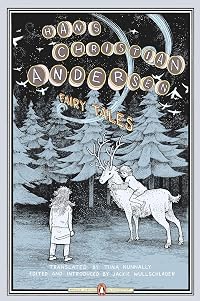
Fairy Tales: A New Translation by Tiina Nunnally
by Hans Christian Andersen
On This Page
Description
New translation of thirty Hans Christian Andersen tales including early stories through poignant masterpieces to later tales for adults.Tags
Recommendations




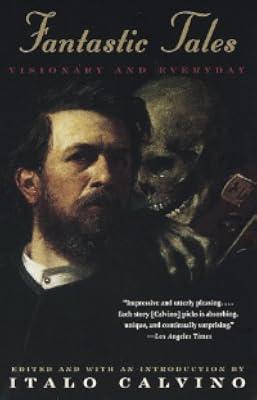
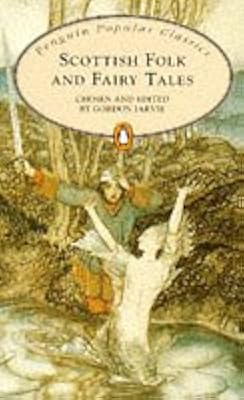
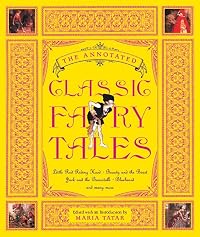

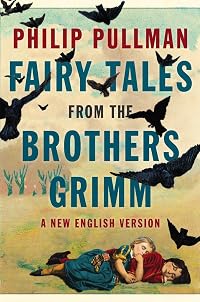






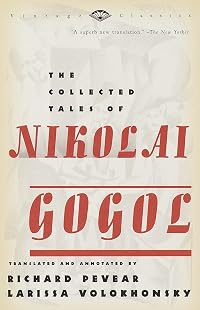
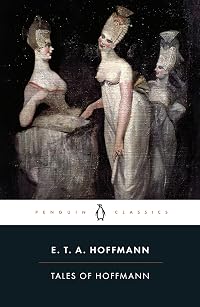


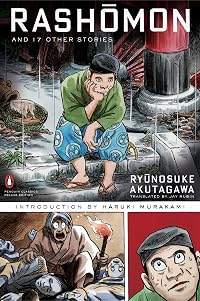
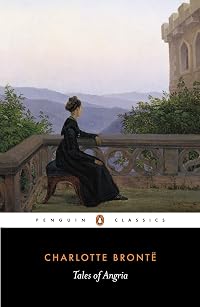
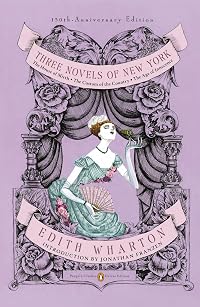
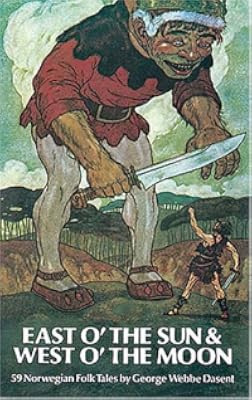
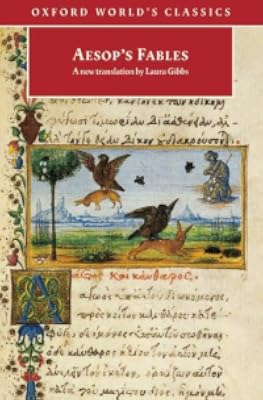
Member Recommendations
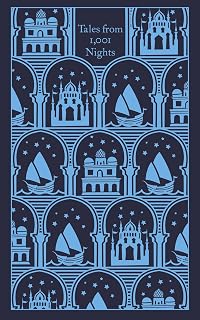
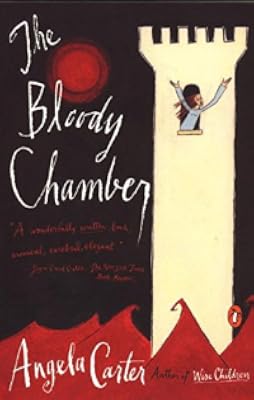
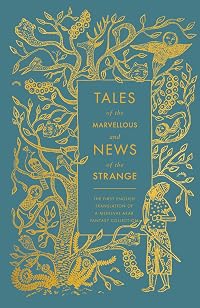
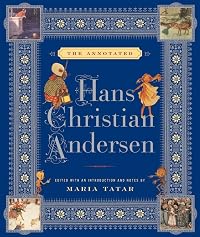
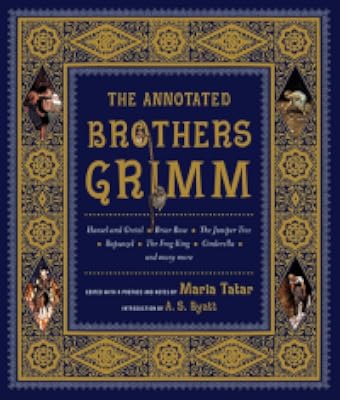
sturlington Two beautiful editions complement one another.
Member Reviews
Andersen is a mixed bag for me. First, this is a beautiful collection, with wonderful woodcut illustrations by Andersen himself, and nicely translated. It contains his most famous stories, including one of my all-time favorites, "The Nightingale," as well as such tried-and-true chestnuts as "The Ugly Duckling," "The Emperor's New Clothes," "The Princess on the Pea" and the incomparable "Snow Queen" (what a strange and bewitching story that is). The less well-known stories are even better; I have to heartily recommend "Little Claus and Big Claus" and "The Traveling Companion." But Andersen is pretty hard on his characters, particularly his girls, and stories like "The Little Mermaid" and "The Red Shoes" are very disturbing to me now. show more Many of these stories have a strong religious bent to them often involving subjecting oneself to God's will that made me uncomfortable, so that when reading these stories aloud to my son, I often found myself censoring what I was reading. I couldn't even finish "The Little Match Girl," a story that is appropriate for no one. Altogether, I prefer the straightforward bloodthirstiness of Grimm, but as I say, there are many gems in here so long as you are choosy. show less
Hans Christian Andersen's fairy tales are world renowned. Endlessly inventive and quirky, they've sparked countless adaptations and retellings, from Disney animated films to stage plays to choral works to short stories. Some of the tales are better known than others, like "The Little Mermaid," "The Emperor's New Clothes," "The Little Match Girl," and "The Steadfast Tin Soldier." Others are less well known (and some understandably so!), like "The Marsh King's Daughter," "The Wood Nymph," "The Red Shoes," and "The Shadow," to name a few.
I was struck by the harshness of some of the stories. I knew going in that Andersen's imagination was informed by a culture very different from our sanitized, politically correct world, back when children show more knew all about life's grimmer realities. But it's still a bit of a shock. Most of the stories don't end on an entirely happy note. Beyond "Thumbelina" I'm hard pressed to remember any that do, actually.
Many of the stories deal with the theme of not being content with your position in life, like the pine tree that wasn't happy in the forest and then had one night of splendor as a Christmas tree before being tossed away to die, or the nymph who traded her natural lifespan for a day as a human. Mortality lurks everywhere in these stories, bittersweet around the edges. The china shepherdess and her china chimney-sweep lover are faithful to one another "until they break." In one story, a man's shadow eventually breaks free of him and arranges his execution... chilling. Always death is peering around the corner; always the good things are tinged with a sense of impermanence.
But despite the dark themes, there is a pervasive humor throughout the stories that I found entirely engaging. Much of it comes from personifying household items, like a kitchen pot or gentleman's necktie and poking fun at the absurdity of human vanity. Relationships come in for their fair share of gentle mockery, too — Stork Father and Stork Mother have some amusing insights on one another, and Andersen isn't above wry observations in the narrative.
As a Christian, I found the theological aspect of the stories fascinating. Sometimes Andersen gets it right and it's biblical and beautiful — and other times (well, most of the time) his conception of a works-based salvation ruins everything. "The Little Mermaid" was particularly bad in this regard; she's told she can gain an immortal soul if she does good deeds for three hundred years. The three hundred years' span just seemed so arbitrary, I laughed out loud. Maybe this conception of earned salvation is another reason why most of the stories end so sadly...
I listened to this on audiobook from Listening Library and was familiar with the readers, Kate Reading and Robert Whitfield, from other audio productions. Both performed these stories admirably (even the tedious ones), alternating back and forth between tales. Though some of the stories dragged out, others were delightful, and I found the unpredictability an enjoyable listening experience. I've read that Tina Nunnally's translation from the Danish is the most accurate to date, and though I can't speak to that, the stories certainly do possess a distinctive tone that one hopes is Andersen's. I'm glad I picked this up, even if just to know these iconic stories as they were originally imagined. show less
I was struck by the harshness of some of the stories. I knew going in that Andersen's imagination was informed by a culture very different from our sanitized, politically correct world, back when children show more knew all about life's grimmer realities. But it's still a bit of a shock. Most of the stories don't end on an entirely happy note. Beyond "Thumbelina" I'm hard pressed to remember any that do, actually.
Many of the stories deal with the theme of not being content with your position in life, like the pine tree that wasn't happy in the forest and then had one night of splendor as a Christmas tree before being tossed away to die, or the nymph who traded her natural lifespan for a day as a human. Mortality lurks everywhere in these stories, bittersweet around the edges. The china shepherdess and her china chimney-sweep lover are faithful to one another "until they break." In one story, a man's shadow eventually breaks free of him and arranges his execution... chilling. Always death is peering around the corner; always the good things are tinged with a sense of impermanence.
But despite the dark themes, there is a pervasive humor throughout the stories that I found entirely engaging. Much of it comes from personifying household items, like a kitchen pot or gentleman's necktie and poking fun at the absurdity of human vanity. Relationships come in for their fair share of gentle mockery, too — Stork Father and Stork Mother have some amusing insights on one another, and Andersen isn't above wry observations in the narrative.
As a Christian, I found the theological aspect of the stories fascinating. Sometimes Andersen gets it right and it's biblical and beautiful — and other times (well, most of the time) his conception of a works-based salvation ruins everything. "The Little Mermaid" was particularly bad in this regard; she's told she can gain an immortal soul if she does good deeds for three hundred years. The three hundred years' span just seemed so arbitrary, I laughed out loud. Maybe this conception of earned salvation is another reason why most of the stories end so sadly...
I listened to this on audiobook from Listening Library and was familiar with the readers, Kate Reading and Robert Whitfield, from other audio productions. Both performed these stories admirably (even the tedious ones), alternating back and forth between tales. Though some of the stories dragged out, others were delightful, and I found the unpredictability an enjoyable listening experience. I've read that Tina Nunnally's translation from the Danish is the most accurate to date, and though I can't speak to that, the stories certainly do possess a distinctive tone that one hopes is Andersen's. I'm glad I picked this up, even if just to know these iconic stories as they were originally imagined. show less
This is a collection of Hans Christian Andersen's fairy/folk tales for children, which includes some of his best-known stories, like 'The Little Mermaid', 'The Princess on the Pea', 'The Little Match Girl' and 'The Snow Queen', as well as a number of tales that were unknown to me. Though I still love reading fairy tales even as an adult, especially those of a darker hue, I did not enjoy the stories as much as I had expected. It may well be that these are simply too Victorian in character for me, with an admonishing finger raised for children to be obedient and well behaved, and for adults to be God-fearing. A DNF from me.
Oh, Hans Christian Andersen. My favorite of favorites. I love this man. Since I was a little girl, I must have read "The Little Mermaid" a few dozen times. I was also familiar with (and loved) his "The Princess and the Pea," "The Little Match Girl," "Thumbelina," "The Ugly Duckling," and "The Red Shoes." Later it was "The Snow Queen" and "The Nightingale" and "The Steadfast Tin Soldier." Somewhere along the way I realized that Andersen was responsible for all of my favorite childhood stories.
I'd been looking for a good translation or a definitive collection of his work for a few years. There's a lot out there. I was attracted to the Penguin Classics Deluxe Edition because of the wacky cover (inspired by the tale "The Traveling show more Companion"), and the translator's note cinched the deal. Tiina Nunnally was devoted to preserving Andersen's original language and interpreting his writing style. Her respect of his work really shows, and I slowly devoured each story. It took me a full year to get through this book, a total of 30 stories, and it has come everywhere with me like a security blanket. It's almost sad that I'm done with it.
This collection doesn't claim to be complete edition of all of his stories (which was what I originally thought I wanted), but is instead a sampling of some of his most important works. They are arranged in chronological order, and thanks to an extended timeline of Andersen's life and biography in the introduction, it's really easy to see this bizarre man's journey through life. Reading this tales, most of which were autobiographical in some way or another, I felt really connected to him.
In the back of the book, there are notes on each tale explaining why he wrote them and the publication history. I never knew that Hans felt he WAS the little mermaid, sacrificing himself for true love only to be handed disappointment. It's all the more heart-breaking to know that he drew from real life inspiration to compose it. show less
I'd been looking for a good translation or a definitive collection of his work for a few years. There's a lot out there. I was attracted to the Penguin Classics Deluxe Edition because of the wacky cover (inspired by the tale "The Traveling show more Companion"), and the translator's note cinched the deal. Tiina Nunnally was devoted to preserving Andersen's original language and interpreting his writing style. Her respect of his work really shows, and I slowly devoured each story. It took me a full year to get through this book, a total of 30 stories, and it has come everywhere with me like a security blanket. It's almost sad that I'm done with it.
This collection doesn't claim to be complete edition of all of his stories (which was what I originally thought I wanted), but is instead a sampling of some of his most important works. They are arranged in chronological order, and thanks to an extended timeline of Andersen's life and biography in the introduction, it's really easy to see this bizarre man's journey through life. Reading this tales, most of which were autobiographical in some way or another, I felt really connected to him.
In the back of the book, there are notes on each tale explaining why he wrote them and the publication history. I never knew that Hans felt he WAS the little mermaid, sacrificing himself for true love only to be handed disappointment. It's all the more heart-breaking to know that he drew from real life inspiration to compose it. show less
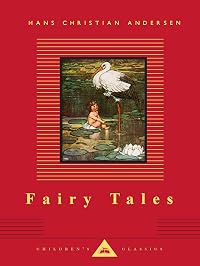
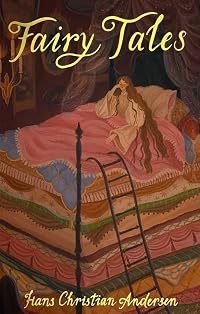
We have been reading this book at bedtime for a long, long time. I know, I should have looked at the book and realized how long it was, but with the lushly illustrated cover, I was really, really expecting more illustrations. Of which there were almost none, and certainly not like the cover.
Before I get carried away, I do want to say that I found this collection of tales to be magical and surprising. I guess I was often distracting by evaluating whether or not I thought the stories were too "old" for Jefferson. I shouldn't have worried. He said he really liked the book, and after we finished reading it, he took it upstairs to read in bed and within a few days said he'd reread most of it. (He skipped some of the stories.) Of course, his show more favorite stories tended to be the most blood-thirsty ones.
I had never read the "real" Little Mermaid before. It's interesting to me how much darkness is in these tales. Not just "the girl dies," which was all I'd been told about how the original varied from the Disney version, but through all the stories. That there is darkness, and we probably won't get what we most want in life, but still we should be honest and humble, and strive for justice and beauty.
If Jefferson absorbed even a little of that message, I should be pretty happy. show less
Before I get carried away, I do want to say that I found this collection of tales to be magical and surprising. I guess I was often distracting by evaluating whether or not I thought the stories were too "old" for Jefferson. I shouldn't have worried. He said he really liked the book, and after we finished reading it, he took it upstairs to read in bed and within a few days said he'd reread most of it. (He skipped some of the stories.) Of course, his show more favorite stories tended to be the most blood-thirsty ones.
I had never read the "real" Little Mermaid before. It's interesting to me how much darkness is in these tales. Not just "the girl dies," which was all I'd been told about how the original varied from the Disney version, but through all the stories. That there is darkness, and we probably won't get what we most want in life, but still we should be honest and humble, and strive for justice and beauty.
If Jefferson absorbed even a little of that message, I should be pretty happy. show less
Summary: A new translation of thirty of Hans Christian Andersen’s fairy tales, including some very familiar ones (”Thumbelina”, “The Little Mermaid”, “The Snow Queen”, “The Ugly Duckling”), as well as a host of less familiar (to me, anyways) stories. Talking plants, animals, household items, and toys are present in abundance, as are enchantments, schemes, and lessons learned.
Review: Due to the way my work scheduling goes, late April and early May is the exact time of year when I have to really go out of my way to make time to listen to my audiobook. And, as it happens, both this year and last year I’ve picked audiobooks that wind up not holding my attention at all, meaning I don’t make the time, meaning they take show more forever. Unfortunately, this book was one of those. I like fairy tales. Hans Christian Andersen is known for his fairy tales. Heck, the book is called Fairy Tales (although I don’t think there was a single actual fairy to be found). And yet, not only did the repetitive nature of the stories bore me, but the stories themselves didn’t hold my interest, meaning I could turn off the book mid-story and have absolutely no compulsion to go back to it. I mainly picked this one up because I’d always heard that fairy tales had been Disney-ified, that Andersen’s originals were much darker and fewer happy endings. Which, that’s true, but it also leads to me wondering who exactly the target audience is for this book. I’d be hesitant to let my kids (if I had any) listen to it, because there’s a fair amount of violence, lying, poor treatment of women, and disturbing imagery that happens without the blink of an eye, and the stories that try moralizing mostly have kind of terrible morals. But, on the other hand, as a grown up I just can’t get into story after story about talking tin soldiers wanting to marry the ballerina statues. They’re classic stories, and I wish the audiobook had included the editor’s and translator’s notes that are apparently included in the print version. Maybe that would have helped me put them into some better context, but on a cold listen, it just felt to me like their time had passed. 2.5 out of 5 stars.
Recommendation: May be worth reading for the historical interest, but my taste runs more towards slightly more modernized fairy tales, or at least more modernized tellings. show less
Review: Due to the way my work scheduling goes, late April and early May is the exact time of year when I have to really go out of my way to make time to listen to my audiobook. And, as it happens, both this year and last year I’ve picked audiobooks that wind up not holding my attention at all, meaning I don’t make the time, meaning they take show more forever. Unfortunately, this book was one of those. I like fairy tales. Hans Christian Andersen is known for his fairy tales. Heck, the book is called Fairy Tales (although I don’t think there was a single actual fairy to be found). And yet, not only did the repetitive nature of the stories bore me, but the stories themselves didn’t hold my interest, meaning I could turn off the book mid-story and have absolutely no compulsion to go back to it. I mainly picked this one up because I’d always heard that fairy tales had been Disney-ified, that Andersen’s originals were much darker and fewer happy endings. Which, that’s true, but it also leads to me wondering who exactly the target audience is for this book. I’d be hesitant to let my kids (if I had any) listen to it, because there’s a fair amount of violence, lying, poor treatment of women, and disturbing imagery that happens without the blink of an eye, and the stories that try moralizing mostly have kind of terrible morals. But, on the other hand, as a grown up I just can’t get into story after story about talking tin soldiers wanting to marry the ballerina statues. They’re classic stories, and I wish the audiobook had included the editor’s and translator’s notes that are apparently included in the print version. Maybe that would have helped me put them into some better context, but on a cold listen, it just felt to me like their time had passed. 2.5 out of 5 stars.
Recommendation: May be worth reading for the historical interest, but my taste runs more towards slightly more modernized fairy tales, or at least more modernized tellings. show less
A collection of Andersen's classic fairy tales in a fantastic English translation that will appeal to modern audiences but does not remove the flavour of language from the 19th century. Including the better known tales like "The Little Mermaid", "The Ugly Duckling", "The Steadfast Tin Soldier, "The Little Match Girl", and "The Snow Queen" there were also a multitude of other tales, with which I was totally unfamiliar. I was also surprised to find the humour in so many of the tales as the ones that I had read and studied previously were on the tragic end of the scale. If you're looking for a collection of Andersen's tales to try, I highly recommend this one.
Members
- Recently Added By
Lists

Books Read in 2015
3,299 works; 127 members
Author Information

3,956+ Works 54,129 Members
Hans Christian Andersen, one of the best known figures in literature, is best know for combining traditional folk tales with his own great imagination to produce fairy tales known to most children today. The Danish writer was born in the slums of Odense. Although he was raised in poverty, he eventually attended Copenhagen University. Although show more Andersen wrote poems, plays and books, he is best known for his Fairy Tales and Other Stories, written between 1835 and 1872. This work includes such famous tales as The Emperor's New Clothes, Little Ugly Duckling, The Tinderbox, Little Claus and Big Claus, Princess and the Pea, The Snow Queen, The Little Mermaid, The Nightingale, The Story of a Mother and The Swineherd. Andersen's greatest work is still influential today, helping mold some of the works of writers ranging from Charles Dickens to Oscar Wilde and inspiring many of the works of Disney and other motion pictures. Andersen, who traveled greatly during his life, died in his home in Rolighed on August 4, 1875. (Bowker Author Biography) show less
All Editions
Some Editions
Awards and Honors
Series
Belongs to Publisher Series
Common Knowledge
- Canonical title
- Fairy Tales: A New Translation by Tiina Nunnally
- Original title
- Fairy Tales
- Alternate titles
- Hans Christian Andersen - Fairy Tales; Fairy Tales (Penguin Audio) {30 stories} (Penguin Audio) (Penguin Audio | Penguin Audio)
- Original publication date
- 2004
- People/Characters
- Gerda; Kay; Thumbelina
- Important places
- China
- First words
- A soldier came marching along the road: left, right! left, right! (The Tinderbox)
- Last words
- (Click to show. Warning: May contain spoilers.)And that's the end of the story, the story about Auntie Toothache. (Auntie Toothache)
- Disambiguation notice
- This is the Penguin Classics abridgement. This short story collection contains only 30 of Andersen's fairy tales (see description). It should not be combined with editions containing additional stories, fewer stories, or diff... (show all)erent stories.
Please DO NOT combine abridgements unless they have the same ISBN or you have confirmed they are exactly the same work with the same set of stories. Please DO NOT combine abridgements with complete works. If you see abridgements and complete sets/editions combined together, please help by separating them. If in doubt, please DO NOT combine. Especially not when faced with large numbers of copies. It takes a lot of time and effort to separate and recombine works.
Classifications
- Genres
- Fiction and Literature, Children's Books, Fantasy
- DDC/MDS
- 839.8136 — Literature & rhetoric German & related literatures Other Germanic literatures Danish and Norwegian literatures Danish Danish fiction 1800–1900
- LCC
- PT8116 .E5 .N86 — Language and Literature German, Dutch and Scandinavian literatures Danish literature Individual authors or works 19th century Andersen, Hans Christian
- BISAC
Statistics
- Members
- 1,069
- Popularity
- 24,048
- Reviews
- 12
- Rating
- (4.20)
- Languages
- Danish, English, German
- Media
- Paper, Audiobook, Ebook
- ISBNs
- 32
- ASINs
- 4