
Anonymous (17)
Author of The Arabian Nights
For other authors named Anonymous, see the disambiguation page.
Series
Works by Anonymous
Tales from 1,001 Nights: Aladdin, Ali Baba and Other Favourites (Penguin Clothbound Classics) (2011) 340 copies, 2 reviews
Sindbad the Sailor and Other Tales from the Arabian Nights (Puffin Classics) (1978) 159 copies, 2 reviews
Het volledige verhaal van Ali Baba, de veertig rovers en het meisje Mardjana (1910) — Author — 25 copies, 1 review
Las Mil y Una Noches / The Thousand and One Nights: Antologia / Anthology (13/20) (Spanish Edition) (0850) 12 copies
De vertellingen van duizend-en-één-nacht. Dl. 3/4 — Author — 11 copies
The Thousand and One Nights, Commonly Called the Arabian Nights' Entertainments; Volume 1 of 3 4 copies, 1 review
Alle verhalen van 1001 nacht : dertiende en veertiende deel — Author — 3 copies
Cento e uma noites 2 copies
The Thousand and One Nights'; Commonly Called the Arabian Nights' Entertainments Volume 8 (2013) 2 copies
Le mille e una notte, Volume 2 of 2 2 copies
The Arabian Nights: Tales from a Thousand and One Nights: Premium Illustrated Edition (2017) 2 copies
Tusen och en natt. Bd. 5 1 copy
Tusen och en natt. Bd. 6 1 copy
Az Ezeregyéjszaka meséi IV. 1 copy
Tusen och en natt. Bd. 4 1 copy
Tusen och en natt. Bd. 3 1 copy
Tusen och en natt. Bd. 2 1 copy
Tusen och en natt. Bd. 1 1 copy
As Mil e Uma Noites VI 1 copy
Tagged
Common Knowledge
Members
Reviews
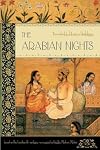
While I can't comment on the quality of the translation, The Arabian Nights is a dizzying array of stories within stories within stories, playing with the idea that our narrative impulse is the connective tissue that makes civilization possible. The stories are at their best when they fully indulge in fantasy, recounting tales of demons, transformative magic, and epic romance.
As much as I liked the book, however, I had a few complaints, principally the lack of development in the frame story show more of Shahrazad and its disappointingly abrupt ending. While her story does exist primarily as a means of telling other stories, I really regretted that after her first night with the king, she becomes nothing more than a chapter break. If The Arabian Nights exists as a tribute to her bravery, skill, wit, and inventiveness as a storyteller, I would have appreciated the chance to see her put to use in other ways. The constant interpolations to remind us that she is narrating for her very survival only serve as a reminder that we're learning nothing else about her.
As with any compendium of stories, some are less interesting than others, and I enjoyed the earlier stories a great deal more than those which ended the book. The introduction made mention of the fact that the book was probably the result of a number of different writers, and reading the stories makes that more than plain. The interlocking stories and cliffhanger endings that I found so interesting disappear entirely as the book goes on, to its detriment.
In addition to the sheer pleasure of the book as an exploration of storytelling, I found it a work of great cultural interest as well. Many of the stories have a decidedly foreign flavor, not just in terms of locale but in what the narrator chooses to emphasize. I found myself thinking on many occasions that I wished the Qur'an had been more like this book, as it seems to provide a much greater insight into a culture about which I know depressingly little. show less
As much as I liked the book, however, I had a few complaints, principally the lack of development in the frame story show more of Shahrazad and its disappointingly abrupt ending. While her story does exist primarily as a means of telling other stories, I really regretted that after her first night with the king, she becomes nothing more than a chapter break. If The Arabian Nights exists as a tribute to her bravery, skill, wit, and inventiveness as a storyteller, I would have appreciated the chance to see her put to use in other ways. The constant interpolations to remind us that she is narrating for her very survival only serve as a reminder that we're learning nothing else about her.
As with any compendium of stories, some are less interesting than others, and I enjoyed the earlier stories a great deal more than those which ended the book. The introduction made mention of the fact that the book was probably the result of a number of different writers, and reading the stories makes that more than plain. The interlocking stories and cliffhanger endings that I found so interesting disappear entirely as the book goes on, to its detriment.
In addition to the sheer pleasure of the book as an exploration of storytelling, I found it a work of great cultural interest as well. Many of the stories have a decidedly foreign flavor, not just in terms of locale but in what the narrator chooses to emphasize. I found myself thinking on many occasions that I wished the Qur'an had been more like this book, as it seems to provide a much greater insight into a culture about which I know depressingly little. show less
This is as good as it gets. I don't know Arabic so there's no way I can judge the accuracy of the translation -- all I know is how it reads, and it reads superbly. I'd rather not get into any "oh, but there's only 271 nights here, what the --" patter. I have the newer, bigger Penguin translation on my shelves too & it presumably uses the (much!) longer Egyptian 'version' (version is the wrong word but I can't think of the right one at the moment) ... but I doubt it could be, well, better show more than this. What's here is simply the rapture of tales, tales, tales ... and it's a volume that makes it eminently clear why people get obsessed with this thing. I'm a bit obsessed with it, right now. show less
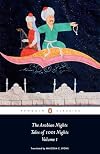
4 1/2 stars. Extremely violent--far more than I expected based on the fairly curated selection of Nights tales I've read over the years.
Also very sexually explicit, and generally the receiving parties are slaves or otherwise unfree to choose, which is weirdly LESS disturbing than the violence.
Both lesbian and gay sex and lots of bi protagonists. Occasional deprecation of homosexuality despite vast queer subtext. Lady doth protest too much, indeed. Creepy incest, actual and implied, and show more children getting married. Still less disturbing than all the casual mass murder.
Some brilliant poetry. I love that this translation keeps the verse and doesn't force rhyme. show less
Also very sexually explicit, and generally the receiving parties are slaves or otherwise unfree to choose, which is weirdly LESS disturbing than the violence.
Both lesbian and gay sex and lots of bi protagonists. Occasional deprecation of homosexuality despite vast queer subtext. Lady doth protest too much, indeed. Creepy incest, actual and implied, and show more children getting married. Still less disturbing than all the casual mass murder.
Some brilliant poetry. I love that this translation keeps the verse and doesn't force rhyme. show less
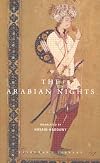
Ah. So some time ago I had a yen to read the 1001 Nights, and I have only just got around to it, apparently having forgotten that I don't like fairy tales. I appreciate the importance of fairy tales, fables, myths and legends from a cultural, historical and literary point of view. Stories that have been passed down between generations by word of mouth should be collected and collated and written down and shared etc. But all the same, I don't enjoy the style in which these stories tend to be show more told, so unless I want to study the Arabian Nights, I don't see much point pursuing reading something I'm not enjoying. Literally the first story in this book (the framing device of Shahrazad) is wall-to-wall sex and murder, which are pretty much my two least favourite topics for a story, and I flicked to the end of the book and it doesn't even resolve the damn story! It just says 'tradition says this happened...' Ugh. show less
Lists
Awards


You May Also Like


Associated Authors
Statistics
- Works
- 90
- Members
- 4,725
- Popularity
- #5,329
- Rating
- 3.9
- Reviews
- 54
- ISBNs
- 9,872
- Languages
- 64
- Favorited
- 1