
Mushin Mahdi (1926–2007)
Author of The Arabian Nights [Norton Critical Edition]
About the Author
Image credit: Uncredited image found at American University of Cairo website
Works by Mushin Mahdi
Ibn Khaldun's Philosophy of History: A Study in the Philosophic Foundation of the Science of Culture (Phoenix books) (1964) 76 copies, 1 review
The Arabian Nights (v. 1) 72 copies
Cite Vertueuse D'Alfarabi (La) (Collections Sciences - Sciences Humaines) (French Edition) (2000) 2 copies
Associated Works
Tagged
Common Knowledge
- Canonical name
- Mahdi, Mushin
- Legal name
- Mahdi al-Mashhadani, Muḥsin Sayyid
- Other names
- Mahdi, Mushin S.
- Birthdate
- 1926-06-21
- Date of death
- 2007-07-09
- Gender
- male
- Education
- University of Chicago (MA|Ph.D|1954)
American University of Beirut (BBA|BA|1947) - Occupations
- islamologist
arabist
translator
professor - Organizations
- Harvard University
University of Chicago
University of Baghdad - Nationality
- Iraq
USA - Birthplace
- Karbala, Iraq
- Place of death
- Brookline, Massachusetts, USA
- Associated Place (for map)
- Brookline, Massachusetts, USA
Members
Reviews
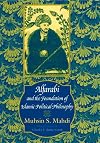
A Superior work by a superior scholar, October 14, 2004
The radicalism and centrality of (philosophical) politics for the Muslim philosopher Farabi (around 900 CE) is the first thing that greets you, like the bristling edge of a row of thorn-bushes, in this amazing book; that uncomfortable impression never leaves you. Mahdi situates Farabi in the midst of neoplatonic philosophers intent upon harmonizing Plato and Aristotle. "Yet the complete absence from his [Farabi] authentic writings of show more the central Neoplatonic philosophic doctrines -of the One, Intellect, and Soul- should have been sufficient to suggest to students of Islamic philosophy who read him that they were in the presence of a philosopher who made use of certain elements drawn from the Neoplatonic philosophic tradition but whose Neoplatonism must remain suspect."
We are shown how Farabi denies(!) that revealed religion is in any real sense an innovation and we are also shown the underlying similarity between pagan and monotheistic religion. "Alfarabi's treatment of these subjects in his works on political philosophy and religion is not an innovation. It points to the similarity between the virtuous royal craft or art and the art of the lawgiver, between the virtuous city as envisioned by Plato and the religious community based on revelation." It seems that Mahdi is here indicating that Farabi said (of the Prophet) what Machiavelli said (of Moses in 'The Prince', chapter 6) many hundreds of years later. ...They were great political (and/or philosophical) innovators, nothing more. Now we find ourselves nervously wondering, has (political) philosophy then made everything?
But why does (political) philosophy make what it does? "The opinions expressed in these two works [Farabi's 'Virtuous City' and 'Political Regime'] not only originate in a political context (in that they are legislated) but are politically relevant, important, and even crucial. For they point to the ends (or the view of happiness) for which the actions are performed, a fundamental subject matter of political science." This suggests that happiness is the fundamental subject of political philosophy. But, as I hope we all know, philosophy itself aims to make men reasonable, not happy. These two views, it should be noted, may not be entirely compatible.
...But what of philosophy proper and its interest in the Cosmos? Is it too an artifact of political philosophy? "The question here is whether, and to what extent, the cosmos and the human body are already interpreted politically or certain conclusions of scientific inquiries are modified to make them more adequate opinions for the citizens and to present them as patterns for the construction of the city" One is tempted to say that if the founder of a religion (or political philosopher masquerading as founder) decides what can be said and not said about cosmos, body and soul then there is only political philosophy.
But the City (and its myths and opinions) cannot be entirely built on myth and opinion otherwise Science and Philosophy could not survive. ...Not any myth is good. "For it is precisely the relationship between science and the city that is at issue," Mahdi correctly reminds us. "Differently stated, the integrity of scientific knowledge should be maintained even when it is used to help form the opinions of the citizens." Can science and philosophy remain free of opinion and myth while spreading myths and opinion among the people? The problem, one suspects and fears, is that after a millennium or two, the differences between philosophy/science and opinion/myth tend to blur. ...Who, for instance, can dare say they see with utter clarity after 2000 years of the 'Platonism for the people'?
Or to perhaps state the same question in another manner: The City (opinion, myth) becomes more real the longer it survives. Its reality challenges the ancient 'realities' of Cosmos and Soul, or if you prefer, nature and individual psyche. The difficulty is twofold; nobody knows how to change nature or the human soul, or even if this can be done. But, and this is the second difficulty, we do know how to change the city, its opinions and myths. Changing religion or regime (these are both the city) is far easier than changing cosmos/nature or soul/psyche.
Thus political philosophy would seem to be doomed to only treat opinion and myth. How does philosophy, or if you prefer, political philosophy, maintain its status as science in such circumstances? Would a medical science that only treated symptoms, never causes - indeed; some of the symptoms were even caused by this so-called medical science - still be worthy of the title of Science?
We have only here scratched the surface of the issues dealt with in this book. I only give 4 stars because in the future I will want to give 5 stars to Farabi himself. show less
The radicalism and centrality of (philosophical) politics for the Muslim philosopher Farabi (around 900 CE) is the first thing that greets you, like the bristling edge of a row of thorn-bushes, in this amazing book; that uncomfortable impression never leaves you. Mahdi situates Farabi in the midst of neoplatonic philosophers intent upon harmonizing Plato and Aristotle. "Yet the complete absence from his [Farabi] authentic writings of show more the central Neoplatonic philosophic doctrines -of the One, Intellect, and Soul- should have been sufficient to suggest to students of Islamic philosophy who read him that they were in the presence of a philosopher who made use of certain elements drawn from the Neoplatonic philosophic tradition but whose Neoplatonism must remain suspect."
We are shown how Farabi denies(!) that revealed religion is in any real sense an innovation and we are also shown the underlying similarity between pagan and monotheistic religion. "Alfarabi's treatment of these subjects in his works on political philosophy and religion is not an innovation. It points to the similarity between the virtuous royal craft or art and the art of the lawgiver, between the virtuous city as envisioned by Plato and the religious community based on revelation." It seems that Mahdi is here indicating that Farabi said (of the Prophet) what Machiavelli said (of Moses in 'The Prince', chapter 6) many hundreds of years later. ...They were great political (and/or philosophical) innovators, nothing more. Now we find ourselves nervously wondering, has (political) philosophy then made everything?
But why does (political) philosophy make what it does? "The opinions expressed in these two works [Farabi's 'Virtuous City' and 'Political Regime'] not only originate in a political context (in that they are legislated) but are politically relevant, important, and even crucial. For they point to the ends (or the view of happiness) for which the actions are performed, a fundamental subject matter of political science." This suggests that happiness is the fundamental subject of political philosophy. But, as I hope we all know, philosophy itself aims to make men reasonable, not happy. These two views, it should be noted, may not be entirely compatible.
...But what of philosophy proper and its interest in the Cosmos? Is it too an artifact of political philosophy? "The question here is whether, and to what extent, the cosmos and the human body are already interpreted politically or certain conclusions of scientific inquiries are modified to make them more adequate opinions for the citizens and to present them as patterns for the construction of the city" One is tempted to say that if the founder of a religion (or political philosopher masquerading as founder) decides what can be said and not said about cosmos, body and soul then there is only political philosophy.
But the City (and its myths and opinions) cannot be entirely built on myth and opinion otherwise Science and Philosophy could not survive. ...Not any myth is good. "For it is precisely the relationship between science and the city that is at issue," Mahdi correctly reminds us. "Differently stated, the integrity of scientific knowledge should be maintained even when it is used to help form the opinions of the citizens." Can science and philosophy remain free of opinion and myth while spreading myths and opinion among the people? The problem, one suspects and fears, is that after a millennium or two, the differences between philosophy/science and opinion/myth tend to blur. ...Who, for instance, can dare say they see with utter clarity after 2000 years of the 'Platonism for the people'?
Or to perhaps state the same question in another manner: The City (opinion, myth) becomes more real the longer it survives. Its reality challenges the ancient 'realities' of Cosmos and Soul, or if you prefer, nature and individual psyche. The difficulty is twofold; nobody knows how to change nature or the human soul, or even if this can be done. But, and this is the second difficulty, we do know how to change the city, its opinions and myths. Changing religion or regime (these are both the city) is far easier than changing cosmos/nature or soul/psyche.
Thus political philosophy would seem to be doomed to only treat opinion and myth. How does philosophy, or if you prefer, political philosophy, maintain its status as science in such circumstances? Would a medical science that only treated symptoms, never causes - indeed; some of the symptoms were even caused by this so-called medical science - still be worthy of the title of Science?
We have only here scratched the surface of the issues dealt with in this book. I only give 4 stars because in the future I will want to give 5 stars to Farabi himself. show less

Note that this review is written specifically of the Norton Critical Edition, ISBN 978-0-393-92808-2.
I can't remember ever rating a Norton Critical Edition of any book this low, and I'm very much a reader of NCEs. It consists of somewhere more than two hundred "nights" of roughly 26 stories (but that story count could vary and perhaps be a bit higher, depending on how you define a "story" given the embedding of narratives in the "1001 Nights"). Additionally, the text includes the separate show more Story of Sindbad the Sailor (which, like Ali Baba and Aladdin, is not actually a part of "1001 Nights" tales narrated by Shahrazad).
Obviously Norton could not be expected to publish the full "1001 Nights" and some selection/abridgement was needed, but just why this particular selection was made is puzzling. Why the omission of Ali Baba and Aladdin, considering that the NCE includes Sinbad, which likewise is not a part of the "1001 Nights" proper? And why the choice of the particular stories (all of which compress into the first 270 or so of the "nights" and none later)? At the very least, the editor's Preface should have explained the basis for these selections.
The Preface should also have pointed out that Sinbad, Ali Baba, and Aladdin are none of them a part of the "1001 Nights" proper, rather being separate story lines. This eventually becomes clear if a reader works her way through certain of the supplementary critical materials, but it's not something that's readily apparent, especially as one begins reading the text proper.
The supplementary materials are poorly chosen, with most of them focusing on textual criticism or story-telling style and with little if any attention to the place of "1001 Nights" in world folklore. The textual criticism also tends to be more technical than one normally associates with NCEs, and some of the essays make references to "nights" or stories without giving clear indication of just where these texts appear in the actual "1001 Nights" selections in this NCE volume. One noteworthy exception is Jerome Clinton's quite interesting essay "Madness and Cure in the 1001 Nights," which presents the Nights as a work of, shall we call it, paleofeminism (my term, not Clinton's).
Overall, this was an unusually unsatisfactory experience for a Norton Critical Edition. show less
I can't remember ever rating a Norton Critical Edition of any book this low, and I'm very much a reader of NCEs. It consists of somewhere more than two hundred "nights" of roughly 26 stories (but that story count could vary and perhaps be a bit higher, depending on how you define a "story" given the embedding of narratives in the "1001 Nights"). Additionally, the text includes the separate show more Story of Sindbad the Sailor (which, like Ali Baba and Aladdin, is not actually a part of "1001 Nights" tales narrated by Shahrazad).
Obviously Norton could not be expected to publish the full "1001 Nights" and some selection/abridgement was needed, but just why this particular selection was made is puzzling. Why the omission of Ali Baba and Aladdin, considering that the NCE includes Sinbad, which likewise is not a part of the "1001 Nights" proper? And why the choice of the particular stories (all of which compress into the first 270 or so of the "nights" and none later)? At the very least, the editor's Preface should have explained the basis for these selections.
The Preface should also have pointed out that Sinbad, Ali Baba, and Aladdin are none of them a part of the "1001 Nights" proper, rather being separate story lines. This eventually becomes clear if a reader works her way through certain of the supplementary critical materials, but it's not something that's readily apparent, especially as one begins reading the text proper.
The supplementary materials are poorly chosen, with most of them focusing on textual criticism or story-telling style and with little if any attention to the place of "1001 Nights" in world folklore. The textual criticism also tends to be more technical than one normally associates with NCEs, and some of the essays make references to "nights" or stories without giving clear indication of just where these texts appear in the actual "1001 Nights" selections in this NCE volume. One noteworthy exception is Jerome Clinton's quite interesting essay "Madness and Cure in the 1001 Nights," which presents the Nights as a work of, shall we call it, paleofeminism (my term, not Clinton's).
Overall, this was an unusually unsatisfactory experience for a Norton Critical Edition. show less
I've recently read several interesting short story collections from antiquity, namely The Canterbury Tales, Arabian Nights, and Ovid's Metamorphoses. Each of them has inspired enough academic articles to fill a library, so I'm not going to delve into their historical import or the ways each has influenced future literature, but I think its valuable to consider how they compare to each other in approach and how I saw them as stories.
First, The Canterbury Tales. Chaucer's unfinished collection show more provides a great window into what life was like in the middle ages, more specifically England in the 1300s. By providing a diverse cast of story tellers as the vehicles for the stories themselves Chaucer is able to explore many professions and various points on the social hierarchy, satirizing and criticizing all the flaws he saw in his society. To an extent these are interesting, but social satire does not always age well. While it certainly gives you a sense of how England looked through Chaucer's eyes (a den of corruption and hypocrisy for the most part, especially when discussing the religious institutions), it can be hit or miss as to whether the critique has aged well. Critique on chivalry in The Knight's Tale? I'm in. Critique of alchemists wherein pages and pages of ingredients are listed? Yawn. Additionally, the majority of the tales aren't that deep, with many being raunchy stories of pure entertainment and others being morality tales with blatantly obvious messages (pride is bad and fortune is fickle, we get it). The message of one tale was flat out stated to be "beware of treachery." Was there someone at the time arguing that treachery wasn't that big a deal and we should just ignore it?
In reverse chronological order the next up is Arabian Nights. This collection is amorphous enough that many tales pop up in one edition and not another, which in my opinion weakens the arguments I see about the collection having a set of coherent themes or messages. The sole theme that I found to be consistent was the power of storytelling- it appears in the frame narrative, of course, but also the stories themselves often showcase the ability of stories to trick the powerful, and oftentimes stories lead to sub-stories and so on, like nesting dolls. Toward the end of the collection the descriptions began to get to me: if I never see someone described as being "as beautiful as the moon" with "lips like coral" and other features like various gems I'll be a happy reader. The Norton Critical addition showed its worth by providing many additional pieces inspired by the Arabian Nights, as well as critical analyses of the text (some of which I found less than convincing, but always interesting). More so than the other two collections Arabian Nights just struck me as a bunch of stories, many of which of course were intended to edify, but mostly its purpose was to entertain. It more or less accomplished this.
The earliest, and also the best, of the three collections was Ovid's Metamorphoses. Chaucer references the classic explicitly several times in his work, and it's no wonder: Ovid is the master that Chaucer tried and failed to match. What put this collection above the others for me was that Ovid not only had a consistent theme to the stories (transformations, as the title would suggest), but also stories flow from one to the next, mostly with an organic feeling that makes the work take on a grander scale. Ovid's not just telling stories, he's tracing the history of the world, explaining how the world became populated with the birds and plants and animals that fill it, and connecting the past all up to what was then the present day. It also serves as the source for much of what we know of Greek/Roman mythology, as Ovid was also setting down an account of the actions and behavior of the gods. Framing narratives can be used to great effect, just look at If On a Winter's Night a Traveller by Italo Calvino for a phenomenal example, but Canterbury Tales creates such a framing narrative only to leave it incomplete, and Arabian Nights slowly siphons away the importance of the frame narrative until it is forgotten entirely. In comparison, Ovid's Metamorphoses connection of his tales makes his work stand on a grander scale, and makes it feel like a more coherent whole. A note on translations, I found Charles Martin's work to be very strong in general, although he makes a few bizarre choices. Translating a singing contest into a rap battle was a clear mistake. Overall, though, I feel confident recommending him so long as you want a more modern take on the text.
All three collections have stood the test of time, and each is an essential read to understand the ages and cultures they arose out of. Between the three of them, though, Ovid's Metamorphoses is the most worthy of your time in my opinion. show less
First, The Canterbury Tales. Chaucer's unfinished collection show more provides a great window into what life was like in the middle ages, more specifically England in the 1300s. By providing a diverse cast of story tellers as the vehicles for the stories themselves Chaucer is able to explore many professions and various points on the social hierarchy, satirizing and criticizing all the flaws he saw in his society. To an extent these are interesting, but social satire does not always age well. While it certainly gives you a sense of how England looked through Chaucer's eyes (a den of corruption and hypocrisy for the most part, especially when discussing the religious institutions), it can be hit or miss as to whether the critique has aged well. Critique on chivalry in The Knight's Tale? I'm in. Critique of alchemists wherein pages and pages of ingredients are listed? Yawn. Additionally, the majority of the tales aren't that deep, with many being raunchy stories of pure entertainment and others being morality tales with blatantly obvious messages (pride is bad and fortune is fickle, we get it). The message of one tale was flat out stated to be "beware of treachery." Was there someone at the time arguing that treachery wasn't that big a deal and we should just ignore it?
In reverse chronological order the next up is Arabian Nights. This collection is amorphous enough that many tales pop up in one edition and not another, which in my opinion weakens the arguments I see about the collection having a set of coherent themes or messages. The sole theme that I found to be consistent was the power of storytelling- it appears in the frame narrative, of course, but also the stories themselves often showcase the ability of stories to trick the powerful, and oftentimes stories lead to sub-stories and so on, like nesting dolls. Toward the end of the collection the descriptions began to get to me: if I never see someone described as being "as beautiful as the moon" with "lips like coral" and other features like various gems I'll be a happy reader. The Norton Critical addition showed its worth by providing many additional pieces inspired by the Arabian Nights, as well as critical analyses of the text (some of which I found less than convincing, but always interesting). More so than the other two collections Arabian Nights just struck me as a bunch of stories, many of which of course were intended to edify, but mostly its purpose was to entertain. It more or less accomplished this.
The earliest, and also the best, of the three collections was Ovid's Metamorphoses. Chaucer references the classic explicitly several times in his work, and it's no wonder: Ovid is the master that Chaucer tried and failed to match. What put this collection above the others for me was that Ovid not only had a consistent theme to the stories (transformations, as the title would suggest), but also stories flow from one to the next, mostly with an organic feeling that makes the work take on a grander scale. Ovid's not just telling stories, he's tracing the history of the world, explaining how the world became populated with the birds and plants and animals that fill it, and connecting the past all up to what was then the present day. It also serves as the source for much of what we know of Greek/Roman mythology, as Ovid was also setting down an account of the actions and behavior of the gods. Framing narratives can be used to great effect, just look at If On a Winter's Night a Traveller by Italo Calvino for a phenomenal example, but Canterbury Tales creates such a framing narrative only to leave it incomplete, and Arabian Nights slowly siphons away the importance of the frame narrative until it is forgotten entirely. In comparison, Ovid's Metamorphoses connection of his tales makes his work stand on a grander scale, and makes it feel like a more coherent whole. A note on translations, I found Charles Martin's work to be very strong in general, although he makes a few bizarre choices. Translating a singing contest into a rap battle was a clear mistake. Overall, though, I feel confident recommending him so long as you want a more modern take on the text.
All three collections have stood the test of time, and each is an essential read to understand the ages and cultures they arose out of. Between the three of them, though, Ovid's Metamorphoses is the most worthy of your time in my opinion. show less

Mahdi presents here a fascinating triptych of intellectual history, consisting of (1) a biography of the 14th c. Arab historian Ibn Khaldûn (who once had an interview with Tamerlane), (2) a discussion that situates Khaldûn in the evolution of Islamic philosophy and historiography, and (3) an interpretation of Khaldûn’s major work The Muqaddimah, or Principles…etc. etc. etc…
Mahdi’s methodological approach (influenced by Leo Strauss) proceeds from a recognition of the principles show more accepted by an author, then to an attempt to uncover the author’s motivations and intentions, and finally a venture into interpretation and judgment of the author’s work. First principles first, then (or, what Khaldûn “knew”): the Islamic community owed its origins, its Law, and its character to a revelation and a prophet. The Law provided final and definitive dogmas about the attributes of God, the creation of the world, and the world to come. It prescribed which acts were obligatory, recommended, permitted or forbidden, and described the rewards and punishments such acts entailed. The divine legislator was not bound by the limits of theoretical reason; what he announced must be accepted and never doubted, even when contradicting what had been known by human reason. Believers were urged not to waste their efforts exploring the rational truth behind the dogmas taught by the Prophet, as this inevitably leads to ‘a gorge in which the mind wanders to no avail.’
Khaldûn’s chief motivation, according to Mahdi, was a desire to understand the nature and causes of the conditions (general decline and disintegration) prevailing in the Islamic world during his lifetime, and to learn the lessons they could teach him on the nature of human history. Khaldûn proposed that particular traditions could be studied as expressions of an underlying universal order of things, an order that could be ascertained by observation and valid reasoning. Khaldûn thought that the attempt to study history in this manner was new and that he had originated it, but such novelty was not true of science or philosophy in general, writes Mahdi. Philosophy had come to the Arabs from the Greeks, but had been in decline since the time of Averroes (d. 1198). Khaldûn would revive it.
The discovery of Greek philosophy stimulated the development of Muslim philosophy, but in a context within which philosophy had to coexist with the divinely-inspired Law. The earliest Muslim thinkers started from religious dogma, then formulated a rational system based upon principles and methods of proof which led to conclusions identical with those dogmas. Later thinkers (Farabi, Avicenna, and Averroes, all inspired by the Greeks) produced a shift in Islamic philosophy, arguing that reasoning could be false without a corresponding falseness of nature/dogma. By Khaldûn’s time, the only philosophy in the Islamic community was a mishmash of speculative theology, mysticism, and the ideas of Farabi, et.al. Khaldûn had first to expose and refute this combination before redirecting philosophy to its proper end. His critique was not aimed at philosophy per se, then, but at the pretenders to philosophy, among whom Khaldûn counted Farabi and Avicenna. (Mahdi’s footnotes in this section are dense with explication and illustrations from the relevant works of various writers. Speed-readers beware.)
In Khaldûn’s view (as related by Mahdi), the philosopher, untangling himself from speculative theology and mysticism, should assert that much of what the Law brings forth cannot be known by reason—‘the universe is too wide to be embraced exhaustively in its totality.’ Khaldûn followed closely the Posterior Analytics of Aristotle to critique the school of Islamic dialectical theology (kalám) that had denied the existence of essential attributes and viewed universals as mere mental constructions with no counterparts outside the mind. He made a distinction between philosophic sciences (which man can know by the nature of his thought and human perception) and positive sciences (which are based upon the traditions communicated from the divine legislator). Khaldûn carefully omitted discussion of the history of practical sciences in Islamic philosophy so as to avoid having to commit himself to the opinions of other philosophers (Farabi’s Platonic position, for instance) or to impede in any way his relation to the community (by putting himself at odds with some faction or another). Nonetheless, Khaldûn’s acceptance of the principles of Islamic politics was implicit in his discussion of the most important issues that practical philosophy had to explore: the nature of prophecy, the nature of the social order, and the role of knowledge in society. Khaldûn’s purpose in the third, according to Mahdi, was “to protect the Law and philosophy, and the many and the few, against possible confusion between their functions and ends.”
The distinction between the many and the few was reintroduced into Islamic philosophy through the Aristotelian theory of the methods of demonstration, which Averroes integrated with the Platonic idea of the political significance of the few and the many as explained in The Republic. In propounding his theory of esoteric writing, Averroes argued that a philosopher should protect the many by supporting and praising the Law, and by refuting and silencing all who attempt to mislead them through questioning the Law or raising doubts about it. Khaldûn’s goal in his discussion of the various sciences, according to Mahdi, was to disentangle and expose the mixtures of positive and philosophic sciences—in refutation of dissenting sectarians, dialecticians and mystics who, being ignorant of the true purpose of the Law and the true nature of philosophy, had attempted in vain to reconcile them.
It was common in Islamic mystical and philosophic literature to deliberately exclude the undesirable reader with a style of writing that was difficult and ambiguous. In contrast, says Mahdi, Khaldûn chose to write for all people. History seemed to him the ideal subject through which ideas could be communicated both to the few and the many: Khaldûn’s exoteric-esoteric writing style enabled him to communicate the externals of history to the many, and the nature and cause of historical events to the few. Mahdi reviews the indirection, cryptic phrases, and obscure allusions that mark Khaldûn’s idiosyncratic style. Writing ‘history’ also gave Khaldûn additional intellectual and political cover: Mahdi notes that, in order to avoid being condemned as a philosopher, Khaldûn avoided mentioning the sources—philosophic tradition or particular authors— from which he derived key concepts.
Before discussing Khaldûn’s historical approach, Mahdi surveys the nature, purpose, and method of history in Islamic thought. Before the Umayyad Caliphate, historical reports were transmitted orally, and subsequent written reports were justified by the sciences of biography and authority-criticism in order to establish a chain of transmission back through time to past events. Various critiques of historians’ assumptions forced an historiographical shift in the 9th & 10th centuries toward a more systematic formulation and defense of the assumptions made in the collecting and arranging of information about the past. Because not all historical reports could be traced back to the time of their occurrence through a reliable chain of transmitters, Tabarî (d. 923) and others relied on the Prophet when necessary, but also had to resort to the Old and New Testaments, Jewish historians, and Persian chroniclers. The Mu’tazili school was first to question the traditional history represented by Tabarî and the prevailing principles of authority, insisting instead that historians’ convictions be based on rational grounds and not solely on tenuous chains to the past. Following Aristotle, the Muʿtazilah also denied that history was a science, since its subject matter is mutable and changing, and thus subject to interpretation.
Islamic historiography and philosophy developed in parallel, then, as dialectical philosophy (kalám) emerged to defend the traditional religious-bound approach against the charges of the Muʿtazilah and their philosophical progeny and to show that its own underlying assumptions were rationally tenable. The defense of kalám was based upon an ontology and a theory of knowledge according to which all objects exist as a result of continuous creation by God, and all perceptions and reasoning consist of separate accidents directly created by God in the substance that is the knower. For the dialectical theologians, a causal relation was merely the relation between accidents, and all explanations were at best probable. “History,” regarded as an extension of sense perceptions, was only what had been experienced directly. Kalám thus reaffirmed and defended the traditional reliance on a chain of authoritative transmitters, and excised all historical knowledge derived from reasoning.
Here is where Khaldûn’s science of culture comes in.
Khaldûn began The Muqaddimah with a discussion and critique of Islamic historiography that serves as preparation for the subsequent development of his new science of culture, through which Khaldûn intended to provide a systematic investigation of the problems of human association, with the ultimate aim, according to Mahdi, of rectifying previous historical reports. Khaldûn was careful to distinguish the new science of culture from history: the knowledge of particular events (concerns of the historian) are not an end but a beginning from which to discern and formulate universal judgments (the science of culture). The subject matter of the science of culture comes after history.
A science of culture, wrote Khaldûn, presupposes the existence of collective habits and actions, the results of relatively stable causes which in turn can be discerned under specific environmental and social conditions. (Culture can only come into being in certain geographical regions.) Khaldûn thought that cultural habits were the product of human desires and reason, so that the phenomenon of culture could be made the object of a rational science. On such a line of thinking rests Khaldûn’s reputation as one of the originators of social science (though, as Mahdi points out, the foundations of Khaldûn’s science of culture are different from those of modern social science). Primitive cultures satisfy basic human desires necessary for survival, wrote Khaldûn, but the human soul harbors latent desires, no less rational and necessary, which can only be satisfied in civilization (‘the city’). The characteristic attribute of civilized culture is a dynamic process of growth, the attainment of natural limits, and finally dissolution.
In The Muqaddimah, the evolution of culture coincides with the rise (and fall) of the state, the pursuit of political power, and the development (and decline) of communal solidarity and the idea of the common good—all of which Khaldûn saw through the lens of Islam. Because Islam legislated the institution of holy war in order to spread its message, the religious leader also had to concern himself with political power and the means of making war. Muslim philosophers, including Khaldûn, understood the regime of the Law, brought into existence by the Prophet, as essentially a political order. But, while acknowledging that a common system of laws and coercion exercised by an undisputed ruler was necessary to insure peace and order in society, Khaldun’s science of culture reached the limits of its usefulness upon asking the question of ultimate ends in human society. The new science was unable to provide a universally compelling formulation of the common good, or the proper amount of justice and moderation for the regime of reason. Khaldûn had to admit (to the few) that there were lessons that history could not teach. And so, the science of culture gave way in the end to political philosophy—a turn that would have been recognized only by those versed in (Greek) political philosophy.
In his assessment of The Muqaddimah and the tradition within which Khaldûn worked, Mahdi concludes that Islamic philosophy was capable of being more secular, political and realistic than usually assumed. The conventional contrast between the more Platonic character of Farabi and Averroes and the more Aristotelian approach of Ibn Khaldûn is overstated. According to Mahdi, we should read Khaldûn as a disciple of the Islamic Platonic tradition. His goal had been to resolve the confusion that undermined philosophy while defining the proper sphere and object of philosophy. With a writing style that concealed as much as it revealed, Khaldûn succeeded in producing a work that was a commentary on itself, an illustration of philosophy qua philosophy, a means to an end that was not the End. show less
Mahdi’s methodological approach (influenced by Leo Strauss) proceeds from a recognition of the principles show more accepted by an author, then to an attempt to uncover the author’s motivations and intentions, and finally a venture into interpretation and judgment of the author’s work. First principles first, then (or, what Khaldûn “knew”): the Islamic community owed its origins, its Law, and its character to a revelation and a prophet. The Law provided final and definitive dogmas about the attributes of God, the creation of the world, and the world to come. It prescribed which acts were obligatory, recommended, permitted or forbidden, and described the rewards and punishments such acts entailed. The divine legislator was not bound by the limits of theoretical reason; what he announced must be accepted and never doubted, even when contradicting what had been known by human reason. Believers were urged not to waste their efforts exploring the rational truth behind the dogmas taught by the Prophet, as this inevitably leads to ‘a gorge in which the mind wanders to no avail.’
Khaldûn’s chief motivation, according to Mahdi, was a desire to understand the nature and causes of the conditions (general decline and disintegration) prevailing in the Islamic world during his lifetime, and to learn the lessons they could teach him on the nature of human history. Khaldûn proposed that particular traditions could be studied as expressions of an underlying universal order of things, an order that could be ascertained by observation and valid reasoning. Khaldûn thought that the attempt to study history in this manner was new and that he had originated it, but such novelty was not true of science or philosophy in general, writes Mahdi. Philosophy had come to the Arabs from the Greeks, but had been in decline since the time of Averroes (d. 1198). Khaldûn would revive it.
The discovery of Greek philosophy stimulated the development of Muslim philosophy, but in a context within which philosophy had to coexist with the divinely-inspired Law. The earliest Muslim thinkers started from religious dogma, then formulated a rational system based upon principles and methods of proof which led to conclusions identical with those dogmas. Later thinkers (Farabi, Avicenna, and Averroes, all inspired by the Greeks) produced a shift in Islamic philosophy, arguing that reasoning could be false without a corresponding falseness of nature/dogma. By Khaldûn’s time, the only philosophy in the Islamic community was a mishmash of speculative theology, mysticism, and the ideas of Farabi, et.al. Khaldûn had first to expose and refute this combination before redirecting philosophy to its proper end. His critique was not aimed at philosophy per se, then, but at the pretenders to philosophy, among whom Khaldûn counted Farabi and Avicenna. (Mahdi’s footnotes in this section are dense with explication and illustrations from the relevant works of various writers. Speed-readers beware.)
In Khaldûn’s view (as related by Mahdi), the philosopher, untangling himself from speculative theology and mysticism, should assert that much of what the Law brings forth cannot be known by reason—‘the universe is too wide to be embraced exhaustively in its totality.’ Khaldûn followed closely the Posterior Analytics of Aristotle to critique the school of Islamic dialectical theology (kalám) that had denied the existence of essential attributes and viewed universals as mere mental constructions with no counterparts outside the mind. He made a distinction between philosophic sciences (which man can know by the nature of his thought and human perception) and positive sciences (which are based upon the traditions communicated from the divine legislator). Khaldûn carefully omitted discussion of the history of practical sciences in Islamic philosophy so as to avoid having to commit himself to the opinions of other philosophers (Farabi’s Platonic position, for instance) or to impede in any way his relation to the community (by putting himself at odds with some faction or another). Nonetheless, Khaldûn’s acceptance of the principles of Islamic politics was implicit in his discussion of the most important issues that practical philosophy had to explore: the nature of prophecy, the nature of the social order, and the role of knowledge in society. Khaldûn’s purpose in the third, according to Mahdi, was “to protect the Law and philosophy, and the many and the few, against possible confusion between their functions and ends.”
The distinction between the many and the few was reintroduced into Islamic philosophy through the Aristotelian theory of the methods of demonstration, which Averroes integrated with the Platonic idea of the political significance of the few and the many as explained in The Republic. In propounding his theory of esoteric writing, Averroes argued that a philosopher should protect the many by supporting and praising the Law, and by refuting and silencing all who attempt to mislead them through questioning the Law or raising doubts about it. Khaldûn’s goal in his discussion of the various sciences, according to Mahdi, was to disentangle and expose the mixtures of positive and philosophic sciences—in refutation of dissenting sectarians, dialecticians and mystics who, being ignorant of the true purpose of the Law and the true nature of philosophy, had attempted in vain to reconcile them.
It was common in Islamic mystical and philosophic literature to deliberately exclude the undesirable reader with a style of writing that was difficult and ambiguous. In contrast, says Mahdi, Khaldûn chose to write for all people. History seemed to him the ideal subject through which ideas could be communicated both to the few and the many: Khaldûn’s exoteric-esoteric writing style enabled him to communicate the externals of history to the many, and the nature and cause of historical events to the few. Mahdi reviews the indirection, cryptic phrases, and obscure allusions that mark Khaldûn’s idiosyncratic style. Writing ‘history’ also gave Khaldûn additional intellectual and political cover: Mahdi notes that, in order to avoid being condemned as a philosopher, Khaldûn avoided mentioning the sources—philosophic tradition or particular authors— from which he derived key concepts.
Before discussing Khaldûn’s historical approach, Mahdi surveys the nature, purpose, and method of history in Islamic thought. Before the Umayyad Caliphate, historical reports were transmitted orally, and subsequent written reports were justified by the sciences of biography and authority-criticism in order to establish a chain of transmission back through time to past events. Various critiques of historians’ assumptions forced an historiographical shift in the 9th & 10th centuries toward a more systematic formulation and defense of the assumptions made in the collecting and arranging of information about the past. Because not all historical reports could be traced back to the time of their occurrence through a reliable chain of transmitters, Tabarî (d. 923) and others relied on the Prophet when necessary, but also had to resort to the Old and New Testaments, Jewish historians, and Persian chroniclers. The Mu’tazili school was first to question the traditional history represented by Tabarî and the prevailing principles of authority, insisting instead that historians’ convictions be based on rational grounds and not solely on tenuous chains to the past. Following Aristotle, the Muʿtazilah also denied that history was a science, since its subject matter is mutable and changing, and thus subject to interpretation.
Islamic historiography and philosophy developed in parallel, then, as dialectical philosophy (kalám) emerged to defend the traditional religious-bound approach against the charges of the Muʿtazilah and their philosophical progeny and to show that its own underlying assumptions were rationally tenable. The defense of kalám was based upon an ontology and a theory of knowledge according to which all objects exist as a result of continuous creation by God, and all perceptions and reasoning consist of separate accidents directly created by God in the substance that is the knower. For the dialectical theologians, a causal relation was merely the relation between accidents, and all explanations were at best probable. “History,” regarded as an extension of sense perceptions, was only what had been experienced directly. Kalám thus reaffirmed and defended the traditional reliance on a chain of authoritative transmitters, and excised all historical knowledge derived from reasoning.
Here is where Khaldûn’s science of culture comes in.
Khaldûn began The Muqaddimah with a discussion and critique of Islamic historiography that serves as preparation for the subsequent development of his new science of culture, through which Khaldûn intended to provide a systematic investigation of the problems of human association, with the ultimate aim, according to Mahdi, of rectifying previous historical reports. Khaldûn was careful to distinguish the new science of culture from history: the knowledge of particular events (concerns of the historian) are not an end but a beginning from which to discern and formulate universal judgments (the science of culture). The subject matter of the science of culture comes after history.
A science of culture, wrote Khaldûn, presupposes the existence of collective habits and actions, the results of relatively stable causes which in turn can be discerned under specific environmental and social conditions. (Culture can only come into being in certain geographical regions.) Khaldûn thought that cultural habits were the product of human desires and reason, so that the phenomenon of culture could be made the object of a rational science. On such a line of thinking rests Khaldûn’s reputation as one of the originators of social science (though, as Mahdi points out, the foundations of Khaldûn’s science of culture are different from those of modern social science). Primitive cultures satisfy basic human desires necessary for survival, wrote Khaldûn, but the human soul harbors latent desires, no less rational and necessary, which can only be satisfied in civilization (‘the city’). The characteristic attribute of civilized culture is a dynamic process of growth, the attainment of natural limits, and finally dissolution.
In The Muqaddimah, the evolution of culture coincides with the rise (and fall) of the state, the pursuit of political power, and the development (and decline) of communal solidarity and the idea of the common good—all of which Khaldûn saw through the lens of Islam. Because Islam legislated the institution of holy war in order to spread its message, the religious leader also had to concern himself with political power and the means of making war. Muslim philosophers, including Khaldûn, understood the regime of the Law, brought into existence by the Prophet, as essentially a political order. But, while acknowledging that a common system of laws and coercion exercised by an undisputed ruler was necessary to insure peace and order in society, Khaldun’s science of culture reached the limits of its usefulness upon asking the question of ultimate ends in human society. The new science was unable to provide a universally compelling formulation of the common good, or the proper amount of justice and moderation for the regime of reason. Khaldûn had to admit (to the few) that there were lessons that history could not teach. And so, the science of culture gave way in the end to political philosophy—a turn that would have been recognized only by those versed in (Greek) political philosophy.
In his assessment of The Muqaddimah and the tradition within which Khaldûn worked, Mahdi concludes that Islamic philosophy was capable of being more secular, political and realistic than usually assumed. The conventional contrast between the more Platonic character of Farabi and Averroes and the more Aristotelian approach of Ibn Khaldûn is overstated. According to Mahdi, we should read Khaldûn as a disciple of the Islamic Platonic tradition. His goal had been to resolve the confusion that undermined philosophy while defining the proper sphere and object of philosophy. With a writing style that concealed as much as it revealed, Khaldûn succeeded in producing a work that was a commentary on itself, an illustration of philosophy qua philosophy, a means to an end that was not the End. show less
You May Also Like


Associated Authors
Statistics
- Works
- 15
- Also by
- 3
- Members
- 516
- Popularity
- #48,119
- Rating
- 3.9
- Reviews
- 6
- ISBNs
- 19
- Languages
- 4
- Favorited
- 2