

Ibn Khaldūn (1332–1406)
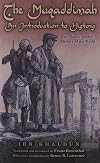
Author of The Muqaddimah, an Introduction to History [abridged Rosenthal translation]
About the Author
Called the Father of the Philosophy of History and the Father of Sociology, Ibn Khaldun is considered the first and one of the greatest philosophers of history. Born in Muslim Spain and educated in Tunis, he served as a judge and a secretary in the service of rulers in both Spain and North Africa. show more In 1382 he moved to Egypt, where he became chief judge of Cairo and a lecturer at the Azhar Mosque University. In 1400 he accompanied the Egyptians on their campaign against the Mongol warrior Tamerlane and played a role in the arrangements for the surrender of Damascus. Ibn Khaldun gained much recognition for his seven-volume work on universal history, Kitab al-Ibar (Book of Lessons). In the work, focused mostly on the Muslim world, Ibn Khaldun attempts to treat history as a science. He made his most important contribution in the first part of the work, Muqaddimah (The Introduction), in which he outlines his philosophy of history, analyzing causes of events and setting social, geographic, and economic contexts for historical changes. (Bowker Author Biography) show less
Image credit: Tunesian postage stamp
Series
Works by Ibn Khaldūn
The Muqaddimah, an Introduction to History [abridged Rosenthal translation] (1969) 749 copies, 8 reviews
Le Livre des Exemples. I: Autobiographie - Muqaddima. Appendices : Chapitres de la version primitive de la «Muqaddima» (2002) 20 copies
Al-Muqaddimah : boken om lærdommene, med en introduksjon til verdens historie. / II (2012) 11 copies
Histoire des Berbères et des dynasties musulmanes de l'Afrique septentrionale. 4 volumes (1956) 7 copies
Histoire des Berbères et des dynasties musulmanes de l'Afrique septentrionale. 4 volumes. Vol. 1 (2014) 6 copies
Ibn Khaldūn: Political Thought (Cambridge Texts in the History of Political Thought) (2025) 5 copies
تاريخ ابن خلدون 3 copies
The Requirements of the Sufi Path: A Defense of the Mystical Tradition (Library of Arabic Literature) (2022) 3 copies
Tasavvufun Mahiyeti 2 copies
Lessons from History 1 copy
تاريخ ابن خلدون - 8 أجزاء 1 copy
Muqaddima (izbor iz djela) 1 copy
MUKADDİME 2 1 copy
Histoire Des Berbères Et Des Dynasties Musulmanes de l'Afrique Septentrionale, Vol. 2 (Classic Reprint) (2018) 1 copy
Προλεγόμενα 1 copy
Tarikh Ibn Khadum 1 copy
Ibn Khaldûn : Anthologie 1 copy
Tagged
Common Knowledge
- Canonical name
- Ibn Khaldūn
- Legal name
- ibn Khaldūn, ʿAbd-ar-Rahmān Abū Zayd ibn Muhammad ibn Muhammad
أبو زيد عبد الرحمن بن محمد بن خلدون الحضرمي - Birthdate
- 1332-05-27
732 AH - Date of death
- 1406-03-19
808 AH - Gender
- male
- Nationality
- Tunisia
- Places of residence
- Spain
Tunisia - Associated Place (for map)
- Tunisia
Members
Reviews
The Muqaddimah: An Introduction to History - Abridged Edition (Princeton Classics, 13) by Ibn Khaldūn

There are books that are good, and there are books that are magnificent. This book by Ibn Khaldun falls into the latter category. The editing and translation are superb.
After reading this abridged version, I decided that in the near future I will read the entire text.
Ibn Khaldun's thinking was far ahead of his time and is advanced even in our modern age. He was a true intellectual, whose vision went wide.
This edition focuses on the nature of civilization and is - as per the subtitle - an show more introduction to history.
The book does not focus on kings and queens, but not on how kingdoms and civilization developed in his part of the world. When you read this book, you get an excellent understanding of life in the Middle East at that time, what forces were at play and how the Bedouin culture interacted with the more settled urban culture.
Read this book. You will want more. show less
After reading this abridged version, I decided that in the near future I will read the entire text.
Ibn Khaldun's thinking was far ahead of his time and is advanced even in our modern age. He was a true intellectual, whose vision went wide.
This edition focuses on the nature of civilization and is - as per the subtitle - an show more introduction to history.
The book does not focus on kings and queens, but not on how kingdoms and civilization developed in his part of the world. When you read this book, you get an excellent understanding of life in the Middle East at that time, what forces were at play and how the Bedouin culture interacted with the more settled urban culture.
Read this book. You will want more. show less
The Muqaddimah: An Introduction to History - Abridged Edition (Princeton Classics, 13) by Ibn Khaldūn
يشيد ابن خلدون بالعقل والفكر بصفته ما يميز البشر ويرفعهم على باقي الكائنات، ويصف نشأة وسقوط الأمم انطلاقاً من العلاقة بين الفرد والجماعة، وتأثير البيئة على طبيعة البشر، فضلاً عن قواعد الاقتصاد وإدارة رأس المال.
ورغم أن عديد أفكاره يعتبر بالياً قديماً (كالدعوة إلى السلطة show more الملكية باعتبارها المثلى لترسيخ النظام وكبح الشر في المجتمع، واعتبار التحضر والمدنية مدمرة لذاتها، وتفضيل دوام الترحال، والكثير من الهراء الديني الممل)، يبقى كتابه هذا سابقاً لعصره، ومادة مناسبة للدارس والقارئ في التاريخ والمجتمع. show less
ورغم أن عديد أفكاره يعتبر بالياً قديماً (كالدعوة إلى السلطة show more الملكية باعتبارها المثلى لترسيخ النظام وكبح الشر في المجتمع، واعتبار التحضر والمدنية مدمرة لذاتها، وتفضيل دوام الترحال، والكثير من الهراء الديني الممل)، يبقى كتابه هذا سابقاً لعصره، ومادة مناسبة للدارس والقارئ في التاريخ والمجتمع. show less
The Muqaddimah is a pleasurable read for experts with many surprises (in the background/sidelines). Rosenthal's bracket fillers are sometimes annoying and misleading. Khaldun finished the work in 1377, which is a pivotal year in both, the Renaissance and also the decline of Islam civilization into intellectual and economic poverty. It is written at a time where much of Islam's high culture had already been lost. The Muqaddimah is full of superstitions that replaced earlier Arab knowledge.
show more
Khaldun's social economic system is based on group feeling (singular nationalism), social cooperation (socialism) and natural cycles of excessive wealth that corrupt civilizations. He recognizes urbanization as a key factor to prosperity. As a stark reminder to modernity, excess leads to living above means, according to Khaldun, and to the corruption of character. This, he argues, leads to the ruin of civilizations. Hence, his conclusion is that religion - his Sufi version of religion - is the only way to keep a civilization sane and modest. It is an important book that builds a bridge to some understanding of modern Muslim thought. Many of Khaldun's offerings are found in Gaddafi's Green book in a slightly modified version.
The historical narrative that is based on traditions (that were invented after the fact) are useless for the student of history. For more information about how the traditions and the main Arab sects fit into history, see The Great Leap-Fraud. show less
show more
Khaldun's social economic system is based on group feeling (singular nationalism), social cooperation (socialism) and natural cycles of excessive wealth that corrupt civilizations. He recognizes urbanization as a key factor to prosperity. As a stark reminder to modernity, excess leads to living above means, according to Khaldun, and to the corruption of character. This, he argues, leads to the ruin of civilizations. Hence, his conclusion is that religion - his Sufi version of religion - is the only way to keep a civilization sane and modest. It is an important book that builds a bridge to some understanding of modern Muslim thought. Many of Khaldun's offerings are found in Gaddafi's Green book in a slightly modified version.
The historical narrative that is based on traditions (that were invented after the fact) are useless for the student of history. For more information about how the traditions and the main Arab sects fit into history, see The Great Leap-Fraud. show less
Criminally ignored in history of philosophy/intellectual history, since it shockingly illustrates the different ways European & Arabic philosophy were working. This work, written in the 1300s, predates & anticipates a fantastic number of "unique" and "milestone" breakthroughs in European philosophy, including:
Limits of induction (Hume), compromise between rationalism & empiricism (Kant), inaccessibility of the noumenal world (also Kant), Labor theory of value (Smith/Marx), necessity of show more interpretation due to cultural/linguistic relativity (Vico/Herder), Truth as intellectual consensus conforming to empirical observation (Popper), tension between truth in text and truth in speech (Derrida), language influences thought (Whorf), the power necessarily inherent in law (Weber/Foucault)
and probably some others as well show less
Limits of induction (Hume), compromise between rationalism & empiricism (Kant), inaccessibility of the noumenal world (also Kant), Labor theory of value (Smith/Marx), necessity of show more interpretation due to cultural/linguistic relativity (Vico/Herder), Truth as intellectual consensus conforming to empirical observation (Popper), tension between truth in text and truth in speech (Derrida), language influences thought (Whorf), the power necessarily inherent in law (Weber/Foucault)
and probably some others as well show less
Lists
Awards

You May Also Like


Associated Authors
Statistics
- Works
- 67
- Members
- 1,227
- Popularity
- #20,921
- Rating
- 3.9
- Reviews
- 11
- ISBNs
- 86
- Languages
- 12
- Favorited
- 7