
Bernard Lewis (1) (1916–2018)
Author of What Went Wrong?: The Clash Between Islam and Modernity in the Middle East
For other authors named Bernard Lewis, see the disambiguation page.
About the Author
Bernard Lewis was born in London, England on May 31, 1916. He graduated with honors in history from the School of Oriental Studies at the University of London in 1936 with special reference to the Middle East. In 1938, he was named an assistant lecturer at the University of London, where he show more received a Ph.D. the next year. In 1940, he was drafted into the British armed forces and assigned to the Army tank corps. He was soon transferred to intelligence. He taught at the University of London for 25 years. In 1974, he accepted joint appointments at the Institute for Advanced Study in Princeton, New Jersey and Princeton University. He also taught at Cornell from 1984 to 1990. He became an American citizen in 1982. He was a scholar of Middle Eastern history and a prolific writer. His books included The Emergence of Modern Turkey, What Went Wrong?: The Clash between Islam and Modernity in the Middle East, and From Babel to Dragomans: Interpreting the Middle East. Because he was considered an expert on interactions between the Christian and Islamic worlds, his view helped shape American foreign policy under President George W. Bush. He died on May 19, 2018 at the age of 101. (Bowker Author Biography) show less
Image credit: Office of Communications, Princeton University
Series
Works by Bernard Lewis
What Went Wrong?: The Clash Between Islam and Modernity in the Middle East (2002) 2,474 copies, 31 reviews
The Middle East: 2000 Years of History From the Rise of Christianity to the Present Day (1997) 1,835 copies, 16 reviews
A Middle East Mosaic: Fragments of Life, Letters and History (Modern Library Classics) (2000) 154 copies, 1 review
Music of a Distant Drum: Classical Arabic, Persian, Turkish, and Hebrew Poems. (2001) — Translator — 75 copies, 3 reviews
Islam: From the Prophet Muhammad to the Capture of Constantinople Volume 1: Politics and War (1974) 60 copies
Islam: From the Prophet Muhammad to the Capture of Constantinople Volume 2: Religion and Society (1974) 59 copies
Christians & Jews in the Ottoman Empire: The Functioning of a Plural Society (1982) — Editor — 35 copies, 1 review
Land of Enchanters: Egyptian Short Stories from the Earliest Times to the Present Day (2002) 22 copies
Population and Revenue in the Towns of Palestine in the Sixteenth Century (Princeton Legacy Library, 1327) (1978) 11 copies
The Origins of Ismāʿīlism: A Study of the Historical Background of the Fāṭimid Caliphate (1940) 4 copies
'The Revolt of Islam: When did the conflict with the West begin, & how could it end?' in The New Yorker, 19 Sept 2001 (2003) 3 copies, 1 review
The Question of Orientalism 1 copy
The Kingly Crown 1 copy
Associated Works
Tagged
Common Knowledge
- Canonical name
- Lewis, Bernard
- Legal name
- Lewis, Bernard
- Birthdate
- 1916-05-31
- Date of death
- 2018-05-19
- Gender
- male
- Education
- University of London (School of Oriental Studies | BA | 1936 | PhD | 1939)
University of Paris (Diplôme des Études Sémitiques | 1937) - Occupations
- historian
professor - Organizations
- Princeton University
Institute for Advanced Study
Cornell University
School of Oriental and African Studies, University of London
Association for the Study of the Middle East and Africa (Founding Member, Chairman of Academic Council)
British Army (WWII) - Awards and honors
- National Humanities Medal (2006)
Fellow, British Academy (1963)
American Academy of Arts and Sciences (1983)
American Philosophical Society (1973)
Harvey Prize (1978)
Irving Kristol Award (2007) (show all 18)
National Jewish Book Award (1999)
Thomas Jefferson Medal (2002)
Atatürk International Peace Prize (2002)
Golden Plate Award from American Academy of Achievement (2004)
The Scholar-Statesman Award (2007)
Jefferson Lecture (1990)
Member, Turkish Historical Society (1972)
Honorary Member, Société Asiatique, Paris (1984)
Citation of Honour, Turkish Ministry of Culture (1973)
Membre Associé, Institut d'Egypte, Cairo (1969)
Honorary Member, Atatürk Academy of History, Language, and Culture (1984)
George Polk Award (2001) - Relationships
- Oppenhejm, Ruth Hélène (wife ∙ divorced)
- Nationality
- UK
USA (naturalized, 1982) - Birthplace
- Stoke Newington, London, England, UK
- Places of residence
- England, UK
USA (naturalized 1982) - Place of death
- Voorhees Township, New Jersey, USA
- Burial location
- Trumpeldor cemetery, Tel Aviv, Israel
- Map Location
- USA
Members
Reviews
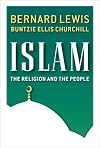
Bernard Lewis evidently knows a lot about Islam and I am looking forward to reading some more of his work, in particular the prescient-sounding Roots of Muslim Rage (1991). However, this book is condensed and abbreviated to the point of arrogance. It is simply too short. Worse, in focusing solely on Islam, it fails to account for the long history of Western intervention and imperialism that shaped its grievances, an omission that is almost dishonest. Lastly, its conclusion, that we face an show more "Islamofascistic" threat as grave as the Third Reich or the Soviet Union is ridiculous. I quote:
“Today we face a third such totalitarian perversion… Their work is facilitated and even helped by the widespread mood of guilt and self-denigration in the West, often expressed in the form of multiculturalism and political correctness. The immediate target of their attack is the Western world, previously known as Christendom. If and when they dispose of that enemy, they will surely turn to the rest of the world, the house of unbelief, and therefore, of war.
If we are to survive this threat – and it is by no means certain that we will – it is important to understand, precisely and accurately, the source, nature, and purpose of the attack.”
Absurd, dangerous and ignorant ramblings. God save us from professors Emeritus. show less
“Today we face a third such totalitarian perversion… Their work is facilitated and even helped by the widespread mood of guilt and self-denigration in the West, often expressed in the form of multiculturalism and political correctness. The immediate target of their attack is the Western world, previously known as Christendom. If and when they dispose of that enemy, they will surely turn to the rest of the world, the house of unbelief, and therefore, of war.
If we are to survive this threat – and it is by no means certain that we will – it is important to understand, precisely and accurately, the source, nature, and purpose of the attack.”
Absurd, dangerous and ignorant ramblings. God save us from professors Emeritus. show less

With a title taken from a Khayyám quatrain, I was hooked before I started.
There is much in here that is wonderful, and much that I simply don't understand. Whether the latter is due to a lack of cultural and religious understanding, or a more general poetetic (is that a word?) dullness on my part, I'm not sure. Nevertheless, a thoroughly enjoyable and re-readable anthology, spanning centuries, cultures and countries.
There is much in here that is wonderful, and much that I simply don't understand. Whether the latter is due to a lack of cultural and religious understanding, or a more general poetetic (is that a word?) dullness on my part, I'm not sure. Nevertheless, a thoroughly enjoyable and re-readable anthology, spanning centuries, cultures and countries.
****
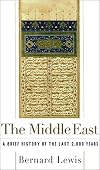
# Review: The Middle East – A Brief History of the Last 2,000 Years
Bernard Lewis’s *The Middle East: A Brief History of the Last 2,000 Years* offers a sweeping, chronological survey of a region that has been a crossroads of civilizations, religions, and empires. Spanning from the Hellenistic era through late 20th-century transformations, Lewis distills two millennia of political, social, and cultural developments into an accessible 448-page narrative. His goal is to identify show more recurring patterns—unity and fragmentation, external influence and indigenous innovation—and to probe whether historical precedents can shed light on contemporary conflicts.
---
## Narrative Scope and Structure
Lewis organizes the story into clear, digestible eras:
- Hellenization and the emergence of **early Christianity** under Roman rule
- The **rise and spread of Islam**, from the Prophet Muhammad to the Umayyad and Abbasid Caliphates
- The impact of the **Mongol invasions**, reshaping political centers and opening pathways for new dynasties
- The **Ottoman and Safavid empires**, whose contests defined regional borders and religious divisions
- Encounters with **Western imperialism** and the challenges of modernization in the 19th and early 20th centuries
- The **post-World War II period**, decolonization, the Arab–Israeli conflicts, and the rise of nationalism and political Islam
---
## Key Strengths
- Meticulous scholarship: Lewis draws on archaeological findings, contemporary chronicles, and modern historiography to ground his analysis.
- Clarity and elegance: Dense material is rendered with graceful prose, making complex transitions and dynastic shifts understandable to non-specialists.
- Pattern recognition: By tracing recurring themes—center-periphery tensions, sectarian divides, and reactions to foreign intervention—Lewis invites readers to consider how history informs present-day dynamics.
---
## Considerations and Criticisms
- Publication date: First released in 1997, it does not cover developments of the 21st century, including the Arab Spring or recent geopolitical realignments.
- Grand narrative trade-offs: A single-volume treatment inevitably glosses over local intricacies and the diversity of Arab, Persian, Turkish, Kurdish, and other communities.
- Perspective: Critics have noted Lewis’s pro-Western outlook may understate indigenous agency and overemphasize external influence in shaping the region.
---
## Conclusion
*The Middle East: A Brief History of the Last 2,000 Years* remains the most comprehensive single-volume introduction to the region penned by a leading scholar. It excels at laying a foundation—charting key dynasties, cultural florescences, and crisis points. For those seeking an up-to-date or deeply localized study, pairing Lewis with newer monographs or specialized regional works is recommended. As a gateway to a complex past, however, his narrative continues to enlighten and provoke informed inquiry into the Middle East’s enduring challenges and possibilities.
I have read the book, and it is informative. show less
# Review: The Middle East – A Brief History of the Last 2,000 Years
Bernard Lewis’s *The Middle East: A Brief History of the Last 2,000 Years* offers a sweeping, chronological survey of a region that has been a crossroads of civilizations, religions, and empires. Spanning from the Hellenistic era through late 20th-century transformations, Lewis distills two millennia of political, social, and cultural developments into an accessible 448-page narrative. His goal is to identify show more recurring patterns—unity and fragmentation, external influence and indigenous innovation—and to probe whether historical precedents can shed light on contemporary conflicts.
---
## Narrative Scope and Structure
Lewis organizes the story into clear, digestible eras:
- Hellenization and the emergence of **early Christianity** under Roman rule
- The **rise and spread of Islam**, from the Prophet Muhammad to the Umayyad and Abbasid Caliphates
- The impact of the **Mongol invasions**, reshaping political centers and opening pathways for new dynasties
- The **Ottoman and Safavid empires**, whose contests defined regional borders and religious divisions
- Encounters with **Western imperialism** and the challenges of modernization in the 19th and early 20th centuries
- The **post-World War II period**, decolonization, the Arab–Israeli conflicts, and the rise of nationalism and political Islam
---
## Key Strengths
- Meticulous scholarship: Lewis draws on archaeological findings, contemporary chronicles, and modern historiography to ground his analysis.
- Clarity and elegance: Dense material is rendered with graceful prose, making complex transitions and dynastic shifts understandable to non-specialists.
- Pattern recognition: By tracing recurring themes—center-periphery tensions, sectarian divides, and reactions to foreign intervention—Lewis invites readers to consider how history informs present-day dynamics.
---
## Considerations and Criticisms
- Publication date: First released in 1997, it does not cover developments of the 21st century, including the Arab Spring or recent geopolitical realignments.
- Grand narrative trade-offs: A single-volume treatment inevitably glosses over local intricacies and the diversity of Arab, Persian, Turkish, Kurdish, and other communities.
- Perspective: Critics have noted Lewis’s pro-Western outlook may understate indigenous agency and overemphasize external influence in shaping the region.
---
## Conclusion
*The Middle East: A Brief History of the Last 2,000 Years* remains the most comprehensive single-volume introduction to the region penned by a leading scholar. It excels at laying a foundation—charting key dynasties, cultural florescences, and crisis points. For those seeking an up-to-date or deeply localized study, pairing Lewis with newer monographs or specialized regional works is recommended. As a gateway to a complex past, however, his narrative continues to enlighten and provoke informed inquiry into the Middle East’s enduring challenges and possibilities.
I have read the book, and it is informative. show less
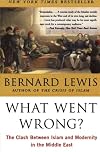
This is a rare offering, a history with a real grasp on human nature. Just as history is written about many of the most awful episodes of the past, many historians write with a very small degree of belief in human decency, to say the least. Most history is written with a lot of technical knowledge about military and political affairs, but in a more mechanical than human way. This is not to say that all errors are the same or all controversy useless, but truth is hard to obtain when the story show more or interpretation is built clumsily and without understanding, a sense of the whole which can distinguish between a house and a pile of bricks. In this book the facts are not just strewn about like bricks, or collected like strange and exotic flora, but selected to tell a story which tells a truth about people, that blame brings only pain to the one who blames. Much history only tells you that the death rate was unusually high on a given day. Much history actually actively contradicts the truth that blame doesn't pay, by blaming the cherished villain of the relevant party. I know that I might sound to be making a lot out of this in terms of it being atypical history, but he does start out with what's most tangible and non-essential, and slowly goes the other way. By the end of it he really is talking about the nature of living, and I really think you are supposed to walk away thinking in a different way than your average student of history, of any party.
The central message of this book is that when something bad happens to you, you ought to take responsibility for it, for you do have the power to make it better. Despite the necessary linguistic training that would go into the backstory research, the technical knowledge needed to work out what people were saying, the story ultimately isn't about people with funny names. If it were about the French Revolution or the war against Napoleon, you'd be talking largely about French people playing the part of the chosen people of the goddess of reason, and suffering in this erroneous zone of thought. But the truth, that nobody is the sacred race, would in the end have nothing to do with French phonetics, or any other technical knowledge. Likewise, the clouds of ignorance darkening the skies of the world of cosmopolitan Ottomans and oceanic poets isn't about looking cool by remembering the details of Russo-Ottoman wars, as though you were employed by the Foreign Office in the century before last. It's not about collecting factoids to score some cheap points against the people who don't mock other people in the correct and enlightened way in which you mock people who are not enlightened, who do not mock the right people in the right ways. No, it's not about silly things that happened to other people; it's about you. If you blame other people for your own mistakes and your foolish ideas that cause you trouble, then you are doing what a once-great half-broken civilization has done to wreck their ship of state. Now as always, if you change your thoughts, you can change your life, although there's always a price if you don't. So it's about you, really. If it's not about you, it's about nobody. (Because we are all one.) show less
The central message of this book is that when something bad happens to you, you ought to take responsibility for it, for you do have the power to make it better. Despite the necessary linguistic training that would go into the backstory research, the technical knowledge needed to work out what people were saying, the story ultimately isn't about people with funny names. If it were about the French Revolution or the war against Napoleon, you'd be talking largely about French people playing the part of the chosen people of the goddess of reason, and suffering in this erroneous zone of thought. But the truth, that nobody is the sacred race, would in the end have nothing to do with French phonetics, or any other technical knowledge. Likewise, the clouds of ignorance darkening the skies of the world of cosmopolitan Ottomans and oceanic poets isn't about looking cool by remembering the details of Russo-Ottoman wars, as though you were employed by the Foreign Office in the century before last. It's not about collecting factoids to score some cheap points against the people who don't mock other people in the correct and enlightened way in which you mock people who are not enlightened, who do not mock the right people in the right ways. No, it's not about silly things that happened to other people; it's about you. If you blame other people for your own mistakes and your foolish ideas that cause you trouble, then you are doing what a once-great half-broken civilization has done to wreck their ship of state. Now as always, if you change your thoughts, you can change your life, although there's always a price if you don't. So it's about you, really. If it's not about you, it's about nobody. (Because we are all one.) show less
Lists
Folio Society (1)
Wish to read (1)
Awards


You May Also Like


Associated Authors
Statistics
- Works
- 75
- Also by
- 1
- Members
- 11,247
- Popularity
- #2,095
- Rating
- 3.6
- Reviews
- 121
- ISBNs
- 425
- Languages
- 19
- Favorited
- 10