
John L. Esposito (1940–2026)
Author of Islam: The Straight Path
About the Author
John L. Esposito is University Professor of Religion and International Affairs, Professor of Islamic Studies, Founding Director of the Alwaleed Center for Muslim-Christian Understanding, and Director of The Bridge: Protecting Pluralism-Ending Islamophobia at Georgetown University. Editor-in-Chief show more of Oxford Islamic Studies Online and The Oxford Encyclopedia of Islam, he is the author of What Everyone Needs to Know about Islam, Second Edition (2011), The Future of Islam (2010), and Unholy War: Terror in the Name of Islam (2002), and coauthor of Islam and Democracy after the Arab Spring (2015), all published by Oxford University Press. show less
Works by John L. Esposito
Islam and Development: Religion and Sociopolitical Change (Contemporary Issues in the Middle East (Paperback)) (1980) 12 copies
Religion and Global Order (University of Wales Press - Religion, Culture, and Society) (2000) — Editor — 6 copies
Güçlenen İslam'ın Yankıları 1 copy
The Contemporary Islamic Revival: A Critical Survey and Bibliography (Bibliographies and Indexes in Religious Studies) (1991) 1 copy
Practice and Theory 1 copy
Associated Works
The Children of Abraham: Judaism, Christianity, Islam (1982) — Foreword, some editions — 215 copies, 1 review
Tagged
Common Knowledge
- Birthdate
- 1940-05-19
- Date of death
- 2026-07-15
- Gender
- male
- Education
- St Johns University
Temple University (PhD|Religious Studies) - Occupations
- professor
Islamic Scholar - Organizations
- Georgetown University
Prince Alwaleed Bin Talal Center for Muslim-Christian Understanding (founding director)
Middle East Studies Association of North America
High Level Group of the U.N. Alliance of Civilizations
College of the Holy Cross - Nationality
- USA
- Places of residence
- New York, New York, USA (Brooklyn)
Washington, D.C., USA - Map Location
- USA
Members
Reviews
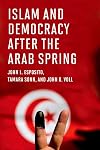
Islam and Democracy after the Arab Spring by John L. Esposito, et al is an examination of the present state of several Islamic countries and how they fared historically and to some extent democratically. Esposito is a professor of International Affairs and Islamic Studies at Georgetown University. He is also the director of the Prince Alwaleed Bin Talal center for Muslim-Christian understanding at Georgetown University.
Anyone who has spent time studying history or politics knows that show more democracy is a learned from of government. The United States learned it as a colony with town hall meetings, limited self-rule, and British tradition. Many after the Cold War expected Eastern Europe and the former Soviet Union would form neat democracies. Instead, the people missed the stability and predictability of the old system. The uncertainty of freedom and democracy were balanced with unemployment and bankrupt pensions. How is it expected that democracy would bloom in the Middle East? It was a region that did not know nationalism until twentieth-century borders were drawn. It is still a region where even today tribal alliances still play an important role. The idea of democracy is seen as a threat to many in all walks of life.
Islam and Democracy after the Arab Spring examines Turkey, Iran, Pakistan, Indonesia, Tunisia, Senegal, and Egypt. Each country's history is very different and each country's present state is also different. Turkey the long held example of an Islamic democracy is not without its problems, some serious. Most would dismiss Senegal, the West African nation, as a democracy, but it has the best democratic track record of the Islamic countries covered. French democratic tradition and a sense of nationalism Senegal adapted into a democratic country with peaceful transfers of power.
Each country is now facing the same problems of a large and largely unemployed youth. The younger generations have greater exposure to the world and information. It is interesting how it is viewed by the younger generation or those under forty. The corruption of the Shah is not a memory, but the war with Iraq and restrictions of freedom are. In Tunisia secular government corruption was the worry. In other places Islamic parties strive for equality, law, and preventing poverty, quite unlike they are viewed in the west. Some see Islamic law as a means of leveling the playing field between the corrupt and the poor.
History and tradition play a role in developing a democracy. Also, many of these countries were pawns in the Cold War which affected their development. Corrupt governments like Iran were supported for their strategic value. Turkey became a NATO member but was never accepted as a European nation. Senegal left out of the Cold War power plays and slow to gain independence from France developed well. Esposito goes a great way in explaining why democracy hasn't taken hold in Islamic countries. The answer isn’t quite as simple as Westerns would like to think. Islam does not always mean oppression and democracy doesn’t mean social and economic equality. Islam and Democracy after the Arab Spring presents a balanced view of the political situation and history in countries with an Islamic population. show less
Anyone who has spent time studying history or politics knows that show more democracy is a learned from of government. The United States learned it as a colony with town hall meetings, limited self-rule, and British tradition. Many after the Cold War expected Eastern Europe and the former Soviet Union would form neat democracies. Instead, the people missed the stability and predictability of the old system. The uncertainty of freedom and democracy were balanced with unemployment and bankrupt pensions. How is it expected that democracy would bloom in the Middle East? It was a region that did not know nationalism until twentieth-century borders were drawn. It is still a region where even today tribal alliances still play an important role. The idea of democracy is seen as a threat to many in all walks of life.
Islam and Democracy after the Arab Spring examines Turkey, Iran, Pakistan, Indonesia, Tunisia, Senegal, and Egypt. Each country's history is very different and each country's present state is also different. Turkey the long held example of an Islamic democracy is not without its problems, some serious. Most would dismiss Senegal, the West African nation, as a democracy, but it has the best democratic track record of the Islamic countries covered. French democratic tradition and a sense of nationalism Senegal adapted into a democratic country with peaceful transfers of power.
Each country is now facing the same problems of a large and largely unemployed youth. The younger generations have greater exposure to the world and information. It is interesting how it is viewed by the younger generation or those under forty. The corruption of the Shah is not a memory, but the war with Iraq and restrictions of freedom are. In Tunisia secular government corruption was the worry. In other places Islamic parties strive for equality, law, and preventing poverty, quite unlike they are viewed in the west. Some see Islamic law as a means of leveling the playing field between the corrupt and the poor.
History and tradition play a role in developing a democracy. Also, many of these countries were pawns in the Cold War which affected their development. Corrupt governments like Iran were supported for their strategic value. Turkey became a NATO member but was never accepted as a European nation. Senegal left out of the Cold War power plays and slow to gain independence from France developed well. Esposito goes a great way in explaining why democracy hasn't taken hold in Islamic countries. The answer isn’t quite as simple as Westerns would like to think. Islam does not always mean oppression and democracy doesn’t mean social and economic equality. Islam and Democracy after the Arab Spring presents a balanced view of the political situation and history in countries with an Islamic population. show less
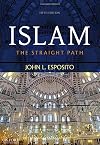
Strong textbook on the foundations of Islam that covers most if not all areas of interest. The only pitfall of the book is that it spends almost copious time righting the misinterpretations of the religion.
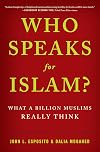
A fascinating and well-documented look at the real Muslims. We hear so much propaganda here selling hatried of Muslims that it's humbling to see the quotes and survey results here. For example, I did not know that the Koran forbids racism. As with our Christian Bible, practice does not always follow scripture, but it is reassuring to see so many admirable quotes from the Koran. The book is very circumspect indeed about challenging myths; it simply makes a case that Muslims are human, and show more that Islam is not demonic. I think it is the duty of Americans to know something about the culture we have been attacking for so long. show less

I was glad to get another point of view after reading so much of Gabriel Said Reynolds work. This one has more information about modern expression of Islam. Well done.
Lists
You May Also Like


Associated Authors
Statistics
- Works
- 64
- Also by
- 3
- Members
- 3,772
- Popularity
- #6,718
- Rating
- 3.7
- Reviews
- 13
- ISBNs
- 204
- Languages
- 10
- Favorited
- 2