
Albert Hourani (1915–1993)
Author of A History of the Arab Peoples
About the Author
Albert Hourani was Emeritus Fellow, St. Antony's College, Oxford. He died in 1993
Works by Albert Hourani
Great Britain and the Arab world, 2 copies
الفكر العربي في عصر النهضة ١٧٩٨-١٩٣٩ 2 copies
Minorities in the Arab World 2 copies
تاريخ الشعوب العربية 1 copy
Tagged
Common Knowledge
- Canonical name
- Hourani, Albert
- Legal name
- Hourani, Albert Habib
- Other names
- ألبرت حبيب حوراني
- Birthdate
- 1915-03-31
- Date of death
- 1993-01-17
- Gender
- male
- Education
- Magdalen College, University of Oxford (BA|Politics, Philosophy & Economics & History|1936)
- Occupations
- professor
historian
civil servant - Organizations
- St. Antony's College, Oxford
American University of Beirut
University of Pennsylvania
Harvard University
Magdalen College, Oxford
Anglo-American Committee of Enquiry - Awards and honors
- Order of the British Empire (Commander, 1980)
American Historical Association (Honorary Fellow)
Middle East Studies Association of North America (Honorary Fellow) - Relationships
- Keynes, Randal (brother-in-law)
Hourani, George (brother) - Short biography
- Married to Odile Hourani, with one daughter, Susanna.
- Nationality
- UK
- Birthplace
- Manchester, Lancashire, England, UK
- Places of residence
- Lebanon
Egypt
Jerusalem, British Palestine
London, England, UK - Place of death
- Oxford, Oxfordshire, England, UK
- Burial location
- Wolvercote Cemetery, Oxford, England, UK
- Map Location
- England, UK
Members
Reviews
http://nhw.livejournal.com/1048242.html
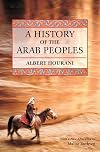
It's an interesting survey - I have been reading a bit about the origins of Islam (both Rogerson's books and this piece by Patricia Crone) but Hourani's book starts from there and takes the narrative up to the late 80s. (The 2002 afterword, by someone else, suffers from not saying enough about Iraq.)
What I most liked about the book was the emphasis on social and economic as well as political history - and that is a big admission for me, because normally show more I only like the political history bits. Hourani modestly claims that in this he is following the example of the great Ibn Khaldūn, but I'm sure he brings an extra six centuries of historiography to bear as well (I am sorry to say that I have read only extracts of Ibn Khaldūn; I see the Muqaddimah is on-line here though.) By concentrating on philosophy and culture he makes a good implicit case that currents of Islamic thought had a greater direct impact on local politics than perhaps the equivalents for Christianity.
Which links neatly to my only grounds of dissatisfaction with the book; which are (rather unreasonably of me, since he covers a pretty large chunk of the world) that it doesn't look widely enough. Iran and Persia are barely mentioned; likewise India, the Balkans and Cyprus, all of which are important interfaces between Islam and other faiths. Turkey proper, because of the longevity of the Ottoman Empire, gets a bit more coverage, as does Al-Andalus, but sub-Saharan Africa, Indonesia, Central Asia and Afghanistan are basically invisible. OK, the book is technically about Arabs rather than Muslims, but it concentrates so much on Islam (and correspondingly less on Arab Christians, except in Lebanon) that I felt the non-Arab Muslims got rather short shrift.
Anyway, well worth reading. show less
It's an interesting survey - I have been reading a bit about the origins of Islam (both Rogerson's books and this piece by Patricia Crone) but Hourani's book starts from there and takes the narrative up to the late 80s. (The 2002 afterword, by someone else, suffers from not saying enough about Iraq.)
What I most liked about the book was the emphasis on social and economic as well as political history - and that is a big admission for me, because normally show more I only like the political history bits. Hourani modestly claims that in this he is following the example of the great Ibn Khaldūn, but I'm sure he brings an extra six centuries of historiography to bear as well (I am sorry to say that I have read only extracts of Ibn Khaldūn; I see the Muqaddimah is on-line here though.) By concentrating on philosophy and culture he makes a good implicit case that currents of Islamic thought had a greater direct impact on local politics than perhaps the equivalents for Christianity.
Which links neatly to my only grounds of dissatisfaction with the book; which are (rather unreasonably of me, since he covers a pretty large chunk of the world) that it doesn't look widely enough. Iran and Persia are barely mentioned; likewise India, the Balkans and Cyprus, all of which are important interfaces between Islam and other faiths. Turkey proper, because of the longevity of the Ottoman Empire, gets a bit more coverage, as does Al-Andalus, but sub-Saharan Africa, Indonesia, Central Asia and Afghanistan are basically invisible. OK, the book is technically about Arabs rather than Muslims, but it concentrates so much on Islam (and correspondingly less on Arab Christians, except in Lebanon) that I felt the non-Arab Muslims got rather short shrift.
Anyway, well worth reading. show less
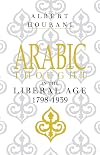
This is a reasonably interesting book on the thoughts of various 19th and early 20th century Arab thinkers on governance and secular modernization. These thoughts were for the most part inspired by events in Europe, but Europe remains firmly in the background in this book. The author usually just notes that a particular thinker spent so an so many years in France before returning home, and instead explains in some detail how the person in question wanted to reform his own country. The show more legitimacy of the Ottoman empire, the preconditions of national solidarity, and nationalism (in the latter part of the period, during the birth of independent nation states in Arab lands) take center stage. It seems like most of the plans and ideas presented in this book did not incite much enthusiasm among a broader public and political developments didn't proceed in the way that any of these authors expected, but it's nevertheless interesting to learn about their worldview.
Political ideas are one central theme of this book and religion is another. Most of the writers presented consider these two themes inseparable. Again and again they return to the same dilemma: modernization can be good only insofar as it accommodates Islam, but Islam cannot be reformed or modernized. There's a passage somewhere in the book about one of these "modern" Arab thinkers (I forgot which one) who considers long and hard if those who convert away from Islam should be allowed to live or not. Others are much more tolerant, but I think this illustrates well how the strength of islamic tradition shackled the development of new ideas on tolerance and freedom in the Arab world. Even enterprising intellectuals with full freedom of expression struggled to reconcile their religious beliefs with political, economic and technical development. In the face of such a fundamental obstacle to modernization, it seems to be no wonder that Arab societies have developed so fitfully and achieved so little political freedom in the 100 years that have passed after these ideas were published. show less
Political ideas are one central theme of this book and religion is another. Most of the writers presented consider these two themes inseparable. Again and again they return to the same dilemma: modernization can be good only insofar as it accommodates Islam, but Islam cannot be reformed or modernized. There's a passage somewhere in the book about one of these "modern" Arab thinkers (I forgot which one) who considers long and hard if those who convert away from Islam should be allowed to live or not. Others are much more tolerant, but I think this illustrates well how the strength of islamic tradition shackled the development of new ideas on tolerance and freedom in the Arab world. Even enterprising intellectuals with full freedom of expression struggled to reconcile their religious beliefs with political, economic and technical development. In the face of such a fundamental obstacle to modernization, it seems to be no wonder that Arab societies have developed so fitfully and achieved so little political freedom in the 100 years that have passed after these ideas were published. show less
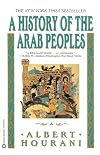
This book tackles a rather complicated and diverse topic and treats it fairly given the subject. Whether we like it or not, there is almost no way for most people to negotiate between the aspects of the amazingly diverse Arab people. We tend to "lump" them all together out of our ignorance. Then there is the issue with Islam and how the world views it. Most of the non-Islamic world has no idea what it is but they know they hate it. This creates a huge gulf of misunderstanding and that can show more create the conditions for strife and conflict. The author steps in to fill that void with a book that gives basic and fundamental information about who these people are and what they believe. The easiest way to get people to understand one another is to introduce yourself and share information. For a good part of the United States (as an example) much in this book will be new information because all they "know" has been headlines and news reports. Learning about the people themselves, who they are, what they do, where they go and how they live-all of this humanizes them and makes the Western world realize that that they are actual "real' people too. We can forget basic humanity when we write off whole populations due to the actions of a few. Not all people are bad. The author also walks us through the founding of Islam. He takes the established path and does not stray from it. There is a substantial body of scholarly work about this topic but this is not the time for that. He gives a clear telling of the foundation of this faith that carries so much impact today. There is quite a lot of serious scholarly material on the Quorn, Islam, the Prophet and the formation of the Islamic states in written and video formats. This book is a great introduction to a subject that people know almost nothing about and that makes it a valuable resource. show less

This book was a good, balanced chronicle of the history and evolution of Islam, the Arabic people, and the nations that arose as a result. It should be required reading for anyone elected into congress or the executive branch and all the empty suits appointed into cabinet or embassy positions that deal with the Middle East and Islamic issues. Very apropos now given the events that have taken place recently in Egypt and other countries.
Hourani takes us from Muhammad to about 1990 and then show more Malise Ruthven takes us to 2009 in his afterword. It looks like another afterword might be needed soon. It was especially refreshing to read that for much of the earlier history covered in the book and in many places in the Islamic empire that non-Muslims were not only tolerated but made important contributions to the societies. OK, they had to pay a head tax for being non-Muslim but that beats losing your head in a pogrom or purge.
This is stuff you never learned in school and that was probably never even taught. If you are feeling a tinge of Islamophobia coming on this book might help you get over it. show less
Hourani takes us from Muhammad to about 1990 and then show more Malise Ruthven takes us to 2009 in his afterword. It looks like another afterword might be needed soon. It was especially refreshing to read that for much of the earlier history covered in the book and in many places in the Islamic empire that non-Muslims were not only tolerated but made important contributions to the societies. OK, they had to pay a head tax for being non-Muslim but that beats losing your head in a pogrom or purge.
This is stuff you never learned in school and that was probably never even taught. If you are feeling a tinge of Islamophobia coming on this book might help you get over it. show less
Lists
Awards


You May Also Like


Associated Authors
Statistics
- Works
- 28
- Members
- 4,089
- Popularity
- #6,152
- Rating
- 3.7
- Reviews
- 23
- ISBNs
- 99
- Languages
- 15
- Favorited
- 4