
Hugh Kennedy (1) (1947–)
Author of The Great Arab Conquests: How The Spread Of Islam Changed The World We Live In
For other authors named Hugh Kennedy, see the disambiguation page.
About the Author
Hugh Kennedy has taught in the Department of Mediaeval History at the University of St. Andrews since 1972.
Works by Hugh Kennedy
The Great Arab Conquests: How The Spread Of Islam Changed The World We Live In (2007) 513 copies, 4 reviews
When Baghdad Ruled the Muslim World: The Rise and Fall of Islam's Greatest Dynasty (2004) 367 copies, 5 reviews
The Prophet and the Age of the Caliphates: The Islamic Near East from the Sixth to the Eleventh Century (1986) 194 copies, 1 review
The Armies of the Caliphs: Military and Society in the Early Islamic State (2001) 60 copies, 1 review
Associated Works
The Cambridge Ancient History, Vol. 14: Late Antiquity: Empire and Successors, A.D. 425–600 (2001) — Contributor — 91 copies, 1 review
The New Cambridge Medieval History: Volume 4, c.1024-c.1198, Part 1 (2004) — Contributor — 75 copies, 1 review
Interpreting Late Antiquity: Essays on the Postclassical World (2001) — Contributor — 62 copies, 1 review
The Cambridge History of Egypt, Vol. 1: Islamic Egypt, 640-1517 (Volume 1) (1998) — Contributor — 34 copies
The City in Late Antiquity (Leicester-Nottingham Studies in Ancient Society) (1992) — Contributor — 26 copies
The History of al-Tabari Vol. 29. Al-Manṣūr and al-Mahdī A.D. 763-786/A.H. 146-169 (1990) — Translator, some editions — 20 copies
The Byzantine and Early Islamic Near East. VI: Elites Old and New (1992) — Contributor — 15 copies, 1 review
Cities, Texts, and Social Networks, 400-1500: Experiences and Perceptions of Medieval Urban Space (2017) — Contributor — 5 copies
Visions of community in the post-Roman world : the West, Byzantium and the Islamic world, 300-1100 (2012) — Contributor — 5 copies
The 17th International Byzantine Congress : Major papers, Dumbarton Oaks/Georgetown University, Washington, D.C., August 3-8, 1986 (1986) — Contributor — 4 copies
Writing "true stories": Historians and Hagiographers in the Late Antique and Medieval Near East (2010) — Editor — 3 copies
Tagged
Common Knowledge
- Legal name
- Kennedy, Hugh N.
- Birthdate
- 1947-10-22
- Gender
- male
- Education
- University of Cambridge
- Occupations
- Professor of Arabic (School of Oriental and African Studies, London, UK)
professor of history (University of St Andrews, Scotland, UK) - Short biography
- Has studies Arabic at the Middle East Centre for Arabic Studies. Went on to read Arabic, Persian & History at Cambridge. Taught in the Department of Medieval History at St Andrews since 1972, and was elected Fellow of the Royal Society of Edinburgh (2000).
- Nationality
- UK
- Associated Place (for map)
- UK
Members
Reviews
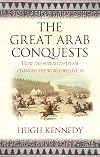
This book is a superb example of popular history that retains scholarly authenticity. Hugh Kennedy manages to not only write in an accessible, engaging style that is perfect for the layman, he also takes the time to address scholarly issues such as the historiography of the topic, the different sources we have about the conquests and their limitations, and finally the broad contours of some of the debates surrounding this time period. The book is well organised and the chapters concise. A show more bunch of maps up front make it easy to follow the events being narrated. Some may disagree with some of Dr. Kennedy's interpretations, but in the best scholarly fashion, he always presents his reasoning and looks at different interpretations. The narrative is based on various Arab sources, as well as Persian, Copt, Byzantine, Jewish, Spanish, Frankish, Nestorian and even Chinese accounts. Dr. Kennedy also refers to archaeological evidence from excavation sites, found artefacts, carvings and even a shipwreck. The author is careful to point out where accounts differ, where they agree and explains why one might be taken to be more authentic than the other. In some cases he points out why and how even obviously fanciful or apocryphal accounts may be of value to the historian.
The only quibble I would have is that the narrative can drag a little, particularly in the chapters on the conquests of Transoxonia and Iran. One can't fault Dr. Kennedy for being comprehensive but sometimes the litany of siege, raid, occupation and so on can become slightly repetitive to read. This minor quibble aside, this is a fine work and highly recommended for anyone seeking to to learn about how the Arabs came to conquer an empire as large of that of Rome at its height. show less
The only quibble I would have is that the narrative can drag a little, particularly in the chapters on the conquests of Transoxonia and Iran. One can't fault Dr. Kennedy for being comprehensive but sometimes the litany of siege, raid, occupation and so on can become slightly repetitive to read. This minor quibble aside, this is a fine work and highly recommended for anyone seeking to to learn about how the Arabs came to conquer an empire as large of that of Rome at its height. show less
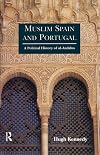
Interesting, although a difficult read. In a way the Muslim conquest of Spain was similar to the various invasions that ended the Roman empire; tribal groups invaded and established a thin veneer of control over the existing population. Ironically, Spain at the time was ruled by descendants of the Visigoths, who were as alien to the original inhabitants as the Muslims were. Author Hugh Kennedy notes that sometimes the rapidity of the conquest is attributed to disorganization and corruption show more in the Visigoth rule; however he counters that the Visigoth army seems to have been well organized and that the Visigoths had established effective central rule; it was paradoxically because of this that the Muslims were able to win. If Visigoth rule had been ineffective, defeat of their army wouldn’t have mattered very much and there would have been plenty of local powers able and willing to fight back. Instead once the main Visigoth army was defeated there was no further resistance and the whole country collapsed.
Well, no, not the whole country. That’s one of the mysteries of the Muslims and al-Andalus; they never extended their rule over the whole of the Iberian Peninsula, leaving roughly the northern third unconquered. After the quick defeat of the Visigoths and occupation of territory by settlers from the Maghreb, subsequent Muslim leaders lead or organized raids into Christian lands, being more intent on returning with booty than conquest; no one seemed interested in permanent settlement. One of the factors here was the Muslim governments never developed a financial system that provided adequate money for defense; to some extent they were handicapped by Koranic sanctions limiting taxation. That left raids and booty as about the only way military forces could be paid; thus, ironically, it wasn’t in the Muslim governments interest to conquer the whole of the peninsula since it would leave nowhere to raid. It’s sometimes contended that the Battle of Tours (732 CE) was one of the most important in world history; supposedly Charles Martel’s victory over ‘Abd-al-Rahmân prevented a Muslim conquest of France; however the history of adjacent Spain suggests all that was intended was another grand raid and a Christian defeat at Tours only would have resulted in a Muslim withdrawal with whatever loot they had picked up.
A repeating pattern developed in al-Andalus; someone or some group from outside the area would decide the people or their leaders had become to secular and would show up to lead them back to orthodox Islam (often the reason was un-Islamic taxation). Thus the original conquest government was replaced by Umayyads from Syria; the Umayyad caliphate of Cordova eventually collapsed into independent local kingdoms; then Almoravids showed up from Morocco to reestablish central authority and Islam; then their rule collapsed again into independent kingdoms; then Almohads showed up from Morocco to reestablish central authority and Islam, then things began to collapse again. All these were outsiders, imposed on the native population, often only by foreign soldiers. In the meantime, the Christian states to the north and east were always nibbling away at Muslim territory; although there were reverses the Christians usually came to stay rather than to raid and return. Eventually the last remaining territory, the kingdom of Granada, fell and the inhabitants were given the choice of conversion or exile.
This was quite a hard read. Kennedy only provides two maps and those are just of the basic geographic layout of Iberia and Morocco; it’s very hard to keep track of who’s doing what where and when; some maps showing areas held by the various powers at various times would have been hugely helpful. There’s also the problem of names; it’s hard to keep track of who’s who; I was tempted to set up a spreadsheet to help me keep track. There are some handy genealogical tables provided in the endpapers; these illustrate another peculiarity of Muslim rule. Rulers were supposed to come from a ruling family, often putative descendants of Muhammed or some early caliph, but strict patrilineal descent wasn’t necessary. Thus rule might go to a brother, then to an uncle, then to a son, then to a nephew. In a lot of cases the ruler was only a titular figure that met the descent requirements and actual power was held by somebody else.
No illustrations other than the maps mentioned; a pretty extensive bibliography but mostly in Spanish or Arabic. Interesting but I probably picked up only a fraction of what was going on. show less
Well, no, not the whole country. That’s one of the mysteries of the Muslims and al-Andalus; they never extended their rule over the whole of the Iberian Peninsula, leaving roughly the northern third unconquered. After the quick defeat of the Visigoths and occupation of territory by settlers from the Maghreb, subsequent Muslim leaders lead or organized raids into Christian lands, being more intent on returning with booty than conquest; no one seemed interested in permanent settlement. One of the factors here was the Muslim governments never developed a financial system that provided adequate money for defense; to some extent they were handicapped by Koranic sanctions limiting taxation. That left raids and booty as about the only way military forces could be paid; thus, ironically, it wasn’t in the Muslim governments interest to conquer the whole of the peninsula since it would leave nowhere to raid. It’s sometimes contended that the Battle of Tours (732 CE) was one of the most important in world history; supposedly Charles Martel’s victory over ‘Abd-al-Rahmân prevented a Muslim conquest of France; however the history of adjacent Spain suggests all that was intended was another grand raid and a Christian defeat at Tours only would have resulted in a Muslim withdrawal with whatever loot they had picked up.
A repeating pattern developed in al-Andalus; someone or some group from outside the area would decide the people or their leaders had become to secular and would show up to lead them back to orthodox Islam (often the reason was un-Islamic taxation). Thus the original conquest government was replaced by Umayyads from Syria; the Umayyad caliphate of Cordova eventually collapsed into independent local kingdoms; then Almoravids showed up from Morocco to reestablish central authority and Islam; then their rule collapsed again into independent kingdoms; then Almohads showed up from Morocco to reestablish central authority and Islam, then things began to collapse again. All these were outsiders, imposed on the native population, often only by foreign soldiers. In the meantime, the Christian states to the north and east were always nibbling away at Muslim territory; although there were reverses the Christians usually came to stay rather than to raid and return. Eventually the last remaining territory, the kingdom of Granada, fell and the inhabitants were given the choice of conversion or exile.
This was quite a hard read. Kennedy only provides two maps and those are just of the basic geographic layout of Iberia and Morocco; it’s very hard to keep track of who’s doing what where and when; some maps showing areas held by the various powers at various times would have been hugely helpful. There’s also the problem of names; it’s hard to keep track of who’s who; I was tempted to set up a spreadsheet to help me keep track. There are some handy genealogical tables provided in the endpapers; these illustrate another peculiarity of Muslim rule. Rulers were supposed to come from a ruling family, often putative descendants of Muhammed or some early caliph, but strict patrilineal descent wasn’t necessary. Thus rule might go to a brother, then to an uncle, then to a son, then to a nephew. In a lot of cases the ruler was only a titular figure that met the descent requirements and actual power was held by somebody else.
No illustrations other than the maps mentioned; a pretty extensive bibliography but mostly in Spanish or Arabic. Interesting but I probably picked up only a fraction of what was going on. show less
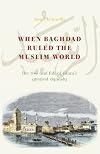
Hugh Kennedy, in his light and entertaining read, “When Baghdad Ruled the Muslim World”, sets out to provide a window into the courts and court life of the Abbasid Caliphate (750 – 935 CE). He succeeds in this goal, providing a colorful and entertaining history of the court culture, poetry, literature, and the groundbreaking scientific discoveries that can be traced to the Abbasid period. He recounts and analyzes the grandeur and power of the caliphs and the practical forces that show more constrained and even usurped their authority. He also provides interesting insight into the early hardening of the split between the Party of Ali (Shi’a) and the party of established Caliphal succession (Sunni).
The Abbasids and their supporters tried to strike a middle ground between those Faithful that believed the Caliphate should succeed to direct heirs of Ali, the son-in-law of the Prophet Muhammad, and those who held more traditional Arab beliefs that the strongest and ablest leader available should take the helm without total regard to lineage. The established Umayyad Caliphate, which most Muslims did not recognize as rightful heirs of the Prophet, was increasingly seen as corrupt and disinterested in the plight of the umma, or Muslim community. The Umayyads consolidated their power in 661, the date of the assassination of Ali, and clung to it until 750, when the last Eastern Umayyad Caliph Marwan was hunted down and killed in battle. Many believers saw the revival of the family of the Prophet as the path to reestablishing true Islam and their own prosperity. Interestingly, however, the masterminds of this nascent coup chose not a direct descendant of Muhammad, but rather Muhammad ibn Ali, a descendant of the Prophet’s paternal uncle Abbas. Kennedy believes this choice was likely driven by a cynical desire to gain effective control of the new caliphate without having to compete with the prestige of the Alids. Yet Abbas was also a peculiar choice in that “there was no getting away from the fact that Abbas had never become a Muslim and would now be burning in hell.” Political pragmatism overcame dogmatism, however, and the Abbasid Caliphate was born.
Although the faithful now had a champion to rally around, the Umayyads remained formidable and were determined to snuff out this challenge as quickly as they could. The conspirators tapped the disenfranchised aristocrats of the Khurasan region, in the regions of modern Turkmenistan, Uzbekistan, Tajikistan and northern Afghanistan. The city of Merv formed the epicenter of the revolt, supplying large numbers of fierce fighters and a Persian culture that ultimately blended with and in many cases supplanted the Arab culture of the Umayyads. These armies unleashed a lightning campaign that rolled back the Umayyads, ultimately driving them out of the Middle East to later reemerge with a new dynasty in modern Spain.
The second Abbasid caliph Mansur (ascending to the caliphate after a short reign by his brother) consolidated his power by eliminating all threats to his authority, including the military leaders that had brilliantly defeated the Umayyads, and many of the heirs of Ali, whose corpses he morbidly kept preserved in a secret crypt. During his 21 year reign, Mansur established his capital in Baghdad, and put in place a large bureaucracy and a professional military dominated by Khurasani soldiers. What he created however, looked suspiciously to the average Muslim like the Umayyad dynasty that it had replaced.
Court culture thrived under the caliphs that succeeded Mansur, beginning with his son Mahdi. Although many of the court elite were Persian, Arabic was adopted as the language of the cultured. Wine tended to flow freely among the elite, something that the more pious found shocking. Poets, singers, philosophers and scientists were all actively patronized by the court’s inner circle. Ironically, while admiring poets and singers greatly, the Caliphs were typically careful to keep these morally challenged artists away from their impressionable children. Much ancient philosophy and science was translated from Greek into Arabic during this time, and many scientists adopted scientific methods to study problems of their day. The mathematical concepts of Euclid and Ptolemy were extended during this time, including through the discovery of algebra and the implementation of the Arabic numeral system we use today. There were also significant discoveries in the areas of optics, medicine, astronomy and chemistry. In this the Abbasids stands in stark contrast to their counterparts in the Byzantine empire and the Germanic kingdoms of western Europe. Kennedy notes that this respect for and aspiring to great literary and scientific achievements was lost in the widespread adoption of madrasas in the 11th century.
The author spends considerable time on the challenges of succession, particularly acute in a culture that did not believe in primogeniture. After a largely peaceful and orderly succession from Mansur to his son Mahdi, virtually all of the subsequent successions were filled with contention and intrigue, including a number of suspicious deaths. The wives and concubines of the caliphs jockeyed for favor in order to move their sons up in the succession. In addition, political cliques at the court often attached themselves to a particular potential heir, and their fortunes rose and fell with the fortunes of their candidate. As these contests often turned into zero sum games, with the losers and their supporters ending up without their heads, there was significant motivation for skullduggery. Particularly interesting is the rise and the fall of the Barmakid family, whose members acted as viziers to a series of Caliphs before suffering a quick and fatal reversal under Caliph Harun al Rashid. The Barmakids, through their trusted relationships with the Caliphs, generated huge fortunes and power. But they soon learned that despite all of their power their grasp on it was tenuous and ultimately subject to the whim of the Caliph. Another topic of interest is the fact that Greek slave girls were highly prized and were often the mothers of subsequent Caliphs, perhaps an indication of how strong the culture of patrilineal descent was and is in Muslim culture.
Also fascinating are the effective constraints on the power of the Caliph. Conventionally, the Caliph’s power was often limited by a fairly effective legal system and he was required to observe in many cases the same laws as his subjects (for example, with respect to private property rights). More interesting is the danger that many caliphs faced from the various military and political cliques that they relied on to manage their state. As noted before, the Abbasids were carried to power on the backs of Khurasani soldiers. These soldiers typically required significant cash payments at the time of each Caliphal succession in order to refrain from rioting, and the new Caliphs by and large made sure they received them. The implied threat being that the military could replace any Caliph if it chose to.
This relationship devolved into an explicit threat as a result of a battle over succession that degenerated into a civil war. Harun al Rashid’s first two sons Amin and Ma’mun, destroyed much of Baghdad, in many cases irreparably, in a battle over the succession. For example, intricate irrigation systems were destroyed which have never been replaced, causing many generations of misery thereafter. During the Caliphate of Ma’mun, his younger half-brother Muctasim began to accumulate a small army made up primarily of Turkic horse soldiers from the steppes of Asia. Upon the death of Ma’mun in 833, Muctasim used this private army to secure the Caliphate over Ma’mun’s son Abbas. While initially useful for Muctasim, these thugs came to dominate the subsequent Caliphs, eventually doing away with any pretense and simply murdering uncooperative Caliphs and choosing successors that they could intimidate and control. While the Khurasani soldiers for the most part came from the Persian aristocracy, these Turks were considered illiterate barbarians. As they fought amongst themselves for more and more power and wealth, they soon represented a burden that the tax base of the empire could not accommodate. Paranoia about political maneuverings by rivals at court forced them to remain in the capital, leaving the outer provinces prey to marauders and rival kingdoms such as the Byzantines. Ultimately, the kingdom splintered and then disintegrated, leaving the Caliph effectively without power or influence among the Muslim umma beginning in the 10th century.
The book also covers the hardening of some of the early differences among those Muslims who would ultimately be known as Shi’a and those that would be known as Sunni. The struggles of the Alids against the Umayyad and Abbasid Caliphates are only peripherally discussed in this work. However, interestingly, there is a brief discussion of the concept of createdness with respect to the Qur’an. It is a complex distinction, but it appears that the traditional Sunni view is that the Qur’an has existed since the beginning of time, and therefore, is inviolable and not subject to change by new revelations or new information and circumstances discovered by man. The doctrine of createdness, however, states that the Qur’an was created by God at a certain point in time, and thus was not eternal and could be interpreted or changed by new revelations or investigations. The latter philosophy appealed to those with an academic bent who appreciated and studied earlier Greek philosophers, but represented blasphemy to more traditional and pious Muslims. The doctrine of createdness, and it’s implications of allowing reason and revelation into the discussion of God’s word, apparently has had some influence over Shi’aism ever since. The Caliph Ma’mun adopted this philosophy in 813 and required its acceptance throughout the empire. During this time there were widespread disturbances as the faithful, particularly those in the Baghdad province, demonstrated their distaste. A Baghdad rebellion led by Ahmad ibn Nasr was put down and Ahmad beheaded. Ahmad eventually became a much-venerated Sunni martyr in later centuries. Also during this period, the Abbasids sought reconciliation with the family of Ali, thereby effectively denying the validity of the three “Rightly Guided Caliphs” that ruled Islam directly after Mohammed’s death. This policy was reversed upon the ascent of the Caliph Mutawakkil in 847. In a demonstration of the new policy, the new Caliph had the Karbala tomb of Ali’s martyred son Husayn destroyed. The remains of this tomb are a site of devotion for Shi’a’s even to this day.
In many ways, the Abbasid Caliphate is considered the Golden Age of Islam. However, it is unlikely that it was ever considered so by the proletariat. To them, the new dynasty looked and behaved much like the previous dynasty, and their existence continued to be one of heavy taxation periodically interrupted by war. But the period was unique in the introduction of much of Persian culture into more traditional Arabic culture, the influences of which are seen even today. Eventually, of course, the Caliphate was subsumed by the warlike Turks, who were initially recruited to assist the Caliphate, but as is many times inevitable with mercenaries, were eventually and inevitably drawn to take it over. The Turks’ lack of administrative skills and overwhelming greed eventually buckled the dynasty Abbasids and reduced it to little more than a figurehead until it was finally destroyed by the Mongols in 1258. Kennedy’s work provides invaluable insight into the rise and fall of this fantastic dynasty. show less
The Abbasids and their supporters tried to strike a middle ground between those Faithful that believed the Caliphate should succeed to direct heirs of Ali, the son-in-law of the Prophet Muhammad, and those who held more traditional Arab beliefs that the strongest and ablest leader available should take the helm without total regard to lineage. The established Umayyad Caliphate, which most Muslims did not recognize as rightful heirs of the Prophet, was increasingly seen as corrupt and disinterested in the plight of the umma, or Muslim community. The Umayyads consolidated their power in 661, the date of the assassination of Ali, and clung to it until 750, when the last Eastern Umayyad Caliph Marwan was hunted down and killed in battle. Many believers saw the revival of the family of the Prophet as the path to reestablishing true Islam and their own prosperity. Interestingly, however, the masterminds of this nascent coup chose not a direct descendant of Muhammad, but rather Muhammad ibn Ali, a descendant of the Prophet’s paternal uncle Abbas. Kennedy believes this choice was likely driven by a cynical desire to gain effective control of the new caliphate without having to compete with the prestige of the Alids. Yet Abbas was also a peculiar choice in that “there was no getting away from the fact that Abbas had never become a Muslim and would now be burning in hell.” Political pragmatism overcame dogmatism, however, and the Abbasid Caliphate was born.
Although the faithful now had a champion to rally around, the Umayyads remained formidable and were determined to snuff out this challenge as quickly as they could. The conspirators tapped the disenfranchised aristocrats of the Khurasan region, in the regions of modern Turkmenistan, Uzbekistan, Tajikistan and northern Afghanistan. The city of Merv formed the epicenter of the revolt, supplying large numbers of fierce fighters and a Persian culture that ultimately blended with and in many cases supplanted the Arab culture of the Umayyads. These armies unleashed a lightning campaign that rolled back the Umayyads, ultimately driving them out of the Middle East to later reemerge with a new dynasty in modern Spain.
The second Abbasid caliph Mansur (ascending to the caliphate after a short reign by his brother) consolidated his power by eliminating all threats to his authority, including the military leaders that had brilliantly defeated the Umayyads, and many of the heirs of Ali, whose corpses he morbidly kept preserved in a secret crypt. During his 21 year reign, Mansur established his capital in Baghdad, and put in place a large bureaucracy and a professional military dominated by Khurasani soldiers. What he created however, looked suspiciously to the average Muslim like the Umayyad dynasty that it had replaced.
Court culture thrived under the caliphs that succeeded Mansur, beginning with his son Mahdi. Although many of the court elite were Persian, Arabic was adopted as the language of the cultured. Wine tended to flow freely among the elite, something that the more pious found shocking. Poets, singers, philosophers and scientists were all actively patronized by the court’s inner circle. Ironically, while admiring poets and singers greatly, the Caliphs were typically careful to keep these morally challenged artists away from their impressionable children. Much ancient philosophy and science was translated from Greek into Arabic during this time, and many scientists adopted scientific methods to study problems of their day. The mathematical concepts of Euclid and Ptolemy were extended during this time, including through the discovery of algebra and the implementation of the Arabic numeral system we use today. There were also significant discoveries in the areas of optics, medicine, astronomy and chemistry. In this the Abbasids stands in stark contrast to their counterparts in the Byzantine empire and the Germanic kingdoms of western Europe. Kennedy notes that this respect for and aspiring to great literary and scientific achievements was lost in the widespread adoption of madrasas in the 11th century.
The author spends considerable time on the challenges of succession, particularly acute in a culture that did not believe in primogeniture. After a largely peaceful and orderly succession from Mansur to his son Mahdi, virtually all of the subsequent successions were filled with contention and intrigue, including a number of suspicious deaths. The wives and concubines of the caliphs jockeyed for favor in order to move their sons up in the succession. In addition, political cliques at the court often attached themselves to a particular potential heir, and their fortunes rose and fell with the fortunes of their candidate. As these contests often turned into zero sum games, with the losers and their supporters ending up without their heads, there was significant motivation for skullduggery. Particularly interesting is the rise and the fall of the Barmakid family, whose members acted as viziers to a series of Caliphs before suffering a quick and fatal reversal under Caliph Harun al Rashid. The Barmakids, through their trusted relationships with the Caliphs, generated huge fortunes and power. But they soon learned that despite all of their power their grasp on it was tenuous and ultimately subject to the whim of the Caliph. Another topic of interest is the fact that Greek slave girls were highly prized and were often the mothers of subsequent Caliphs, perhaps an indication of how strong the culture of patrilineal descent was and is in Muslim culture.
Also fascinating are the effective constraints on the power of the Caliph. Conventionally, the Caliph’s power was often limited by a fairly effective legal system and he was required to observe in many cases the same laws as his subjects (for example, with respect to private property rights). More interesting is the danger that many caliphs faced from the various military and political cliques that they relied on to manage their state. As noted before, the Abbasids were carried to power on the backs of Khurasani soldiers. These soldiers typically required significant cash payments at the time of each Caliphal succession in order to refrain from rioting, and the new Caliphs by and large made sure they received them. The implied threat being that the military could replace any Caliph if it chose to.
This relationship devolved into an explicit threat as a result of a battle over succession that degenerated into a civil war. Harun al Rashid’s first two sons Amin and Ma’mun, destroyed much of Baghdad, in many cases irreparably, in a battle over the succession. For example, intricate irrigation systems were destroyed which have never been replaced, causing many generations of misery thereafter. During the Caliphate of Ma’mun, his younger half-brother Muctasim began to accumulate a small army made up primarily of Turkic horse soldiers from the steppes of Asia. Upon the death of Ma’mun in 833, Muctasim used this private army to secure the Caliphate over Ma’mun’s son Abbas. While initially useful for Muctasim, these thugs came to dominate the subsequent Caliphs, eventually doing away with any pretense and simply murdering uncooperative Caliphs and choosing successors that they could intimidate and control. While the Khurasani soldiers for the most part came from the Persian aristocracy, these Turks were considered illiterate barbarians. As they fought amongst themselves for more and more power and wealth, they soon represented a burden that the tax base of the empire could not accommodate. Paranoia about political maneuverings by rivals at court forced them to remain in the capital, leaving the outer provinces prey to marauders and rival kingdoms such as the Byzantines. Ultimately, the kingdom splintered and then disintegrated, leaving the Caliph effectively without power or influence among the Muslim umma beginning in the 10th century.
The book also covers the hardening of some of the early differences among those Muslims who would ultimately be known as Shi’a and those that would be known as Sunni. The struggles of the Alids against the Umayyad and Abbasid Caliphates are only peripherally discussed in this work. However, interestingly, there is a brief discussion of the concept of createdness with respect to the Qur’an. It is a complex distinction, but it appears that the traditional Sunni view is that the Qur’an has existed since the beginning of time, and therefore, is inviolable and not subject to change by new revelations or new information and circumstances discovered by man. The doctrine of createdness, however, states that the Qur’an was created by God at a certain point in time, and thus was not eternal and could be interpreted or changed by new revelations or investigations. The latter philosophy appealed to those with an academic bent who appreciated and studied earlier Greek philosophers, but represented blasphemy to more traditional and pious Muslims. The doctrine of createdness, and it’s implications of allowing reason and revelation into the discussion of God’s word, apparently has had some influence over Shi’aism ever since. The Caliph Ma’mun adopted this philosophy in 813 and required its acceptance throughout the empire. During this time there were widespread disturbances as the faithful, particularly those in the Baghdad province, demonstrated their distaste. A Baghdad rebellion led by Ahmad ibn Nasr was put down and Ahmad beheaded. Ahmad eventually became a much-venerated Sunni martyr in later centuries. Also during this period, the Abbasids sought reconciliation with the family of Ali, thereby effectively denying the validity of the three “Rightly Guided Caliphs” that ruled Islam directly after Mohammed’s death. This policy was reversed upon the ascent of the Caliph Mutawakkil in 847. In a demonstration of the new policy, the new Caliph had the Karbala tomb of Ali’s martyred son Husayn destroyed. The remains of this tomb are a site of devotion for Shi’a’s even to this day.
In many ways, the Abbasid Caliphate is considered the Golden Age of Islam. However, it is unlikely that it was ever considered so by the proletariat. To them, the new dynasty looked and behaved much like the previous dynasty, and their existence continued to be one of heavy taxation periodically interrupted by war. But the period was unique in the introduction of much of Persian culture into more traditional Arabic culture, the influences of which are seen even today. Eventually, of course, the Caliphate was subsumed by the warlike Turks, who were initially recruited to assist the Caliphate, but as is many times inevitable with mercenaries, were eventually and inevitably drawn to take it over. The Turks’ lack of administrative skills and overwhelming greed eventually buckled the dynasty Abbasids and reduced it to little more than a figurehead until it was finally destroyed by the Mongols in 1258. Kennedy’s work provides invaluable insight into the rise and fall of this fantastic dynasty. show less

Covering the period from the earliest conquests in Syria and Iraq to the reduction of the caliphate to a purely symbolic rôle (ie. the 630s to the 930s), Kennedy tries to follow the organizational, social, technological, and tactical evolution of caliphal armies. Note that this largely excludes not only irregular rebels like Kharijites or the Qarmatians, but also the armies of the various breakaway dynasties that eventually escaped the caliphs' political control - towards the end of the show more period caliphal control was restricted to parts of Iraq and western Iran.
The book presumes a working knowledge of the political history of the period: well-known, and indeed, to most of us, little-known, events and individuals are frequently mentioned cursorily en route to some illuminating incident without being explained or introduced. It can probably be safely assumed that anyone considering a book like this already knows who Harun al-Rashid was, but the same doesn't apply, in my case at least, to al-Hajjaj or Babak. There's a brief glossary of Arabic terms employed; something similar for the more important people mentioned would've been appreciated.
That said, I liked it enough I find myself wishing for a similar book, if one can be written, on the abovementioned Kharijite and Qarmatian rebels. Alas, I suspect the sources simply aren't there for a similar work. show less
The book presumes a working knowledge of the political history of the period: well-known, and indeed, to most of us, little-known, events and individuals are frequently mentioned cursorily en route to some illuminating incident without being explained or introduced. It can probably be safely assumed that anyone considering a book like this already knows who Harun al-Rashid was, but the same doesn't apply, in my case at least, to al-Hajjaj or Babak. There's a brief glossary of Arabic terms employed; something similar for the more important people mentioned would've been appreciated.
That said, I liked it enough I find myself wishing for a similar book, if one can be written, on the abovementioned Kharijite and Qarmatian rebels. Alas, I suspect the sources simply aren't there for a similar work. show less
Lists
You May Also Like


Associated Authors
Statistics
- Works
- 17
- Also by
- 17
- Members
- 1,643
- Popularity
- #15,627
- Rating
- 3.8
- Reviews
- 16
- ISBNs
- 77
- Languages
- 7
- Favorited
- 1