
Leila Ahmed
Author of Women and Gender in Islam: Historical Roots of a Modern Debate
About the Author
Leila Ahmed is the Victor S. Thomas Professor of Divinity at Harvard Divinity School. She is the author of Women and Gender in Islam and A Border Passage: From Cairo to America-A Woman's Journey.
Works by Leila Ahmed
A Quiet Revolution: The Veil's Resurgence, from the Middle East to America (2011) 126 copies, 3 reviews
Edward W. Lane: A Study of His Life and Works and of British Ideas of the Middle East in the Nineteenth Century (1978) 5 copies
Kvinder og kn̜ i islam 1 copy
Associated Works
Tagged
Common Knowledge
- Other names
- لیلى أحمد
- Birthdate
- 1940-05-29
- Gender
- female
- Education
- University of Cambridge
- Occupations
- professor
- Organizations
- Harvard Divinity School
University of Massachusetts, Amherst - Nationality
- Egypt (birth)
- Birthplace
- Cairo, Egypt
- Associated Place (for map)
- Cairo, Egypt
Members
Reviews
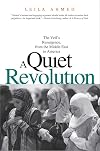
[A Quiet Revolution]: the veil’s resurgence from the Middle East to America is a fascinating and frustrating book.
Leila Ahmed, currently teaching at Harvard, writes from her perspective as a Muslim women born in the 1940s in Egypt and raised during a time when it was normal for women of her family (upper middle class, educated, urban) not to wear hijab (head covering). Thus, her experience of the advocacy of a return to a “pure” form of Islam, coupled with an increase in the wearing show more of hijab as a sign of this return is not welcome. In Ahmed’s understanding, the rise of hijab is coupled with the rise of a type of Islam that calls for political activisim on the part of its practioners.
I found Ahmed’s account a content-rich description of the combination of political and religious activism of Muslims in Egypt and, to a lesser extent, Saudi Arabia in the last decades of the twentieth century. In addition, it covers the influx of students and later immigrants to the USA from majority Muslim countries in the last half of the twentieth century, and the development of several organizations in the US. This was the fascinating part.
Unfortunately, the entire discussion is laced with the word Islamism, which is never clearly defined. This makes it difficult (impossible?) to be clear about what Ahmed’s position is. At the first use of the word Islamism (page 3, Introduction) Ahmed states the appearance of hijab signals, to her, the presence of Islamism, a political form of Islam which she associates with the Muslim Brotherhood and, by implication in the next four paragraphs, with violence. Thus the word carries a negative connotation. On page 9 she refers to Islamism as a term that becomes popular in the 1990s to describe a wider continuum of movements, from moderate to militant.
The confused meaning of Islamism coupled with a lack of thesis statement made this book disappointing.
I do appreciate Ahmed’s attempt to put the rise of hijab in historical and political context. This is, to me, a very helpful way of looking at it, and a perspective I haven’t run across before. show less
Leila Ahmed, currently teaching at Harvard, writes from her perspective as a Muslim women born in the 1940s in Egypt and raised during a time when it was normal for women of her family (upper middle class, educated, urban) not to wear hijab (head covering). Thus, her experience of the advocacy of a return to a “pure” form of Islam, coupled with an increase in the wearing show more of hijab as a sign of this return is not welcome. In Ahmed’s understanding, the rise of hijab is coupled with the rise of a type of Islam that calls for political activisim on the part of its practioners.
I found Ahmed’s account a content-rich description of the combination of political and religious activism of Muslims in Egypt and, to a lesser extent, Saudi Arabia in the last decades of the twentieth century. In addition, it covers the influx of students and later immigrants to the USA from majority Muslim countries in the last half of the twentieth century, and the development of several organizations in the US. This was the fascinating part.
Unfortunately, the entire discussion is laced with the word Islamism, which is never clearly defined. This makes it difficult (impossible?) to be clear about what Ahmed’s position is. At the first use of the word Islamism (page 3, Introduction) Ahmed states the appearance of hijab signals, to her, the presence of Islamism, a political form of Islam which she associates with the Muslim Brotherhood and, by implication in the next four paragraphs, with violence. Thus the word carries a negative connotation. On page 9 she refers to Islamism as a term that becomes popular in the 1990s to describe a wider continuum of movements, from moderate to militant.
The confused meaning of Islamism coupled with a lack of thesis statement made this book disappointing.
I do appreciate Ahmed’s attempt to put the rise of hijab in historical and political context. This is, to me, a very helpful way of looking at it, and a perspective I haven’t run across before. show less
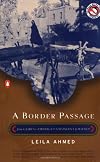
A wonderful autobiography by a feminist scholar who explores her own experience of colonization, and her own identity as an Egyptian, Muslim, Arab woman.
Leila Ahmed’s autobiography is a well-crafted, multifaceted gem, shining with an integrity all its own. And that makes it a difficult book for me to summarize and review. According to Ahmed, all of us have multifaceted identities. We are not this or that, but a mixture of many personas. She rejects identities that are purely negative, show more including an Egyptian identity that denies the value of European culture and literature, a Arab nationalism that is primarily anti-Jew, or an US-style feminism that invalidated Islamic religion. In describing how she has brought together her own various identities, she warns us all of the dangers of polarizing self-definitions.
Read more...
http://mdbrady.wordpress.com/2012/03/20/a-border-passage-from-cairo-to-america-a... show less
Leila Ahmed’s autobiography is a well-crafted, multifaceted gem, shining with an integrity all its own. And that makes it a difficult book for me to summarize and review. According to Ahmed, all of us have multifaceted identities. We are not this or that, but a mixture of many personas. She rejects identities that are purely negative, show more including an Egyptian identity that denies the value of European culture and literature, a Arab nationalism that is primarily anti-Jew, or an US-style feminism that invalidated Islamic religion. In describing how she has brought together her own various identities, she warns us all of the dangers of polarizing self-definitions.
Read more...
http://mdbrady.wordpress.com/2012/03/20/a-border-passage-from-cairo-to-america-a... show less
This is an intellectually stimulating and beautifully memoir. It reflects the formative moments of Leila Ahmed's life while simultaneously investigating questions of imperialism, culture, religion, identity, feminism, race, literacy, politics, literature, Egypt, and the formation of Arab identity at a level exceptionally perceptive and thorough. Ahmed draws a complex portrait of her childhood in Egypt and experiences in British academia. Her critical eye and articulate voice combine to form show more a rich memoir, one which perhaps leaves the reader with more questions that he or she started with, in realization of the complexity of the issues Ahmed takes on. show less
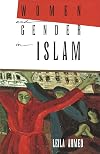
An important and insightful academic study that needs to be read by everyone who cares about women, gender, feminism, Islam, the Middle East, or colonization.
Lelia Ahmed is a superb scholar. She combines a traditional respect for the accuracy of the portrayal of the past with a sensitivity to modern theory about contested values and the political use of symbols. In this book, she provides a two-thousand-year survey of a vast region, consistently noting what still needs more research and the show more potential biases of her sources. She carefully traces differences of class and race within Islam and Middle Eastern societies. Historical context is absolutely critical in her account. Importantly, Ahmed is capable of recognizing contradictions and ambiguity that influence all our thinking.
Read more on my blog: me, you and books
http://mdbrady.wordpress.com/2012/03/08/women-and-gender-in-islam-by-leila-ahmed... show less
Lelia Ahmed is a superb scholar. She combines a traditional respect for the accuracy of the portrayal of the past with a sensitivity to modern theory about contested values and the political use of symbols. In this book, she provides a two-thousand-year survey of a vast region, consistently noting what still needs more research and the show more potential biases of her sources. She carefully traces differences of class and race within Islam and Middle Eastern societies. Historical context is absolutely critical in her account. Importantly, Ahmed is capable of recognizing contradictions and ambiguity that influence all our thinking.
Read more on my blog: me, you and books
http://mdbrady.wordpress.com/2012/03/08/women-and-gender-in-islam-by-leila-ahmed... show less
Lists
Awards


You May Also Like


Associated Authors
Statistics
- Works
- 7
- Also by
- 1
- Members
- 941
- Popularity
- #27,308
- Rating
- 3.9
- Reviews
- 11
- ISBNs
- 17
- Languages
- 2
- Favorited
- 3