
Elizabeth Warnock Fernea (1927–2008)
Author of Guests of the Sheik - An Ethnography of an Iraqi Village
About the Author
Image credit: Elizabeth Warnock Fernea in her office at the Center for Middle Eastern Studies, University of Texas at Austin, late 1980s
Works by Elizabeth Warnock Fernea
Associated Works
Tagged
Common Knowledge
- Legal name
- Fernea, Elizabeth Janet Warnock
- Other names
- Warnock, Betty Jane
Warnock, B. J. - Birthdate
- 1927-10-21
- Date of death
- 2008-12-02
- Gender
- female
- Education
- Reed College
Mount Holyoke College
University of Chicago - Occupations
- professor
anthropologist
ethnologist
documentary filmmaker
memoirist
scholar - Organizations
- Middle East Studies Association of North America
University of Texas at Austin - Relationships
- Fernea, Robert A. (husband)
- Short biography
- Elizabeth Warnock Fernea was a writer, anthropologist, and filmmaker who spent much of her life in the field documenting the struggles and turmoil of the lives of women in Middle Eastern and African cultures. Her husband, Robert A. Fernea, also an anthropologist, was a large influence in her life, and they collaborated on many projects. She was born in Milwaukee, Wisconsin and grew up in a mining town in Manitoba, Canada. At age 14, after the outbreak of World War II, the family moved to Portland, Oregon. She earned a bachelor's degree in English from Reed College, where she started calling herself "B.J." and the nickname stuck. She did graduate work at Mount Holyoke College and at the University of Chicago. In 1956, as a newlywed, she went with her new husband to stay in the remote Iraqi village of El Nahra, where he was doing fieldwork for his doctorate. To accommodate his studies, she lived as the local women did -- separated from the men, wearing the veil, and covering herself in public in a black abayah. The couple stayed in the home of a sheik, and Elizabeth spent her days with the women of the sheik's harem. By the time she left two years later, she had won the affection of the women with her efforts to learn their language and culture. The experience provided the material for Elizabeth's first and most famous work, her memoir Guests of the Sheik, An Ethnography of an Iraqi Village (1969). The Ferneas then moved to Cairo, where their three children were born, and Robert taught at the American University. In 1965, they returned to the USA and settled in Austin, Texas, where he taught at the University of Texas and she began writing books. In 1975, after serving in a number of staff jobs at UT, she was appointed senior lecturer of comparative literature and Middle Eastern studies, and eventually became full professor. She chaired the university's Women's Studies Program from 1980 to 1983 before retiring in 1999.Her other books included In Search of Feminism: One Woman's Global Journey (1998), for which she traveled to nine countries over two years; The Arab World: Personal Encounters (1985), written with her husband; and Children in the Muslim Middle East (1995), a collection of essays that she edited. Elizabeth Fernea produced several documentaries about the Middle East, including Living With the Past: Historic Cairo (2001).
- Nationality
- USA
- Birthplace
- Milwaukee, Wisconsin, USA
- Places of residence
- La Canada Flintridge, California, USA (death)
El Nahra, Iraq
Cairo, Egypt
Flin Flon, Manitoba, Canada
Portland, Oregon, USA - Place of death
- Austin, Texas, USA
- Associated Place (for map)
- USA
Members
Reviews
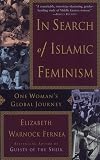
An American scholar who has long studied Muslim women returned to the Islamic world in the 1990s to interview women about their activities as and for women and their understanding of “Islamic Feminism.”
Elizabeth Fernea first came to the Middle East in the 1950s as the young bride of an anthropologist doing research in a small village in southern Iraq. As a result of living there for two years, she wrote a very insightful account of her experiences with the village women, women who were show more strictly segregated from the men. After returning she and her husband both taught at the University of Texas and continued to spend time in various Arab countries. She continued to write and create films about Muslim women. In the 1990s she decided to explore the issue of feminism for Muslims. Returning to Muslim regions, she interviewed a variety of women and a few men about the conditions for women in their countries. Often these were women with whom she was already friends. She visited Uzbekistan, Morocco, Kuwait, Turkey, Iraq, Saudi Arabia, Israel and Palestine. She founded the women of the Iraq village in which she had lived still valued her friendship and that gender segregation had weakened over the years. Returning to the United States, she also interviewed American Muslim women.
What is most clear in the book is that conditions for women in Muslim communities vary enormously. For those of us who tend to lump Muslims and/or feminists together, we need to absorb this critical fact. In some places women have rights and benefits that we are still struggling for in the United States. For example, while most of us assume that feminism is linked to democracy, Iraqi women in the 1990s were grateful to Sadam Hessian for the benefits he established for them by acting as a dictator.
Here and there Fernea found women who strongly identified themselves as feminists. More generally, however, she found women deeply engaged in efforts to improve women’s lives in ways we might consider feminist in the United States. But these women often refused to identify as feminists. Women find themselves fighting against the misogyny of both traditional and colonial leaders. Globally, an easy way for opponents to attack women is to label them as feminists and therefore as American or foreign. Feminism is said to be a luxury for outsiders.
Yet Muslim women are working with Christian and Jewish women to resolve these specific problems rather than attacking particular men. They struggle with poverty, lack of education or economic independence, oppressive family and marriage laws, and other issues that affect them as wives and mothers. Fernea’s book is full of descriptions of the variety of ways that Muslim women working to improve their own lives and those of other women within their families and religion.
More basically, women in other parts of the world remain grounded in family and religion, in ways that many western feminists do not. They view western feminists as too secular and too individualistic. They often lump all western feminists together and fail to understand the variety within western feminism. Muslim women, like other post-colonel ones, do make an important point. For better or worse, the “Western Civilization” differs from other cultures in its emphasis on progress through secular, individualistic efforts for both men and women. Muslim women want better lives, but they do not define them as most of us do. They particularly resent western assumptions of what they need.
Fernea does not provide us with a neat picture of Islamic feminism. In fact she remains ambivalent over whether such a thing exists. Instead she ends her book with useful comments about feminism in general and how her project showed her the need to reconsider how we define it. In her travels, she observed the limitations of mainstream western feminism and our need to listen respectfully to others. The novels I have been reading have convinced me of the same point.
I gladly recommend Searching for Islamic Feminism to readers interested in the lives and projects of Muslim women. Its information was collected twenty years ago and may be somewhat dated, but much of what Fernea observed continues to be valuable. show less
Elizabeth Fernea first came to the Middle East in the 1950s as the young bride of an anthropologist doing research in a small village in southern Iraq. As a result of living there for two years, she wrote a very insightful account of her experiences with the village women, women who were show more strictly segregated from the men. After returning she and her husband both taught at the University of Texas and continued to spend time in various Arab countries. She continued to write and create films about Muslim women. In the 1990s she decided to explore the issue of feminism for Muslims. Returning to Muslim regions, she interviewed a variety of women and a few men about the conditions for women in their countries. Often these were women with whom she was already friends. She visited Uzbekistan, Morocco, Kuwait, Turkey, Iraq, Saudi Arabia, Israel and Palestine. She founded the women of the Iraq village in which she had lived still valued her friendship and that gender segregation had weakened over the years. Returning to the United States, she also interviewed American Muslim women.
What is most clear in the book is that conditions for women in Muslim communities vary enormously. For those of us who tend to lump Muslims and/or feminists together, we need to absorb this critical fact. In some places women have rights and benefits that we are still struggling for in the United States. For example, while most of us assume that feminism is linked to democracy, Iraqi women in the 1990s were grateful to Sadam Hessian for the benefits he established for them by acting as a dictator.
Here and there Fernea found women who strongly identified themselves as feminists. More generally, however, she found women deeply engaged in efforts to improve women’s lives in ways we might consider feminist in the United States. But these women often refused to identify as feminists. Women find themselves fighting against the misogyny of both traditional and colonial leaders. Globally, an easy way for opponents to attack women is to label them as feminists and therefore as American or foreign. Feminism is said to be a luxury for outsiders.
Yet Muslim women are working with Christian and Jewish women to resolve these specific problems rather than attacking particular men. They struggle with poverty, lack of education or economic independence, oppressive family and marriage laws, and other issues that affect them as wives and mothers. Fernea’s book is full of descriptions of the variety of ways that Muslim women working to improve their own lives and those of other women within their families and religion.
More basically, women in other parts of the world remain grounded in family and religion, in ways that many western feminists do not. They view western feminists as too secular and too individualistic. They often lump all western feminists together and fail to understand the variety within western feminism. Muslim women, like other post-colonel ones, do make an important point. For better or worse, the “Western Civilization” differs from other cultures in its emphasis on progress through secular, individualistic efforts for both men and women. Muslim women want better lives, but they do not define them as most of us do. They particularly resent western assumptions of what they need.
Fernea does not provide us with a neat picture of Islamic feminism. In fact she remains ambivalent over whether such a thing exists. Instead she ends her book with useful comments about feminism in general and how her project showed her the need to reconsider how we define it. In her travels, she observed the limitations of mainstream western feminism and our need to listen respectfully to others. The novels I have been reading have convinced me of the same point.
I gladly recommend Searching for Islamic Feminism to readers interested in the lives and projects of Muslim women. Its information was collected twenty years ago and may be somewhat dated, but much of what Fernea observed continues to be valuable. show less
Fernea doesn't seem to know what exactly she means by 'Islam,' or what exactly she means by 'feminism,' but she has some very interesting experiences going she knows not whither in search of she knows not what. In particular, a large part of the book is concerned with Central Asia -- Uzbekistan, especially -- and the conditions of women there, in a world of nomadic Turkic peoples swept over by the Mongol wave, the Muslim one, and finally the Soviet. We hear little enough about this region, show more but it's a deeply interesting one; seeing more about it is well worth the trouble.
As for the condition of women in the Islamic world? You probably already know: bad among the Arabs, varying in Lebanon (where either the good guys or Hezbollah will win sooner or later -- and I do not use the term "good guys" lightly), terrible among the Pashtuns, the opposite of what the authorities want in Persia, Euro-y in Albania and Kurdistan... and it would be outright good in Bosnia and the Turkic states were it not for how the Saudis can generally claim to be the better Muslims. But, as in Shakespeare's plays, the interest is much more in the details than in the big picture. show less
As for the condition of women in the Islamic world? You probably already know: bad among the Arabs, varying in Lebanon (where either the good guys or Hezbollah will win sooner or later -- and I do not use the term "good guys" lightly), terrible among the Pashtuns, the opposite of what the authorities want in Persia, Euro-y in Albania and Kurdistan... and it would be outright good in Bosnia and the Turkic states were it not for how the Saudis can generally claim to be the better Muslims. But, as in Shakespeare's plays, the interest is much more in the details than in the big picture. show less
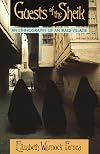
I read this as a freshman in college and it has never been more relevant. It is an ethnography of the women of an Iraqi village named El Nahra. At the time it was written, the author was not an anthropologist but the wife of one of the men in the village. In fact, she was a newlywed!
I wish I knew where my copy of this book was. I'd like to read it again.
I wish I knew where my copy of this book was. I'd like to read it again.
Interestingly, this book frequently reads less like feminist theory and more like an evocatively descriptive travel narrative, which will certainly be enjoyed by fans of that genre. Indeed, this book is at its best when describing the people and places; and when the Muslim women in the chapters speak for themselves.
Unfortunately, though, I sometimes found the pacing a bit clunky, and the author's own viewpoints and/or insertion of herself into the proceedings, to be irritating. Some of her show more attitudes seemed surprising, as she is supposed to be a longtime professor of Middle East studies.
The glimpse into the lives and viewpoints of women abroad, though, was very interesting, and I found the chapter on Iraq to be fascinating. The book was written in the 1990s, but I read it in 2006, after the second Gulf War, so it was like looking back in time to an Iraq that, to judge by media reports, no longer exists. show less
Unfortunately, though, I sometimes found the pacing a bit clunky, and the author's own viewpoints and/or insertion of herself into the proceedings, to be irritating. Some of her show more attitudes seemed surprising, as she is supposed to be a longtime professor of Middle East studies.
The glimpse into the lives and viewpoints of women abroad, though, was very interesting, and I found the chapter on Iraq to be fascinating. The book was written in the 1990s, but I read it in 2006, after the second Gulf War, so it was like looking back in time to an Iraq that, to judge by media reports, no longer exists. show less
Lists
Awards

You May Also Like


Associated Authors
Statistics
- Works
- 12
- Also by
- 3
- Members
- 1,198
- Popularity
- #21,435
- Rating
- 4.1
- Reviews
- 20
- ISBNs
- 38
- Languages
- 1
- Favorited
- 1