

Tamim Ansary
Author of Destiny Disrupted: A History of the World Through Islamic Eyes
About the Author
Series
Works by Tamim Ansary
The Story of My Life: An Afghan Girl on the Other Side of the Sky (2005) — Contributor — 371 copies, 12 reviews
The Invention of Yesterday: A 50,000-Year History of Human Culture, Conflict, and Connection (2019) 190 copies, 7 reviews
Associated Works
Tagged
Common Knowledge
- Birthdate
- 1948-11-04
- Gender
- male
- Education
- Reed College
- Organizations
- San Francisco State University
San Francisco Writers Workshop
Encarta.com - Agent
- Mann, Carol
- Nationality
- Afghanistan (birth)
USA - Birthplace
- Kabul, Afghanistan
- Places of residence
- San Francisco, California, USA
- Associated Place (for map)
- San Francisco, California, USA
Members
Reviews
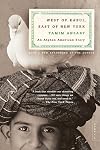
Ansary writes with a duality that matches his bicultural heritage. His words are at once graceful and blunt; elegant and funny. He calls his upbringing "straddling a crack in the earth", but what he doesn't tell you is that his ability to navigate both the American and Afghan cultures is nothing short of expert mountaineering. His siblings may have chosen a definitive side after September 11th, but Ansary decided to use his bicultural perspective in an effort to find a deeper truth. It all show more started with an emotional email fired off to friends and family after the fall of the World Trade Towers. The email is included at the end of West of Kabul, in case you were wondering.
The entire time Ansary was traveling around Tangier I was on edge. His experiences with the "guides" were troubling; as was the time he was duped about an upgrade to a sleeping car on a train. (By the way, I would like to see jovial and overly congenial Rick Steves navigate those kinds of harassments.) Even when Ansary traveled to city to city waiting anxiously for a letter from his girlfriend, I was on edge. Would she wait for him? You just have to read his memoir to find out. show less
The entire time Ansary was traveling around Tangier I was on edge. His experiences with the "guides" were troubling; as was the time he was duped about an upgrade to a sleeping car on a train. (By the way, I would like to see jovial and overly congenial Rick Steves navigate those kinds of harassments.) Even when Ansary traveled to city to city waiting anxiously for a letter from his girlfriend, I was on edge. Would she wait for him? You just have to read his memoir to find out. show less
The project here -- presenting the history of the world for non-Muslims through a Muslim worldview -- is a superb one, and Ansary does well with it. It's not encyclopedic, of course, but it is panoramic, and illuminative. The Afterword, especially, ties the entire presentation up masterfully. Ansary's sense of both the typical Eurocentric/Christian and Islamic worldviews are spot on. His sense of the fact that they are not dimetrically opposed to each other, but rather almost completely show more ignorant of each other, is a valuable way to view the world we find ourselves in. His sense of their fundamental incompatibilities is well laid out, and I appreciate his choice not to try and reconcile them. show less
The Invention of Yesterday: A 50,000-Year History of Human Culture, Conflict, and Connection by Tamim Ansary
A brilliant history book!
As I was reading this book and learned about different periods and peoples, and how our world unfolded over time, I had only one recurring question - how much better it would have been if I learned this from school history books? My views and those of my classmates; and by that extension my entire generation would have been open and more accommodating had this been a textbook.
I loved every chapter because every chapter taught me something new and gave me something show more to think about, either about the world outside or my opinions in my head.
'Seminal' is the only word I can think of to describe this book. show less
As I was reading this book and learned about different periods and peoples, and how our world unfolded over time, I had only one recurring question - how much better it would have been if I learned this from school history books? My views and those of my classmates; and by that extension my entire generation would have been open and more accommodating had this been a textbook.
I loved every chapter because every chapter taught me something new and gave me something show more to think about, either about the world outside or my opinions in my head.
'Seminal' is the only word I can think of to describe this book. show less

I've read a lot of books about Islamic history. I've also read several versions of the Qur'an with commentary. These tomes tend to be dry and scholarly. This is fine, but I prefer cordial narratives and a sprinkle of humor when reading a book about history for my pleasure. Tamim Ansary's Destiny Disrupted is ideal in this regard.
Despite its respectable 400 pages, I blazed through this book. It was so damned interesting, and it goes down easy. The writing is smooth, conversational, and show more personal. I appreciate that Ansary is an Afghan and identifies as a secular Muslim. He's offering this narrative from the unique perspective of someone who grew up immersed in Afghan-Muslim culture and now lives in the West, with all its silos and post-enlightenment trappings.
Not only does it paint a complete picture of the political, religious, and social evolution of the Islamic world for the past 1400 years, but it also places this saga next to the changes happening in Western societies, offering a fascinating, comprehensive - sometimes infuriating - 20/20 retrospective of what has occurred across the globe leading up to, and after the advent of, "modernity."
Rich with details left out of most Western history textbooks and current political commentary, Destiny Disrupted provides us with a series of 'ah ha!' moments. Even those of us familiar with Muslim societies and their histories may have significant gaps in our understanding, and this book fills in the blank spaces, explaining not only the interactions between Islam and the West but also among Muslims and their respective sects and cultures.
I've spent decades educating people about Islam and Muslims, engaged in interfaith dialogue and political activism. The level of ignorance, particularly in America, about the world's second-largest religion is breathtaking. It's also an open door for groups with less-than-savory political agendas to manipulate through fear and anger. This is a book I wish I'd had right after 9/11 when I was visiting churches regularly, responding to questions like, "Why does Islam oppress women?" and "Why do Muslims hate dogs?"
Much of what we see playing out on the world stage today is a direct result of the impacts of colonialism, the 20th-century nation-state project, and the Western world's uninformed rejection of Islamic culture as being 'anti-western' and a threat to the values Westerners hold dear. In some ways, there are some profound conflicts of interest between the two - I would never suggest otherwise. That said, it would benefit us all to determine for ourselves whether we honestly disagree with the spirit of this great religion or whether we're simply comfortable in our highly propagandized version of it. show less
Despite its respectable 400 pages, I blazed through this book. It was so damned interesting, and it goes down easy. The writing is smooth, conversational, and show more personal. I appreciate that Ansary is an Afghan and identifies as a secular Muslim. He's offering this narrative from the unique perspective of someone who grew up immersed in Afghan-Muslim culture and now lives in the West, with all its silos and post-enlightenment trappings.
Not only does it paint a complete picture of the political, religious, and social evolution of the Islamic world for the past 1400 years, but it also places this saga next to the changes happening in Western societies, offering a fascinating, comprehensive - sometimes infuriating - 20/20 retrospective of what has occurred across the globe leading up to, and after the advent of, "modernity."
Rich with details left out of most Western history textbooks and current political commentary, Destiny Disrupted provides us with a series of 'ah ha!' moments. Even those of us familiar with Muslim societies and their histories may have significant gaps in our understanding, and this book fills in the blank spaces, explaining not only the interactions between Islam and the West but also among Muslims and their respective sects and cultures.
I've spent decades educating people about Islam and Muslims, engaged in interfaith dialogue and political activism. The level of ignorance, particularly in America, about the world's second-largest religion is breathtaking. It's also an open door for groups with less-than-savory political agendas to manipulate through fear and anger. This is a book I wish I'd had right after 9/11 when I was visiting churches regularly, responding to questions like, "Why does Islam oppress women?" and "Why do Muslims hate dogs?"
Much of what we see playing out on the world stage today is a direct result of the impacts of colonialism, the 20th-century nation-state project, and the Western world's uninformed rejection of Islamic culture as being 'anti-western' and a threat to the values Westerners hold dear. In some ways, there are some profound conflicts of interest between the two - I would never suggest otherwise. That said, it would benefit us all to determine for ourselves whether we honestly disagree with the spirit of this great religion or whether we're simply comfortable in our highly propagandized version of it. show less
Lists
Awards


You May Also Like


Associated Authors
Statistics
- Works
- 70
- Also by
- 1
- Members
- 3,295
- Popularity
- #7,764
- Rating
- 4.1
- Reviews
- 85
- ISBNs
- 252
- Languages
- 9
- Favorited
- 2
