
Anonymous (17)
Author of The Arabian Nights
For other authors named Anonymous, see the disambiguation page.
Series
Works by Anonymous
Tales from 1,001 Nights: Aladdin, Ali Baba and Other Favourites (Penguin Clothbound Classics) (2011) 346 copies, 2 reviews
Sindbad the Sailor and Other Tales from the Arabian Nights (Puffin Classics) (1978) 162 copies, 2 reviews
Het volledige verhaal van Ali Baba, de veertig rovers en het meisje Mardjana (1910) — Author — 25 copies, 1 review
Las Mil y Una Noches / The Thousand and One Nights: Antologia / Anthology (13/20) (Spanish Edition) (0850) 12 copies
De vertellingen van duizend-en-één-nacht. Dl. 3/4 — Author — 11 copies
The Thousand and One Nights, Commonly Called the Arabian Nights' Entertainments; Volume 1 of 3 4 copies, 1 review
Alle verhalen van 1001 nacht : dertiende en veertiende deel — Author — 3 copies
The Thousand and One Nights'; Commonly Called the Arabian Nights' Entertainments Volume 8 (2013) 2 copies
Cento e uma noites 2 copies
The Arabian Nights: Tales from a Thousand and One Nights: Premium Illustrated Edition (2017) 2 copies
Le mille e una notte, Volume 2 of 2 2 copies
Tusen och en natt. Bd. 6 1 copy
Tusen och en natt. Bd. 5 1 copy
Az Ezeregyéjszaka meséi IV. 1 copy
Tusen och en natt. Bd. 4 1 copy
Tusen och en natt. Bd. 1 1 copy
Tusen och en natt. Bd. 2 1 copy
Tusen och en natt. Bd. 3 1 copy
As Mil e Uma Noites VI 1 copy
Tagged
Common Knowledge
Members
Reviews
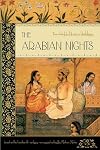
This is as good as it gets. I don't know Arabic so there's no way I can judge the accuracy of the translation -- all I know is how it reads, and it reads superbly. I'd rather not get into any "oh, but there's only 271 nights here, what the --" patter. I have the newer, bigger Penguin translation on my shelves too & it presumably uses the (much!) longer Egyptian 'version' (version is the wrong word but I can't think of the right one at the moment) ... but I doubt it could be, well, better show more than this. What's here is simply the rapture of tales, tales, tales ... and it's a volume that makes it eminently clear why people get obsessed with this thing. I'm a bit obsessed with it, right now. show less

I have officially finished all three volumes of The Arabian Night, a 2,715 page journey!
Volume 3 comprises nights 719 to 1001, as well as the "Aladdin, or the Magic Lamp" standalone story. This third volume has proven to be my favorite, as there is less repetition (same kind of story followed by same kind of story) than in the previous books and some stories that begin on well trodden themes actually branch of in show more surprising directions. Adventures, romances, and comedy tales mix together with morality tales in a broad spectrum of stories, many of which I found rather fun and interesting.
Shahrazad's Tale Comes to an End
As I mentioned, in my review of volume 2, we can see Shahrazad's story and dramatic progression through the tales she tells, guiding King Shahriyar to a different perspective on women. By volume 3, I get the sense that Shahrazad has relaxed, which allows her to explore a greater variety of tales. She probably senses him coming around and so can use the tales more as entertainment than for moral and philosophical lessons.
Though, there is one clear exception to this toward the end of the 1001 nights. In general, Shahrazad has veered away from concluding stories with morals, but in one particular tale, she compares a woman who is an adulteress and a traitor to a woman who is loyal and virtuous. At the end of the story, she states, "Whoever thinks that all women are alike is suffering from a disease of madness for which there is no cure." Since the King has been marrying, bedding, and then executing one woman after another, because he believes every woman to be just like his adulteress wife, this statement seems to be pointedly directed at him.
The story concludes as we all know it concludes, with the King respecting Shahrazad as a good, virtuous woman and granting her her life. The most shocking aspect, however, was the fact that at the end of all this storytelling, Shahrazad presents the King with his three sons, whom she has given birth to over the course of all these nights of tales. I mean, really? He didn't notice her belly growing and shrinking during all these nights they've spent together?
Love for Miriam and other clever women of the Arabian Nights
One of the things I've come to appreciate about these stories is that, taken as a whole, they provide a wide spectrum of kinds of women. I've mentioned how women are presented in my reviews of both volume 1 and 2. While there are certainly types — the pure, virtuous virgin, the evil, plotting adulteress, the wickedly clever old woman — there is also great variety that strays outside these parameters. The adulteress, for example, is not always evil or punished. Women sometimes appear as heavily armed, strong fighting armies. And women are just as likely to be the ones to come up with the clever plan to escape a dangerous situation.
My favorite character in the entire set of three volumes, by far, is Miriam the Girdle Maker. She annoyed me at first as a vain, superficial, and arrogant slave girl. Able to choose who would buy her, she was reject many merchants for being ugly, fat, stupid, or too bearded, making up poetry to mock them as she did. While this ties in to how the Arabian Nights tend to honor beauty as equal to goodness and I could respect her clever and sometimes humorous snark, I wanted to tell her that life isn't all about looks. As expected, she chooses Ali Nur al-Din to buy her, because he's very handsome, even though he has to spend all his money to make the purchase.
Once she begins to live with Nur al-Din, she is able to save him from his new poverty. Turns out she's known as the Girdle Maker, because she can craft beautiful girdles and cloaks out of fabric, which Nur al-Din is then able to sell at the market to sustain them.
Her abilities don't stop there, however, because it turns out her name is Miriam and she is a princess of the Franks. When her father's adviser later comes to bring her home, parting the two lovers, it is Miriam who continually outwits and frees them both from her father and the adviser's clutches.
– Miriam disguises herself as a male ship captain and slays her father's sailors to escape with Nur al-Din.
– On her second escape, Miriam tries to ride off on great stallions with Nur al-Din, only to be pursued by her father and brothers. She calls out to them to fight her and she fights them with grace and skill. As the story says, "She was the bravest warrior of her age and unique in her time, for ever since she was a little girl her father had taught her how to ride and plunge into the waves of battle even in the darkest of night."
By the time, Miriam was battling great warriors like a noble knight, I adored her.
I only wished she had fallen in love with and chosen a better companion for herself, because Nur al-Din is pretty much useless. He starts out the story by getting drunk and knocking out his own father's eye, spends most of his time wallowing in loss of Miriam and relying on luck and help from others to stumble his way back to her, leaves her alone in the boat to get recaptured the first time, and then during the second escape falls asleep, allowing the horses to be stolen, leaving Miriam to outwit the thief and return to save his sorry ass. Seriously, he's not even moderately clever and Miriam deserves much better.
When Love at First Sight Goes Awry
As with fairy tales and Arthurian romances, love at first sight is taken as noble and normal in the Arabian Nights, though in some cases it leads to unhappy consequences. Take, for example, the character Zain, who is so beautiful just about every man she comes into contact with falls in love with her. When her husband drags her off to another city in order to keep her from her lover, she uses her beauty to convince every magistrate in the city that her husband is wicked and that she will marry the magistrate, if only he would help her. She then slips away in the night to escape her husband, leaving all the magistrates and their servants to waste away and die in love for her.
Later, Zain in her flight back to her lover stays at a monastery, only to have abbot and forty monks also fall in love with her, each of whom likewise wastes away and dies when she leaves.
I could argue that Zain is certainly the first femme fatale in the story books. Also, this death and mayhem is so dramatic and absurd that it's funny and it makes me wonder if this story is in mockery of the "love at first sight" concept.
People of the Sea
Two stories in volume 3 feature sea people (or merfolk) stories. In one, a King falls in love with a sea woman and tricks her into becoming his concubine. She gives birth to a son that can breathe underwater and this prince later falls in love with princess of the sea. He wins her only to later fail one of her tests, causing them to be parted and forcing him to journey to find her.
The second story is much more interesting and tells the story of a fisherman who catches a seaman in his net. After releasing him, the two become friends and the merman brings jewels and precious stones in exchanges for bowls of fruit. Later, the fisherman travels with the seaman under the water and you get to see how the seafolk live. At one point they mock the fisherman for having two legs and wearing clothes.
Bits, Oddities, and Humor
Here are just a few other random things that amused me.
– When someone tells/has told a tale, it's often said that the story is "so remarkable that, were it written with needles on men's eyeballs, it would serve as a lesson for all who can learn." Which leaves me wondering, who is going around writing on people EYEBALLS? Though likely this little odd word choice it more due to translation problems.
– The story Badr, in which he meets a woman named Queen Lud, who turns people into animals, reminded me quite a bit if the story of Odysseus and Circe. I wonder if one story may have influenced the other.
– In one story, Qamar al-Zaman, a young man falls in love with another man's wife. He befriends the husband in order to find a way to meet and be intimate with the wife, which results in this hilarity: The husband "kept on talking about these qualities until, thanks to him, his wife had fallen in love with his [Qamar al-Zaman] description — and there is no greater pimp than a husband who describes a man to his wife as both handsome and generous with his money." Too funny.
– People apparently lived to ripe old ages in these tales. One King was said to be 180 years old, while his Vizier was 280.
– I rather enjoyed the story of Khalifa the fisherman, a humorous tale in which the hero plays the fool, calling out "Praise be to God" at every misfortune that befalls him. His foolishness leads him to mistaking the Caliph for a beggar and making other mistakes that draw him unawares into court intrigues.
– Characters often blame fate, destiny, or the will of God for their misdoings, as in, "I'm so sorry I tried to kill you, but it was decreed by fate that I should do this terrible thing, so don't blame me and offer me forgiveness." In many cases, the people are forgiven, some to repent and some to do harm again. Only once did I see a wise young man point out to a wrongdoer that God granted men freewill and therefore he should take responsibility for his own actions.
In Conclusion
This year long journey through all 1001 nights of tales, including the supplemental stories “Ali Babba and the Forty Thieves“ and "Aladdin, or the Magic Lamp," has been epic and well worth the effort. show less
Volume 3 comprises nights 719 to 1001, as well as the "Aladdin, or the Magic Lamp" standalone story. This third volume has proven to be my favorite, as there is less repetition (same kind of story followed by same kind of story) than in the previous books and some stories that begin on well trodden themes actually branch of in show more surprising directions. Adventures, romances, and comedy tales mix together with morality tales in a broad spectrum of stories, many of which I found rather fun and interesting.
Shahrazad's Tale Comes to an End
As I mentioned, in my review of volume 2, we can see Shahrazad's story and dramatic progression through the tales she tells, guiding King Shahriyar to a different perspective on women. By volume 3, I get the sense that Shahrazad has relaxed, which allows her to explore a greater variety of tales. She probably senses him coming around and so can use the tales more as entertainment than for moral and philosophical lessons.
Though, there is one clear exception to this toward the end of the 1001 nights. In general, Shahrazad has veered away from concluding stories with morals, but in one particular tale, she compares a woman who is an adulteress and a traitor to a woman who is loyal and virtuous. At the end of the story, she states, "Whoever thinks that all women are alike is suffering from a disease of madness for which there is no cure." Since the King has been marrying, bedding, and then executing one woman after another, because he believes every woman to be just like his adulteress wife, this statement seems to be pointedly directed at him.
The story concludes as we all know it concludes, with the King respecting Shahrazad as a good, virtuous woman and granting her her life. The most shocking aspect, however, was the fact that at the end of all this storytelling, Shahrazad presents the King with his three sons, whom she has given birth to over the course of all these nights of tales. I mean, really? He didn't notice her belly growing and shrinking during all these nights they've spent together?
Love for Miriam and other clever women of the Arabian Nights
One of the things I've come to appreciate about these stories is that, taken as a whole, they provide a wide spectrum of kinds of women. I've mentioned how women are presented in my reviews of both volume 1 and 2. While there are certainly types — the pure, virtuous virgin, the evil, plotting adulteress, the wickedly clever old woman — there is also great variety that strays outside these parameters. The adulteress, for example, is not always evil or punished. Women sometimes appear as heavily armed, strong fighting armies. And women are just as likely to be the ones to come up with the clever plan to escape a dangerous situation.
My favorite character in the entire set of three volumes, by far, is Miriam the Girdle Maker. She annoyed me at first as a vain, superficial, and arrogant slave girl. Able to choose who would buy her, she was reject many merchants for being ugly, fat, stupid, or too bearded, making up poetry to mock them as she did. While this ties in to how the Arabian Nights tend to honor beauty as equal to goodness and I could respect her clever and sometimes humorous snark, I wanted to tell her that life isn't all about looks. As expected, she chooses Ali Nur al-Din to buy her, because he's very handsome, even though he has to spend all his money to make the purchase.
Once she begins to live with Nur al-Din, she is able to save him from his new poverty. Turns out she's known as the Girdle Maker, because she can craft beautiful girdles and cloaks out of fabric, which Nur al-Din is then able to sell at the market to sustain them.
Her abilities don't stop there, however, because it turns out her name is Miriam and she is a princess of the Franks. When her father's adviser later comes to bring her home, parting the two lovers, it is Miriam who continually outwits and frees them both from her father and the adviser's clutches.
– Miriam disguises herself as a male ship captain and slays her father's sailors to escape with Nur al-Din.
– On her second escape, Miriam tries to ride off on great stallions with Nur al-Din, only to be pursued by her father and brothers. She calls out to them to fight her and she fights them with grace and skill. As the story says, "She was the bravest warrior of her age and unique in her time, for ever since she was a little girl her father had taught her how to ride and plunge into the waves of battle even in the darkest of night."
By the time, Miriam was battling great warriors like a noble knight, I adored her.
I only wished she had fallen in love with and chosen a better companion for herself, because Nur al-Din is pretty much useless. He starts out the story by getting drunk and knocking out his own father's eye, spends most of his time wallowing in loss of Miriam and relying on luck and help from others to stumble his way back to her, leaves her alone in the boat to get recaptured the first time, and then during the second escape falls asleep, allowing the horses to be stolen, leaving Miriam to outwit the thief and return to save his sorry ass. Seriously, he's not even moderately clever and Miriam deserves much better.
When Love at First Sight Goes Awry
As with fairy tales and Arthurian romances, love at first sight is taken as noble and normal in the Arabian Nights, though in some cases it leads to unhappy consequences. Take, for example, the character Zain, who is so beautiful just about every man she comes into contact with falls in love with her. When her husband drags her off to another city in order to keep her from her lover, she uses her beauty to convince every magistrate in the city that her husband is wicked and that she will marry the magistrate, if only he would help her. She then slips away in the night to escape her husband, leaving all the magistrates and their servants to waste away and die in love for her.
Later, Zain in her flight back to her lover stays at a monastery, only to have abbot and forty monks also fall in love with her, each of whom likewise wastes away and dies when she leaves.
I could argue that Zain is certainly the first femme fatale in the story books. Also, this death and mayhem is so dramatic and absurd that it's funny and it makes me wonder if this story is in mockery of the "love at first sight" concept.
People of the Sea
Two stories in volume 3 feature sea people (or merfolk) stories. In one, a King falls in love with a sea woman and tricks her into becoming his concubine. She gives birth to a son that can breathe underwater and this prince later falls in love with princess of the sea. He wins her only to later fail one of her tests, causing them to be parted and forcing him to journey to find her.
The second story is much more interesting and tells the story of a fisherman who catches a seaman in his net. After releasing him, the two become friends and the merman brings jewels and precious stones in exchanges for bowls of fruit. Later, the fisherman travels with the seaman under the water and you get to see how the seafolk live. At one point they mock the fisherman for having two legs and wearing clothes.
Bits, Oddities, and Humor
Here are just a few other random things that amused me.
– When someone tells/has told a tale, it's often said that the story is "so remarkable that, were it written with needles on men's eyeballs, it would serve as a lesson for all who can learn." Which leaves me wondering, who is going around writing on people EYEBALLS? Though likely this little odd word choice it more due to translation problems.
– The story Badr, in which he meets a woman named Queen Lud, who turns people into animals, reminded me quite a bit if the story of Odysseus and Circe. I wonder if one story may have influenced the other.
– In one story, Qamar al-Zaman, a young man falls in love with another man's wife. He befriends the husband in order to find a way to meet and be intimate with the wife, which results in this hilarity: The husband "kept on talking about these qualities until, thanks to him, his wife had fallen in love with his [Qamar al-Zaman] description — and there is no greater pimp than a husband who describes a man to his wife as both handsome and generous with his money." Too funny.
– People apparently lived to ripe old ages in these tales. One King was said to be 180 years old, while his Vizier was 280.
– I rather enjoyed the story of Khalifa the fisherman, a humorous tale in which the hero plays the fool, calling out "Praise be to God" at every misfortune that befalls him. His foolishness leads him to mistaking the Caliph for a beggar and making other mistakes that draw him unawares into court intrigues.
– Characters often blame fate, destiny, or the will of God for their misdoings, as in, "I'm so sorry I tried to kill you, but it was decreed by fate that I should do this terrible thing, so don't blame me and offer me forgiveness." In many cases, the people are forgiven, some to repent and some to do harm again. Only once did I see a wise young man point out to a wrongdoer that God granted men freewill and therefore he should take responsibility for his own actions.
In Conclusion
This year long journey through all 1001 nights of tales, including the supplemental stories “Ali Babba and the Forty Thieves“ and "Aladdin, or the Magic Lamp," has been epic and well worth the effort. show less
There are many versions of The Arabian Nights that have floated about over the centuries; this one is a translation of the Mahdi edition, based on the oldest known copy from 14th century Syria. It has 271 “nights”, tales that were collected from Persia, Arabia, and India and containing stories within stories (and sometimes within stories, and so on). The collection was expanded over the centuries to reach the well-known 1,001 nights, including “Aladdin and the Wonderful Lamp", "The show more Seven Voyages of Sinbad the Sailor", and "Ali Baba and the Forty Thieves" – none of this later content is present in this version.
With that said, it’s an enjoyable read, and there is plenty of 700 year old sex and violence from the Middle East to hold one’s interest. :)
The stage is set in the prologue in a way that certainly opens the eyes. There are two kings, one named Shahrayar, the other Shahzaman, who are brothers. Shahzaman is sent for by his brother to visit, but before leaving, discovers his wife in the arms of one of the kitchen boys. Naturally, he strikes them with his sword, drags them by their heels, and throws them from the top of the palace to the trench below. He then arrives in Shahrayar’s domain in a dejected mood. As he’s agonizing over his sorrow, he finds himself a witness to an interracial orgy involving Shahrayar’s wife, ten white slave girls, ten black slaves who had been dressed as girls, and Mas’ud, another black slave who, upon being summoned, jumps out of a tree to have his way with the Queen. Yeah, wow.
Shahrayar can’t believe his ears when he hears of this, and so the two of them have to watch a repeat performance to convince him. They are so disheartened that they decide to take to the road and leave the palace. That night they see what seems to be a giant pillar, one that grows to touch the clouds, emerging from the sea. They flee in terror and hide in a tree, and when they look again discover that the pillar is actually a mighty demon, who approaches without seeing them, carrying a large glass chest with four locks. He sets it down in the meadow beneath them and unlocks it, and what emerges is a beautiful woman, with a face “like the full moon, and a lovely smile.” The demon then proceeds to fall asleep, whereupon the woman notices Shahrayar and Shahzaman in the tree, and asks them to come down and make love to her, otherwise she’ll wake her husband the demon and have him kill them. They comply, one after the other, and she then asks for a ring as a souvenir from each; she’s collected one from each of her lovers and has now reached a full hundred, despite the demon keeping her locked up. Again, yeah, wow.
The brothers decide to return to their kingdoms and never marry again. Shahrayar has his wife and all her slave girls killed, but then formulates a new plan, to marry a new woman each night and then kill her in the morning to prevent her from cheating on him. After he’s done this for so long that girls in the kingdom are becoming a little scarce, Shahrazad (sometimes spelled Scheherazade), the vizier’s daughter, volunteers to marry the king. She is smart and very well read, and her plan for survival is to tell the king a new story each night, but to not finish it, betting on his curiosity to postpone the execution from night to night.
And thus begin the stories, each ‘tale’ or night of which are generally just a couple pages each, but which are grouped into larger stories, such as The Fisherman and the Demon, The Porter and the Three Ladies, and The Hunchback. The prologue is so classic that frankly it’s a tough act to follow, and I have to say the tales tend to get a bit tedious. If you’re not a fan of misogyny or body parts getting lopped off you may not enjoy them, but they are certainly not dry, and there is something special about reading stories this old that provided entertainment for the medieval Islam world, similar to The Decameron or The Canterbury Tales. I prefer those other books to this one, but wonder if the inclusion of the other stories in the 1,001 Nights version would have upped my rating. show less
With that said, it’s an enjoyable read, and there is plenty of 700 year old sex and violence from the Middle East to hold one’s interest. :)
The stage is set in the prologue in a way that certainly opens the eyes. There are two kings, one named Shahrayar, the other Shahzaman, who are brothers. Shahzaman is sent for by his brother to visit, but before leaving, discovers his wife in the arms of one of the kitchen boys. Naturally, he strikes them with his sword, drags them by their heels, and throws them from the top of the palace to the trench below. He then arrives in Shahrayar’s domain in a dejected mood. As he’s agonizing over his sorrow, he finds himself a witness to an interracial orgy involving Shahrayar’s wife, ten white slave girls, ten black slaves who had been dressed as girls, and Mas’ud, another black slave who, upon being summoned, jumps out of a tree to have his way with the Queen. Yeah, wow.
Shahrayar can’t believe his ears when he hears of this, and so the two of them have to watch a repeat performance to convince him. They are so disheartened that they decide to take to the road and leave the palace. That night they see what seems to be a giant pillar, one that grows to touch the clouds, emerging from the sea. They flee in terror and hide in a tree, and when they look again discover that the pillar is actually a mighty demon, who approaches without seeing them, carrying a large glass chest with four locks. He sets it down in the meadow beneath them and unlocks it, and what emerges is a beautiful woman, with a face “like the full moon, and a lovely smile.” The demon then proceeds to fall asleep, whereupon the woman notices Shahrayar and Shahzaman in the tree, and asks them to come down and make love to her, otherwise she’ll wake her husband the demon and have him kill them. They comply, one after the other, and she then asks for a ring as a souvenir from each; she’s collected one from each of her lovers and has now reached a full hundred, despite the demon keeping her locked up. Again, yeah, wow.
The brothers decide to return to their kingdoms and never marry again. Shahrayar has his wife and all her slave girls killed, but then formulates a new plan, to marry a new woman each night and then kill her in the morning to prevent her from cheating on him. After he’s done this for so long that girls in the kingdom are becoming a little scarce, Shahrazad (sometimes spelled Scheherazade), the vizier’s daughter, volunteers to marry the king. She is smart and very well read, and her plan for survival is to tell the king a new story each night, but to not finish it, betting on his curiosity to postpone the execution from night to night.
And thus begin the stories, each ‘tale’ or night of which are generally just a couple pages each, but which are grouped into larger stories, such as The Fisherman and the Demon, The Porter and the Three Ladies, and The Hunchback. The prologue is so classic that frankly it’s a tough act to follow, and I have to say the tales tend to get a bit tedious. If you’re not a fan of misogyny or body parts getting lopped off you may not enjoy them, but they are certainly not dry, and there is something special about reading stories this old that provided entertainment for the medieval Islam world, similar to The Decameron or The Canterbury Tales. I prefer those other books to this one, but wonder if the inclusion of the other stories in the 1,001 Nights version would have upped my rating. show less
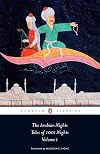
4 1/2 stars. Extremely violent--far more than I expected based on the fairly curated selection of Nights tales I've read over the years.
Also very sexually explicit, and generally the receiving parties are slaves or otherwise unfree to choose, which is weirdly LESS disturbing than the violence.
Both lesbian and gay sex and lots of bi protagonists. Occasional deprecation of homosexuality despite vast queer subtext. Lady doth protest too much, indeed. Creepy incest, actual and implied, and show more children getting married. Still less disturbing than all the casual mass murder.
Some brilliant poetry. I love that this translation keeps the verse and doesn't force rhyme. show less
Also very sexually explicit, and generally the receiving parties are slaves or otherwise unfree to choose, which is weirdly LESS disturbing than the violence.
Both lesbian and gay sex and lots of bi protagonists. Occasional deprecation of homosexuality despite vast queer subtext. Lady doth protest too much, indeed. Creepy incest, actual and implied, and show more children getting married. Still less disturbing than all the casual mass murder.
Some brilliant poetry. I love that this translation keeps the verse and doesn't force rhyme. show less
Lists
Awards


You May Also Like


Associated Authors
Statistics
- Works
- 91
- Members
- 4,746
- Popularity
- #5,295
- Rating
- 3.9
- Reviews
- 54
- ISBNs
- 9,892
- Languages
- 64
- Favorited
- 1