
M. C. Lyons
Author of Tales of the Marvellous and News of the Strange
About the Author
Image credit: Malcolm Lyons (center) Oundle School
Works by M. C. Lyons
Tales of the Marvellous and News of the Strange (2017) — Translator, some editions — 290 copies, 2 reviews
The Arabian Epic: Volume 1, Introduction: Heroic and Oral Story-telling (University of Cambridge Oriental Publications) (1995) 7 copies
The Arabian Epic: Volume 2, Analysis: Heroic and Oral Story-telling (University of Cambridge Oriental Publications) (1995) 3 copies
The Arabian Nights: Tales Of 1001 Nights, Volume 1 — Translator — 3 copies
Associated Works
The Arabian Nights: Tales of 1,001 Nights: Volume 1 (Penguin Classics) (2010) — Translator, some editions — 685 copies, 7 reviews
The Arabian Nights: Tales of 1,001 Nights: Volume 2 (Penguin Classics) (2008) — Translator, some editions — 359 copies, 1 review
Kitab buqrat fi habl ala habl (Hipppocrates: On Superfoetation); Kitab buqrat al-maruf bi-qatitriyun (Hippocrates: In the Surgery) (Arabic Technical and Scientific Texts 3) (1968) — Editor, some editions — 2 copies
An Arabic Translation of Themistius' Commentary on Aristoteles de Anima (1973) — Editor, some editions — 2 copies
Kitab buqrat fi tabi'at al-insan (Hippocrates: On the Nature of Man) (1968) — Editor, some editions — 1 copy
Kitab tadbir al-amrad al-hadda li-Buqrat (Hippocrates: Regimen in Acute Diseases) (Arabic Technical and Scientific Texts 1) — Editor, some editions — 1 copy
Tagged
Common Knowledge
- Canonical name
- Lyons, M. C.
- Legal name
- Lyons, Malcolm Cameron
- Other names
- Lyons, Malcolm C.
- Gender
- male
- Education
- University of Cambridge (Pembroke College|MA|1954|PhD|1957)
- Occupations
- university professor (Arabic)
- Organizations
- English Short Title Catalogue
Cambridge University (professor of Arabic) - Relationships
- Lyons, Ursula (wife|collaborator)
- Nationality
- UK
- Associated Place (for map)
- UK
Members
Reviews
Tales of the Marvellous and News of the Strange: The First English Translation of a Medieval Arab Fantasy Collection (A Penguin Classics Hardcover) by Malcolm C. Lyons
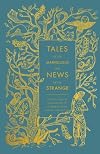
This book is so lovely that I might have bought it no matter what it was about. But then -- it's the first English translation of what is the earliest known collection of Arabic stories, at least a thousand years old, some of which made their way into The Arabian Nights, but many never read in English before.
I bought this book pretty early in my djinn obsession, but I'm very glad that I waited to read it. Even as I was reading these stories, and enjoying (most of) them, I kept thinking that show more I probably would not have been ready to deal with these a year ago. Stories so old are just different, no matter what culture they're from, and had I not some familiarity with this form, particularly from Al-Shaykh's One Thousand and One Nights retelling, I think I would have been at a loss. You know, with the horrific racism, and the "oh, well, he raped her, but he married her!" and "well, she cheated on me, so I cut off her nose." That stuff.
So, knowing what to expect, I found this peek into the history of storytelling delightful and fantastic. There was only one story that was all prophecies and god-bragging and this tribe shall defeat that tribe until this tribe is defeated by that tribe that was a slog all the way through and never had a moment of magic. It was work, of course, to read, but I felt duly rewarded for the work. show less
I bought this book pretty early in my djinn obsession, but I'm very glad that I waited to read it. Even as I was reading these stories, and enjoying (most of) them, I kept thinking that show more I probably would not have been ready to deal with these a year ago. Stories so old are just different, no matter what culture they're from, and had I not some familiarity with this form, particularly from Al-Shaykh's One Thousand and One Nights retelling, I think I would have been at a loss. You know, with the horrific racism, and the "oh, well, he raped her, but he married her!" and "well, she cheated on me, so I cut off her nose." That stuff.
So, knowing what to expect, I found this peek into the history of storytelling delightful and fantastic. There was only one story that was all prophecies and god-bragging and this tribe shall defeat that tribe until this tribe is defeated by that tribe that was a slog all the way through and never had a moment of magic. It was work, of course, to read, but I felt duly rewarded for the work. show less
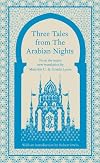
Where have these stories been for last 33 years? Hidden like a jinni, I guess, in post-Said discomfort with 'orientalism' and professor-fuelled distrust of story-telling. Well, here I am, Anonymous. Late as ever, but now in thrall.
The Malcom Lyons translation of 'Arabian Nights,' published by Penguin, comes in three sizes. The super-size is three volumes of nearly 1000 pages each. The grande is a selection of around 500 pages. I started here, with the small size: the three tales listed in show more the title, together with the very short frame narrative. Ma'rus is the last story in the sequence, so it is also the conclusion of the frame narrative.
Some things I learned from this book that you will not learn from Disney: The Arabian Nights is *brutally* violent and often charmlessly erotic; the first story is one of two kings being deceived by their wives, who engage in orgies while the kings are on monarchical business trips. So they murder their wives and their wives' lovers, run away together, find a jinni who's trapped a beautiful woman as a sex-slave, only she gets her revenge by waiting until he's asleep, then begging passing men to sleep with her in ways and numbers that make me shudder. One of the kings returns to his country and vows to deflower one virgin per night, then have her killed, so that he'll never be betrayed again. Our hero, Shahrazad, tells stories to save the lives of young girls. In other words, despite everything my modernist and post-modernist professors taught me, it's okay to tell stories, and sometimes it's really, really important to tell good stories.
Also, our earliest evidence for the stories of Ali Baba and Aladdin are in French. They're meant to be translations from oral storytellers, but nobody really knows; in any case, these, the most famous stories in the collection, may or may not actually be part of the collection.
Judar and Ma'rus are both glorious tales that end in horror--right up my alley. I'll be moving on to the grande volume soon. show less
The Malcom Lyons translation of 'Arabian Nights,' published by Penguin, comes in three sizes. The super-size is three volumes of nearly 1000 pages each. The grande is a selection of around 500 pages. I started here, with the small size: the three tales listed in show more the title, together with the very short frame narrative. Ma'rus is the last story in the sequence, so it is also the conclusion of the frame narrative.
Some things I learned from this book that you will not learn from Disney: The Arabian Nights is *brutally* violent and often charmlessly erotic; the first story is one of two kings being deceived by their wives, who engage in orgies while the kings are on monarchical business trips. So they murder their wives and their wives' lovers, run away together, find a jinni who's trapped a beautiful woman as a sex-slave, only she gets her revenge by waiting until he's asleep, then begging passing men to sleep with her in ways and numbers that make me shudder. One of the kings returns to his country and vows to deflower one virgin per night, then have her killed, so that he'll never be betrayed again. Our hero, Shahrazad, tells stories to save the lives of young girls. In other words, despite everything my modernist and post-modernist professors taught me, it's okay to tell stories, and sometimes it's really, really important to tell good stories.
Also, our earliest evidence for the stories of Ali Baba and Aladdin are in French. They're meant to be translations from oral storytellers, but nobody really knows; in any case, these, the most famous stories in the collection, may or may not actually be part of the collection.
Judar and Ma'rus are both glorious tales that end in horror--right up my alley. I'll be moving on to the grande volume soon. show less
An excellent study of a complex personality. He was an excellent politician, and an adequate strategist, but his tactical sense was his weakest point. The prose is competent, but the book would benefit from a family tree. The maps, though numerous, are of little use to a work with so much detail of battles and strategic postures.
A collection of Arabian tales from about 1,000 years ago probably from Constantinople (now Istanbul), former capital of the Byzantine Empire. They are strange by modern standards, are generally unpolished, and vary in quality, with a family resemblance to the Tales of the Thousand and One Nights and other ancient Arabic collections, some of these tales in common with those. The empire had experienced a golden age, becoming the largest and wealthiest city of Europe, but was coming into show more greater conflict with the Arab empire. The tales are not about the historical events of the time.
The authors of the tales liked magic, caves, handsome young men who could slay thousands single-handed, precious gems, virgins, the rising sun, the full moon, good food and drink, slaves, dirty tricks, fate, Muhammad, and God.
You might give this three stars only, unless you have a particular interest in Arab literature or history. show less
The authors of the tales liked magic, caves, handsome young men who could slay thousands single-handed, precious gems, virgins, the rising sun, the full moon, good food and drink, slaves, dirty tricks, fate, Muhammad, and God.
You might give this three stars only, unless you have a particular interest in Arab literature or history. show less
Lists
Reading LIst (2)
Awards


You May Also Like


Associated Authors
Statistics
- Works
- 11
- Also by
- 7
- Members
- 522
- Popularity
- #47,609
- Rating
- 4.2
- Reviews
- 5
- ISBNs
- 26
- Languages
- 2