
Franz Xaver von Schönwerth (1810–1886)
Author of The Turnip Princess and Other Newly Discovered Fairy Tales
About the Author
Works by Franz Xaver von Schönwerth
Associated Works
Tagged
Common Knowledge
- Canonical name
- von Schönwerth, Franz Xaver
- Legal name
- von Schönwerth, Franz Xaver
- Birthdate
- 1810-07-16
- Date of death
- 1886-05-24
- Gender
- male
- Occupations
- folklorist
- Nationality
- Bavaria
- Birthplace
- Amberg, Bavaria, Germany
- Place of death
- Munich, Bavaria, Germany
- Burial location
- Alter Nordfriedhof, Munich, Bavaria, Germany
- Map Location
- Germany
Members
Reviews
The Turnip Princess and Other Newly Discovered Fairy Tales (Penguin Classics) by Franz Xaver von Schönwerth
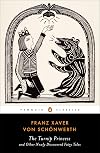
Like so many other readers, fairy tales were a huge part of my childhood. They were my cautionary tales, my morality plays, and my protection against the evil that lurked under the bed. As much as I loved the sanitized versions in the Disney movies, it was the older tales in which there was no huntsman to save Little Red and Bluebeard had ways to deal with curious wives. Even as I grew out of childhood, I never completely outgrew the magic of fairytales. So when a few years ago, a treasure show more trove of fairy tales were discovered in a vault that had been locked for 150 years, I, like so many others, was thrilled at the prospect of reading them. The tales were originally collected by Franz Xaver Schonwerth in Bavaria in the 1850s. According to the Introduction, he wanted to preserve them in their original form so what we get here are the tales as they were first told to him and as he wrote them down. They were beautifully translated by Harvard Professor and folklorist, Maria Tatar.
The Turnip Princess offers 72 of these rediscovered stories. Many are familiar and are clearly regional variations on familiar tales like Cinderella and Snow White but many like the title story are completely unique. The stories are collected into six parts, each representing the type of tale: animals, magic, nature, legends etc. and they are all quite short, some as little as a paragraph. There is also an introduction that explains the history and significance of the discovery and, at the end, a synopsis of the tales.
As is pointed out in the introduction, fairy tales were not originally for children but were ‘cleaned up’ in later years to be more child-friendly. Thankfully, these tales have not been sanitized for a young audience so that we not only get to see fairy tales as they were originally told but, with this, we are given a better understanding of the original audience - there are, for example some interesting scatological references in some of the tales that suggest that a 19th c. audience appreciated a good ‘fart’ joke as much as we do. There is also an interesting amount of gender-bending in many of these tales so that Cinderella becomes ‘Cinderfella’ as well as several overt Christian references often linked with more pagan imagery. As Maria Tatar says, these stories are ‘almost on steroids’ full of sex and violence and they will completely change your perspective on ‘happily ever after’. show less
The Turnip Princess offers 72 of these rediscovered stories. Many are familiar and are clearly regional variations on familiar tales like Cinderella and Snow White but many like the title story are completely unique. The stories are collected into six parts, each representing the type of tale: animals, magic, nature, legends etc. and they are all quite short, some as little as a paragraph. There is also an introduction that explains the history and significance of the discovery and, at the end, a synopsis of the tales.
As is pointed out in the introduction, fairy tales were not originally for children but were ‘cleaned up’ in later years to be more child-friendly. Thankfully, these tales have not been sanitized for a young audience so that we not only get to see fairy tales as they were originally told but, with this, we are given a better understanding of the original audience - there are, for example some interesting scatological references in some of the tales that suggest that a 19th c. audience appreciated a good ‘fart’ joke as much as we do. There is also an interesting amount of gender-bending in many of these tales so that Cinderella becomes ‘Cinderfella’ as well as several overt Christian references often linked with more pagan imagery. As Maria Tatar says, these stories are ‘almost on steroids’ full of sex and violence and they will completely change your perspective on ‘happily ever after’. show less
The Turnip Princess and Other Newly Discovered Fairy Tales (Penguin Classics) by Franz Xaver von Schönwerth
I’m very grateful to Penguin Classics for the ARC I received via NetGalley.
Schönwerth’s collection of 500 unknown fairy tales was discovered in 2009 by Erika Eichenseer, herself a storyteller, folk tale scholar, and founder of the Franz Xaver von Schönwerth Society. The tales were gathering dust among his papers in an archive in Regensburg, but finally lived to see the light of day thanks to Eichenseer’s efforts and tireless championing of the fairy tale in general and of Schönwerth show more in particular. This lovely Penguin Classics translation moves Schönwerth’s world of wonder beyond the borders of the German-speaking world.
Unjustly lesser-known than the Grimm brothers, Perrault, or Andersen, Schönwerth collected his stories in the Bavarian Oberpfalz among people of varied social standing. What is most striking about his method is that he apparently almost completely refrained from interventions after writing down the stories, lending them a raw and authentic quality. The tales even lack an opening formula and instead provide the setting and introduce the characters straight away, e.g. “A wealthy merchant had a son named Karl, who was the silent type.” (The Beautiful Slave Girl); “Three huntsmen went in search of their sister, who had been abducted by a witch and hidden away in the woods” (Three Flowers). By the time we’ve read the first paragraph, so much has already happened, and we’re too far gone in the magical world to go back.
Many tales seem unfinished: either the heroes and heroines are frustrated in their quest to find happiness and there is no happy ending, or, more often, we don’t get proper closure or answers to most of our questions. However, the tales have a strange pull; the reader is drawn to turning the page in order to find out what happens next, questions and possible confusion notwithstanding.
Most of the tale types are already familiar to fans of Grimm, Perrault, and others. Enchanted castles, daring quests, envious stepmothers, talking animals, seductive merfolk, magical objects, the number three, and other familiar sights all inhabit these pages. However, both girls and boys are enchanted or need rescue in turn in a rather balanced measure, which delightfully subverts traditional gender roles: often boys are in distress, and girls use their wit and courage to save them.
The pagan or supernatural motifs in some of the tales are also often mixed with Christian symbolism (e.g. a girl prays to keep the mermaids away from her husband, or the Madonna appears in the role of a “fairy” godmother). Some of the tales are myths or legends, or Schönwerth’s takes on very famous stories, such as that of the Pied Piper.
My personal favourites are the so called “tall tales”, which feature the humorous exploits of ordinary people displaying extraordinary wit.
This volume appeals to casual readers and scholars alike. The former will appreciate the uninterrupted sequence of the stories themselves without any footnotes except Schönwerth’s own short remarks in two instances, and the latter will enjoy the commentary of each tale at the end, as well as the careful sources, German titles, and types of each story featured.
While many of the stories are brutal and raw, there is undoubtedly a solid number of them that I would select to read or tell to children, either for the humour or for the moral, but above all because every child and adult could profit from losing themselves in a world of wonder and enchantment. show less
Schönwerth’s collection of 500 unknown fairy tales was discovered in 2009 by Erika Eichenseer, herself a storyteller, folk tale scholar, and founder of the Franz Xaver von Schönwerth Society. The tales were gathering dust among his papers in an archive in Regensburg, but finally lived to see the light of day thanks to Eichenseer’s efforts and tireless championing of the fairy tale in general and of Schönwerth show more in particular. This lovely Penguin Classics translation moves Schönwerth’s world of wonder beyond the borders of the German-speaking world.
Unjustly lesser-known than the Grimm brothers, Perrault, or Andersen, Schönwerth collected his stories in the Bavarian Oberpfalz among people of varied social standing. What is most striking about his method is that he apparently almost completely refrained from interventions after writing down the stories, lending them a raw and authentic quality. The tales even lack an opening formula and instead provide the setting and introduce the characters straight away, e.g. “A wealthy merchant had a son named Karl, who was the silent type.” (The Beautiful Slave Girl); “Three huntsmen went in search of their sister, who had been abducted by a witch and hidden away in the woods” (Three Flowers). By the time we’ve read the first paragraph, so much has already happened, and we’re too far gone in the magical world to go back.
Many tales seem unfinished: either the heroes and heroines are frustrated in their quest to find happiness and there is no happy ending, or, more often, we don’t get proper closure or answers to most of our questions. However, the tales have a strange pull; the reader is drawn to turning the page in order to find out what happens next, questions and possible confusion notwithstanding.
Most of the tale types are already familiar to fans of Grimm, Perrault, and others. Enchanted castles, daring quests, envious stepmothers, talking animals, seductive merfolk, magical objects, the number three, and other familiar sights all inhabit these pages. However, both girls and boys are enchanted or need rescue in turn in a rather balanced measure, which delightfully subverts traditional gender roles: often boys are in distress, and girls use their wit and courage to save them.
The pagan or supernatural motifs in some of the tales are also often mixed with Christian symbolism (e.g. a girl prays to keep the mermaids away from her husband, or the Madonna appears in the role of a “fairy” godmother). Some of the tales are myths or legends, or Schönwerth’s takes on very famous stories, such as that of the Pied Piper.
My personal favourites are the so called “tall tales”, which feature the humorous exploits of ordinary people displaying extraordinary wit.
This volume appeals to casual readers and scholars alike. The former will appreciate the uninterrupted sequence of the stories themselves without any footnotes except Schönwerth’s own short remarks in two instances, and the latter will enjoy the commentary of each tale at the end, as well as the careful sources, German titles, and types of each story featured.
While many of the stories are brutal and raw, there is undoubtedly a solid number of them that I would select to read or tell to children, either for the humour or for the moral, but above all because every child and adult could profit from losing themselves in a world of wonder and enchantment. show less
White as Milk, Red as Blood: The Forgotten Fairy Tales of Franz Xaver von Schönwerth by Franz Xaver von Schönwerth
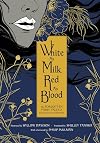
I’ve already read the Penguin collection of von Schönwerth’s fairytales, so the stories in this collection weren’t new by any means, but I had to pick it up because of the gorgeous illustrations. Willow Dawson did not disappoint, providing eerily lovely drawings alongside the small selection of stories from von Schönwerth’s archive. I’m sure she won’t be the last artist to officially illustrate his work, so I hope that this book sets a tone for future illustrators; just because show more many of the Grimm’s stories have been Disney-fied doesn’t mean that we have to start treating von Schönwerth the same way. Bring on the darkness that much folklore hides (or doesn’t in some cases) and give us something to really think about! show less
The Turnip Princess and Other Newly Discovered Fairy Tales (Penguin Classics) by Franz Xaver von Schönwerth
A long, long time ago, there lived a princess, and a prince, and a talking frog, and a daring dung beetle, and a couple homely honey bees - spring time assassins of the Oak King. Okay, I may have lost the plot there. I'm just going to go ahead and yank back on that thread I threw out there (read: spoil everything) and confirm that there are no assassin honey bees in this book.
My point is this: a long, long time ago cultures were built upon the tips of tongues. A rich oral tradition was just show more as vital to the progress of time as any other building block and stories spun by bedside or from the corner of a town's inn on a dreary night each had their own ripples. Some of those ripples have given us modern fairytales which are a blend of many different influences and era-centric attitudes. Some of those ripples faded to the background in certain times and places for any number of reasons. The Turnip Princess and Other Newly Discovered Fairy Tales turns an eye to the efforts of one man, Franz Xaver von Schönwerth, and his desire to seek out the origins and petering sparks of lost fairytales. The ancestral timbre of these lost stories isn't blunted by any generational sieve and, as such, they capture quite a bit more of the intensity of their eras.
I enjoyed this collection as a whole. There were some stories that I felt were better than others and some I can definitely see myself rereading in the future. There were also stories whose connection to what have become Disneyfied fairytales was obvious in parts and some that felt like a fresh script entirely. I think that blend makes this a pretty important book for fairytale and folklore fans and writers right off the bat. The story of their discovery and collection even has a bit of lore like feel to it in itself. An adventuring collector of lost stories, dusty boxes slumbering away until a discovery is made.
I'd love to see the trajectory of this collection; what ripples it gives off and in what avenues. Honestly, I think right now is a pretty perfect time for this book to make its greatest impact. We've been in the trenches of retelling for such a long time and as comfortable (or disastrous depending on your capability for retelling angst, character angst, or simply angst in general) as our beloved stories can be as first imagined and reimagined (and reimagined and reimagined) - a fresh breath is welcome and wonderful to experience. show less
My point is this: a long, long time ago cultures were built upon the tips of tongues. A rich oral tradition was just show more as vital to the progress of time as any other building block and stories spun by bedside or from the corner of a town's inn on a dreary night each had their own ripples. Some of those ripples have given us modern fairytales which are a blend of many different influences and era-centric attitudes. Some of those ripples faded to the background in certain times and places for any number of reasons. The Turnip Princess and Other Newly Discovered Fairy Tales turns an eye to the efforts of one man, Franz Xaver von Schönwerth, and his desire to seek out the origins and petering sparks of lost fairytales. The ancestral timbre of these lost stories isn't blunted by any generational sieve and, as such, they capture quite a bit more of the intensity of their eras.
I enjoyed this collection as a whole. There were some stories that I felt were better than others and some I can definitely see myself rereading in the future. There were also stories whose connection to what have become Disneyfied fairytales was obvious in parts and some that felt like a fresh script entirely. I think that blend makes this a pretty important book for fairytale and folklore fans and writers right off the bat. The story of their discovery and collection even has a bit of lore like feel to it in itself. An adventuring collector of lost stories, dusty boxes slumbering away until a discovery is made.
I'd love to see the trajectory of this collection; what ripples it gives off and in what avenues. Honestly, I think right now is a pretty perfect time for this book to make its greatest impact. We've been in the trenches of retelling for such a long time and as comfortable (or disastrous depending on your capability for retelling angst, character angst, or simply angst in general) as our beloved stories can be as first imagined and reimagined (and reimagined and reimagined) - a fresh breath is welcome and wonderful to experience. show less
Lists
Awards

You May Also Like


Associated Authors
Statistics
- Works
- 6
- Also by
- 1
- Members
- 653
- Popularity
- #38,651
- Rating
- 3.8
- Reviews
- 17
- ISBNs
- 18
- Languages
- 2