
Joanne Harris
Author of Chocolat
About the Author
Joanne Harris was born in Barnsley, Yorkshire, England on July 3, 1964. She studied Modern and Mediaeval Languages at St Catharine's College, Cambridge. While working as a teacher for fifteen years, she published three novels: The Evil Seed (1989), Sleep, Pale Sister (1993) and Chocolat (1999), show more which was made into a film starring Juliette Binoche and Johnny Depp. Her other works include Blackberry Wine, Five Quarters of the Orange, Coastliners, Holy Fools, The Lollipop Shoes and Runemarks. She also co-wrote two cookbooks with cookery writer Fran Warde: The French Kitchen and The French Market. (Bowker Author Biography) show less
Image credit: Joanne Harris, at the FT Weekend Oxford Literary Festival on March 20, 2018 in Oxford, England
Series
Works by Joanne Harris
Associated Works
Queer as Folklore: The Hidden Queer History of Myths and Monsters (2024) — Foreword — 174 copies, 2 reviews
Four for Fantasy: A Quartet of Fantastical Stories Collected for World FantasyCon 2013 (2013) — Contributor — 13 copies, 1 review
Bard: The Short Story Collection: 6 Original Contemporary Fiction Short Stories (2018) — Contributor — 8 copies
Flotsam Fantasique The Souvenir Book of World Fantasy Convention 2013 (2013) — Contributor — 6 copies
Tagged
Common Knowledge
- Birthdate
- 1964-07-03
- Gender
- female
- Nationality
- UK
- Birthplace
- Barnsley, West Riding of Yorkshire, England, UK (now in South Yorkshire)
- Map Location
- England, UK
Members
Discussions
An Author Interview with Joanne Harris in Talk about LibraryThing (August 2025)
Five Quarters of the Orange by Joanne Harris in Orange January/July (October 2011)
Reviews
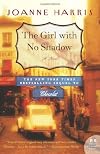
I had the same reaction to this book as to Chocolat...I want to bathe myself in chocolate, I want to make chocolate a part of my every day, I want to worship chocolate! I'm always leary of sequels...especially when the first book was an all-time favorite (which is the case with Chocolat). While not quite as good as Chocolat, Joanne Harris came darn close in The Girl With No Shadow. Of course, it always makes a book better when you've been to the place where it is set...I could see Montmartre show more and her people as Harris describes them (perfectly). The story kept me turning pages...until very late last night! Definitely worth reading...I think you'd feel the same even if you didn't read Chocolat (or see the movie). show less
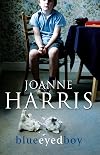
I'm not usually a thriller fan, but this one really grabbed me. Joanne Harris knows how to tell a story and keep the tension high and the twists are never overwhelming, but always exciting. This is the story of a very messed up group of people told through the blog and private posts of "blueeyedboy" who is a 40-something bachelor living with his mother. He writes "fiction" about his family and assorted murders...but what is really true and what is truly fiction? Also, we read the private show more posts of Albertine, whose identity we think we know, until we don't. Well written, great story and enough depth of character to satisfy my preference for character-driven stories. show less
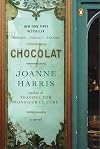
I loved the movie Chocolat when I was younger, but somehow managed to miss reading the book this entire time, so when I spotted it in a thriftshop I figured why not give it a try? Turns out that that novel is just as magical, whimsical, and comedic as the film - and this is the perfect time of year to read it too! With the winds of March blowing a change of scenery into the world we are swept along to the small French village of Lansquenet, following Vianne Rocher and her daugher as they show more settle down (for a time) to open a chocolate shop. Small French villages may seem picturesque, but behind their facade lies vicious local gossip, a mistrust of strangers, and more secrets than we know what to do with. Even though we would think that Vianne woud have instant popularity due to her friendly nature and delicious chocolately wares, she immediately runs afoul of the judgemental Catholic priest who sees her as a corrupting influence on his "flock." While we can't judge the church for its seemingly traditional and backwards ways, as that is all these small town people know, Vianne's presence sparks a much needed revolution. The moral of the story is pretty blatant - live life and don't judge others for their differences - but we are none the less caught up by the intriguing cast of characters and in the slow burn storytelling that unfolds. A perfectly magical read for spring, as long as one controls their inevitable urge to eat all the chocolate in sight whilst reading! show less
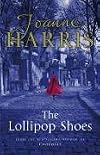
I didn’t realise that there was a sequel to [b:Chocolat|47401|Chocolat (Chocolat, #1)|Joanne Harris|https://images.gr-assets.com/books/1388674628s/47401.jpg|2930558] until a friend recommended it a few years ago. Then I happened to see a copy in the library and thought it might be fun to read, as indeed it was. The narrative picks up about five years after the events of [b:Chocolat|47401|Chocolat (Chocolat, #1)|Joanne show more Harris|https://images.gr-assets.com/books/1388674628s/47401.jpg|2930558]. Vianne and Anouk have been joined by little Rosette and are living quietly in Paris. Their relatively peaceful existence is upended by the arrival of the enigmatic Zozie. I found the split point of view between Vianne, Anouk, and Zozie delightful, as Zozie is such an interesting antagonist. Although the reader knows from the start that her intentions are nefarious, you also cannot help but be fascinated by her. Thus I found ‘The Lollipop Shoes’ a more tense and thrilling experience than [b:Chocolat|47401|Chocolat (Chocolat, #1)|Joanne Harris|https://images.gr-assets.com/books/1388674628s/47401.jpg|2930558]. In the latter, the villain is a simple personification of convention, whereas here multiple witches are in play. I loved all the references to the Kindly Ones, who the central characters sometimes paralleled: the maiden, the mother, and the crone. (That said, I did feel old when I realised that Vianne is my age in this novel.)
I read [b:Chocolat|47401|Chocolat (Chocolat, #1)|Joanne Harris|https://images.gr-assets.com/books/1388674628s/47401.jpg|2930558] quite a while back, but am nonetheless pretty sure I enjoyed ‘The Lollipop Shoes’ more. I appreciated that emotional bonds between women were at the centre of the plot and that the dilemmas faced by Vianne in particular were so sensitively explored. Paris was evoked vividly, which made me a little nostalgic. I’ve only been to Paris once, but the visit included a day wandering around Montmartre on my own. The descriptions chime with my memories of that day. The gradual build towards the denouement was elegantly done and the magical elements woven in beautifully. Although the ending did not surprise me, it was entirely charming and fitting. What an excellent novel to read over a restful weekend. It leaves you with a warm, cosy feeling. show less
I read [b:Chocolat|47401|Chocolat (Chocolat, #1)|Joanne Harris|https://images.gr-assets.com/books/1388674628s/47401.jpg|2930558] quite a while back, but am nonetheless pretty sure I enjoyed ‘The Lollipop Shoes’ more. I appreciated that emotional bonds between women were at the centre of the plot and that the dilemmas faced by Vianne in particular were so sensitively explored. Paris was evoked vividly, which made me a little nostalgic. I’ve only been to Paris once, but the visit included a day wandering around Montmartre on my own. The descriptions chime with my memories of that day. The gradual build towards the denouement was elegantly done and the magical elements woven in beautifully. Although the ending did not surprise me, it was entirely charming and fitting. What an excellent novel to read over a restful weekend. It leaves you with a warm, cosy feeling. show less
Lists
Female Author (1)
Witchy Fiction (1)
Best Beach Reads (1)
Books About Boys (1)
Awards


You May Also Like
Associated Authors
Statistics
- Works
- 52
- Also by
- 27
- Members
- 32,167
- Popularity
- #605
- Rating
- 3.8
- Reviews
- 995
- ISBNs
- 941
- Languages
- 34
- Favorited
- 114


