
Francis James Child (1825–1896)
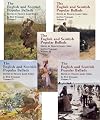
Author of The English and Scottish Popular Ballads, Volumes 1 through 5
About the Author
American scholar, folklorist, and collector of ballads, Francis Child was born in Boston, Massachusetts, and educated at Harvard University. After graduating from Harvard, he studied for a time in Europe and then returned to the United States to teach at Harvard, eventually becoming professor of show more English there. Motivated by an interest in folklore, Child put together at the Harvard Library one of the largest folklore collections in existence at the time. Though a scholar of the British poets, notably Edmund Spenser and Geoffrey Chaucer , Child is best known for his systematic study, collecting, and cataloging of folk ballads, particularly those of Scotland and England. He is noted for studying manuscript rather than printed versions of old ballads from these countries although he studied and investigated ballads and stories in other languages that were related to the Scottish and English ballads. Child's first important work was Four Old Plays (1848). A subsequent eight-volume collection called English and Scottish Ballads (1857-1858) eventually grew into his final and most ambitious collection, The English and Scottish Popular Ballads (1882-1898). The work contains 305 ballads, many of which come from manuscript sources, and with all known versions of each ballad. It remains the most authoritative work on old English and Scottish ballads and folk songs. Child's teaching and collecting provided an important impetus for other scholars to gather ballads in the United States and elsewhere. (Bowker Author Biography) show less
Image credit: Photo courtesy of the Milman Parry Collection
of Oral Literature, Harvard University.
Series
Works by Francis James Child
True Thomas {ballad} — Collector — 3 copies
Lord Randall {ballad} — Collector — 2 copies
Get Up and Bar the Door [ballad] — Collector — 1 copy
Johnny Armstrong [ballad] — Collector — 1 copy
Robin Hood and the Tanner {ballad} — Collector — 1 copy
Child's Ballads - Volume I 1 copy
Child's Ballads - Volume II 1 copy
Associated Works
English and Scottish Popular Ballads (Cambridge Edition of the Poets) (1904) — Editor — 61 copies, 1 review
Tagged
Common Knowledge
- Birthdate
- 1825-02-01
- Date of death
- 1896-09-11
- Gender
- male
- Education
- Harvard University
English High School, Boston, Massachusetts
Boston Grammar School, Boston, Massachusetts - Occupations
- professor (rhetoric)
editor
professor (English literature)
professor (oratory)
philologist
folklorist - Organizations
- Harvard University
- Relationships
- Kittredge, George Lyman (son-in-law)
- Short biography
- Francis James Child was a Professor of Rhetoric and Oratory at Harvard University. In 1876 he became Harvard's first Professor of English.
- Nationality
- USA
- Birthplace
- Boston, Massachusetts, USA
- Places of residence
- Berlin, Germany
Boston, Massachusetts, USA - Place of death
- Boston, Massachusetts, USA
- Burial location
- Stockbridge, Massachusetts, USA
- Associated Place (for map)
- Massachusetts, USA
Members
Reviews
A fantastic piece of scholarship, although it did take a bit of effort to understand how to "read" the various types of entries--but well worth it. Reading new ballads gets better and better, and when I am in the the mood to relax and be delighted, these are the books I pick up.
In the 19th century, Child collected every ballad (it appears) known in Scotland and England and compared the different versions that had been remembered or published, with astute and fascinating analysis of how they show more changed or were "combined" in people's memories. He also comments on the more than 30 languages in which he found some of them.
One of my favorite finds was the verse used by Simon and Garfunkel for their recording of "Canticle/Parsley, Sage, Rosemary and Thyme.". By listening to their recording, and following the information Child provides, you can hear the canticle sung "against" the main ballad, and can more clearly distinguish the lyrics of the third melody that S&G added, an anti-gun protest. Anachronistic, since guns were in the future, but then there IS artistic license.
I also love reading the Early Modern English or the Scots lyrics--glossary provided, although using a website for Scots is more easily accessible and more comprehensive.
One commentator states that these ballads are the most true-to-life descriptions available of what life really was like in earlier centuries. show less
In the 19th century, Child collected every ballad (it appears) known in Scotland and England and compared the different versions that had been remembered or published, with astute and fascinating analysis of how they show more changed or were "combined" in people's memories. He also comments on the more than 30 languages in which he found some of them.
One of my favorite finds was the verse used by Simon and Garfunkel for their recording of "Canticle/Parsley, Sage, Rosemary and Thyme.". By listening to their recording, and following the information Child provides, you can hear the canticle sung "against" the main ballad, and can more clearly distinguish the lyrics of the third melody that S&G added, an anti-gun protest. Anachronistic, since guns were in the future, but then there IS artistic license.
I also love reading the Early Modern English or the Scots lyrics--glossary provided, although using a website for Scots is more easily accessible and more comprehensive.
One commentator states that these ballads are the most true-to-life descriptions available of what life really was like in earlier centuries. show less

Ballads are said to be our best poetry because everything is condensed to its essence with no extraneous matter. However, I often find that it's condensed past the point of comprehension, as in this ballad where I can't tell if it's the step-mother or the step-daughter who gets enchanted. It's short, so it's worth reading once.
Of all the cautionary tales about young women running off with inappropriate men, this is one of the few that is appropriate for feminist daughters to read.
This is one of those ballads that the folk process has reduced almost to the point of incomprehensibility. Still I've always liked the way the words flow off a readers tongue.
Lists
You May Also Like


Associated Authors
Statistics
- Works
- 42
- Also by
- 2
- Members
- 743
- Popularity
- #34,184
- Rating
- 4.1
- Reviews
- 9
- ISBNs
- 58
- Languages
- 1
- Favorited
- 1