
Alan Dundes (1934–2005)
Author of The Study of Folklore
About the Author
Anthropologist and folklorist Alan Dundes was born in 1934 in New York City. He received his BA in English in 1955 and his MAT in English in 1958, both from Yale University. He received his Ph.D in Folklore from Indiana University in 1962 and in 1963 he joined the teaching staff at the University show more of California, Berkley. He wrote over 250 journal articles and12 books and co-wrote more than 20 other books. In 1993, he became the first American to win the Pitre Prize's Sigillo d'Oro, which is an international life-time achievement award in folklore and ethnography. He died of a heart attack on March 30, 2004 at the age of 70. (Bowker Author Biography) show less
Works by Alan Dundes
Mother Wit from the Laughing Barrel: Readings in the Interpretation of Afro-American Folklore (1972) 45 copies
Life Is Like a Chicken Coop Ladder: A Study of German National Character Through Folklore (Great Lakes Books (Paperback) (1984) 28 copies, 1 review
Never Try to Teach a Pig to Sing: Still More Urban Folklore from the Paperwork Empire (Humor in Life and Letters Series) (1991) 10 copies
Two Tales of Crow and Sparrow: A Freudian Folkloristic Essay on Caste and Untouchability (1997) 3 copies
Essays in Folkloristics 3 copies
"Folkloristic Commentary," 1 copy
Associated Works
Tagged
Common Knowledge
- Canonical name
- Dundes, Alan
- Birthdate
- 1934-09-08
- Date of death
- 2005-03-30
- Gender
- male
- Education
- Indiana University (PhD - Folklore)
Yale University (BA - English, MA - English) - Occupations
- folklorist
university professor - Organizations
- University of California, Berkeley
- Nationality
- USA
- Birthplace
- New York, New York, USA
- Places of residence
- Berkeley, California, USA
- Place of death
- Berkeley, California, USA
- Associated Place (for map)
- California, USA
Members
Reviews
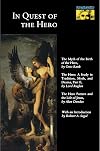
And here I thought cultural one-upsmanship was dead.
This book starts from a significant and valuable observation: That a great many tales of heroes have a great deal in common. For example, most heroes are brought up by someone other than their parents -- a fact that is true of everyone from Moses to Oedipus to Cyrus the Great to (in more recent tales, which were not known to the authors of this book) Frodo Baggins and Harry Potter. This point has been made by many scholars, most notably show more Joseph Campbell, and is freely accepted by all three contributors to this book; it need not be questioned.
What these three essays (especially the first two, by Rank and Lord Raglan) attempt to do is to study why folktales have this common element. This is a much better question.
It's too bad it gets such lousy answers.
Otto Rank tries to explain it in Freudian terms. In essence, he says that the Oedipus tale is as it is because we all have Oedipus complexes. As for where the rest of the details come from -- that's because we're all a bunch of paranoids.
For starters, of course, Freud's hypotheses are absurd. But it seems to me that Rank isn't even applying them correctly. Rags-to-riches stories don't appeal to us because we're paranoid; they appeal to us because we want to succeed!
Lord Raglan isn't as badly deceived by incompetent psychologists, but he has his nose so high in the air, it's a wonder he finds anything up there to breathe. He looks down on the primitive myths, completely failing to understand their purpose and treating them as pure fiction -- and bad fiction, and then denying that primitive peoples even have the brains to invent such things! I can't claim to know much about psychology, but I know folklore, and Raglan just doesn't get it. Often the best work in fact comes from the illiterates, the hunter-gatherers, the primitives -- what else do they have to do at night except tell stories?
To give one specific example of Raglan's complete wrong-headedness, on pp. 146-147, he attempts to place Robin Hood in the "hero" mold, giving the outlaw 13 of a possible 22 points. But six (arguably eight) of those alleged 13 points are either not explicit in the earliest references to Robin, or are the hack work of later broadside-writers. The Robin Hood of the folk both predates Raglan's version and is folkier -- but less like a hero.
The final essay, by Alan Dundes, is much better; at least it brings real insight into the myths themselves -- and covers a topic which many have feared to address. But it can't wipe out the bad taste left by the others. In one sense, Rank is surely right: hero tales around the world are alike because they strike some deep inner chord in all of us. But the reason they do so is not because we are sick, or neo-primitive, or suffer some sort of religious mania. It's because the hero tales exalt values which make for better, stronger, more stable societies. Heroes are heroes because they make us better, not because they make us inferior. show less
This book starts from a significant and valuable observation: That a great many tales of heroes have a great deal in common. For example, most heroes are brought up by someone other than their parents -- a fact that is true of everyone from Moses to Oedipus to Cyrus the Great to (in more recent tales, which were not known to the authors of this book) Frodo Baggins and Harry Potter. This point has been made by many scholars, most notably show more Joseph Campbell, and is freely accepted by all three contributors to this book; it need not be questioned.
What these three essays (especially the first two, by Rank and Lord Raglan) attempt to do is to study why folktales have this common element. This is a much better question.
It's too bad it gets such lousy answers.
Otto Rank tries to explain it in Freudian terms. In essence, he says that the Oedipus tale is as it is because we all have Oedipus complexes. As for where the rest of the details come from -- that's because we're all a bunch of paranoids.
For starters, of course, Freud's hypotheses are absurd. But it seems to me that Rank isn't even applying them correctly. Rags-to-riches stories don't appeal to us because we're paranoid; they appeal to us because we want to succeed!
Lord Raglan isn't as badly deceived by incompetent psychologists, but he has his nose so high in the air, it's a wonder he finds anything up there to breathe. He looks down on the primitive myths, completely failing to understand their purpose and treating them as pure fiction -- and bad fiction, and then denying that primitive peoples even have the brains to invent such things! I can't claim to know much about psychology, but I know folklore, and Raglan just doesn't get it. Often the best work in fact comes from the illiterates, the hunter-gatherers, the primitives -- what else do they have to do at night except tell stories?
To give one specific example of Raglan's complete wrong-headedness, on pp. 146-147, he attempts to place Robin Hood in the "hero" mold, giving the outlaw 13 of a possible 22 points. But six (arguably eight) of those alleged 13 points are either not explicit in the earliest references to Robin, or are the hack work of later broadside-writers. The Robin Hood of the folk both predates Raglan's version and is folkier -- but less like a hero.
The final essay, by Alan Dundes, is much better; at least it brings real insight into the myths themselves -- and covers a topic which many have feared to address. But it can't wipe out the bad taste left by the others. In one sense, Rank is surely right: hero tales around the world are alike because they strike some deep inner chord in all of us. But the reason they do so is not because we are sick, or neo-primitive, or suffer some sort of religious mania. It's because the hero tales exalt values which make for better, stronger, more stable societies. Heroes are heroes because they make us better, not because they make us inferior. show less

Back in the 1980s, teenagers used to tell dead baby jokes. “What’s red and squirms in the corner? A baby playing with a razor blade. What’s green and red and squirms in the corner? The same baby three months later.” We recited these jokes like catechisms. Being able to tell at least one or two of them meant you were part of the club. Sociologically speaking, that probably meant more than the actual jokes themselves. I’m not even sure if anybody thought they were funny. By the time show more I reached the age of 16 though, telling a dead baby joke would only be met with eye rolls and people telling you your jokes were old. You weren’t cool because you weren’t keeping up with the social trends.
The dead baby jokes were part of a joke cycle, meaning a cluster of jokes centered around a common theme. Other joke cycles are grosser than gross jokes, knock knock jokes, leper jokes, light bulb jokes, and jokes targeted specific ethnic or racial groups. Since these are circulated orally through society and their origins are unknown, joke cycles qualify as being a branch of folklore in sociology, particularly in the category of socio-linguistics. Alan Dundes, once one of America’s most prominent and controversial folklorists, examines offensive joke cycles in the collection of essays called Cracking Jokes.
Dundes approaches his subject matter theoretically through a Freudian psychoanalytic framework. That essentially dates his work and delegitimizes some of his findings from the start. But what this means is that he analyzes the content of jokes in order to understand what they reveal about unconscious processes and what the popularity of these jokes say about the society in which they circulate. I personally don’t reject Freudian thought outright since it does provide a framework and a language for making sense of the content of thought; it depends on what the researcher does with it. The most legitimate idea in this book is how jokes indicate symptoms of neurosis and insecurity through the process of substitution and sublimation, thus helping a folklorist to understand sources of anxiety in any given population Scholars who stick too closely to the Freudian method and accept the theoretical method without question tend to sabotage their own studies though. This is a problem I ran into with Dundes.
In one essay he writes about a joke cycle from the early 1960s centered around elephants. “What’s big and grey and comes in gallons? An elephant.” I have to say most of the jokes Dundes lists aren’t funny. Some of them I didn’t even get. Many of them are sexual in nature though in the way they compare the size of an elephant’s trunk to the size of a penis. Some of them aren’t though. The connection between elephants and sexual inadequacy is easy to see, but Dundes’ conclusions go downhill from there. His contention is that elephants in these jokes are symbols of African-American masculinity, something that represented a threat to white men in America at the time. Aside from the pairing of the trunk and penis, elephants live in the jungle and Black people come from Africa so Black men get paired with elephants (never mind that a large portion of Africa is desert). From there he makes an error in thinking that the link between elephants and Black men is legitimate because this joke cycle circulated at the time the Civil Rights Movement was happening. But that might be an error of linking correlation with causation. His analysis leads into the Oedipus complex where Black men become a stand-in for the father who has to be killed so the white male can possess his mother thereby inheriting the father’s domain. It just degenerates into Freudian psychobabble at that point. In Dundes’ defense, he isn’t trying to encourage racism here; he is trying to diagnose the neurotic symptoms of racist anxieties under the premise that the first step in curing an illness is understanding its pathology. His analytical method just leads to a dead end as far as I can see. He would have benefited more from providing data on the demographics of people telling these jokes and the social groups in which they circulated. Would these elephant jokes mean something different depending on context? Do we know that only white people told these jokes? Would their meaning change if they were told by Black people or some other ethnic group?
In a more successful essay, he analyzes the dead baby joke cycle. After analyzing some of the different reasons why these jokes might have appealed to teens, he arrives at the conclusion that the dead babies symbolize aborted fetuses. This might sound crazy at first but after following the train of logic it makes more sense. Puberty is marked by the onset of child bearing capabilities. Hormones begin telling adolescents to reproduce. However, in the context of modern society, they aren’t psychologically mature enough or financially equipped to raise children. So one consequence of sex for teenagers is unwanted pregnancy. One of the ways of dealing with this is abortion, an issue that became a prominent controversy after the passing of Rose Vs. Wade in the 1970s. So Dundes concludes that dead baby jokes are a social way of relieving anxiety around the problem of unwanted pregnancy.
If I could add my own thoughts to this, I would say that the disgusting images of dead babies in these jokes did not come out of nowhere. I remember anti-abortion activists handing out pamphlets on city streets in the 1980s that had photos of bloody fetuses in toilets and garbage cans. No doubt this shock value was used for propaganda purposes. Of course anybody who knows how abortions are actually performed would recognize this propaganda as nonsense as well as anybody who knows the difference between first, second, and third trimester fetal development. Third trimester abortions are performed less than five times per year and only allowed in cases of extreme danger. But once you’ve seen the horrific images in those pamphlets, you can’t unsee them regardless of what your beliefs about abortion are. Of course there is no technical way to prove that dead baby jokes result from sexual anxiety in teenagers, but at least the connecting thread from the joke to the explanation is clear and plausible.
The rest of the book mostly analyzes offensive jokes revolving around ethnic or sexual stereotypes. Joke cycles about the Holocaust, Polish people, Italian people, gay people, and so on and so forth get covered. Dundes comes up with the amazing insight that ethnic jokes are rooted in anxiety caused by the presence of people who are different from the ones telling the jokes. Well, I guess I knew that already. To build on that, I’d say there is an element of sadism in the telling of sick jokes. One thing I gathered from reading the Marquis de Sade is that when people feel superior to others, they feel like they are justified in doing anything they want to them. Outside of acts of physical violence, one means people have of expressing superiority over others is by offending them through the medium of humor. This might even appeal to ordinary people who aren’t necessarily capable or interested in committing crimes like physical violence to begin with. Other scholars have examined whether or not racist humor is a form of verbal violence.
Sexual jokes are treated by Dundes in a similar way with a similarly underwhelming effect. The cycle of jokes told by women about why cucumbers are better than men are little more than a laundry list of things about men that bother women. A cucumber is better than a man because you don’t get hair stuck in your teeth when you put a cucumber in your mouth. A cucumber doesn’t whine if you ask it to wear a condom. Haha. That’s so funny I forgot to laugh. It doesn’t take a Freudian sociological analysis to explain why this joke would appeal to the people who tell it and not so much to the rest of us. Of more interest would have been a discussion on why sexuality causes the kind of anxiety that needs to be relieved through humor in the first place. Actually, Steven Pinker has done a good job of that already.
Another subject the author overlooks is that of ethnic intra-group joke cycles. For example, when I was in Poland a few years ago I was surprised to find that Polish people were telling some of the same Polish jokes I heard when I was a kid. This isn’t any different than Jeff Foxworthy telling redneck jokes to a redneck audience. “You know you’re a redneck if you go to family reunions to pick up women.” He does address Jewish American Mother and Jewish American Princess jokes which he demonstrates are inextricably linked. These jokes are told in Jewish communities and especially appeal to Jews from second generation immigrant families. Dundes points out that they address anxieties about childbearing and growing up in a culture where family styles of childcare don’t match with the dominant host culture. On a side note, I was surprised to learn that Orthodox Jews tell jokes based on their own stereotypes of Reform and Conservative Jews. Now there’s something I never knew before. Over all though, Dundes doesn’t sufficiently deal with self-abnegating humor which, from what I’ve experienced, is common in Europe and especially the U.K. A stereotype of Americans that many Europeans hold is that we can’t laugh at ourselves because we have no sense of irony. An essay on self-abnegating humor would have made for a good point of contrast.
Of more value than the truisms presented about ethnically offensive jokes analyzed in this book is the taxonomic approach to categorizing types of humor. It should be obvious that there is a difference between story telling jokes and riddles, but observations about motifs and themes, when grouped into categories, work to undermine and neutralize the damage racist jokes can do. Dundes points out that common motifs are stupidity, linguistic miscommunications, and unhygienic habits. The last one makes me wonder if ethnic stereotypes about people being dirty are rooted in theories of eugenics and ethnic hygiene from the early modern era. Note how Hitler said that immigrants were “polluting” the blood of pure Germans or how some Americans tell jokes about Muslims not using toilet paper.
Dundes also rightly points out that many ethnic groups are interchangeable in stereotype jokes. “What’s the difference between an Irish wedding and an Irish funeral? There’s one less drunk at the funeral.” (I first heard this joke told by an Irish man when I was in Ireland, by the way.) The slot filled by “Irish” in that joke could be filled with any other ethnic group you choose and the joke would still be the same. Knowing this exemplifies the way in which stereotypes work to create distance between the user of the stereotype and who it is meant to represent.
Another class of joke cycles refers to ethnic characteristics that are less general and refer to specific physical features, linguistic patterns, or cultural traits. Jokes about Jewish or Scottish people being thrifty are commonly used as insults, yet the author points out that there is nothing inherently bad about not spending excessive amounts of money. In fact, in many cases it shows virtuous behavior. People complain about excessive government spending constantly but if a Jewish person doesn’t buy a book for $100 because he can buy the same book at another store for $20 that is a cause for offensive humor and accusations of being cheap. It’s like some people think that person needs to be put down for asserting his self-control, self-restraint, and wise decision making. All this brings Dundes to raise the question of whether ethnic stereotypes arise from cultural patterns in specific ethnic groups or whether they just misrepresent such groups without regard for how they actually are. Dundes leaves this question unanswered.
Alan Dundes is at his best in this book when he doesn’t pursue Freudian cliches too far. Otherwise I feel that too many of these essays do little more than state the obvious. Too much of the time he sticks too closely to the formula of anxiety that needs to be relieved by telling jokes. I didn’t come away from this book feeling like he had provided any great insights. But I did get a chance to see how folkloric studies can work. Joke cycles reveal repetitive patterns that can be aggregated for drawing conclusions about the people who tell them whereas individual jokes that aren’t contained in cycles don’t give enough data to work with. I also think a shortcoming in these studies is that he mostly limits his analysis to the contents of the jokes and doesn’t say enough about who tells them. That social dimension is largely missing and it could have led to more significant insights. I give him credit for having his heart in the right place though when it comes to combating racism.
As for the dead baby jokes, looking back on it now I’m not convinced that the content of the jokes mattered all that much to us. Telling the jokes was like a social ritual that bonded our group of friends together. It worked by creating an in-group/out-group dynamic. The in-group was the teenagers telling the jokes and the out-group was the adults in our lives who we never shared the jokes with. Dead baby jokes were only funny because of their shock value. But they didn’t shock us though we thought they would shock our parents and teachers. It was our secret that bonded us closer together. I’m not convinced we were anxious about unwanted pregnancy. It’s true that we were a bunch of horny teenagers, but we were also too shy and awkward for sex, and far too young. We sure talked about it a lot, but at that age sex was still something that only adults did. But as Freud would have said, jokes make people laugh by making people uncomfortable.
We bonded together socially in our knowledge that our parents would be offended by sick jokes. The 1980s were the era of the latchkey kids. That meant that the cost of living had risen to the point where both parents had to work to support a family. So kids returned home from school to empty houses where they gathered with friends in the absence parental supervision. Working parents worried about what their teenagers might be doing at those times and their biggest fear might be that the kids turn out to be monsters. So dead baby jokes played on those fears since some of the worst crimes imaginable would involve the torture and murder of infants, the most innocent and vulnerable members of the human race. The thought that your kids might be thinking of or doing something of that sort in the absence of parental guidance could be quite distressing. Furhter, it is important that these jokes were not shared with adults because knowing how offensive they were is what made them appealing as secrets worth keeping. If we knew that adults knew these jokes, and actually a lot of them did as I found out later on, the spell would have been broken and they would cease to function as a social bonding ritual. It’s also interesting to note that, as far as I know, none of the kids telling dead baby jokes never turned into sadistic baby murderers so possibly the jokes also functioned by regulating and containing potentially harmful unconscious drives and desires.
After reading Cracking Jokes I’m not sold on the idea that this kind of folkloric research has much value, or at least not in the way it was presented by Alan Dundes. He was obviously a smart man, but these essays didn’t yield any significant insights and were a little too general in their scope and methodologies to be of much value. I still think there is a place for folklore in sociology, but this book just doesn’t convince me of that on its own. show less
The dead baby jokes were part of a joke cycle, meaning a cluster of jokes centered around a common theme. Other joke cycles are grosser than gross jokes, knock knock jokes, leper jokes, light bulb jokes, and jokes targeted specific ethnic or racial groups. Since these are circulated orally through society and their origins are unknown, joke cycles qualify as being a branch of folklore in sociology, particularly in the category of socio-linguistics. Alan Dundes, once one of America’s most prominent and controversial folklorists, examines offensive joke cycles in the collection of essays called Cracking Jokes.
Dundes approaches his subject matter theoretically through a Freudian psychoanalytic framework. That essentially dates his work and delegitimizes some of his findings from the start. But what this means is that he analyzes the content of jokes in order to understand what they reveal about unconscious processes and what the popularity of these jokes say about the society in which they circulate. I personally don’t reject Freudian thought outright since it does provide a framework and a language for making sense of the content of thought; it depends on what the researcher does with it. The most legitimate idea in this book is how jokes indicate symptoms of neurosis and insecurity through the process of substitution and sublimation, thus helping a folklorist to understand sources of anxiety in any given population Scholars who stick too closely to the Freudian method and accept the theoretical method without question tend to sabotage their own studies though. This is a problem I ran into with Dundes.
In one essay he writes about a joke cycle from the early 1960s centered around elephants. “What’s big and grey and comes in gallons? An elephant.” I have to say most of the jokes Dundes lists aren’t funny. Some of them I didn’t even get. Many of them are sexual in nature though in the way they compare the size of an elephant’s trunk to the size of a penis. Some of them aren’t though. The connection between elephants and sexual inadequacy is easy to see, but Dundes’ conclusions go downhill from there. His contention is that elephants in these jokes are symbols of African-American masculinity, something that represented a threat to white men in America at the time. Aside from the pairing of the trunk and penis, elephants live in the jungle and Black people come from Africa so Black men get paired with elephants (never mind that a large portion of Africa is desert). From there he makes an error in thinking that the link between elephants and Black men is legitimate because this joke cycle circulated at the time the Civil Rights Movement was happening. But that might be an error of linking correlation with causation. His analysis leads into the Oedipus complex where Black men become a stand-in for the father who has to be killed so the white male can possess his mother thereby inheriting the father’s domain. It just degenerates into Freudian psychobabble at that point. In Dundes’ defense, he isn’t trying to encourage racism here; he is trying to diagnose the neurotic symptoms of racist anxieties under the premise that the first step in curing an illness is understanding its pathology. His analytical method just leads to a dead end as far as I can see. He would have benefited more from providing data on the demographics of people telling these jokes and the social groups in which they circulated. Would these elephant jokes mean something different depending on context? Do we know that only white people told these jokes? Would their meaning change if they were told by Black people or some other ethnic group?
In a more successful essay, he analyzes the dead baby joke cycle. After analyzing some of the different reasons why these jokes might have appealed to teens, he arrives at the conclusion that the dead babies symbolize aborted fetuses. This might sound crazy at first but after following the train of logic it makes more sense. Puberty is marked by the onset of child bearing capabilities. Hormones begin telling adolescents to reproduce. However, in the context of modern society, they aren’t psychologically mature enough or financially equipped to raise children. So one consequence of sex for teenagers is unwanted pregnancy. One of the ways of dealing with this is abortion, an issue that became a prominent controversy after the passing of Rose Vs. Wade in the 1970s. So Dundes concludes that dead baby jokes are a social way of relieving anxiety around the problem of unwanted pregnancy.
If I could add my own thoughts to this, I would say that the disgusting images of dead babies in these jokes did not come out of nowhere. I remember anti-abortion activists handing out pamphlets on city streets in the 1980s that had photos of bloody fetuses in toilets and garbage cans. No doubt this shock value was used for propaganda purposes. Of course anybody who knows how abortions are actually performed would recognize this propaganda as nonsense as well as anybody who knows the difference between first, second, and third trimester fetal development. Third trimester abortions are performed less than five times per year and only allowed in cases of extreme danger. But once you’ve seen the horrific images in those pamphlets, you can’t unsee them regardless of what your beliefs about abortion are. Of course there is no technical way to prove that dead baby jokes result from sexual anxiety in teenagers, but at least the connecting thread from the joke to the explanation is clear and plausible.
The rest of the book mostly analyzes offensive jokes revolving around ethnic or sexual stereotypes. Joke cycles about the Holocaust, Polish people, Italian people, gay people, and so on and so forth get covered. Dundes comes up with the amazing insight that ethnic jokes are rooted in anxiety caused by the presence of people who are different from the ones telling the jokes. Well, I guess I knew that already. To build on that, I’d say there is an element of sadism in the telling of sick jokes. One thing I gathered from reading the Marquis de Sade is that when people feel superior to others, they feel like they are justified in doing anything they want to them. Outside of acts of physical violence, one means people have of expressing superiority over others is by offending them through the medium of humor. This might even appeal to ordinary people who aren’t necessarily capable or interested in committing crimes like physical violence to begin with. Other scholars have examined whether or not racist humor is a form of verbal violence.
Sexual jokes are treated by Dundes in a similar way with a similarly underwhelming effect. The cycle of jokes told by women about why cucumbers are better than men are little more than a laundry list of things about men that bother women. A cucumber is better than a man because you don’t get hair stuck in your teeth when you put a cucumber in your mouth. A cucumber doesn’t whine if you ask it to wear a condom. Haha. That’s so funny I forgot to laugh. It doesn’t take a Freudian sociological analysis to explain why this joke would appeal to the people who tell it and not so much to the rest of us. Of more interest would have been a discussion on why sexuality causes the kind of anxiety that needs to be relieved through humor in the first place. Actually, Steven Pinker has done a good job of that already.
Another subject the author overlooks is that of ethnic intra-group joke cycles. For example, when I was in Poland a few years ago I was surprised to find that Polish people were telling some of the same Polish jokes I heard when I was a kid. This isn’t any different than Jeff Foxworthy telling redneck jokes to a redneck audience. “You know you’re a redneck if you go to family reunions to pick up women.” He does address Jewish American Mother and Jewish American Princess jokes which he demonstrates are inextricably linked. These jokes are told in Jewish communities and especially appeal to Jews from second generation immigrant families. Dundes points out that they address anxieties about childbearing and growing up in a culture where family styles of childcare don’t match with the dominant host culture. On a side note, I was surprised to learn that Orthodox Jews tell jokes based on their own stereotypes of Reform and Conservative Jews. Now there’s something I never knew before. Over all though, Dundes doesn’t sufficiently deal with self-abnegating humor which, from what I’ve experienced, is common in Europe and especially the U.K. A stereotype of Americans that many Europeans hold is that we can’t laugh at ourselves because we have no sense of irony. An essay on self-abnegating humor would have made for a good point of contrast.
Of more value than the truisms presented about ethnically offensive jokes analyzed in this book is the taxonomic approach to categorizing types of humor. It should be obvious that there is a difference between story telling jokes and riddles, but observations about motifs and themes, when grouped into categories, work to undermine and neutralize the damage racist jokes can do. Dundes points out that common motifs are stupidity, linguistic miscommunications, and unhygienic habits. The last one makes me wonder if ethnic stereotypes about people being dirty are rooted in theories of eugenics and ethnic hygiene from the early modern era. Note how Hitler said that immigrants were “polluting” the blood of pure Germans or how some Americans tell jokes about Muslims not using toilet paper.
Dundes also rightly points out that many ethnic groups are interchangeable in stereotype jokes. “What’s the difference between an Irish wedding and an Irish funeral? There’s one less drunk at the funeral.” (I first heard this joke told by an Irish man when I was in Ireland, by the way.) The slot filled by “Irish” in that joke could be filled with any other ethnic group you choose and the joke would still be the same. Knowing this exemplifies the way in which stereotypes work to create distance between the user of the stereotype and who it is meant to represent.
Another class of joke cycles refers to ethnic characteristics that are less general and refer to specific physical features, linguistic patterns, or cultural traits. Jokes about Jewish or Scottish people being thrifty are commonly used as insults, yet the author points out that there is nothing inherently bad about not spending excessive amounts of money. In fact, in many cases it shows virtuous behavior. People complain about excessive government spending constantly but if a Jewish person doesn’t buy a book for $100 because he can buy the same book at another store for $20 that is a cause for offensive humor and accusations of being cheap. It’s like some people think that person needs to be put down for asserting his self-control, self-restraint, and wise decision making. All this brings Dundes to raise the question of whether ethnic stereotypes arise from cultural patterns in specific ethnic groups or whether they just misrepresent such groups without regard for how they actually are. Dundes leaves this question unanswered.
Alan Dundes is at his best in this book when he doesn’t pursue Freudian cliches too far. Otherwise I feel that too many of these essays do little more than state the obvious. Too much of the time he sticks too closely to the formula of anxiety that needs to be relieved by telling jokes. I didn’t come away from this book feeling like he had provided any great insights. But I did get a chance to see how folkloric studies can work. Joke cycles reveal repetitive patterns that can be aggregated for drawing conclusions about the people who tell them whereas individual jokes that aren’t contained in cycles don’t give enough data to work with. I also think a shortcoming in these studies is that he mostly limits his analysis to the contents of the jokes and doesn’t say enough about who tells them. That social dimension is largely missing and it could have led to more significant insights. I give him credit for having his heart in the right place though when it comes to combating racism.
As for the dead baby jokes, looking back on it now I’m not convinced that the content of the jokes mattered all that much to us. Telling the jokes was like a social ritual that bonded our group of friends together. It worked by creating an in-group/out-group dynamic. The in-group was the teenagers telling the jokes and the out-group was the adults in our lives who we never shared the jokes with. Dead baby jokes were only funny because of their shock value. But they didn’t shock us though we thought they would shock our parents and teachers. It was our secret that bonded us closer together. I’m not convinced we were anxious about unwanted pregnancy. It’s true that we were a bunch of horny teenagers, but we were also too shy and awkward for sex, and far too young. We sure talked about it a lot, but at that age sex was still something that only adults did. But as Freud would have said, jokes make people laugh by making people uncomfortable.
We bonded together socially in our knowledge that our parents would be offended by sick jokes. The 1980s were the era of the latchkey kids. That meant that the cost of living had risen to the point where both parents had to work to support a family. So kids returned home from school to empty houses where they gathered with friends in the absence parental supervision. Working parents worried about what their teenagers might be doing at those times and their biggest fear might be that the kids turn out to be monsters. So dead baby jokes played on those fears since some of the worst crimes imaginable would involve the torture and murder of infants, the most innocent and vulnerable members of the human race. The thought that your kids might be thinking of or doing something of that sort in the absence of parental guidance could be quite distressing. Furhter, it is important that these jokes were not shared with adults because knowing how offensive they were is what made them appealing as secrets worth keeping. If we knew that adults knew these jokes, and actually a lot of them did as I found out later on, the spell would have been broken and they would cease to function as a social bonding ritual. It’s also interesting to note that, as far as I know, none of the kids telling dead baby jokes never turned into sadistic baby murderers so possibly the jokes also functioned by regulating and containing potentially harmful unconscious drives and desires.
After reading Cracking Jokes I’m not sold on the idea that this kind of folkloric research has much value, or at least not in the way it was presented by Alan Dundes. He was obviously a smart man, but these essays didn’t yield any significant insights and were a little too general in their scope and methodologies to be of much value. I still think there is a place for folklore in sociology, but this book just doesn’t convince me of that on its own. show less
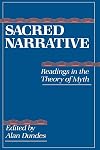
A collection of essays on the theory behind the study of mythology, covering the definition of myth, different ways to analyze them, and several analyses of various myths using some of these methods.
I enjoyed this, but it was darn hard to get through. It took me nearly a month to get through the entire thing (along with a few other books, admittedly) and almost nothing takes that long for me. Not what I'd recommend for light reading.
That said, it was incredibly interesting. The editor tried show more to bring together many different viewpoints, and seemed to succeed. Some parts were slightly repetitive, but this was due to the fact that he was trying to present a balanced picture. The most irritating thing about the book was that every author seemed to feel that their way was the only way to approach myth. Alan Dundes' own essay was a breath of fresh air, compared to that, as he seemed acutely aware that a single definition/method of analyzing myth would never suffice to totally explain their significance. Also, the last essay made me laugh out loud. The book was worth reading just to get to that. 9/10 show less
I enjoyed this, but it was darn hard to get through. It took me nearly a month to get through the entire thing (along with a few other books, admittedly) and almost nothing takes that long for me. Not what I'd recommend for light reading.
That said, it was incredibly interesting. The editor tried show more to bring together many different viewpoints, and seemed to succeed. Some parts were slightly repetitive, but this was due to the fact that he was trying to present a balanced picture. The most irritating thing about the book was that every author seemed to feel that their way was the only way to approach myth. Alan Dundes' own essay was a breath of fresh air, compared to that, as he seemed acutely aware that a single definition/method of analyzing myth would never suffice to totally explain their significance. Also, the last essay made me laugh out loud. The book was worth reading just to get to that. 9/10 show less
Life Is Like a Chicken Coop Ladder: A Study of German National Character Through Folklore by Alan Dundes
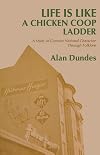
The author takes a hilarious look at German folklore and its preoccupation with Scheiße. It's liberally sprinkled with quotes from Luther, Goethe, and Mozart among others, some quite shocking (such as excerpts from Mozart's infamous letters to his cousin Bäsle). BTW, the title refers to a German proverb, "Das Leben ist wie eine Hühnerleiter--kurz und beschissen" (life is like a chicken coop ladder--short and shitty).
Lists
Awards

You May Also Like


Associated Authors
Statistics
- Works
- 43
- Also by
- 4
- Members
- 1,425
- Popularity
- #18,051
- Rating
- 3.7
- Reviews
- 16
- ISBNs
- 101
- Languages
- 2