
Richard M. Dorson (1916–1981)
Author of American Folklore
About the Author
In 1957, Richard M. Dorson replaced Stith Thompson as the head of folklore studies at Indiana University, establishing himself as a major scholar and perhaps the foremost influence in the field. Dorson is often called the father of American folklore. In addition, he is given credit for bringing show more about an international or cross-cultural approach to the subject. Dorson was editor of the Journal of American Folklore (1959-63), president of the American Folklore Society (1967-68), and author of numerous studies on the subject. His textbook, American Folklore (1959), which employs a historical approach, was the first comprehensive study of the subject. In it he attempted to bring about what he calls a hemispheric theory, wherein the disciplines of both folklore and history are combined, stressing the intimate bonds between the culture of the folk and the history of the American experience. It is still recognized as a classic work. (Bowker Author Biography) show less
Image credit: Photo courtesy of Lilly Library, Indiana University, Bloomington, Indiana
Works by Richard M. Dorson
Peasant Customs and Savage Myths: Selections from the British Folklorists. TWO VOLUMES (1968) 29 copies
Negro Tales from Pine Bluff, Arkansas, and Calvin, Michigan (Indiana University Publications. Folklore Series, No. 12) (1958) 4 copies
British Folklorists: A History (Folktales of the World Ser) by Richard Mercer Dorson (1969-06-03) 1 copy
Historia legendaria de los Estados Unidos el folklore americano desde el Período Colonial hasta el momento presente (1978) 1 copy
African Folklore 1 copy
Associated Works
Witches, Wraiths, and Warlocks: Supernatural Tales of the American Renaissance (1971) — Contributor — 42 copies
Dialogue: A Journal of Mormon Thought - Volume 8, Number 3/4 (Autumn/Winter 1973) (1973) — Contributor — 1 copy
Tagged
Common Knowledge
- Birthdate
- 1916-03-12
- Date of death
- 1981-09-11
- Gender
- male
- Education
- Harvard University (Ph.D., 1942)
- Occupations
- folklorist
Professor, Harvard University, 1943-1944
Professor, Michigan State University, 1944-1957
Professor, Indiana State University, 1957-1981
Editor, Journal of American Folklore, 1959-1963 - Organizations
- National Endowment for the Humanities research grants selection committee, 1972-75
Smithsonian Institution Folklife Council, 1977-81
Folklore Institute (Director, 1963-1981)
American Folklore Society (President, 1971-1972) - Nationality
- USA
- Birthplace
- New York, New York, USA
- Place of death
- Bloomington, Indiana, USA
- Associated Place (for map)
- USA
Members
Reviews
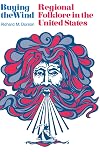
Regional Folklore of the USA: By contemporary standards, this book is dated and perhaps a bit politically incorrect and simplistic. But the book is a valuable archive of fascinating folktales, beliefs, and descriptions of regionally-based forms of traditional culture in the United States. Dorson provides a great variety of stories that are well-worth reading, and they could provide the basis for further study. I found it especially interesting how Dorson was showing ways to integrate the show more study of folklore into the study of history and geography with this collection of materials. I also found this book to be interesting as a resource for gauging how the thinking of social scientists and humanities scholars has changed over the past 30 years. It also provides a great resource for comparing how regional folklore has changed throughout a sort period of time in this nation. show less

This book was a lot of fun. Dorson traveled all over the Upper Peninsula back in the 40s to record old folklore and tall tales before they vanished. Mainly he recorded: Lumberjack lore, Mining lore, Great Lakes superstitions, and Native American folklore. Many of the tales can find their origins in Europe as many of the early settlers were French, Cornish, Finnish and Swedish. These tales were changed in subtle ways to reflect the new environment of the storyteller. However a good number of show more the tales are original North American lore.
The book is full of tales of north woods sorcerers, larger than life lumberjacks, curses, creatures from Indian folklore and ghosts that lived in the mines. The lumberjack part was by far the funniest. It really hit home
how different men are today -- perhaps for the poorer. These guys were rougher than you would ever believe, yet they still lived by a strict code of honor. In fact, they were almost like Vikings; they wore their hair long, cherished their double-headed axes like prized heirlooms, drank like
fish and fought like bears. Like the old west, this is what happens to men when there are no women around, or very few.
The book goes on to describe a series of infamous lumberjacks. Lumberjacks made a name for themselves by accomplishing great feats of strength or by being downright crazy. An example of the latter was P. K. Small. He was a big freak of a man who was born with two rows of teeth! His eyes were slightly crossed. He rarely talked, only chuckled. Whenever he got in a fight, he usually took off someone's nose or ears with his teeth. The lumber camps were full of men with missing or chewed ears and
noses, casualties of Small. He also has a strange tolerance to pain. While trying to bite off a man's finger, the other man gouged one of Small's eyes out and left it hanging in his cheek. It didn't bother small, so the man
gouged out the other eye. Eventually Small let go and popped his eyes back in. This is just one example. There were others that made Small look downright civilized. Many lumberjacks were missing toes. This isn't from mishaps with an axe; it's from getting blind drunk, passing out in the snow, and getting frostbite.
The book was a lot of fun. At times it got a wee bit dry, as tales can vary in excitement, but over all it was fascinating and entertaining. show less
The book is full of tales of north woods sorcerers, larger than life lumberjacks, curses, creatures from Indian folklore and ghosts that lived in the mines. The lumberjack part was by far the funniest. It really hit home
how different men are today -- perhaps for the poorer. These guys were rougher than you would ever believe, yet they still lived by a strict code of honor. In fact, they were almost like Vikings; they wore their hair long, cherished their double-headed axes like prized heirlooms, drank like
fish and fought like bears. Like the old west, this is what happens to men when there are no women around, or very few.
The book goes on to describe a series of infamous lumberjacks. Lumberjacks made a name for themselves by accomplishing great feats of strength or by being downright crazy. An example of the latter was P. K. Small. He was a big freak of a man who was born with two rows of teeth! His eyes were slightly crossed. He rarely talked, only chuckled. Whenever he got in a fight, he usually took off someone's nose or ears with his teeth. The lumber camps were full of men with missing or chewed ears and
noses, casualties of Small. He also has a strange tolerance to pain. While trying to bite off a man's finger, the other man gouged one of Small's eyes out and left it hanging in his cheek. It didn't bother small, so the man
gouged out the other eye. Eventually Small let go and popped his eyes back in. This is just one example. There were others that made Small look downright civilized. Many lumberjacks were missing toes. This isn't from mishaps with an axe; it's from getting blind drunk, passing out in the snow, and getting frostbite.
The book was a lot of fun. At times it got a wee bit dry, as tales can vary in excitement, but over all it was fascinating and entertaining. show less
Book Description: Chicago & London/The University of Chicago Press, Soft copy, [1964], Fourth Impression. 12mo, ix, 328(2)pp, Green w/yellow lettering, important dates, bibliographical notes, table of motifs and tale types, index, vg ex-lib (lib markings fep & title pg. A VERY good reading copy.)
You May Also Like


Associated Authors
Statistics
- Works
- 40
- Also by
- 7
- Members
- 1,211
- Popularity
- #21,206
- Rating
- 3.8
- Reviews
- 5
- ISBNs
- 65
- Languages
- 1