
Giambattista Basile (1566–1632)
Author of Il Pentamerone: The Tale of Tales
About the Author
Image credit: Artist unidentified.
Works by Giambattista Basile
La gatta Cenerentola e altre fiabe raccontate da! Roberto Piumini ; a cura di Elvira Mancuso e Carlo Minoia (1991) 3 copies
Il mito: uno strumento per la conoscenza del mondo. Saggio introduttivo attorno all'ermeneutica mitica (2013) 3 copies
Contes De La Renaissance Italienne 2 copies
Italiaansche volkssprookjes 2 copies
The Little Parsley Girl 1 copy
Fiabe italiane 1 copy
Cinderela Italiana 1 copy
Sun, Moon, and Talia 1 copy
Associated Works
Spells of Enchantment: The Wondrous Fairy Tales of Western Culture (1991) — Contributor — 603 copies, 5 reviews
The Great Fairy Tale Tradition: From Straparola and Basile to the Brothers Grimm [Norton Critical Edition] (2001) — Contributor — 391 copies, 1 review
Monstrous Tales: Stories of Strange Creatures and Fearsome Beasts from around the World (2020) — Contributor — 117 copies
Clever Cooks: A Concoction of Stories, Charms, Recipes & Riddles (1973) — Contributor — 22 copies, 1 review
La gatta cenerentola — Author — 1 copy
Tagged
Common Knowledge
- Legal name
- Basile, Giambattista
- Other names
- Abbattutis, Gian Alesio
- Birthdate
- 1566-02-15
- Date of death
- 1632-02-23
- Gender
- male
- Occupations
- poet
folklorist - Short biography
- Giambattista Basile (February 1566 – February 1632) was an Italian poet, courtier, and fairy tale collector. Born in Giugliano to a Neapolitan middle-class family, Basile was a courtier and soldier to various Italian princes, including the doge of Venice. By the time of his death he had reached the rank of "count" Conte di Torrone.
- Nationality
- Italy
- Birthplace
- Naples, Kingdom of Naples
- Associated Place (for map)
- Naples, Kingdom of Naples
Members
Reviews

When a pregnant woman is caught stealing parsley from her ogress-neighbor's garden in this classic fairy-tale from Naples, the unfortunate lady is forced to promise her unborn child as payment, in order to avoid death. Taking the child into the forest, the ogress imprisons her in a tall tower, where she grows to womanhood. When a handsome prince (naturally) happens by and discovers Petrosinella, the two fall in love, eventually escaping. But can they outrun the ogress...?
Recorded some two show more hundred years before the more famous Rapunzel, from the Brothers Grimm - it was contained in Giambattista Basile's 1637 Pentamerone, often considered the first collection of European fairy-tales - this Neapolitan variant of the classic tale has always been a favorite of mine. I owned this edition as a girl, and must have read it a hundred times! The story here is engaging, exciting, and ultimately heart-satisfying. Rereading as an adult, I particularly liked the inclusion of the three magic acorns, which give Petrosinella more agency than her fairy-tale "sister" Rapunzel. The artwork from Diane Stanley is simply gorgeous - like Evelyn Andreas' Cinderella, I pored over this book as a child - perfectly capturing Petrosinella's beauty and the ogress' malice. Highly recommended to all fairy-tale lovers, and to anyone who appreciate lovely picture-book art. show less
Recorded some two show more hundred years before the more famous Rapunzel, from the Brothers Grimm - it was contained in Giambattista Basile's 1637 Pentamerone, often considered the first collection of European fairy-tales - this Neapolitan variant of the classic tale has always been a favorite of mine. I owned this edition as a girl, and must have read it a hundred times! The story here is engaging, exciting, and ultimately heart-satisfying. Rereading as an adult, I particularly liked the inclusion of the three magic acorns, which give Petrosinella more agency than her fairy-tale "sister" Rapunzel. The artwork from Diane Stanley is simply gorgeous - like Evelyn Andreas' Cinderella, I pored over this book as a child - perfectly capturing Petrosinella's beauty and the ogress' malice. Highly recommended to all fairy-tale lovers, and to anyone who appreciate lovely picture-book art. show less
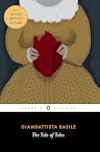
This obscure and wonderful collection of fairytales is not, perhaps, quite as filthy as you might expect from something called Lo cunto de li cunti, but it's still full of bizarre and scatological delights. Written in the early 1600s – before the Grimms, before Perrault – it contains the first known versions of famous tales like Cinderella, Rapunzel, Hansel & Gretel, or Sleeping Beauty, all of them dramatically different from how they're told today, and throws in for good measure a host show more of more recondite folk-stories that I had never heard before.
Their author, Giambattista Basile, was a kind of itinerant courtier and sometime soldier from outside Naples, who wrote in an elaborate, rococo form of Neapolitan as well as (elsewhere) in standard Italian. In The Tales of Tales, Basile gathers his stories together under a frame narrative, in a half-parodic imitation of Boccaccio: the tone is set early when a princess gets a curse put on her for laughing at an old woman's vagina, as a distant result of which it becomes necessary – don't ask why – for ten women to tell five stories each across the space of five days. Hence the alternative title of the Pentamerone.
Each story is no more than four or five pages long, which makes this an easy book to read, despite its length. And each begins with a helpful one-paragraph synopsis. I can give you an idea of the kind of thing we're dealing with by quoting one of these in its entirety – here's the précis of tale 5.1, ‘The Goose’:
Lilla and Lolla buy a coin-shitting goose at the market. A neighbor asks to borrow it, and when she sees that it's the opposite of what it should be, she kills it and throws it out the window. The goose attaches itself to a prince's ass while he's relieving himself, and no one but Lolla can remove it; for this reason the prince takes her for his wife.
Yep. The scene where the prince is trying to wipe his arse on the dead goose's neck is particularly to be recommended.
And this flair for the Rabelaisian is put to surprisingly effective use within the stories, generating some impressive insults and metaphors. ‘Why don't you shut that sewer hole, you bogeyman's grandmother, blood-sucking witch, baby drowner, rag shitter, fart gatherer?’ yells one character, while another is dismissed as ‘a flycatcher who wasn't worth his weight in dog sperm’. Someone else is described as being so terrified that ‘they wouldn't have been able to take an enema made of a single pig's bristle’.
Basile's obscurity, at least in the English-speaking world, is due in no small part to the lack of decent translations, which makes this new rendering from Nancy L Canepa – the first since the 1930s – extremely welcome. More than welcome; it feels staggeringly overdue. Most previous editions have been based on Benedetto Croce's ‘not always faithful’ 1925 translation into Italian, whereas Canepa is working straight from the original Neapolitan. To show what a difference it makes, let's return to that coin-shitting goose we met earlier. A line from the original tale runs:
Ma, scoppa dì e fa buono iuorno, la bona papara commenzaie a cacare scute riccie, de manera che a cacata a cacata se ne ’nchiero no cascione.
The previous complete English translation – from Penzer in 1932, working from Croce's Italian – translated this like so:
But dawn comes and it turns out to be a fine day: the worthy goose began to make golden ducats, so that, little by little, they filled a great chest with them…
But Canepa's translation restores the forceful vulgarity of the original:
And when morning breaks it's a nice day, for the good goose began to shit hard cash until, shitload upon shitload, they had filled up a whole chest.
You can see that it really feels like we're hearing Basile for the first time now. This gives a wonderful sense of discovery to Canepa's translation, even if for my own taste she sometimes seems to favour word-for-word accuracy over English readability (with the convenient, if believable, justification that Basile's own Neapolitan must have been quite a challenge even to contemporaries). Any quibbles are more than made up for by the wealth of notes and other apparatus, which give generous citations of the original and explain those flourishes of wordplay or references that Canepa has not attempted to modernise.
Taking this fabulous, irreverent tour of seventeenth-century life is an exhilarating experience, and even an uplifting one. Although he deals with violence, revenge and death, Basile is not especially interested in tragedy or cruelty; it's impossible to imagine him other than with a smile on his face. And indeed impossible to read him without one, either. show less
Their author, Giambattista Basile, was a kind of itinerant courtier and sometime soldier from outside Naples, who wrote in an elaborate, rococo form of Neapolitan as well as (elsewhere) in standard Italian. In The Tales of Tales, Basile gathers his stories together under a frame narrative, in a half-parodic imitation of Boccaccio: the tone is set early when a princess gets a curse put on her for laughing at an old woman's vagina, as a distant result of which it becomes necessary – don't ask why – for ten women to tell five stories each across the space of five days. Hence the alternative title of the Pentamerone.
Each story is no more than four or five pages long, which makes this an easy book to read, despite its length. And each begins with a helpful one-paragraph synopsis. I can give you an idea of the kind of thing we're dealing with by quoting one of these in its entirety – here's the précis of tale 5.1, ‘The Goose’:
Lilla and Lolla buy a coin-shitting goose at the market. A neighbor asks to borrow it, and when she sees that it's the opposite of what it should be, she kills it and throws it out the window. The goose attaches itself to a prince's ass while he's relieving himself, and no one but Lolla can remove it; for this reason the prince takes her for his wife.
Yep. The scene where the prince is trying to wipe his arse on the dead goose's neck is particularly to be recommended.
And this flair for the Rabelaisian is put to surprisingly effective use within the stories, generating some impressive insults and metaphors. ‘Why don't you shut that sewer hole, you bogeyman's grandmother, blood-sucking witch, baby drowner, rag shitter, fart gatherer?’ yells one character, while another is dismissed as ‘a flycatcher who wasn't worth his weight in dog sperm’. Someone else is described as being so terrified that ‘they wouldn't have been able to take an enema made of a single pig's bristle’.
Basile's obscurity, at least in the English-speaking world, is due in no small part to the lack of decent translations, which makes this new rendering from Nancy L Canepa – the first since the 1930s – extremely welcome. More than welcome; it feels staggeringly overdue. Most previous editions have been based on Benedetto Croce's ‘not always faithful’ 1925 translation into Italian, whereas Canepa is working straight from the original Neapolitan. To show what a difference it makes, let's return to that coin-shitting goose we met earlier. A line from the original tale runs:
Ma, scoppa dì e fa buono iuorno, la bona papara commenzaie a cacare scute riccie, de manera che a cacata a cacata se ne ’nchiero no cascione.
The previous complete English translation – from Penzer in 1932, working from Croce's Italian – translated this like so:
But dawn comes and it turns out to be a fine day: the worthy goose began to make golden ducats, so that, little by little, they filled a great chest with them…
But Canepa's translation restores the forceful vulgarity of the original:
And when morning breaks it's a nice day, for the good goose began to shit hard cash until, shitload upon shitload, they had filled up a whole chest.
You can see that it really feels like we're hearing Basile for the first time now. This gives a wonderful sense of discovery to Canepa's translation, even if for my own taste she sometimes seems to favour word-for-word accuracy over English readability (with the convenient, if believable, justification that Basile's own Neapolitan must have been quite a challenge even to contemporaries). Any quibbles are more than made up for by the wealth of notes and other apparatus, which give generous citations of the original and explain those flourishes of wordplay or references that Canepa has not attempted to modernise.
Taking this fabulous, irreverent tour of seventeenth-century life is an exhilarating experience, and even an uplifting one. Although he deals with violence, revenge and death, Basile is not especially interested in tragedy or cruelty; it's impossible to imagine him other than with a smile on his face. And indeed impossible to read him without one, either. show less

Diane Stanley's author's note is interesting, as is the story. The whole bit about the blind prince, the desert, the twins, is missing, as is the girl's father. I loved the pictures, though some might find them just a bit too pretty. Highly recommended to anyone who explores older folklore and fairy tales. But I wonder if children like it? Sentimental girls, but anyone else?
I will look for more by Stanley, for both her art and her voice in this adaptation.
I will look for more by Stanley, for both her art and her voice in this adaptation.
Not suitable for children, it is interesting to read some folk tales from which many well-known children's stories must have derived.
Although I have read the translation by Sir Richard Burton, the glimpse we get of people's mindsets and fairy-tale habits are priceless - albeit possibly not accurate of the time... but who knows. The neapolitan dialect verson of the book is available online and so it's interesting to compare translations and word usage. Obviously much feeling and meaning gets show more lost in translation, however I found Sir Richard Burton's dated and quirky language magical and fascinating. show less
Although I have read the translation by Sir Richard Burton, the glimpse we get of people's mindsets and fairy-tale habits are priceless - albeit possibly not accurate of the time... but who knows. The neapolitan dialect verson of the book is available online and so it's interesting to compare translations and word usage. Obviously much feeling and meaning gets show more lost in translation, however I found Sir Richard Burton's dated and quirky language magical and fascinating. show less
Lists
Awards


You May Also Like


Associated Authors
Statistics
- Works
- 44
- Also by
- 11
- Members
- 737
- Popularity
- #34,455
- Rating
- 4.1
- Reviews
- 15
- ISBNs
- 107
- Languages
- 7