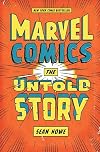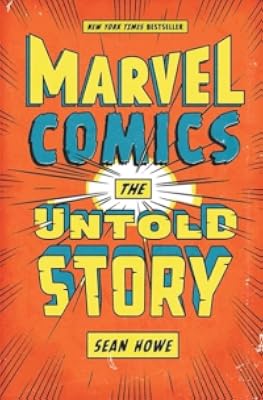
Marvel Comics: The Untold Story
by Sean Howe
On This Page
Description
Interweaves history, anecdotes, and analysis with more than one hundred interviews with Marvel insiders to reveal how Marvel, which introduced brightly costumed caped crusaders in the 1960s, became one of the most dominant pop cultural forces in contemporary America.Tags
Recommendations






Member Recommendations


Member Reviews
Fascinating history of one of the biggest comic book companies of all time. It's history is convoluted and mired in backstabbing, he-said/he-said, and people worrying more about their own legacies than those of the characters they were writing. Stan Lee has been the face of Marvel comics for, well, it seems like forever, and he was around before it was even called Marvel (Timely was the original name) and yet has barely cracked open a comic since the 70s. He's only told about what the writers/artists are doing and he comments from there.
It's hard to tell how many people have owned Marvel through out its history, but each one had their own idea of how the books should be published. Most owners never read the books and frowned when any of show more the comics wound up in front of them. Before reading this book I had thought that comic book writers/editors/artists were all pretty straight forward people who just want to tell their stories, and for the most part, this book shows that that is the case. But the exceptions to that rule shine through here. From Jack Kirby all the way through to Grant Morrison, the tales of these writers is told, some of their history's are good, some have burned their bridges quite extensively, some have had their bridges burned because they questioned the status quo. The saddest part of the book is hearing what happened to Jerry Siegel, co-creator of Superman, who at one point worked at Marvel. In fact the Siegel and Shuster family's are still fighting with DC over royalties and money owed from Superman's history. It's only recently that Jack Kirby, Joe Simon, Steve Ditko, and others are starting to get the recognition that they deserve (no matter how crotchety they are in real life).
The writers who passed through and did their job without much hassle are mentioned in passing, like Kurt Busiek, Joss Whedon, and Grant Morrison. The ones who fought for whatever reason are given some room to breath and the pros and cons of what was going on is discussed. There is a lot of drama that stems from the 70s, a lot of misdirection in the 80s and lots and lots of failure in the 90s.
I can't recommend this book enough if you want to read about the history of Marvel Comics. It's not so much a history of the characters in the books but the characters who wrote and illustrated the books. It can get a bit heavy in parts, especially when a lot of the legal stuff comes in in the late 80s through the 90s, but all of the stories will make you want to go back and look at the old comics looking for the clues of life at Marvel that the writers/artists threw into the books. show less
It's hard to tell how many people have owned Marvel through out its history, but each one had their own idea of how the books should be published. Most owners never read the books and frowned when any of show more the comics wound up in front of them. Before reading this book I had thought that comic book writers/editors/artists were all pretty straight forward people who just want to tell their stories, and for the most part, this book shows that that is the case. But the exceptions to that rule shine through here. From Jack Kirby all the way through to Grant Morrison, the tales of these writers is told, some of their history's are good, some have burned their bridges quite extensively, some have had their bridges burned because they questioned the status quo. The saddest part of the book is hearing what happened to Jerry Siegel, co-creator of Superman, who at one point worked at Marvel. In fact the Siegel and Shuster family's are still fighting with DC over royalties and money owed from Superman's history. It's only recently that Jack Kirby, Joe Simon, Steve Ditko, and others are starting to get the recognition that they deserve (no matter how crotchety they are in real life).
The writers who passed through and did their job without much hassle are mentioned in passing, like Kurt Busiek, Joss Whedon, and Grant Morrison. The ones who fought for whatever reason are given some room to breath and the pros and cons of what was going on is discussed. There is a lot of drama that stems from the 70s, a lot of misdirection in the 80s and lots and lots of failure in the 90s.
I can't recommend this book enough if you want to read about the history of Marvel Comics. It's not so much a history of the characters in the books but the characters who wrote and illustrated the books. It can get a bit heavy in parts, especially when a lot of the legal stuff comes in in the late 80s through the 90s, but all of the stories will make you want to go back and look at the old comics looking for the clues of life at Marvel that the writers/artists threw into the books. show less
It's hard not to make this review about me, as annoying as that would be to read, because of how important comics - and Marvel Comics in particular - were to me (and still are, to some degree), but I won't go there.
The history of this company, and its expansive modern mythology, is seriously fascinating reading - especially if you are familiar with their output. If you aren't, you may well find yourself getting a hold of some of their amazing work that you've never heard of before (esp. the books from the 70's). It is also the history of a corporate juggernaut that chewed up and spat out all the people who devoted the most to it. Aside from the Ballad of Jack Kirby, which could be its own 600pg tome, there were so many bodies left in show more ditches. People who devoted decades of their lives and were the most popular creators of their time, cut off without a single word about their involuntary departure. Then you have the superstars of the early 90's, who were (esp. in the case of McFarlane and Liefeld) unscrupulous hypocrites who bragged about burning their bridges - only to go on (in several cases) to treat others even more unfairly than the parent company they sought to replace.
It's a story of greed, and the magic that somehow managed to grow in the tiny green spaces not touched by corporate corruption and a virtual derth of human decency. It's one of the best nonfiction books I've ever read, and it has had what I think will be a lasting impact on me.
The summation on the cover, that it was a company that "gave people what they wanted while it took from them what they had" is better wording than I can generate. I'm going to write to a few of the creators who we're lucky enough to still have with us, to thank them for their work. show less
The history of this company, and its expansive modern mythology, is seriously fascinating reading - especially if you are familiar with their output. If you aren't, you may well find yourself getting a hold of some of their amazing work that you've never heard of before (esp. the books from the 70's). It is also the history of a corporate juggernaut that chewed up and spat out all the people who devoted the most to it. Aside from the Ballad of Jack Kirby, which could be its own 600pg tome, there were so many bodies left in show more ditches. People who devoted decades of their lives and were the most popular creators of their time, cut off without a single word about their involuntary departure. Then you have the superstars of the early 90's, who were (esp. in the case of McFarlane and Liefeld) unscrupulous hypocrites who bragged about burning their bridges - only to go on (in several cases) to treat others even more unfairly than the parent company they sought to replace.
It's a story of greed, and the magic that somehow managed to grow in the tiny green spaces not touched by corporate corruption and a virtual derth of human decency. It's one of the best nonfiction books I've ever read, and it has had what I think will be a lasting impact on me.
The summation on the cover, that it was a company that "gave people what they wanted while it took from them what they had" is better wording than I can generate. I'm going to write to a few of the creators who we're lucky enough to still have with us, to thank them for their work. show less
I’ll say right up front that if you are not an avid reader of Marvel comics, you won’t get much out of MARVEL COMICS: THE UNTOLD STORY by Sean Howe. I’ll also add that I am one of them, a Marvel reader for more than a few decades who has hung in there through thick and thin and thick again as the quality of Marvel comics has been inconsistent to say the least. This book gives us the inside dope on the company that gave popular culture Spider-Man, The Fantastic Four, X-Men, Doctor Strange, The Hulk, Iron Man, Thor, Captain America and The Punisher, among very many. What went on behind closed doors from the beginning was a far different picture than the happy Marvel Bullpen Stan Lee claimed it to be, and things only got worse as the show more company was sold to one corporate entity and then another, most of them only interested in the money they squeeze out of merchandising the characters and selling their rights to TV and movies.
Most of all, it is the story of how talent got screwed over repeatedly by management, year in and year out, as great artists and writers were denied the compensation they were due as their creations earned the company millions, while they got a pittance. In the early days, on every artist’s paycheck was printed a boiler plate forfeiture of future earnings from all work on condition of cashing the check, a typical practice for what was considered work for hire. And sadly, in later decades, when the writers and artists had gotten wise and were earning the big bucks, they turned out to be just as big a douche bags as management-I’m talking about the likes of Scott McFarlane and Rob Liefeld.
Stan Lee, the man whose name is synonymous with Marvel Comics comes across as the ultimate huckster, a man who did some good work, with critical contributions from Jack Kirby and Steve Ditko, back in the 60’s that laid the groundwork for the Marvel comic universe, and who rode the gravy train thereafter. The back and forth over who created Spider-Man and the FF is laid out once again, and it makes a damning case that Lee has long hogged the credit due others; what is really galling is the millions of dollars Lee has earned over the decades until this very day from his lifelong association with Marvel, while Jack Kirby, without whom there really would not have been a Marvel Comics, had to spend years suing the company to get his own artwork returned to him. The prickly Ditko, who managed to insert Ayn Rand’s Ojectivist philosophy into the early Spider-Man books, comes off as the anti Stan Lee in every way.
There are tales of “chemical enhancement” by some artists in the 70’s which will not come as news to anyone who read certain titles during that era. I enjoyed tidbits such as why Peter Parker’s girlfriend Gwen Stacy was murdered by the Green Goblin in 1973: she was a boring character. Chris Claremont, the man who made the X-Men books a powerhouse, is dismissed after a sixteen year tenure because editor Bob Haras didn’t get the way he was writing the characters. There is the infamous Jim Shooter, who created the very first Secret Wars mini-series to promote action figures and talked openly of killing off all the Marvel heroes and starting over. How Jim Starlin bought the rights to the old Fu Manchu novels to use in the comic, Shang-Chi: Master of Kung Fu only to discover Sax Rohmer’s books to be utterly racist. We learn that there was a deal on the table in the mid 80’s for DC to sell their super hero titles-Superman, Batman, The Flash and the rest-to Marvel; how different would history have been if that deal had gone through. There is the mania for crossovers and Big Events in the late 80’s and early 90’s; the special and variant covers fad that turned off fans by the millions and nearly busted the whole comic book industry by the end of the decade.
The book goes into the details behind the Heroes Reborn fiasco, where the renegades at Image were rewarded while many long time Marvel artists and writers, among them John Romita and his wife, were shown the door. The story of the Heroes World distribution scheme is laid out, and how many comic shop owners, the backbone of the industry, were subsequently forced to close their doors. Corporate mismanagement is a running theme throughout the book, as one owner proves to be worse than the previous, with a rogue’s gallery that include Avi Arvid, Joe Calamari, Ron Perelman, Carl Iachan, and Ike Perlmutter, the worst of a bad lot.
There are a few good guys like artist Neal Adams, who tried to organize the artists into a union in the 70’s and Mark Gruenwald, an editor whose love for Marvel drove him to an early grave because of the distress he felt over what was happening at the company.
It’s ultimately the story of a bunch of rich men trying to make money in a niche industry they didn’t even remotely understand or cared to take the time to learn anything about; it’s a tale of how the arrogance possessed only by those who believe great personal financial success automatically bestows competence in all human endeavors led to disaster. By the end of the book, after Disney purchases the company and the movie version of THE AVENGERS becomes a box office blockbuster, I marveled (pun intended) that the comics had survived this long. The only reason I could come up with was the patience and love of fans like myself for the unending adventures of Spider-Man, The Fantastic Four, Charles Xavier’s mutants, The Hulk in all his forms, along with Doctor Doom, Magneto, Doctor Octopus and the rest of the 2000 plus denizens of the Marvel Universe. We’ve hung in there for the reboots, revamps, Secret Wars, Secret Invasions, Civil Wars, Ages of Apocalypse, Clone Sagas, Brand New Days, Days of Future Pasts, World War Hulks, Ultimates and Superiors and all the rest down through the years. In the end, the saddest thing to learn was that, for the most part, the creators of our beloved heroes and villains did not love them as much as we did. Many reviewers have this space to vent their spleens at Marvel and the comic book industry in general and I fully understand their pain; Sean Howe’s well written and researched book will only add fuel to the fire. show less
Most of all, it is the story of how talent got screwed over repeatedly by management, year in and year out, as great artists and writers were denied the compensation they were due as their creations earned the company millions, while they got a pittance. In the early days, on every artist’s paycheck was printed a boiler plate forfeiture of future earnings from all work on condition of cashing the check, a typical practice for what was considered work for hire. And sadly, in later decades, when the writers and artists had gotten wise and were earning the big bucks, they turned out to be just as big a douche bags as management-I’m talking about the likes of Scott McFarlane and Rob Liefeld.
Stan Lee, the man whose name is synonymous with Marvel Comics comes across as the ultimate huckster, a man who did some good work, with critical contributions from Jack Kirby and Steve Ditko, back in the 60’s that laid the groundwork for the Marvel comic universe, and who rode the gravy train thereafter. The back and forth over who created Spider-Man and the FF is laid out once again, and it makes a damning case that Lee has long hogged the credit due others; what is really galling is the millions of dollars Lee has earned over the decades until this very day from his lifelong association with Marvel, while Jack Kirby, without whom there really would not have been a Marvel Comics, had to spend years suing the company to get his own artwork returned to him. The prickly Ditko, who managed to insert Ayn Rand’s Ojectivist philosophy into the early Spider-Man books, comes off as the anti Stan Lee in every way.
There are tales of “chemical enhancement” by some artists in the 70’s which will not come as news to anyone who read certain titles during that era. I enjoyed tidbits such as why Peter Parker’s girlfriend Gwen Stacy was murdered by the Green Goblin in 1973: she was a boring character. Chris Claremont, the man who made the X-Men books a powerhouse, is dismissed after a sixteen year tenure because editor Bob Haras didn’t get the way he was writing the characters. There is the infamous Jim Shooter, who created the very first Secret Wars mini-series to promote action figures and talked openly of killing off all the Marvel heroes and starting over. How Jim Starlin bought the rights to the old Fu Manchu novels to use in the comic, Shang-Chi: Master of Kung Fu only to discover Sax Rohmer’s books to be utterly racist. We learn that there was a deal on the table in the mid 80’s for DC to sell their super hero titles-Superman, Batman, The Flash and the rest-to Marvel; how different would history have been if that deal had gone through. There is the mania for crossovers and Big Events in the late 80’s and early 90’s; the special and variant covers fad that turned off fans by the millions and nearly busted the whole comic book industry by the end of the decade.
The book goes into the details behind the Heroes Reborn fiasco, where the renegades at Image were rewarded while many long time Marvel artists and writers, among them John Romita and his wife, were shown the door. The story of the Heroes World distribution scheme is laid out, and how many comic shop owners, the backbone of the industry, were subsequently forced to close their doors. Corporate mismanagement is a running theme throughout the book, as one owner proves to be worse than the previous, with a rogue’s gallery that include Avi Arvid, Joe Calamari, Ron Perelman, Carl Iachan, and Ike Perlmutter, the worst of a bad lot.
There are a few good guys like artist Neal Adams, who tried to organize the artists into a union in the 70’s and Mark Gruenwald, an editor whose love for Marvel drove him to an early grave because of the distress he felt over what was happening at the company.
It’s ultimately the story of a bunch of rich men trying to make money in a niche industry they didn’t even remotely understand or cared to take the time to learn anything about; it’s a tale of how the arrogance possessed only by those who believe great personal financial success automatically bestows competence in all human endeavors led to disaster. By the end of the book, after Disney purchases the company and the movie version of THE AVENGERS becomes a box office blockbuster, I marveled (pun intended) that the comics had survived this long. The only reason I could come up with was the patience and love of fans like myself for the unending adventures of Spider-Man, The Fantastic Four, Charles Xavier’s mutants, The Hulk in all his forms, along with Doctor Doom, Magneto, Doctor Octopus and the rest of the 2000 plus denizens of the Marvel Universe. We’ve hung in there for the reboots, revamps, Secret Wars, Secret Invasions, Civil Wars, Ages of Apocalypse, Clone Sagas, Brand New Days, Days of Future Pasts, World War Hulks, Ultimates and Superiors and all the rest down through the years. In the end, the saddest thing to learn was that, for the most part, the creators of our beloved heroes and villains did not love them as much as we did. Many reviewers have this space to vent their spleens at Marvel and the comic book industry in general and I fully understand their pain; Sean Howe’s well written and researched book will only add fuel to the fire. show less
I didn't grow up with Marvel; I read Archie comics almost exclusively until I discovered indie comics as a teen. I bought one issue of Wolverine because I liked the X-Men animated series and it ended up being Wolverine and Sabretooth fighting for 32 pages while they watched news footage of a police beating. I had no idea what the hell was going on, and I still don't, and that colored my perception of Marvel Comics for a long time: ultra-violent muscle porn with way, way too much continuity. And as I learned from this book, that definitely seemed to be the case in the 90s, and they didn't like it either.
I guess all I mean to say is that I'm not necessarily the target audience for this. I don't love comics, but I am interested in them as show more a medium. I love junk culture, culture made to be disposed of, and comics really were that for a very long time. It seems Marvel was at the forefront of comics being considered anything other than kids' stuff, and they really helped usher in this modern era where low-art genre trash (and I say that as someone who loves low-art genre trash) is the biggest moneymaking force in popular culture.
From reading the book you get the impression that working at Marvel was pretty much always hell for one reason or another (I'm not sure I've read another book about culture history where one company was bought and sold so many times). But through that hell the writers and artists produced some outstanding work, creating characters and stories that have resonated for decades.
They also produced the Clone Saga and Rob Liefeld worked there for way too long, but hey, nobody's perfect. show less
I guess all I mean to say is that I'm not necessarily the target audience for this. I don't love comics, but I am interested in them as show more a medium. I love junk culture, culture made to be disposed of, and comics really were that for a very long time. It seems Marvel was at the forefront of comics being considered anything other than kids' stuff, and they really helped usher in this modern era where low-art genre trash (and I say that as someone who loves low-art genre trash) is the biggest moneymaking force in popular culture.
From reading the book you get the impression that working at Marvel was pretty much always hell for one reason or another (I'm not sure I've read another book about culture history where one company was bought and sold so many times). But through that hell the writers and artists produced some outstanding work, creating characters and stories that have resonated for decades.
They also produced the Clone Saga and Rob Liefeld worked there for way too long, but hey, nobody's perfect. show less
There's an ugliness uncovered by this book that I really had never considered before about Marvel The Business. Backstabbing, outright theft and piracy, and he-said/he-said swirl around in such operatic scale that it's surprising that ANYTHING got published at all!
Hundreds of interviews and deep research kick over the fallen log of Marvel's history; I read in horrified fascination about all the things that squirmed out from under it.
Oh, I still consider myself a Marvel Fan, no question; but it's still the characters I love, not the business practice.
Hundreds of interviews and deep research kick over the fallen log of Marvel's history; I read in horrified fascination about all the things that squirmed out from under it.
Oh, I still consider myself a Marvel Fan, no question; but it's still the characters I love, not the business practice.
Sean Howe's Marvel Comics: The Untold Story begins with a quick account of Timely and Atlas Comics before turning to the launch of the Marvel Age with the Fantastic Four. From there, he examines the early Bullpen and the explosion of creativity that accompanied the cultural resurgence of comics in the 1960s. Howe effortlessly weaves between the business side of comics and the lives of writers, artists, editors and others, while using letters (both published and unpublished) and excerpts from college talks to give insight into the public's reaction to the comics. He moves into the 1970s and 1980s, when Marvel went from the underdog in the industry to the leading publisher, culminating in the speculator market bust of the 1990s. The human show more stories of people trying to tell their stories and make a living or control the ideas they brought to the company provide a dramatic counterpoint to the business wheeling and dealing of publishers and corporate vice presidents. These stories make this a particularly harrowing look at the unforgiving nature of the comics industry, though there may exist parallels elsewhere in publishing. All of this ends with a focus on the cyclical nature of the stories, which reflect the cyclical nature of the industry, as Howe writes, "Multiple manifestations of Captain America and Spider-Man and the X-Men float in elastic realities, passed from one temporary custodian to the next, and their heroic journes are, forever, denied an end" (pg. 432). show less
As someone who didn't grow up reading comics but has spent twenty years as a sideline observer of the fandom, I found this is an excellent history of Marvel.
It is also a profoundly depressing book. The author clearly strove and I think largely succeeded at an even-handed approach, taking no sides to the extent that's possible. There were plenty of episodes where people just plain behaved badly, though, and there's not much to be done about that.
It's food for a great deal of thought on the history and future of publishing in general, the dangers of monopoly in any creative industry, and the difficulties inherent in cooperative creative work. I recommend it.
It is also a profoundly depressing book. The author clearly strove and I think largely succeeded at an even-handed approach, taking no sides to the extent that's possible. There were plenty of episodes where people just plain behaved badly, though, and there's not much to be done about that.
It's food for a great deal of thought on the history and future of publishing in general, the dangers of monopoly in any creative industry, and the difficulties inherent in cooperative creative work. I recommend it.
Members
- Recently Added By
Lists

Books Read By artturnerjr - 2019
6 works; 1 member

Books Read in 2013
1,630 works; 51 members

Unshelved Book Clubs
579 works; 5 members
Author Information

4+ Works 840 Members
Sean Howe, formerly an editor at The Criterion Collection, lives in New York City.
Some Editions
Awards and Honors
Awards
Distinctions
Notable Lists
Common Knowledge
- Canonical title
- Marvel Comics: The Untold Story
- Original publication date
- 2012
- People/Characters
- Stan Lee; Jack Kirby; Martin Goodman; Joe Quesada; Jim Starlin; Steve Ditko (show all 23); Avi Arad; Jim Shooter; Chris Claremont; Todd McFarlane; Jim Lee; Roy Thomas; Len Wein; Marv Wolfman; John Romita, Sr.; Steve Englehart; Steve Gerber; Al Milgrom; John Byrne; Neal Adams; Gil Kane; Steve Severin; Marie Severin
- Important places
- New York, New York, USA
- Dedication
- To the Merry Marvel Bullpen
- First words
- Prologue: In 1961, Stanley Martin Lieber was pushing forty, watching the comic-book industry, in which he'd toiled for over two decades, fade away.
Chapter 1: Long before there was Marvel Comics, there was Martin Goodman. - Last words
- (Click to show. Warning: May contain spoilers.)Multiple manifestations of Captain America and Spider-Man and the X-Men float in elastic realities, passed from one temporary custodian to the next, and their heroic journeys are, forever, denied an end.
Classifications
- Genres
- Nonfiction, General Nonfiction, Graphic Novels & Comics
- DDC/MDS
- 741.5 — Arts & recreation Drawing & decorative arts Drawing Comic books, graphic novels, fotonovelas, cartoons, caricatures, comic strips
- LCC
- PN6725 .H69 — Language and Literature Literature (General) Literature (General) Collections of general literature Comic books, strips, etc.
- BISAC
Statistics
- Members
- 704
- Popularity
- 40,575
- Reviews
- 30
- Rating
- (3.94)
- Languages
- English, Italian, Portuguese, Spanish
- Media
- Paper, Audiobook, Ebook
- ISBNs
- 9
- UPCs
- 2
- ASINs
- 9