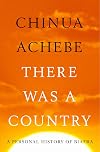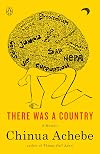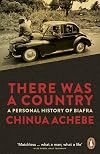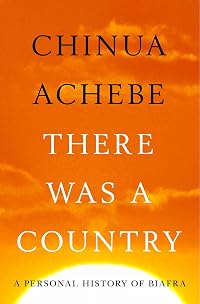
There Was A Country: A Personal History of Biafra
by Chinua Achebe
On This Page
Description
Achebe's long-awaited account of coming of age during the defining experience of his life: the Nigerian Civil War, also known as the Biafran War of 1967-1970.Tags
Recommendations
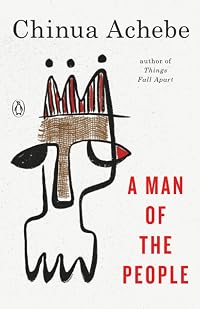
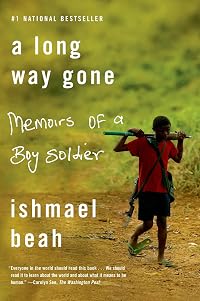
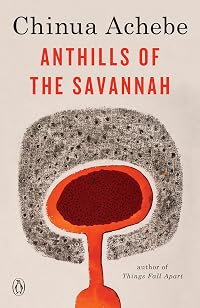
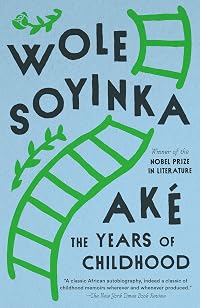
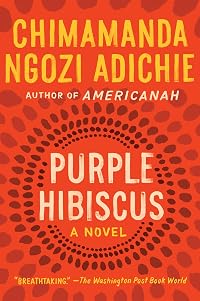
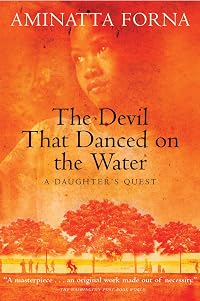
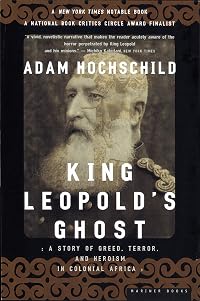
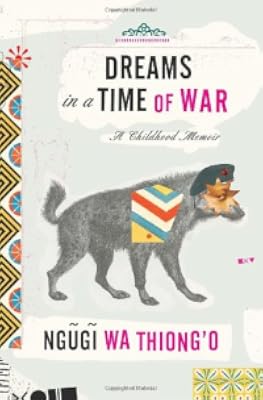


Member Recommendations
Member Reviews
It is a weird book. It is not personal enough to be a personal story; it is not objective enough to be history (or a story). It has its good parts but it also has passages that are too dry even for a history book, let alone the type of this story.
Achebe decided to tell his story 45 years after the facts happened and instead of writing a memoir, he went for a mix of a story and poetry - he peppered the book with his poems, the ones that match the times and the story. I am not much for white and free verse poetry and even though I liked a few of the pieces, it just is not my thing.
The prose parts of the story are weird - he shares a few personal stories here and there (more at the start, less and less as the story progresses) and those show more parts of the story are the bright points in the book. The rest... when he is not reciting a history overview, he is giving so many historical details that the book feels overwritten. I expected a one-sided story - Achebe was part of Biafra and believed in it; he had always claimed that the Igbos were persecuted because of jealousy and were innocent at all times. History is a hard thing - we may never know why some things happened - too many people from those times are still alive and the history is written by the winners (although in this case it seems like not only the winners did write histories).
I read this book almost by chance - after reading Forsyth's autobiography earlier this year, I decided that I want to read his other non-fiction book - the story of Biafra. And when I was looking for the book on my kindle, I realized I have another book about it - Achebe's. And decided to start with it.
I did learn new things from the book - some of the facts I will forget (too many names that ended up irrelevant) and I still will be looking for a more balanced account (Forsyth's probably will not be but I plan to read it). I am not sorry that I read this one - but I think that it was a lost opportunity - it could have been so much more powerful. The few glimpses of story though were enough to convince me to find his fiction - I somehow never got around to it before now. show less
Achebe decided to tell his story 45 years after the facts happened and instead of writing a memoir, he went for a mix of a story and poetry - he peppered the book with his poems, the ones that match the times and the story. I am not much for white and free verse poetry and even though I liked a few of the pieces, it just is not my thing.
The prose parts of the story are weird - he shares a few personal stories here and there (more at the start, less and less as the story progresses) and those show more parts of the story are the bright points in the book. The rest... when he is not reciting a history overview, he is giving so many historical details that the book feels overwritten. I expected a one-sided story - Achebe was part of Biafra and believed in it; he had always claimed that the Igbos were persecuted because of jealousy and were innocent at all times. History is a hard thing - we may never know why some things happened - too many people from those times are still alive and the history is written by the winners (although in this case it seems like not only the winners did write histories).
I read this book almost by chance - after reading Forsyth's autobiography earlier this year, I decided that I want to read his other non-fiction book - the story of Biafra. And when I was looking for the book on my kindle, I realized I have another book about it - Achebe's. And decided to start with it.
I did learn new things from the book - some of the facts I will forget (too many names that ended up irrelevant) and I still will be looking for a more balanced account (Forsyth's probably will not be but I plan to read it). I am not sorry that I read this one - but I think that it was a lost opportunity - it could have been so much more powerful. The few glimpses of story though were enough to convince me to find his fiction - I somehow never got around to it before now. show less
A brief primer for those unfamiliar with Biafra: the west African nation of Nigeria (like much of Africa) is a colonial creation. The British ruled Nigeria for about 150 years, first using an economic company, and later forming a protectorate. Prior to the arrival of the British, Nigeria had seen a series of cultures rise and fall. Many of these cultures had very advanced artistic and religious cultures. Immediately prior to the British, much of modern Nigeria was controlled by the Sokoto Caliphate, an Islamic state that had risen following the collapse if Songhai Empire. The Sokoto Caliphate had begun north of Nigeria and had gradually spread southward.
The rise and fall of multiple cultures in Nigeria left the country full of numerous show more groups that were very different from one another. To use broad stereotypes, northern Nigeria is primarily populated by the Hausa people. The Hausa people are predominately Islamic and share many cultural similarities with peoples north of modern Nigeria. The Yoruba people primarily inhabit southwestern Nigeria. Many Yoruba practiced an indigenous religion although that religion has diminished greatly over the past 100 years as Christianity and Islam have become the primary religions. In the southeast of Nigeria are the Igbo people. Like the Yoruba, the Igbo primarily practiced an indigenous religion but that religion has largely been subsumed by Christianity. This is a broad brush view of Nigeria, in truth something close to 500 ethnic groups are recognized and there are many religious factions many of which blend traditional faiths with Christianity and Islam.
The Igbo people were perceived to have "benefited" the most from British rule having taken advantage of educational opportunities and securing important government positions. When British rule ended in 1960, the differences between the ethnic groups began to boil over. Following military coups in 1966 and 1967, the ethnic tensions exploded into the Biafran Civil War (also called the Nigerian Civil War) which involved the southeastern (predominately Igbo) part of the country declaring independence.
There Was a Country is a Achebe's (an Igbo) account of his own experience during that conflict. Achebe describes the initial confusion around the military coups and his own efforts to stay ahead of the expanding conflict as he, his friends, and his family flee into Igbo territory. Already famous on account of Things Fall Apart, Achebe is used by the nascent Biafran government to help draft constitutions and later to serve as a diplomat.
Achebe describes his hopes for the new country and how those hopes are dashed as Biafra slowly collapses against the better armed and equipped Nigerian army. Achebe also discusses the many atrocities of the conflict. It is Achebe's view point that the conflict amounted to genocide with the deliberate killing and dispossession of Igbos because of their ethnic group. There is room for debate on this point because Igbo populations outside of Biafra, such as in Lagos (the economic capital) were not systematically destroyed (although many Igbo fled Lagos and other major cities as the conflict developed). That said, it is clear that the Nigerian army took efforts to wipe out the Igbo that resided in the newly declared Biafra. The federal government of Nigeria also made it a policy to use starvation as a weapon of war. As such, they blockaded Biafra and made efforts to prevent food from getting to the people. This resulted in widespread famine and disease which is turn led to massive casualties (1 to 3 million) of the Biafrans, many of whom were children. In many ways, the discussion of whether the war was genocide obscures the point that the Biafran war was aimed as much at the civilian populace as it was military targets. Consequentially, the suffering was enormous. Nevertheless, Achebe clearly believes that the conflict was properly classified as genocide. His point being that the war was not simply a civil war and thus an internal issue for Nigeria but a conflict that the entire world had an obligation to halt.
Achebe describes some of the fear and suffering in Biafra although it is clear that he and his family were shielded from the worst of it because of his fame. He also discusses, at length, the international reaction to the war and how various nations took stands for and against Biafran independence and how those positions changed over time. Finally, Achebe talks about the collapse of Biafra and goes on to attribute much of Nigeria's problems today as the legacy of the conflict. I am not in a position to evaluate the merits of Achebe's arguments but it is clear that Achebe believed that had Biafra survived as an independent state it would have become a model country far removed from the corruption and conflict of modern Nigeria.
Ultimately, There Was a Country is a very personal look at a horrendous conflict, one that Achebe clearly believes had broad consequences for modern Nigeria and all of west Africa. show less
The rise and fall of multiple cultures in Nigeria left the country full of numerous show more groups that were very different from one another. To use broad stereotypes, northern Nigeria is primarily populated by the Hausa people. The Hausa people are predominately Islamic and share many cultural similarities with peoples north of modern Nigeria. The Yoruba people primarily inhabit southwestern Nigeria. Many Yoruba practiced an indigenous religion although that religion has diminished greatly over the past 100 years as Christianity and Islam have become the primary religions. In the southeast of Nigeria are the Igbo people. Like the Yoruba, the Igbo primarily practiced an indigenous religion but that religion has largely been subsumed by Christianity. This is a broad brush view of Nigeria, in truth something close to 500 ethnic groups are recognized and there are many religious factions many of which blend traditional faiths with Christianity and Islam.
The Igbo people were perceived to have "benefited" the most from British rule having taken advantage of educational opportunities and securing important government positions. When British rule ended in 1960, the differences between the ethnic groups began to boil over. Following military coups in 1966 and 1967, the ethnic tensions exploded into the Biafran Civil War (also called the Nigerian Civil War) which involved the southeastern (predominately Igbo) part of the country declaring independence.
There Was a Country is a Achebe's (an Igbo) account of his own experience during that conflict. Achebe describes the initial confusion around the military coups and his own efforts to stay ahead of the expanding conflict as he, his friends, and his family flee into Igbo territory. Already famous on account of Things Fall Apart, Achebe is used by the nascent Biafran government to help draft constitutions and later to serve as a diplomat.
Achebe describes his hopes for the new country and how those hopes are dashed as Biafra slowly collapses against the better armed and equipped Nigerian army. Achebe also discusses the many atrocities of the conflict. It is Achebe's view point that the conflict amounted to genocide with the deliberate killing and dispossession of Igbos because of their ethnic group. There is room for debate on this point because Igbo populations outside of Biafra, such as in Lagos (the economic capital) were not systematically destroyed (although many Igbo fled Lagos and other major cities as the conflict developed). That said, it is clear that the Nigerian army took efforts to wipe out the Igbo that resided in the newly declared Biafra. The federal government of Nigeria also made it a policy to use starvation as a weapon of war. As such, they blockaded Biafra and made efforts to prevent food from getting to the people. This resulted in widespread famine and disease which is turn led to massive casualties (1 to 3 million) of the Biafrans, many of whom were children. In many ways, the discussion of whether the war was genocide obscures the point that the Biafran war was aimed as much at the civilian populace as it was military targets. Consequentially, the suffering was enormous. Nevertheless, Achebe clearly believes that the conflict was properly classified as genocide. His point being that the war was not simply a civil war and thus an internal issue for Nigeria but a conflict that the entire world had an obligation to halt.
Achebe describes some of the fear and suffering in Biafra although it is clear that he and his family were shielded from the worst of it because of his fame. He also discusses, at length, the international reaction to the war and how various nations took stands for and against Biafran independence and how those positions changed over time. Finally, Achebe talks about the collapse of Biafra and goes on to attribute much of Nigeria's problems today as the legacy of the conflict. I am not in a position to evaluate the merits of Achebe's arguments but it is clear that Achebe believed that had Biafra survived as an independent state it would have become a model country far removed from the corruption and conflict of modern Nigeria.
Ultimately, There Was a Country is a very personal look at a horrendous conflict, one that Achebe clearly believes had broad consequences for modern Nigeria and all of west Africa. show less
"The triumph of the written word is often attained when the writer achieves union and trust with the reader, who then becomes ready to be drawn deep into unfamiliar territory, walking in borrowed literary shoes so to speak, toward a deeper understanding of self or society, or of foreign peoples, cultures, and situations."
Chinua Achebe's writing presents human power abused, and then encourages possibility...his faith never seemed to give up, though his horizon of hope lengthened.
"Why don't people fight back? ...the oppressive process effectively strips away from the minds of the people the knowledge that they have rights. ... And they tried to construct all kinds of arrangements to whittle down the menace of those with the will to show more power. ... A new patriotic consciousness has to be developed, not one based simply on the well-worn notion of unity...and faith..., but one based on an awareness of the responsibility of leaders to the led. ... It is from this kind of environment that a leader, humbled by the trust placed upon him by the people, will emerge, willing to use the power given to him for the good of the people." ~ "There Was A Country: A Personal History of Biafra"
This book describes the Nigeria Civil War in the late 1960s, brought to the present. It adds to my readings on empire building and breaking; something that seems to be a continual process of those with "the will to power." Sometimes I wonder if places of power aren't the worse place from which to lead. show less
Chinua Achebe's writing presents human power abused, and then encourages possibility...his faith never seemed to give up, though his horizon of hope lengthened.
"Why don't people fight back? ...the oppressive process effectively strips away from the minds of the people the knowledge that they have rights. ... And they tried to construct all kinds of arrangements to whittle down the menace of those with the will to show more power. ... A new patriotic consciousness has to be developed, not one based simply on the well-worn notion of unity...and faith..., but one based on an awareness of the responsibility of leaders to the led. ... It is from this kind of environment that a leader, humbled by the trust placed upon him by the people, will emerge, willing to use the power given to him for the good of the people." ~ "There Was A Country: A Personal History of Biafra"
This book describes the Nigeria Civil War in the late 1960s, brought to the present. It adds to my readings on empire building and breaking; something that seems to be a continual process of those with "the will to power." Sometimes I wonder if places of power aren't the worse place from which to lead. show less
I wish this 'personal history of Biafra' was more personal. Achebe was intimately involved in Biafran independence and the war that followed, but this book wasn't vey intimate. I got the feeling he was being very careful with what he said, perhaps not to offend people still living.
But of course Achebe is a great writer and thinker. The real strong point of this book I think is the poetry he includes at the end of each section. His beautiful poems humanize the war at it's progressive stages in fragile, heartbreaking images.
I think the book would have benefitted from more of his poems being included, and more of his poetry infused in the prose.
This book is a mixture of memoir and history of the Biafran War of 1967-1970, hence Achebe's description of it as a "personal history", an account of events from the perspective of himself and his family.
Nigeria had gained its independence from Britain in 1960 - the new country had a number of different peoples, speaking many different languages, who had different histories of relating to British rule and thus to the new state and its government. The foundation of the breakaway Biafran Republic in the south east was announced in May 1967, after some quite brutal conflicts in the north of the country, and a very bitter civil war followed, ending in defeat for Biafra.
Achebe attempts to explain the origins of the conflict in post colonial show more Nigeria, in an attempted coup in Northern Nigeria and the response to it, etc. He also describes some of the experiences of himself, his wife and their young children in war torn Biafra (the third was born just after the declaration of the Biafran Republic). He also includes a number of his poems about the conflict.
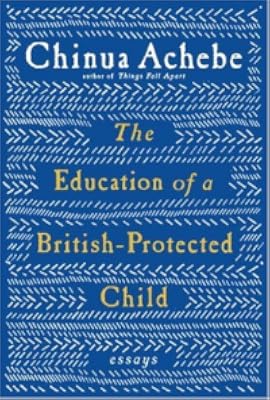
I was eager to read this book as I loved Achebe's previous book The Education of a British-Protected Child (Penguin Modern Classics) , a collection of essays including several autobiographical ones. I didn't find this quite as accessible or engaging. The juxtaposition of sections of history and memoir seemed a bit disjointed, and the rather dry historical narrative with lots of names of military leaders felt as if it was pulling me away from the story of the book.
I did appreciate the inclusion of some of his poetry in the book, and was interested in the way he tried to tell the story, I just didn't find it completely successful.
On a more positive note, the book is a nicely presented hardback with an elegant and sombre dust jacket and a very comprehensive index. Some of the endnote citations from the book seem a bit eccentric and of doubtful reliability - lots of conversations with named and unnamed individuals which cannot be followed up as they may not be published, and even "author's recollections" - I think it would be sufficient to make it clear in the main text that something is from conversation or memory and use endnotes just for published external sources.
I intend to refer back to this if I read other books about Nigeria and Biafra, and think it would be useful alongside other books as an introduction to Nigerian and/or recent African history.
Reviewed for Amazon Vine December 2012 show less
Nigeria had gained its independence from Britain in 1960 - the new country had a number of different peoples, speaking many different languages, who had different histories of relating to British rule and thus to the new state and its government. The foundation of the breakaway Biafran Republic in the south east was announced in May 1967, after some quite brutal conflicts in the north of the country, and a very bitter civil war followed, ending in defeat for Biafra.
Achebe attempts to explain the origins of the conflict in post colonial show more Nigeria, in an attempted coup in Northern Nigeria and the response to it, etc. He also describes some of the experiences of himself, his wife and their young children in war torn Biafra (the third was born just after the declaration of the Biafran Republic). He also includes a number of his poems about the conflict.
I was eager to read this book as I loved Achebe's previous book The Education of a British-Protected Child (Penguin Modern Classics) , a collection of essays including several autobiographical ones. I didn't find this quite as accessible or engaging. The juxtaposition of sections of history and memoir seemed a bit disjointed, and the rather dry historical narrative with lots of names of military leaders felt as if it was pulling me away from the story of the book.
I did appreciate the inclusion of some of his poetry in the book, and was interested in the way he tried to tell the story, I just didn't find it completely successful.
On a more positive note, the book is a nicely presented hardback with an elegant and sombre dust jacket and a very comprehensive index. Some of the endnote citations from the book seem a bit eccentric and of doubtful reliability - lots of conversations with named and unnamed individuals which cannot be followed up as they may not be published, and even "author's recollections" - I think it would be sufficient to make it clear in the main text that something is from conversation or memory and use endnotes just for published external sources.
I intend to refer back to this if I read other books about Nigeria and Biafra, and think it would be useful alongside other books as an introduction to Nigerian and/or recent African history.
Reviewed for Amazon Vine December 2012 show less
A book about the history of Biafra, a state that seceded from Nigeria from 1967 and was reunited with the country in 1970 following a devastating civil war.
Achebe starts by recounting his early life and education in Nigeria under British colonial rule, then describes the sequence of historical events following independence leading up to Biafran succession and the Nigerian–Biafran War. The events of the war are related through a mixture of personal recollections and historical details. The text also contains a number of poems by the author written during the period.
While I found the subject matter interesting, the fusion of history and memoir in this book was not entirely successful. As a memoir, the book is hampered by the author's show more efforts to maintain a neutral or even impersonal tone, while as a work of history the viewpoint seems too narrowly restricted to the author's own experiences. Still, despite its limitations, this book did provide an interesting perspective on this period of Nigeria's history. show less
Achebe starts by recounting his early life and education in Nigeria under British colonial rule, then describes the sequence of historical events following independence leading up to Biafran succession and the Nigerian–Biafran War. The events of the war are related through a mixture of personal recollections and historical details. The text also contains a number of poems by the author written during the period.
While I found the subject matter interesting, the fusion of history and memoir in this book was not entirely successful. As a memoir, the book is hampered by the author's show more efforts to maintain a neutral or even impersonal tone, while as a work of history the viewpoint seems too narrowly restricted to the author's own experiences. Still, despite its limitations, this book did provide an interesting perspective on this period of Nigeria's history. show less
An interesting book, but it is not Achebe's best work. For such an important event, Achebe could have brought more than the propagandist's view to the events about which he writes.
Members
- Recently Added By
Lists

Best African Books
126 works; 46 members
Author Information

60+ Works 32,829 Members
Albert Chinualumogu Achebe was born on November 16, 1930 in Ogidi, Nigeria. He studied English, history and theology at University College in Ibadan from 1948 to 1953. After receiving a second-class degree, he taught for a while before joining the Nigeria Broadcasting Service in 1954. He was working as a broadcaster when he wrote his first two show more novels, and then quit working to devote himself to writing full time. Unfortunately his literary career was cut short by the Nigerian Civil War. During this time he supported the ill-fated Biafrian cause and served abroad as a diplomat. He and his family narrowly escaped assassination. After the civil war, he abandoned fiction for a period in favor of essays, short stories, and poetry. His works include Things Fall Apart, Arrow of God, No Longer at Ease, A Man of the People, Anthills of the Savannah, and There Was a Country. He also wrote four children's books including Chike and the River and How the Leopard Got His Claws. In 2007, he won the Man Booker International Prize for his "overall contribution to fiction on the world stage." He also worked as a professor of literature in Nigeria and the United States. He died following a brief illness on March 21, 2013 at the age of 82. (Bowker Author Biography) show less
Awards and Honors
Awards
Common Knowledge
- Canonical title
- There Was A Country: A Personal History of Biafra
- Original title
- There was a country
- Original publication date
- 2012
- People/Characters
- Chinua Achebe
- Important places
- Biafra, Nigeria
- First words
- Introduction: An Igbo proverb tells us that a man who does not know where the rain began to beat him cannot say where he dried his body.
My father was born in the last third of the nineteenth century, an era of great cultural, economic, and religious upheaval in Igbo land. - Last words
- (Click to show. Warning: May contain spoilers.)After years
of pressing death
and dizzy last-hour reprieves
we're glad to dump our fears
and our perilous gains together
in one shallow grave and flee
the same rueful way we came
straight home to haunted revelry.
(Click to show. Warning: May contain spoilers.)Appendix: Good night. - Publisher's editor
- Penguin Books
Classifications
Statistics
- Members
- 414
- Popularity
- 74,856
- Reviews
- 11
- Rating
- (3.59)
- Languages
- English
- Media
- Paper, Audiobook, Ebook
- ISBNs
- 11
- UPCs
- 1
- ASINs
- 8