A Rose for Emily [short story]
by William Faulkner
On This Page
Description
Miss Emily Grierson was the fading aristocrat of a small Southern town. When she was young, her tyrannical father drove away all her suitors. Finally free after his death, Miss Emily quickly succumbed to the advances of a Yankee day laborer. Only years later does the town realize the chilling consequences of this ill-fated romance.Tags
Recommendations
































Member Reviews
We did not say she was crazy then. We believed she had to do that. We remembered all the young men her father had driven away, and we knew that with nothing left, she would have to cling to that which had robbed her, as people will.
The second William Faulkner short story I have read turned out to be an absolute success. On diverting, brief eight pages, Faulkner manages to introduce his readers to the character of Miss Emily Grierson, a woman marked by loneliness and bitterness. This story deals with a person's inability to adjust to changing surroundings, to become a respected part of the society. And it succeeds on each and every level.
The story starts off with a slow narration, recounting the life of Emily Grierson until Faulkner's show more final revelation will step around the corner and confront you totally unexpectedly. It is impossible to talk about this story without spoiling its most important turn of events, so I will leave this review at a whole-hearted recommendation for you to read it. Even though (or rather because) it does include some creepy parts, the story will also probably burn into your mind unlike anything else you have read so far. You can read it for free here. show less
Available to read for free here: http://xroads.virginia.edu/~drbr/wf_rose.html
This is a delightfully creepy short story, and my first introduction to the writing of [a: William Faulkner|3535|William Faulkner|https://d.gr-assets.com/authors/1373572902p2/3535.jpg]. While it carries some of the hallmarks of his writing - disjointed time, strange narration - it is a far cry from what he normally writes. This is arguably one of the earliest examples of the Southern Gothic genre and a fantastic example of it.
An easy read, I highly recommend it to anyone interested in the genre in general. If you don't mind some Alfred Hitchcock's Psycho level creepy in your day.
This is a delightfully creepy short story, and my first introduction to the writing of [a: William Faulkner|3535|William Faulkner|https://d.gr-assets.com/authors/1373572902p2/3535.jpg]. While it carries some of the hallmarks of his writing - disjointed time, strange narration - it is a far cry from what he normally writes. This is arguably one of the earliest examples of the Southern Gothic genre and a fantastic example of it.
An easy read, I highly recommend it to anyone interested in the genre in general. If you don't mind some Alfred Hitchcock's Psycho level creepy in your day.
This is the second story by Faulkner I’ve read. I thought it much better than the first.
Emily Grierson is a small, fat woman who refuses to pay her taxes: She says she does not owe any taxes and tells the authorities to ask Colonel Sartoris about the matter, though he has been dead for nearly ten years. She seems to have no sense of reality.
She has a Negro servant.
Shortly after her sweetheart had deserted her, a smell developed. Some people broke open her cellar door and sprinkled lime there and in all the outbuildings, and after a week the smell went away.
(How can lime remove smells?)
Emily’s great-aunt had gone “completely crazy”, and Emily herself does not seem to me to be completely sane.
At thirty Emily was still show more single. When her father died, all that was left to her was the house.
For three days Emily claimed her father was not dead, but eventually she confessed he was.
He had driven away many young men.
A Yankee called Homer Barron came, in charge of the work for paving the sidewalks. He and Miss Emily drove together in a yellow-wheeled buggy on Sunday afternoons.
She was the last Grierson.
At one point she bought arsenic at the druggist’s. She wanted the best they had but refused to divulge what she wanted it for, though the law required her to.
Some said Emily would marry Homer. But he liked men, and himself said that he was not a marrying man.
Later the townspeople saw that Emily had grown fat and her hair eventually turned iron-grey.
Homer was not to be seen again.
Emily died at the age of seventy-four in one of the downstairs rooms. She had shut up the top floor of the house.
After Emily’s death, the Negro servant disappeared.
Two female cousins came and held the funeral.
There was one room above stairs which would have to be forced. When Emily was buried, they did so.
I won’t divulge the ending – your will have to read the story yourself.
One member of the Good Reads’ Short Story Club suggested that necrophilia was involved, but I myself see no reason to think this, and I wouldn’t know if it was possible for a woman to do this to a man. Another states that, knowing Faulkner, this could have been what he meant. But I do not know Faulkner.
All in all, I found this to be a very readable story with a somewhat shocking ending. I recommend that you read it. show less
Emily Grierson is a small, fat woman who refuses to pay her taxes: She says she does not owe any taxes and tells the authorities to ask Colonel Sartoris about the matter, though he has been dead for nearly ten years. She seems to have no sense of reality.
She has a Negro servant.
Shortly after her sweetheart had deserted her, a smell developed. Some people broke open her cellar door and sprinkled lime there and in all the outbuildings, and after a week the smell went away.
(How can lime remove smells?)
Emily’s great-aunt had gone “completely crazy”, and Emily herself does not seem to me to be completely sane.
At thirty Emily was still show more single. When her father died, all that was left to her was the house.
For three days Emily claimed her father was not dead, but eventually she confessed he was.
He had driven away many young men.
A Yankee called Homer Barron came, in charge of the work for paving the sidewalks. He and Miss Emily drove together in a yellow-wheeled buggy on Sunday afternoons.
She was the last Grierson.
At one point she bought arsenic at the druggist’s. She wanted the best they had but refused to divulge what she wanted it for, though the law required her to.
Some said Emily would marry Homer. But he liked men, and himself said that he was not a marrying man.
Later the townspeople saw that Emily had grown fat and her hair eventually turned iron-grey.
Homer was not to be seen again.
Emily died at the age of seventy-four in one of the downstairs rooms. She had shut up the top floor of the house.
After Emily’s death, the Negro servant disappeared.
Two female cousins came and held the funeral.
There was one room above stairs which would have to be forced. When Emily was buried, they did so.
I won’t divulge the ending – your will have to read the story yourself.
One member of the Good Reads’ Short Story Club suggested that necrophilia was involved, but I myself see no reason to think this, and I wouldn’t know if it was possible for a woman to do this to a man. Another states that, knowing Faulkner, this could have been what he meant. But I do not know Faulkner.
All in all, I found this to be a very readable story with a somewhat shocking ending. I recommend that you read it. show less
Whew! Talk about disturbing.
I had to read this a few times in school, so I don't remember the dates that I finished this story, but I did enjoy it.
Ratings
Members
- Recently Added By
Lists

Literary Works Read in College
316 works; 15 members

"We" narration
49 works; 2 members

Forbes: The 25 Greatest Short Stories of All Time
25 works; 4 members
Author Information

464+ Works 99,218 Members
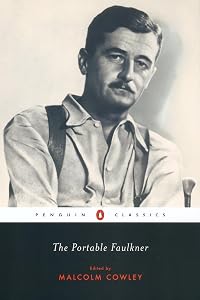
Born in an old Mississippi family, William Faulkner made his home in Oxford, seat of the University of Mississippi. After the fifth grade he went to school only off and on-lived, read, and wrote much as he pleased. In 1918, refusing to enlist with the "Yankees," he joined the Canadian Air Force, and was transferred to the British Royal Air Force. show more After the war he studied a little at the University, did house painting, worked as a night superintendent at a power plant, went to New Orleans and became a friend of Sherwood Anderson, then to Europe and back home to Oxford. By this time he had written two novels. The Sound and the Fury followed in 1929. Financial success came with Sanctuary in 1931, which he assisted in filming. Faulkner 's novels are intense in their character portrayals of disintegrating Southern aristocrats, poor whites, and African Americans. A complex stream-of-consciousness rhetoric often involves Faulkner in lengthy sentences of anguished power. Most of his tales are set in the mythical Yoknapatawpha County, Mississippi, and are characterized by the use of many recurring characters from families of different social levels spanning more than a century. His best subjects are the old, dying South and the newer materialistic South. As I Lay Dying (1930), is a grotesquely tragicomic story about a family of poor southern whites. With Absalom, Absalom! (1936); the difficult parts of his famous short novel "The Bear" (published in Go Down, Moses, 1942); and the allegorical A Fable (1954), a non-Yoknapatawpha novel set in France during World War I; Faulkner returned to an innovative and difficult style that most readers have trouble with. Yet, interspersed among such works are collections of easily read stories originally published in popular magazines. There seems to be a growing sentiment among critics that the Snopes trilogy-The Hamlet (1940), The Town (1957), and The Mansion (1959)-for the most part an example of Faulkner's "moderate" style, could well be among his most important works. Faulkner was awarded the 1949 Nobel Prize for literature "for his powerful and artistically independent contribution to the new American novel," but it would appear now that he also deserved to win that honor for his contribution to world literature. When reporting his death, the Boston Globe quoted Faulkner's having once told an interviewer: "Since man is mortal, the only immortality for him is to leave something behind him that is immortal since it will always move. That is the artist's way of scribbling "Kilroy was here" on the wall of the final and irrevocable oblivion through which he must some day pass." In addition to the Nobel Prize, Faulkner received the Howells Medal of the American Academy of Arts and Letters in 1950, and in 1951 he was given the National Book Award for his Collected Stories Collected Stories. For his novel A Fable he received the National Book Award for the second time, as well as the Pulitzer Prize in 1955. The Reivers (1962) was awarded the Pulitzer Prize in 1963. In 1957 and 1958, he was the University of Virginia's first writer-in-residence, and in January 1959 he accepted an appointment as consultant on contemporary literature to the Alderman Library of that university. Although Faulkner was not without honors in his lifetime and has received world recognition since then, it is surprising to learn that, when Malcolm Cowley edited The Portable Faulkner in 1946, he found that almost all of Faulkner's books were out of print. By arranging selections from the works to form a continuous chronicle, Cowley deserves much of the credit for making readers aware of the way in which Faulkner was creating a fictive world on a scale grander than that of any novelist since Balzac. William Faulkner died in Oxford, Mississippi, in 1962. (Bowker Author Biography) show less
Some Editions
Awards and Honors
Notable Lists
Series
Belongs to Publisher Series
Work Relationships
Common Knowledge
- Canonical title
- A Rose for Emily [short story]
- Original title
- A Rose for Emily
- People/Characters
- Emily Grierson
- Important places
- Yoknapatawpha County, Mississippi, USA
- Original language
- English
Classifications
Statistics
- Members
- 311
- Popularity
- 102,664
- Reviews
- 5
- Rating
- (3.96)
- Languages
- English, Turkish
- Media
- Paper, Ebook
- ISBNs
- 7
- UPCs
- 1
- ASINs
- 4