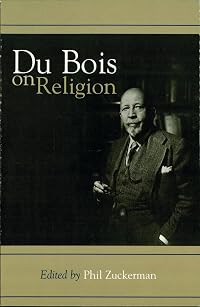
Du Bois on Religion
by W. E. B. Du Bois
On This Page
Description
W.E.B. Du Bois shaped 20th century America to an extent rivaled by few others. The first black to receive a Ph. D. from Harvard, he helped create the discipline of sociology and was one of the founders of the National Association for the Advancement of Colored People (NAACP). Martin Luther King, Jr. called Du Bois 'a gifted discoverer of social truths.' But until now little academic attention has been paid to his insights on religion or to how religious commitments shaped his views of race, show more rights and justice. Phil Zuckerman here gathers together Du Bois's writings on religion, and makes a compelling case for Du Bois to be recognized among the leading sociologists of religion. Du Bois on Religion includes selections from his well-known works such as The Souls of Black Folks to poems, prayers, stories and speeches less widely available. Brief, helpful introductions preface each of the twenty-six selections. Also, a general introduction traces Du Bois's move from church-attending Christian to relentless critic of religion and evaluates Du Bois's contributions to the study of religion. Du Bois on Religion is an important text for sociologists or for anyone interested in the history of race and religion in the United States. show lessTags
Members
- Recently Added By
Author Information

185+ Works 13,011 Members
Civil rights leader and author, William Edward Burghardt Du Bois was born in Great Barrington, Massachusetts on February 23, 1868. He earned a B.A. from both Harvard and Fisk universities, an M.A. and Ph.D. from Harvard, and studied at the University of Berlin. He taught briefly at Wilberforce University before he came professor of history and show more economics at Atlanta University in Ohio (1896-1910). There, he wrote The Souls of Black Folk (1903), in which he pointed out that it was up to whites and blacks jointly to solve the problems created by the denial of civil rights to blacks. In 1905, Du Bois became a major figure in the Niagara Movement, a crusading effort to end discrimination. The organization collapsed, but it prepared the way for the founding of the National Association for the Advancement of Colored People (NAACP), in which Du Bois played a major role. In 1910, he became editor of the NAACP magazine, a position he held for more than 20 years. Du Bois returned to Atlanta University in 1932 and tried to implement a plan to make the Negro Land Grant Colleges centers of black power. Atlanta approved of his idea, but later retracted its support. When Du Bois tried to return to NAACP, it rejected him too. Active in several Pan-African Congresses, Du Bois came to know Fwame Nkrumah, the first president of Ghana, and Jono Kenyatta the president of Kenya. In 1961, the same year Du Bois joined the Communist party, Nkrumah invited him to Ghana as a director of an Encyclopedia Africana project. He died there on August 27, 1963, after becoming a citizen of that country. (Bowker Author Biography) show less
All Editions
Classifications
- Genres
- Nonfiction, Religion & Spirituality, History
- DDC/MDS
- 306.6 — Society, government, & culture Social sciences, sociology & anthropology Social Behavior - Dating, Marriage, Divorce Religious institutions
- LCC
- E185.97 .D73 .A322 — History of the United States United States Elements in the population Afro-Americans Biography. Genealogy
- BISAC
Statistics
- Members
- 15
- Popularity
- 1,597,149
- Languages
- English
- Media
- Paper, Ebook
- ISBNs
- 3