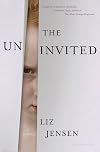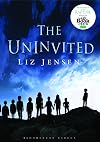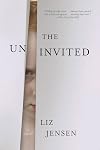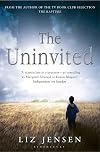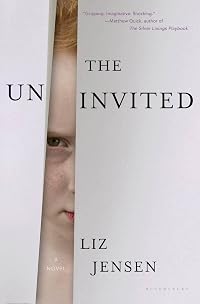
The Uninvited
by Liz Jensen
On This Page
Description
A seven-year-old girl puts a nail gun to her grandmother's neck and fires. An isolated incident, say the experts. The experts are wrong. Across the world, children are killing their families. Is violence contagious? As chilling murders by children grip the country, anthropologist Hesketh Lock has his own mystery to solve: a bizarre scandal in the Taiwan timber industry. Hesketh has never been good at relationships: Asperger's Syndrome has seen to that. But he does have a talent for spotting show more behavioral patterns and an outsider's fascination with group dynamics. Nothing obvious connects Hesketh's Asian case with the atrocities back home. Or with the increasingly odd behavior of his beloved stepson, Freddy. But when Hesketh's Taiwan contact dies shockingly and more acts of sabotage and child violence sweep the globe, he is forced to acknowledge possibilities that defy the rational principles on which he has staked his life, his career, and, most devastatingly of all, his role as a father. Part psychological thriller, part dystopian nightmare, The Uninvited is a powerful and viscerally unsettling portrait of apocalypse in embryo.. show less
Tags
Recommendations


















Member Reviews
What is it about books with children acting badly which makes them so compellingly creepy? Liz Jensen's new book, The Uninvited opens with a small child calmly holding a nail gun against her grandmother's neck and pulling the trigger. Soon, this type of violent act is repeated again and again as children everywhere begin killing their loved ones. As well, there are acts of sabotage in which children seem somehow to be controlling adults. And if this isn't creepy enough the children begin to form feral packs, eat bugs, and. in horrible acts of cannibalism, each other.
The main protagonist of the story, Hesketh Lock, is hired to discover what is causing all of these strange occurrences. He has Asperger's which makes him the perfect show more observer since he can't engage emotionally, that is, until his own stepson begins to show the same bizarre symptoms as other children and soon the case becomes very personal even as the violence escalates.
It is hard to classify this book. It seems to be an amalgam of several genres - dystopian, scifi, thriller, horror, and fantasy but whatever you call it, it makes for one hell of a scary read. show less
The main protagonist of the story, Hesketh Lock, is hired to discover what is causing all of these strange occurrences. He has Asperger's which makes him the perfect show more observer since he can't engage emotionally, that is, until his own stepson begins to show the same bizarre symptoms as other children and soon the case becomes very personal even as the violence escalates.
It is hard to classify this book. It seems to be an amalgam of several genres - dystopian, scifi, thriller, horror, and fantasy but whatever you call it, it makes for one hell of a scary read. show less
The Uninvited opens with a scene of intense horror, as a young child slaughters her grandmother with a nail-gun to the neck. “No reason, no warning.” Everyone’s immediate reaction is that there has been a terrible accident, especially as the girl is found staring at the wall, as if in shock; but then she comes to herself, grabs the nail gun, and puts it to her father’s face and fires again. “One murder, one blinding. Two minutes. No accident.” The girl had just turned seven.
The narrator of the tale that begins with this incident is Hesketh, a man who lives in a stone cottage on the island of Arran in Scotland, an isolated place that suits a man who prefers solitude and has a job that doesn’t require him to appear at the show more Head Office with any great frequency. Hesketh is separated from Kaitlin, which necessarily separates him from her son, Freddy, who is the same age as the girl who shot her grandmother; Hesketh feels the loss of Freddy much more than he does the loss of Kaitlin. Hesketh uses his training in anthropology to find and celebrate whistleblowers in corporations. He does so at the behest of those corporations, who wish to manage the whistleblowers for their own advantage, to show that they are good corporate citizens and avoid bad publicity. It’s a little surprising that Hesketh is able to be so effective at his work, as he has Asperger’s Syndrome. As it applies to him, Asperger’s makes it difficult for him to understand how people will react emotionally to any given set of circumstances, because he does not experience most emotions as the bulk of humanity does.
But Hesketh is, in fact, good at his work, which has him traveling throughout the world. An assignment in Taiwan, at a timber factory, reveals a situation fully as strange as the child who killed her grandmother with a nail gun. Hesketh finds the whistleblower quickly, but the man behaves very oddly. It is plain that he loves the organization that employs him; his father, grandfather and uncles all worked there, and he believes it to be a good company. He also clearly finds whistleblowing to be shameful. Hesketh notes that his movements are “jerky and puppet-like,” and that he has a “hectic look.” It’s almost as if the man acted against his own conscience and his own will in doing as he did. But more mysteriously, the man points to evidence — genuine evidence, not something manufactured — that seems to indicate someone else, in fact, a child, was involved.
The mysteries compound from there, and Hesketh is right in the middle of them. All over the world, people are betraying corporations they love. All over the world, children are killing the adults who care for them. It seems that some sort of apocalypse is underway, but one never foreseen and with no discernible shape. Who or what is the uninvited? And what are they, or it, doing to the world? What is their purpose, their plan? And how do ordinary people figure it out, and what do they do about it?
The story is told entirely in the first person by Hesketh, which makes the narrative mostly seem cold, analytical, emotionless. Consequently, when Hesketh does show emotion, it is all the more powerful. He has an especially interesting voice; seeing through his eyes, watching his habits, his means of coping, is fascinating. His emotional distance makes him able to observe and relate what is happening around him as familiar institutions start to collapse. It’s a great use of character to make an unusual story even more unusual.
And the story is unusual, imaginative, excitingly different. I’ve read nothing like The Uninvited before. It is very different from the average horror or science fiction novel, imagining events that seem unimaginable in exquisite detail. Despite the veritable arms race among thriller writers to make their viewpoint characters in some way “other,” giving them a disease or disorder that sets them apart from the mass of humanity, Jensen’s novel is the most skillful use of such a technique I’ve seen. It is a bleak tale, telling of an end to the world that seems entirely meaningless, an end that humans are helpless to prevent at any level. Yet there is a beauty to it, too, and an odd note that perhaps what is happening is not an ending, but merely a change. This is not an easy novel, but it is eminently worthwhile.
Originally published at http://www.fantasyliterature.com/reviews/horrible-monday-the-uninvited-by-liz-je... show less
The narrator of the tale that begins with this incident is Hesketh, a man who lives in a stone cottage on the island of Arran in Scotland, an isolated place that suits a man who prefers solitude and has a job that doesn’t require him to appear at the show more Head Office with any great frequency. Hesketh is separated from Kaitlin, which necessarily separates him from her son, Freddy, who is the same age as the girl who shot her grandmother; Hesketh feels the loss of Freddy much more than he does the loss of Kaitlin. Hesketh uses his training in anthropology to find and celebrate whistleblowers in corporations. He does so at the behest of those corporations, who wish to manage the whistleblowers for their own advantage, to show that they are good corporate citizens and avoid bad publicity. It’s a little surprising that Hesketh is able to be so effective at his work, as he has Asperger’s Syndrome. As it applies to him, Asperger’s makes it difficult for him to understand how people will react emotionally to any given set of circumstances, because he does not experience most emotions as the bulk of humanity does.
But Hesketh is, in fact, good at his work, which has him traveling throughout the world. An assignment in Taiwan, at a timber factory, reveals a situation fully as strange as the child who killed her grandmother with a nail gun. Hesketh finds the whistleblower quickly, but the man behaves very oddly. It is plain that he loves the organization that employs him; his father, grandfather and uncles all worked there, and he believes it to be a good company. He also clearly finds whistleblowing to be shameful. Hesketh notes that his movements are “jerky and puppet-like,” and that he has a “hectic look.” It’s almost as if the man acted against his own conscience and his own will in doing as he did. But more mysteriously, the man points to evidence — genuine evidence, not something manufactured — that seems to indicate someone else, in fact, a child, was involved.
The mysteries compound from there, and Hesketh is right in the middle of them. All over the world, people are betraying corporations they love. All over the world, children are killing the adults who care for them. It seems that some sort of apocalypse is underway, but one never foreseen and with no discernible shape. Who or what is the uninvited? And what are they, or it, doing to the world? What is their purpose, their plan? And how do ordinary people figure it out, and what do they do about it?
The story is told entirely in the first person by Hesketh, which makes the narrative mostly seem cold, analytical, emotionless. Consequently, when Hesketh does show emotion, it is all the more powerful. He has an especially interesting voice; seeing through his eyes, watching his habits, his means of coping, is fascinating. His emotional distance makes him able to observe and relate what is happening around him as familiar institutions start to collapse. It’s a great use of character to make an unusual story even more unusual.
And the story is unusual, imaginative, excitingly different. I’ve read nothing like The Uninvited before. It is very different from the average horror or science fiction novel, imagining events that seem unimaginable in exquisite detail. Despite the veritable arms race among thriller writers to make their viewpoint characters in some way “other,” giving them a disease or disorder that sets them apart from the mass of humanity, Jensen’s novel is the most skillful use of such a technique I’ve seen. It is a bleak tale, telling of an end to the world that seems entirely meaningless, an end that humans are helpless to prevent at any level. Yet there is a beauty to it, too, and an odd note that perhaps what is happening is not an ending, but merely a change. This is not an easy novel, but it is eminently worthwhile.
Originally published at http://www.fantasyliterature.com/reviews/horrible-monday-the-uninvited-by-liz-je... show less
I am a Liz Jensen fan, although I don’t make as much of an effort to read her books as I should do. True, whenever I see one in a charity shop, I buy it. But, seriously, I should be buying her books new from a retailer – online or otherwise – because they are that good. Consider it a personal failing. In The Uninvited, the narrator, who suffers from Asperger’s, finds himself drawn into an investigation into children who have murdered their parents. And there seems to be an epidemic of such murders. In all cases, the children have no idea why they committed murder, and seem completely unaffected by their actions. Jensen never gives you quite what you expect – and that’s as true of this novel as it is of any of her others. The show more narrator’s condition is handled expertly, the circumstances of the deaths he investigates are presented convincingly, and the actual plot of the novel actually seems almost plausible. I’m not the only one with a failing here – we should all be reading Liz Jensen. And The Uninvited is as good a place to start as any. show less
So the question is, Heaven or Hell?’
I say, ‘Pyjama Girl dreamed about a beautiful white desert that sparkled. She said it looked like Heaven.’
‘If it is, it’s a salty one. What have you come up with on that front?’
I glance at my notes. ‘The fact that salt’s been very dynamic of late. Salt levels in most oceans have increased dramatically over the last fifty years. But even more so in the last three or four. There are many countries that are reporting massive crystal deposits inland because much of the water table is salt-laden. Farmers have been battling it for years. It comes to the surface by capillary transport and when it evaporates, you have whole deserts of it. In South Australia there are already millions of show more hectares where nothing will grow. They call it the White Death.’
Hesketh Lock, the protagonist of this story, is autistic, and obsessed with origami and paint colour charts. He is not lucky in love, having been recently dumped by his girlfriend Kaitlin who is refusing to let him see his much loved stepson Freddy. Hesketh's descriptions of his relationship with Freddy really made me warm to him, while his encounters with women made me laugh. On the other hand, he has done well in his professional life, finding a boss, who appreciates his talents and is prepared to help him with his social skills when he has problems in relating to people. Hesketh is an investigator for Phipps & Wexman, a company that tracks down whistleblowers so that they can be 'rewarded' by their employers. He is very good at his job due to a talent for seeing patterns in behaviour, because he isn't distracted by the emotions of the people he investigates.
The story begins with Hesketh investigating a sudden outbreak of sabotage (his company's term for whistle blowing), in which loyal employees who love the companies they work for, deliberately sabotage them, seemingly against their will, and commit suicide soon after. At the same time there is an outbreak of violent attacks perpetrated by children under 10 on family members and Hesketh begins to see an overlap in the two, just as Phipps & Wexman are employed by the government to investigate the causes of the rapidly worsening situation alongside Hesketh's former mentor, Professor Whybray, who has come out of retirement because of the due to the crisis.
The saboteurs claim to have been made to do it by child-sized spirits (trolls, djinns, etc depending on their culture) that have somehow got inside them. The children do not seem to be prone to suicide, but refuse to say why they attacked people they loved and don't seem to remember what they have done. While reading the book, I was wondering whether there would be a fantasy explanation with the trolls and djinns being real, or a psychological explanation with the collective unconscious breaking through, so the actual explanation for what happened came as a surprise. I quite liked the ending, with its note of optimism coming after so much devastation. Because Hesketh doesn't do wishful thinking, I believed him when he said there was hope for the future. show less
I say, ‘Pyjama Girl dreamed about a beautiful white desert that sparkled. She said it looked like Heaven.’
‘If it is, it’s a salty one. What have you come up with on that front?’
I glance at my notes. ‘The fact that salt’s been very dynamic of late. Salt levels in most oceans have increased dramatically over the last fifty years. But even more so in the last three or four. There are many countries that are reporting massive crystal deposits inland because much of the water table is salt-laden. Farmers have been battling it for years. It comes to the surface by capillary transport and when it evaporates, you have whole deserts of it. In South Australia there are already millions of show more hectares where nothing will grow. They call it the White Death.’
Hesketh Lock, the protagonist of this story, is autistic, and obsessed with origami and paint colour charts. He is not lucky in love, having been recently dumped by his girlfriend Kaitlin who is refusing to let him see his much loved stepson Freddy. Hesketh's descriptions of his relationship with Freddy really made me warm to him, while his encounters with women made me laugh. On the other hand, he has done well in his professional life, finding a boss, who appreciates his talents and is prepared to help him with his social skills when he has problems in relating to people. Hesketh is an investigator for Phipps & Wexman, a company that tracks down whistleblowers so that they can be 'rewarded' by their employers. He is very good at his job due to a talent for seeing patterns in behaviour, because he isn't distracted by the emotions of the people he investigates.
The story begins with Hesketh investigating a sudden outbreak of sabotage (his company's term for whistle blowing), in which loyal employees who love the companies they work for, deliberately sabotage them, seemingly against their will, and commit suicide soon after. At the same time there is an outbreak of violent attacks perpetrated by children under 10 on family members and Hesketh begins to see an overlap in the two, just as Phipps & Wexman are employed by the government to investigate the causes of the rapidly worsening situation alongside Hesketh's former mentor, Professor Whybray, who has come out of retirement because of the due to the crisis.
The saboteurs claim to have been made to do it by child-sized spirits (trolls, djinns, etc depending on their culture) that have somehow got inside them. The children do not seem to be prone to suicide, but refuse to say why they attacked people they loved and don't seem to remember what they have done. While reading the book, I was wondering whether there would be a fantasy explanation with the trolls and djinns being real, or a psychological explanation with the collective unconscious breaking through, so the actual explanation for what happened came as a surprise. I quite liked the ending, with its note of optimism coming after so much devastation. Because Hesketh doesn't do wishful thinking, I believed him when he said there was hope for the future. show less
Children are typically revered for their innocence and inability to protect themselves. However, anyone who has ever had any interaction with children on a regular basis (which means anyone who has experienced the tortures of puberty) knows that children are cruel little beasts and more than capable of causing damage to others when they want to do so. In The Uninvited, Liz Jensen explores these violent tendencies of children and the psychological impact such actions have on the adult world.
Yet, The Uninvited is not about the child violence. Nor is it about Hesketh’s quirks or brilliance at finding patterns thanks to his inability to connect with people. Rather, The Uninvited explores the impact of a global crisis, highlighting how show more quickly and how easily society turns to chaos given a surprisingly few number of man-made catastrophes. It truly is the beginnings of an apocalyptic world.
Behind this dynamic are two key discussions regarding global climate changes as well as a very basic discussion of quantum physics and the most recent theories regarding humans’ understanding of time. Ms. Jensen does an excellent job making such technical discussions comprehensible to all readers without diving into details that would impede the story. If anything, her use of recent scientific theories take what could be construed as a paranormal events and makes them plausible. The end result is a scenario that is more terrifying specifically because of its possibility.
Hesketh Lock is an interesting lead character. The way his mind words is absolutely fascinating, as he finds patterns where none seemingly exist and can remove himself from the irrationality provided by emotional reactions. Hesketh’s rationality in the face of the most improbable of scenarios enhances the sense of realism created by the scientific discussions. However, as intriguing as his inability to connect with others is, he is a tragic figure. Some of Hesketh’s responses, or lack thereof, are quite humorous but all scenes are tinged with an underlying sadness at his ongoing struggles to appear “normal” when his Asperger’s Syndrome makes him anything but that. His struggles to recognize his emotions and react accordingly create gut-wrenching scenes that obligate a reader to react on his behalf.
The Uninvited is a rare thriller that refuses to oversimplify the math and science behind its phenomenon and yet compels one to continue with the story. There is a sense of escapism while reading, but one cannot mindlessly plow through the novel without skipping key elements. The tension, vital in any thriller, ratchets up quickly and never completely loosens its grip on the reader, even after one turns the last page. The scenarios discussed within The Uninvited, with their basis in real math and science, make it an intense read made scarier for the possibilities it proposes. show less
Yet, The Uninvited is not about the child violence. Nor is it about Hesketh’s quirks or brilliance at finding patterns thanks to his inability to connect with people. Rather, The Uninvited explores the impact of a global crisis, highlighting how show more quickly and how easily society turns to chaos given a surprisingly few number of man-made catastrophes. It truly is the beginnings of an apocalyptic world.
Behind this dynamic are two key discussions regarding global climate changes as well as a very basic discussion of quantum physics and the most recent theories regarding humans’ understanding of time. Ms. Jensen does an excellent job making such technical discussions comprehensible to all readers without diving into details that would impede the story. If anything, her use of recent scientific theories take what could be construed as a paranormal events and makes them plausible. The end result is a scenario that is more terrifying specifically because of its possibility.
Hesketh Lock is an interesting lead character. The way his mind words is absolutely fascinating, as he finds patterns where none seemingly exist and can remove himself from the irrationality provided by emotional reactions. Hesketh’s rationality in the face of the most improbable of scenarios enhances the sense of realism created by the scientific discussions. However, as intriguing as his inability to connect with others is, he is a tragic figure. Some of Hesketh’s responses, or lack thereof, are quite humorous but all scenes are tinged with an underlying sadness at his ongoing struggles to appear “normal” when his Asperger’s Syndrome makes him anything but that. His struggles to recognize his emotions and react accordingly create gut-wrenching scenes that obligate a reader to react on his behalf.
The Uninvited is a rare thriller that refuses to oversimplify the math and science behind its phenomenon and yet compels one to continue with the story. There is a sense of escapism while reading, but one cannot mindlessly plow through the novel without skipping key elements. The tension, vital in any thriller, ratchets up quickly and never completely loosens its grip on the reader, even after one turns the last page. The scenarios discussed within The Uninvited, with their basis in real math and science, make it an intense read made scarier for the possibilities it proposes. show less
**Disclaimer: The publisher provided a free digital ARC of this book for review purposes.
This book started with a bang. Actually, it yanked me in violently. But after the first page, it kind of petered out for few chapters. “The Uninvited” takes its time to reclaim its reader, but readers that stick with it are definitely rewarded. While the events in the novel are unlikely to happen, Jensen convinces the reader that it could. I think this is the vital ingredient in the success of this story.
Liz Jensen does a stellar job at creating creepy-as-shit children and imaginative chaos. The only fault I can see, and it’s a pretty subjective one, is that her protagonist, Hesketh Lock, is extremely difficult to relate to, and yet, I think show more he’s the perfect character for this story.
Other than the slow warm-up I had to Hesketh (yes I did warm up eventually) Jensen crafted her characters carefully and with admirable attention to detail. It is well written, but must be digested slowly and thoughtfully. Jensen writes a beautiful, complex and disturbing story that stays with you. Evil children are creepy, and this book releases those fears and dark thoughts that we try to avoid thinking. Once they’re in your mind, it’s not easy to bottle it up and put it away in a safe, dark place where it can’t touch you anymore. This novel requires patience, but it’s a read that is immensely rewarding.
Full review at www.onfictionwriting.com show less
This book started with a bang. Actually, it yanked me in violently. But after the first page, it kind of petered out for few chapters. “The Uninvited” takes its time to reclaim its reader, but readers that stick with it are definitely rewarded. While the events in the novel are unlikely to happen, Jensen convinces the reader that it could. I think this is the vital ingredient in the success of this story.
Liz Jensen does a stellar job at creating creepy-as-shit children and imaginative chaos. The only fault I can see, and it’s a pretty subjective one, is that her protagonist, Hesketh Lock, is extremely difficult to relate to, and yet, I think show more he’s the perfect character for this story.
Other than the slow warm-up I had to Hesketh (yes I did warm up eventually) Jensen crafted her characters carefully and with admirable attention to detail. It is well written, but must be digested slowly and thoughtfully. Jensen writes a beautiful, complex and disturbing story that stays with you. Evil children are creepy, and this book releases those fears and dark thoughts that we try to avoid thinking. Once they’re in your mind, it’s not easy to bottle it up and put it away in a safe, dark place where it can’t touch you anymore. This novel requires patience, but it’s a read that is immensely rewarding.
Full review at www.onfictionwriting.com show less
Hesketh, the main character in Liz Jensen’s newest novel, The Uninvited, is someone I don’t think I shall ever forget. I thoroughly enjoyed the opportunity to get to know him through this book, and I can’t shake the feeling that he’s not just a literary character, but someone very real.
Hesketh has Asperger’s. He has a Ph.D. in anthropology, an affinity for learning and speaking foreign languages, a life-long love for linguistics, and a passion for origami. Everyday life frequently over-stimulates him and he resolves these situations by folding origami figures compulsively in his mind. For pleasure, he reads about the latest advances in particle physics. Hesketh is the ultimate reliable narrator; it is impossible for him to show more tell a lie. His ex-wife calls him a meat robot, but readers will learn that he has a deep reservoir of humanity that makes him a better human being than most of the best without Asperger’s. He has some odd social behavior that is not uncommon to those on the autism spectrum…behavior that at times can be extremely humorous. Hesketh is a gem of a human just waiting for the reader to discover.
If a fine author with very strong writing skills manages to deliver an extraordinary character study, then that would generally be enough to satisfy most literary readers. But what makes this book extraordinary is that this brilliant character study is enveloped in first-rate dystopian sci-fi thriller. I love dystopian fiction, but rarely get a chance to read it because it is hard for me to find authors that will hold my interest. This book grabbed me at the beginning, and didn’t let go until I’d quickly made my way to the end. For me, it was a high-octane literary and thinking-person’s thriller.
The main character is employed as a Behavioral Patterns Expert for an international corporation with a sudden growing worldwide client-base seeking help resolving devastating and singularly unexplainable cases of insider sabotage. Hesketh is the analyst sent to figure out what is going on...to examine the chaos of seemingly unrelated facts surrounding each case and somehow find the underlying patterns that connect the dots, in short, to find out why. Simultaneously, the worldwide media attention is focused on a slow but growing phenomenon of preadolescent children violently attacking and killing their parents and other adult family members. Hesketh eventually sees a link between the two types of incidents: corporate sabotage and child murderers. It is a problem so big it threatens the collapse of the whole of global civilization. It is a force that can’t be stopped. Hesketh’s job eventually morphs into a singular focus: nurturing and saving his ex-stepchild, Freddy K. Through Hesketh’s love and care for Freddy K., we begin to understand the depths of humanity that often remain hidden behind the outward social awkwardness of Asperger’s.
The Uninvited is a gem of a novel. Reading it makes me want to turn around and read all the author’s previous works…and I will. show less
Hesketh has Asperger’s. He has a Ph.D. in anthropology, an affinity for learning and speaking foreign languages, a life-long love for linguistics, and a passion for origami. Everyday life frequently over-stimulates him and he resolves these situations by folding origami figures compulsively in his mind. For pleasure, he reads about the latest advances in particle physics. Hesketh is the ultimate reliable narrator; it is impossible for him to show more tell a lie. His ex-wife calls him a meat robot, but readers will learn that he has a deep reservoir of humanity that makes him a better human being than most of the best without Asperger’s. He has some odd social behavior that is not uncommon to those on the autism spectrum…behavior that at times can be extremely humorous. Hesketh is a gem of a human just waiting for the reader to discover.
If a fine author with very strong writing skills manages to deliver an extraordinary character study, then that would generally be enough to satisfy most literary readers. But what makes this book extraordinary is that this brilliant character study is enveloped in first-rate dystopian sci-fi thriller. I love dystopian fiction, but rarely get a chance to read it because it is hard for me to find authors that will hold my interest. This book grabbed me at the beginning, and didn’t let go until I’d quickly made my way to the end. For me, it was a high-octane literary and thinking-person’s thriller.
The main character is employed as a Behavioral Patterns Expert for an international corporation with a sudden growing worldwide client-base seeking help resolving devastating and singularly unexplainable cases of insider sabotage. Hesketh is the analyst sent to figure out what is going on...to examine the chaos of seemingly unrelated facts surrounding each case and somehow find the underlying patterns that connect the dots, in short, to find out why. Simultaneously, the worldwide media attention is focused on a slow but growing phenomenon of preadolescent children violently attacking and killing their parents and other adult family members. Hesketh eventually sees a link between the two types of incidents: corporate sabotage and child murderers. It is a problem so big it threatens the collapse of the whole of global civilization. It is a force that can’t be stopped. Hesketh’s job eventually morphs into a singular focus: nurturing and saving his ex-stepchild, Freddy K. Through Hesketh’s love and care for Freddy K., we begin to understand the depths of humanity that often remain hidden behind the outward social awkwardness of Asperger’s.
The Uninvited is a gem of a novel. Reading it makes me want to turn around and read all the author’s previous works…and I will. show less
Members
- Recently Added By
Published Reviews
ThingScore 100
This unsettling mystery-thriller possesses elements of horror as well as apocalyptic overtones. The protagonist of Liz Jensen's The Uninvited (Bloomsbury USA, $25) is Hesketh Lock, a brilliant fellow with Asperger's syndrome who works as a claims investigator for a British firm. He can't help but look for patterns and rely on observations when he detects something abnormal about some recent, show more exceptionally bloody violence from very young children. show less
added by KelMunger
Lists

Dystopian and Apocalyptic Literature
350 works; 74 members

Recommended Speculative Fiction by Women and People of Color
298 works; 45 members

BingoDOG - Books About Autism: Fiction
27 works; 14 members

KayStJ's to-read list
1,616 works; 11 members

Recommended Horror and Dark Fiction by Women
81 works; 13 members

Books Read in 2015
3,299 works; 129 members

Same Title
115 works; 3 members

Books Read in 2020
4,379 works; 124 members

2022 To Read List
11 works; 2 members
Author Information

13+ Works 2,204 Members
Common Knowledge
- Canonical title
- The Uninvited
- Original title
- The Uninvited
- Original publication date
- 2012-07-05
- Epigraph
- Our birth is but a sleep and a forgetting
The Soul that rises with us, our life's Star
Hath had elsewhere its setting
And cometh from afar . . .
Hence in a season of calm weather
T... (show all)hough inland far we be
Our Souls have sight of that immortal sea
Which brought us hither
Can in a moment travel thither
And see the children sport upon the shore
And hear the mighty waters rolling evermore.
William Wordsworth, Ode: Intimations of Immortality from Recollections of Early Childhood
There is always one moment in childhood when the door opens and lets the future in.
Graham Greene, The Power and the Glory - Dedication
- For Clare Blatchford Rees
An inspiration - First words
- Mass hysterical outbreaks rarely have identifiable inceptions, but the date I remember most vividly is Sunday 16th September, when a young child in butterfly pyjamas slaughtered her grandmother with a nail-gun to the neck.
- Last words
- (Click to show. Warning: May contain spoilers.)And I am filled with something I can hesitantly call joy.
- Original language*
- Englisch
*Some information comes from Common Knowledge in other languages. Click "Edit" for more information.
Classifications
Statistics
- Members
- 312
- Popularity
- 102,429
- Reviews
- 29
- Rating
- (3.38)
- Languages
- Danish, English, German, Italian
- Media
- Paper, Audiobook, Ebook
- ISBNs
- 21
- ASINs
- 5