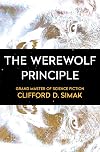
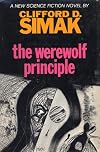
The Werewolf Principle
by Clifford D. Simak
On This Page
Description
His body hosting a pair of strange alien presences, an amnesiac space traveler returns home to an unrecognizable Earth Many centuries in the future, a two-hundred-year-old man is discovered hibernating in a space capsule orbiting a distant star. Transported back to his home planet, Andrew Blake awakens to an Earth he does not recognize--a world of flying cars and sentient floating houses--with no memory whatsoever of his history or purpose. But he has not returned alone. The last survivor of show more a radical experiment abandoned more than a century earlier, Blake was genetically altered to be able to adapt to extreme alien environments, and now he can sense other presences inhabiting his mind and body. One is a biological computer of astonishing power; the other is a powerful creature akin to a large wolf. And Blake is definitely not the one in control. With his sanity hanging in the balance, Blake's only option is to set out in frantic pursuit of his past, the truth, his destiny--and quite possibly the fate of humankind. A bravura demonstration of unparalleled imagination, intelligence, and heart, The Werewolf Principle addresses weighty issues of genetic manipulation that are as relevant today as when the novel first appeared in print. One of the all-time best and brightest in speculative fiction, Grand Master Clifford D. Simak offers a moving, stunning, witty, and thought-provoking exploration of what it means to be human. show lessTags
Recommendations






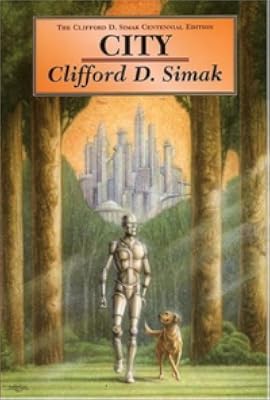





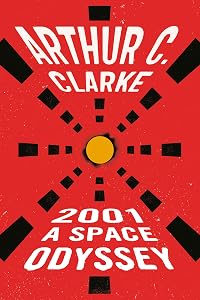


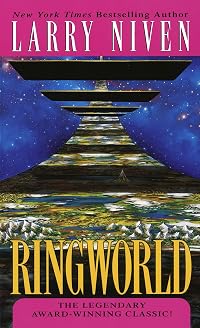


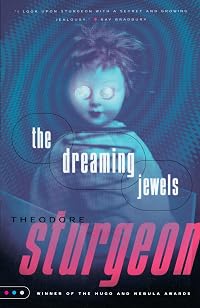


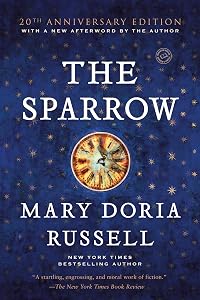




Member Recommendations
Member Reviews
I recently read an interesting article titled "what is it like to be a bat?" which works from the premise that there is something that it means to be me, which is different from what it means to be you (bats too, in case you're wondering). And that thing is not reducible to something physical and neither is is entirely subjective. A similar question is at the heart of this book, and as usual with questions about the nature of humanity, Simak gives readers something memorable.
Readers get reflections on memory, mind, experience, physiology, and even the teleology of the Human form. None of these fully explain what provides us with a subjective, defining experience. And I think this ultimately leads to the question of whether there is a show more distinct, inalienable human experience. This course of thought is often at the heart of Simak's explorations of robots, aliens, and dogs.
This one was published in the 60's and I think that the ideas are just as fresh and still as unanswered as they were when we was considering them. And the whole thing is written in Simak's delightful, folksy way. show less
Readers get reflections on memory, mind, experience, physiology, and even the teleology of the Human form. None of these fully explain what provides us with a subjective, defining experience. And I think this ultimately leads to the question of whether there is a show more distinct, inalienable human experience. This course of thought is often at the heart of Simak's explorations of robots, aliens, and dogs.
This one was published in the 60's and I think that the ideas are just as fresh and still as unanswered as they were when we was considering them. And the whole thing is written in Simak's delightful, folksy way. show less
The title notwithstanding, The Werewolf Principle is not a gothic. An android whose brain is based on an uploaded personality can morph into alien forms. Its purpose is to explore distant star systems and return to Earth with data about alien life. But something goes wrong, and he is found centuries later frozen in his capsule. Meanwhile, Earth has forgotten the whole deal. The first part of the story is about his adaptation to Earth and his efforts to restore his memory. There’s a great scene about what we now call the Internet of Things. The attempt at heavy philosophy about the human condition at the end is not so successful. And there was a plot twist that made me wince.
One of the more universally appealing Simak, perhaps. Many of the ideas could have been conceived by other writers. But only Simak's House would have offered not-wallpaper that's a collage of thousands of eyes, when requested to change it from a woodland scene featuring a bunny, and only Simak's Kitchen would have pouted because the resident asked for ham'n'eggs instead of lobster thermidor. And only in a Simak novel would our hero go (trout?) fishing and wind up feeding most of his picnic to a not-Brownie. And even the politics were interesting, how the two Senators from the US had to come to agreement or one would be forced to resign....
Lots of ideas here slowed me down from total immersion, but I reveled in them rather than show more resented them. If you're anything of a Simak fan, don't miss this. If you happen to be in the mood for some older SF that's a little different, do consider it. show less
Lots of ideas here slowed me down from total immersion, but I reveled in them rather than show more resented them. If you're anything of a Simak fan, don't miss this. If you happen to be in the mood for some older SF that's a little different, do consider it. show less
I find Simak’s novels to be uneven. Whether it is uneven in plotting, pacing, or execution, it does not really matter because the result is always somewhat of a rolling up and down read. This novel may be slightly more uneven than some of the others I have read, but its, again, something I have learned to expect with Simak.
I liked the usual things one likes about Simak novels. I disliked the unevenness and I definitely did not like the sudden negative mood of the main character. I would not be surprised if the next novel I read of his also contains a character who does not fit in with humanity, finds a deep nostalgia for Earth and nature, but has a uncomfortable attitude toward humans. This is NOT a bad read, certainly not at all. It show more just is not the high level of Simak’s work. show less
I liked the usual things one likes about Simak novels. I disliked the unevenness and I definitely did not like the sudden negative mood of the main character. I would not be surprised if the next novel I read of his also contains a character who does not fit in with humanity, finds a deep nostalgia for Earth and nature, but has a uncomfortable attitude toward humans. This is NOT a bad read, certainly not at all. It show more just is not the high level of Simak’s work. show less
The idea is intriguing, and Simak's prose is always interesting, but the plot and characterization do not rise above mediocre.
The idea of three totally unrelated minds in one android body - one mind being that of its "imprinter" - deserves some credit for speculative edginess, although I think that allowing physical changes to the body is not sufficiently credible.
There would have been more suspense if he hadn't telegraphed the plot with the title, and the surprise ending was cheesy.
There would have been more suspense if he hadn't telegraphed the plot with the title, and the surprise ending was cheesy.
Second (or third?) read. My previous review still stands. This time I want to add that the poetry of the writing surprised me. Lots of beautiful imagery and stylings... not purple prose, and easy to overlook in one's quest to figure out what's going on in the plot and with the characters, but definitely well-crafted.
The title is a little misleading for today's readers because Andrew Blake isn't really a werewolf although he is a shapeshifter. At the beginning of the book he has no knowledge of his past or of his shapeshifting abilities. He was found in stasis in an escape pod on a distant asteroid and brought back to Earth where he was revived. It wasn't realized at first that he was the result of a past attempt at genetically engineering the perfect space explorer. We gradually learn about his nature and his past along with Andrew. Simak includes some interesting ideas about how his future Earth would work, for instance, the flying houses. But, politics is still much the same.
Members
- Recently Added By
Author Information

390+ Works 25,417 Members
Some Editions
Awards and Honors
Distinctions
Series
Belongs to Publisher Series
Work Relationships
Common Knowledge
- Canonical title
- The Werewolf Principle
- Original title
- The Werewolf Principle
- Original publication date
- 1967
- People/Characters
- Andrew Blake
- Important places
- Washington, D.C., USA
- First words
- The creature halted, crouched low against the ground, staring at the tiny points of light that lay ahead, burning softly through the darkness.
- Last words
- (Click to show. Warning: May contain spoilers.)For they were the extensions of humanity, the hand and mind of mankind reaching out into the mysteries of all eternity.
- Original language
- English
Classifications
Statistics
- Members
- 686
- Popularity
- 41,859
- Reviews
- 13
- Rating
- (3.54)
- Languages
- 11 — Bulgarian, Dutch, English, Estonian, French, German, Hungarian, Italian, Lithuanian, Spanish, Swedish
- Media
- Paper, Audiobook, Ebook
- ISBNs
- 16
- ASINs
- 22