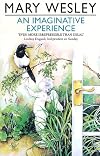
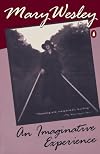
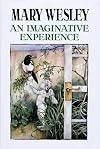
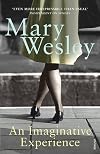
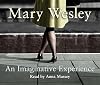
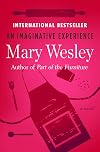
An Imaginative Experience
by Mary Wesley
On This Page
Description
A traveller on an InterCity train returning to London smells the burn of the breaks as it hisses to a stop in the middle of the countryside. He sees a white-faced woman leap from the train and race to the aid of a sheep stranded on its back, unable to rise, in a field. Righting it, she turns, and he sees her face is full of tragedy. And not, he thinks, because she pulled the emergency lever and will face retribution. Considering tragedies of his own, he does not intrude, but the image lodges show more in his mind: a strange but familiar despair, unable to ignore the desperation it recognizes in others. From these seeds Mary Wesley draws out a plot of unforgettable impactof loss, of release, of a necessarily comic acceptance of fate, of lovethe "imaginative experience." Rich in character and wit, and powerfully moving, this is a novel of the heart's pain and deliverance." show lessTags
Recommendations
























Member Reviews
A strange, sweet little novel about a young woman dealing with a terrible history and a recent tragedy and her inadvertent effect on an introspective man whose wife has just left him. This is a book full of well-sketched characters, wry humor, and unexpected wisdom. Wesley may not be a profound novelist but her exploration of the everyday and commonplace is spot on and surprisingly moving. Where some authors create the equivalent of minutely-detailed oil paintings, I tend to think of Mary Wesley as a watercolor artist who brings forth the outline of reality in a few simple strokes.
One of the best novels I've read; pretty certain I love it.
Wesley is a wizard in showing the gist and vulnerability of her characters; making them instantly real and either likeable or unlikeable.
I do hope Rebecca (I actually knew a Rebecca VERY like this one) gets her hands on Maurice. It'll do him good.
Wondrous, witty and joyful!
Wesley is a wizard in showing the gist and vulnerability of her characters; making them instantly real and either likeable or unlikeable.
I do hope Rebecca (I actually knew a Rebecca VERY like this one) gets her hands on Maurice. It'll do him good.
Wondrous, witty and joyful!
This was a bit of fluff--in the best possible way. I'm at a stressful point at work and needed something fairly light (although it does have a vein of tragedy running through it). It begins when a young woman pulls the emergency brake on a train--something passenger Sylvester Wykes admits that he's always wanted to do but never had the guts. The reason Julia Piper pulled the brake? To help a sheep she had seen from her window who was stuck on its back. When they all disembark at the next station, Sylvester sees her again, mildly curious, but Maurice Benson takes a more stalkerish mode, determined to find out everything he can about her.
Wesley has created a group of intriguing characters not only in Julia, Sylvester, and Maurice, but in show more the secondary characters as well. There's Sylvester's soon-to-be ex-wife, Celia, who ran off with another man, denuding the house in the process; even things that had been handed down from his father were gone, as well as the teakettle he had just purchased to replace the one she had just taken. Rebecca, Sylvester's domineering former secretary, can't help herself from frequently popping in with attempts to take charge. It's great fun to see how the mild-mannered Sylvester gradually learns how to manage her. Much of the story centers around the shop on the corner, run by the agreeable Mr. Patel. Julia befriends his wife, despite her inability to speak English, and becomes close to the Patel's two little boys. Her mother, Clodagh, is the epitome of a horrible mother, for various reaosns preferring her son-in-law to her own daughter. And there's a dog in the mix--a lurcher eventually named Joyful.
In some ways, as one reviewer states, this is a pretty typical love story. But it's one with a little surprise around every corner. It has been a long time since I've read a Mary Wesley novel, and this one remionded me of how much I've enjoyed her others. show less
Wesley has created a group of intriguing characters not only in Julia, Sylvester, and Maurice, but in show more the secondary characters as well. There's Sylvester's soon-to-be ex-wife, Celia, who ran off with another man, denuding the house in the process; even things that had been handed down from his father were gone, as well as the teakettle he had just purchased to replace the one she had just taken. Rebecca, Sylvester's domineering former secretary, can't help herself from frequently popping in with attempts to take charge. It's great fun to see how the mild-mannered Sylvester gradually learns how to manage her. Much of the story centers around the shop on the corner, run by the agreeable Mr. Patel. Julia befriends his wife, despite her inability to speak English, and becomes close to the Patel's two little boys. Her mother, Clodagh, is the epitome of a horrible mother, for various reaosns preferring her son-in-law to her own daughter. And there's a dog in the mix--a lurcher eventually named Joyful.
In some ways, as one reviewer states, this is a pretty typical love story. But it's one with a little surprise around every corner. It has been a long time since I've read a Mary Wesley novel, and this one remionded me of how much I've enjoyed her others. show less
Falling in love is, in A.N. Wilson's view, the most imaginative experience we can have.
This book lets us down because it is over-imagined; the malign characters are too much so, and the hero, Sylvester, is rendered more attractive than he is because of this. The plot is more far-fetched than is good for the story.
Nevertheless, this is a Mary Wesley novel, and it maintains her good reputation, but it is not the best of those novels of hers that I have read.
This book lets us down because it is over-imagined; the malign characters are too much so, and the hero, Sylvester, is rendered more attractive than he is because of this. The plot is more far-fetched than is good for the story.
Nevertheless, this is a Mary Wesley novel, and it maintains her good reputation, but it is not the best of those novels of hers that I have read.
"Angrily he thought, of course I want! I want to collar the dog and collar you."
I was enjoying the book up until the last chapters. Then I started to wonder if creepy, stalking, violent, horrible Maurice and bullying, interfering, horrible Rebecca and horrible, horrible, horrible Clodagh were drawn so very horribly to make impatient, controlling Sylvester look better. Practically a prince by comparison.
I've like Wesley's books in the past but this one, not so much.
I was enjoying the book up until the last chapters. Then I started to wonder if creepy, stalking, violent, horrible Maurice and bullying, interfering, horrible Rebecca and horrible, horrible, horrible Clodagh were drawn so very horribly to make impatient, controlling Sylvester look better. Practically a prince by comparison.
I've like Wesley's books in the past but this one, not so much.
Kind of Literature, kind of Romance... ?áI loved Julia, and the Patels, and Sylvester; I was interested in Rebecca, and Janet; I was appalled by Tim, Maurice, Giles, and Clodagh.., just as the author wanted me to be. ?áI guess I'd say it's a bit like a slightly darker, more spare, more ambitious Maeve Binchy? ?áAnyway, I enjoyed it, and have already ordered the only other by the author that is avl in my library system, A Sensible Life. ?áFrom there I'll see whether or not I want to keep tracking down more of Wesley's novels.
This seems to be one of Mary Wesley’s not so well known novels, and I’d forgotten I’d got it till asked to review it for the ‘Go review that book’ thread. It starts with a fairly memorable sentence ‘The sheep lay on its back in the centre of the field with its legs in the air’ and you are quickly introduced to three of the books main characters: Sylvester Wykes, Maurice Benson and Julia Piper who are all travelling on the same train heading towards Paddington. They all have their own problems and quirks, and the book develops their stories and those of mutual acquaintances. It manages, in typical Mary Wesley fashion to combine both sadness and, if not comedy, wry observances on the characters and their situations. I’d show more probably not rate it as highly as some of Wesley’s other books, but it’s still a good read. show less
Members
- Recently Added By
Author Information

25+ Works 4,577 Members
Mary Aline Mynors Farmar was born in Berkshire in 1912. She was the youngest of three children and her father was an army officer, so the family frequently moved. In 1936, she married Lord Swinfen, had two children, and divorced in the early 1940's. During World War II, she fell in love with journalist Eric Siepmann and lived with him for several show more years before they were married, which caused Mary's parents to cut her out of their will in disapproval. When her husband died, she was broke with a teenage son. During the late 1960's, she wrote two books, "Speaking Terms" and "The Sixth Seal," but it wasn't until she was in her seventies that her first major novel was published, "Jumping the Queue." Afterwards, she published "Cammomile Lawn" (1984), which is about love and sex in the British upper middle class and was adapted for television, "Harnessing Peacocks" (1986), which is about a young unwed mother who turns to prostitution to pay for her son's education, and "The Vacillations of Peppy Carew" (1986). Wesley's other titles include "A Sensible Life" (1990), "A Dubious Legacy" (1993), "An Imaginative Experience" (1994) and "Part of the Furniture" (1997). She died of natural causes following a long battle with gout on December 30, 2002. (Bowker Author Biography) show less
Common Knowledge
- Original publication date
- 1994
- People/Characters
- Sylvester Wykes; Julia Piper; Maurice Benson
- Important places
- London, England, UK
- Dedication
- for Tessa Sayle
- First words
- The sheep lay on its back in the centre of the field with its legs in the air.
- Last words
- (Click to show. Warning: May contain spoilers.)She said, 'You will have to lend me your shirt.'
Classifications
Statistics
- Members
- 371
- Popularity
- 84,773
- Reviews
- 12
- Rating
- (3.72)
- Languages
- 7 — Danish, Dutch, English, French, German, Italian, Swedish
- Media
- Paper, Audiobook, Ebook
- ISBNs
- 31
- ASINs
- 6