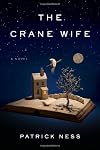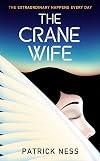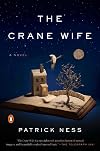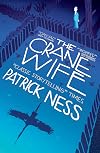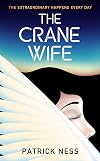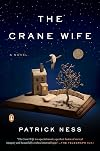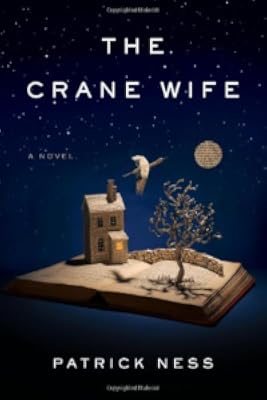
The Crane Wife
by Patrick Ness
On This Page
Description
A magical novel, based on a Japanese folk tale, that imagines how the life of a broken-hearted man is transformed when he rescues an injured white crane that has landed in his backyard.George Duncan is an American living and working in London. At forty-eight, he owns a small print shop, is divorced, and lonelier than he realizes. All of the women with whom he has relationships eventually leave him for being too nice. But one night he is woken by an astonishing sound—a terrific show more keening, which is coming from somewhere in his garden. When he investigates he finds a great white crane, a bird taller than even himself. It has been shot through the wing with an arrow. Moved more than he can say, George struggles to take out the arrow from the bird's wing, saving its life before it flies away into the night sky.
The next morning, a shaken George tries to go about his daily life, retreating to the back of his store and making cuttings from discarded books—a harmless, personal hobby—when through the front door of the shop a woman walks in. Her name is Kumiko, and she asks George to help her with her own artwork. George is dumbstruck by her beauty and her enigmatic nature, and begins to fall desperately in love with her. She seems to hold the potential to change his entire life, if he could only get her to reveal the secret of who she is and why she has brought her artwork to him.
Witty, magical, and romantic, The Crane Wife is a story of passion and sacrifice, that resonates on the level of dream and myth. It is a novel that celebrates the creative imagination, and the disruptive power of love. show less
Tags
Recommendations








Member Reviews
Why did I love this so much? People criticize it for being pretentious and boring, both of which strike me as well-founded arguments, and yet...
Objectively, this is probably a three-star book. I mean, it has its moments, Patrick Ness is undoubtedly talented, and it's certainly original. But nothing more, I guess. It doesn't quite hit the mark.
Now, subjectively...
I read this book in one, 4-hour sitting. I was so completely spellbound by the story, I had never read anything like it. It doesn't have much of a plot as such - I mean, a crane lands in George's back yard, shot by the arrow of its lover-volcano (!!), and it appears the next day as a woman. George and the woman create art together and fall in love, and everything seems rosy show more until the volcano, possessing one Rachel, sets fire to it all. I mean... whattt?
Despite the strangeness of it, I felt the story never veered into the outrageously weird. The sheer humanity of it kept it earth-bound. Ness writes his characters with such genuine love, that I as a reader couldn't help but love them too. The prose is so ethereally beautiful and poetic, and the stories of Amanda (my fave), George and the crane and volcano merge so fluidly and beautifully in spite of their differences just like Kumiko's and George's artwork.
This book was a real treat, and it definitely gave me much appreciation for Patrick Ness. I feel like most YA authors (even brilliant ones, such as him) can never really transcend that YA-ness of theirs, but Ness really does that, and he does it well. I sincerely hope he writes more adult literature, and although I wouldn't recommend this book left and right, you might want to give it try. show less
Objectively, this is probably a three-star book. I mean, it has its moments, Patrick Ness is undoubtedly talented, and it's certainly original. But nothing more, I guess. It doesn't quite hit the mark.
Now, subjectively...
I read this book in one, 4-hour sitting. I was so completely spellbound by the story, I had never read anything like it. It doesn't have much of a plot as such - I mean, a crane lands in George's back yard, shot by the arrow of its lover-volcano (!!), and it appears the next day as a woman. George and the woman create art together and fall in love, and everything seems rosy show more until the volcano, possessing one Rachel, sets fire to it all. I mean... whattt?
Despite the strangeness of it, I felt the story never veered into the outrageously weird. The sheer humanity of it kept it earth-bound. Ness writes his characters with such genuine love, that I as a reader couldn't help but love them too. The prose is so ethereally beautiful and poetic, and the stories of Amanda (my fave), George and the crane and volcano merge so fluidly and beautifully in spite of their differences just like Kumiko's and George's artwork.
This book was a real treat, and it definitely gave me much appreciation for Patrick Ness. I feel like most YA authors (even brilliant ones, such as him) can never really transcend that YA-ness of theirs, but Ness really does that, and he does it well. I sincerely hope he writes more adult literature, and although I wouldn't recommend this book left and right, you might want to give it try. show less
Here I was at the beginning of the book, throughout the middle, and even 3/4, thinking this would be a solid 3 stars and with an ehhhh slipping out of my mouth, and then I got to part V.
Ok, on the surface, The Crane Wife tells the story of a family growing older and losing and finding love. But then there's also a lyrical myth about a 'lady' and a 'volcano' intertwined with this narrative that just seems confusing at first. Trust me, keep going, because it all makes sense at the end.
The story told between chapters is something of an age-old war between two forces, named the 'lady' and the 'volcano'. They both love and hate each other. The volcano destroys, and the lady forgives. The only way to end this feud is for them to end each show more other's lives--but of course, they can't bring themselves to do it.
What makes this book great is how the contemporary story and the myth combine (and for me, I really only got it in part V).These characters each become the lady or the volcano, and play out the roles, continuing the myth on and on and on. Basically, the myth itself was searching for people who had the capacity to fulfill its ending, and had been recycling through different people until it found the right ones--which happened to be the ones in this book.
So, though I never really got the whole picture till the end, that whole picture was beautiful and I really can't help but love it. show less
Ok, on the surface, The Crane Wife tells the story of a family growing older and losing and finding love. But then there's also a lyrical myth about a 'lady' and a 'volcano' intertwined with this narrative that just seems confusing at first. Trust me, keep going, because it all makes sense at the end.
The story told between chapters is something of an age-old war between two forces, named the 'lady' and the 'volcano'. They both love and hate each other. The volcano destroys, and the lady forgives. The only way to end this feud is for them to end each show more other's lives--but of course, they can't bring themselves to do it.
What makes this book great is how the contemporary story and the myth combine (and for me, I really only got it in part V).
So, though I never really got the whole picture till the end, that whole picture was beautiful and I really can't help but love it. show less
George is an American ex-pat living in England. He has been there for so long that, and is so unlike the stereotypical “loud American” that most people require convincing of that fact. He lives a quiet, almost content life, but a somewhat lonely one. He gets on well with women, but the relationships never last. He is described as being too kind, too giving, but not all there. And so they leave him.
One night he wakes in the middle of the night, a strange sound, a keening, brings him to the back garden and a big white bird that has been shot by an arrow. The next day he meets Kumiko.
This book is loosely based on a Japanese folktale. In that story a fisherman rescues a crane who becomes a woman, and his wife. She brings him great show more wealth until his greed becomes overwhelming and he forces her to create too much. And so she leaves him.
I loved a lot of this book. Some of the quotes and ideas in it are fantastic. I always enjoy reading stories about stories, and that is a point that is brought up more than once in this book. That a story changes depending on point of view is not an original thought, but I thought it was handled well here. And the idea that no story ever ends, well, that’s true as fanfiction can attest to :)
The book may be called The Crane Wife but it isn’t about Kumiko, it is about George, and to a lesser extent his daughter Amanda. Kumiko isn’t that much of a character in the story, instead she is a catalyst and a turning point. She effects the world around her but she herself remains unchanged, unchanging, and unknowable.
I have read other reviews that say George is too much of a “nice guy” stereotype. One of those who because they do the right thing think themselves entitled to get the girl. I’d have to disagree with that reading of the story. Yes, George starts out as a nice guy, but maybe that’s because he hasn’t been challenged enough in life. He gets by with minimal fuss, and minimal drama. He gives himself in relationships but the women in his life complain that he isn’t really all there. That, to me, indicates a lack of passion. And that is what Kumiko brings to him. A passion that takes over and catches him by surprise.
And he really isn’t such a “good guy”, (but to say more would be a spoiler) but he does try his best, even when he is pushing for knowledge that he knows he shouldn’t be demanding. He is flawed, but it is a flaw that only becomes visible when he is put under strain.
The first half of this book I loved. It tailed off a little in the second half, but I still think that Ness is such a great writer. This isn’t one I can say that I totally and utterly loved but I still enjoyed it and would recommend it. show less
One night he wakes in the middle of the night, a strange sound, a keening, brings him to the back garden and a big white bird that has been shot by an arrow. The next day he meets Kumiko.
This book is loosely based on a Japanese folktale. In that story a fisherman rescues a crane who becomes a woman, and his wife. She brings him great show more wealth until his greed becomes overwhelming and he forces her to create too much. And so she leaves him.
I loved a lot of this book. Some of the quotes and ideas in it are fantastic. I always enjoy reading stories about stories, and that is a point that is brought up more than once in this book. That a story changes depending on point of view is not an original thought, but I thought it was handled well here. And the idea that no story ever ends, well, that’s true as fanfiction can attest to :)
The book may be called The Crane Wife but it isn’t about Kumiko, it is about George, and to a lesser extent his daughter Amanda. Kumiko isn’t that much of a character in the story, instead she is a catalyst and a turning point. She effects the world around her but she herself remains unchanged, unchanging, and unknowable.
I have read other reviews that say George is too much of a “nice guy” stereotype. One of those who because they do the right thing think themselves entitled to get the girl. I’d have to disagree with that reading of the story. Yes, George starts out as a nice guy, but maybe that’s because he hasn’t been challenged enough in life. He gets by with minimal fuss, and minimal drama. He gives himself in relationships but the women in his life complain that he isn’t really all there. That, to me, indicates a lack of passion. And that is what Kumiko brings to him. A passion that takes over and catches him by surprise.
And he really isn’t such a “good guy”, (but to say more would be a spoiler) but he does try his best, even when he is pushing for knowledge that he knows he shouldn’t be demanding. He is flawed, but it is a flaw that only becomes visible when he is put under strain.
The first half of this book I loved. It tailed off a little in the second half, but I still think that Ness is such a great writer. This isn’t one I can say that I totally and utterly loved but I still enjoyed it and would recommend it. show less
There is nothing flashy about The Crane Wife. It is a simple story simply told, one that relies on the beauty of the words rather than action and suspense. This makes sense in the fact that Mr. Ness is retelling a folktale. It does not need anything other than gorgeous imagery and even better prose to highlight the story’s charms and lessons, something at which Mr. Ness excels.
There is a poetic quality, not only to the narrative but also in the characters, that makes The Crane Wife so compelling. George is a bit of a recluse by choice and still struggling to come to terms with the loneliness that resulted from his divorce. In fact, he may be one of the few people in which being “too nice” is a character flaw. However, his show more awakening upon Kumiko’s arrival is spectacular to behold. While he remains a genuinely nice guy – eager to please and selfless – his love for Kumiko brings about new feelings and emotions within him that are exciting and build tension. He is jealous and like a jilted lover at times, especially when she refuses to let him into her house or answer his increasingly frantic questions. It is a metamorphosis that is fascinating to watch unfold in that it emphasizes the all-encompassing power that love can have.
By incorporating the original folktale behind The Crane Wife into the narrative, the suspense within the story is not a result of concern for George and Kumiko but rather a curiosity at how this fable with its volcano and crane will play out in George’s life. That the poem upon which Kumiko bases her work is an allegory for Kumiko herself is no surprise. The mystery lays in how it will all fit together, the fable and the fiction, the metaphors with the realistic. The careful method by which Mr. Ness pieces everything together only heightens a reader’s appreciation for his ability to craft a story.
Because The Crane Wife is not necessarily an original piece, Mr. Ness focuses on his craft, and the results are obvious. The Crane Wife is one of the most beautiful pieces of fiction in recent months. It traverses the lands of fable and fiction, poetry and prose without a single hiccup. The flawless transitions make for superb reading, as does the care with which he brings George and Kumiko’s relationship to life. The simplicity and tragedy of the story as well as the impeccable prose create a gorgeous novel on the cyclical and far-reaching aspects of love. show less
There is a poetic quality, not only to the narrative but also in the characters, that makes The Crane Wife so compelling. George is a bit of a recluse by choice and still struggling to come to terms with the loneliness that resulted from his divorce. In fact, he may be one of the few people in which being “too nice” is a character flaw. However, his show more awakening upon Kumiko’s arrival is spectacular to behold. While he remains a genuinely nice guy – eager to please and selfless – his love for Kumiko brings about new feelings and emotions within him that are exciting and build tension. He is jealous and like a jilted lover at times, especially when she refuses to let him into her house or answer his increasingly frantic questions. It is a metamorphosis that is fascinating to watch unfold in that it emphasizes the all-encompassing power that love can have.
By incorporating the original folktale behind The Crane Wife into the narrative, the suspense within the story is not a result of concern for George and Kumiko but rather a curiosity at how this fable with its volcano and crane will play out in George’s life. That the poem upon which Kumiko bases her work is an allegory for Kumiko herself is no surprise. The mystery lays in how it will all fit together, the fable and the fiction, the metaphors with the realistic. The careful method by which Mr. Ness pieces everything together only heightens a reader’s appreciation for his ability to craft a story.
Because The Crane Wife is not necessarily an original piece, Mr. Ness focuses on his craft, and the results are obvious. The Crane Wife is one of the most beautiful pieces of fiction in recent months. It traverses the lands of fable and fiction, poetry and prose without a single hiccup. The flawless transitions make for superb reading, as does the care with which he brings George and Kumiko’s relationship to life. The simplicity and tragedy of the story as well as the impeccable prose create a gorgeous novel on the cyclical and far-reaching aspects of love. show less
But if it wasn't a dream, it was one of those special corners of what's real, one of those moments, only a handful of which he could recall throughout his lifetime, where the world dwindled down to almost no one, where it seemed to pause just for him, so that he could, for a moment, be seized into life. Page 11
George's life could be qualified as simple, mundane possibly. Nothing exciting and nothing extreme happens other than a divorce that left him with a grown daughter who tolerates him as one who tolerates a persistent, but necessary pest. Until that one night. A crane, wounded with an arrow piercing her wing lands in his backyard. She will set off a chain of events that will culminate into one devastating night and George's show more monotonous existence will cease to exist.
The Crane Wife is a blending of two different stories. Interwoven into George's story is a Japanese folktale that extolls grand themes that are the building blocks of what makes us human. In some ways, Ness seems to be overreaching in that by attempting to unravel everything under the sun, he neglects to combine all the different facets of the story together well. There is a sense that the lines between what is real, what is surreal, what are truths, what are lies is purposely blurred and you the reader are left to search in between the lines. The story is left to you to interpret and take what you wish from it. There is no doubt that Ness is a gifted writer as evidenced by the multitude of Post-It stickers I have poking out from the book. The story although lacking in cohesiveness never lacked from beautiful, poetical and lyrical writing. That alone made the reading worthwhile. show less
George's life could be qualified as simple, mundane possibly. Nothing exciting and nothing extreme happens other than a divorce that left him with a grown daughter who tolerates him as one who tolerates a persistent, but necessary pest. Until that one night. A crane, wounded with an arrow piercing her wing lands in his backyard. She will set off a chain of events that will culminate into one devastating night and George's show more monotonous existence will cease to exist.
The Crane Wife is a blending of two different stories. Interwoven into George's story is a Japanese folktale that extolls grand themes that are the building blocks of what makes us human. In some ways, Ness seems to be overreaching in that by attempting to unravel everything under the sun, he neglects to combine all the different facets of the story together well. There is a sense that the lines between what is real, what is surreal, what are truths, what are lies is purposely blurred and you the reader are left to search in between the lines. The story is left to you to interpret and take what you wish from it. There is no doubt that Ness is a gifted writer as evidenced by the multitude of Post-It stickers I have poking out from the book. The story although lacking in cohesiveness never lacked from beautiful, poetical and lyrical writing. That alone made the reading worthwhile. show less
Forty-eight-year-old George is a divorced father and grandfather, an American who has lived in England for years. One night, a mysterious bird shows up on his lawn with an arrow piercing her wing. The next day, a woman shows up at his printing office with some art, and his life is altered forever.
I finished this book days ago, but I'm still struggling to put my response into words. It's one of those books that you can't really explain to someone who hasn't read it. It's short but complicated, a potentially fast read but one that makes you want to slow down in case you missed anything. It's a blend of fairy tale and fiction where you're not quite sure where "real" ends and imagination begins. In the middle of the story of George, his show more daughter Amanda, and the woman Kumiko are musing on the importance of story and how it can't truly be contained in a novel or told from merely perspective; then there is the story of the flying woman and the volcano. So, clearly, it's not a story that can be boiled down to just a simple few words. I'm not quite sure I understood it and I'm not dying to reread it, but it's also staying with me longer than many tales do. show less
I finished this book days ago, but I'm still struggling to put my response into words. It's one of those books that you can't really explain to someone who hasn't read it. It's short but complicated, a potentially fast read but one that makes you want to slow down in case you missed anything. It's a blend of fairy tale and fiction where you're not quite sure where "real" ends and imagination begins. In the middle of the story of George, his show more daughter Amanda, and the woman Kumiko are musing on the importance of story and how it can't truly be contained in a novel or told from merely perspective; then there is the story of the flying woman and the volcano. So, clearly, it's not a story that can be boiled down to just a simple few words. I'm not quite sure I understood it and I'm not dying to reread it, but it's also staying with me longer than many tales do. show less
Good
Patrick Ness is usually a YA author and previously I’d only read the fabulous [a monster calls] but I do follow him on twitter and when he read out some of the novel at a Kitschies event I was at last year I thought it was interesting enough to get when it was available. Then my favourite bookshop – Mr B’s Emporium of reading delights in Bath got him in to speak about the book and I knew I had to be there. The book is based on a Japanese folk tale, a man saves a Crane and shortly after a woman enters his life and he falls in love. Through her they become rich and yet the man has a growing dissatisfaction with the woman’s secretiveness. Ness spoke about the fact that some of the episodes in the book, Minor Spoiler (like the show more car accident) actually happened to him and his approach to writing. If a book you are writing cannot inspire emotion in the writer, how do you expect to inspire emotion in the reader. And this story is emotional. Ness interweaves a mythical story throughout the book in 32 short snippets of a love tale about the Crane and a Volcano which really underpins and informs what happens in the “main” plot.
George is a divorcee approaching 50 who runs a print company with a deliberately incompetent Turkish assistant and makes art from cutting up old books. His marriage broke down as he was too nice but has left him with a daughter, Amanda. Amanda has a flaw in that she speaks her mind and cannot make lasting friendships, she does however love her son fiercely and is also still in love with her French ex-husband. When the mysterious Kumiko enters their lives George and Amanda are changed. Kumiko makes art out of feathers and when her art and George’s art is combined it creates something that is much more than the sum of its parts.
A story is not an explanation, it is a net, a net through which the truth flows. The net catches some of the truth, but not all, never all, only enough so that we can live with the extraordinary without it killing us
Ness has woven together two narratives and like Kumiko & George’s art the sum is greater than the parts. This is a story about love, but not just a love story, it is also about possession and loss and the nature of stories.
Overall – Highly recommended modern ancient tale show less
Patrick Ness is usually a YA author and previously I’d only read the fabulous [a monster calls] but I do follow him on twitter and when he read out some of the novel at a Kitschies event I was at last year I thought it was interesting enough to get when it was available. Then my favourite bookshop – Mr B’s Emporium of reading delights in Bath got him in to speak about the book and I knew I had to be there. The book is based on a Japanese folk tale, a man saves a Crane and shortly after a woman enters his life and he falls in love. Through her they become rich and yet the man has a growing dissatisfaction with the woman’s secretiveness. Ness spoke about the fact that some of the episodes in the book, Minor Spoiler (like the show more car accident) actually happened to him and his approach to writing. If a book you are writing cannot inspire emotion in the writer, how do you expect to inspire emotion in the reader. And this story is emotional. Ness interweaves a mythical story throughout the book in 32 short snippets of a love tale about the Crane and a Volcano which really underpins and informs what happens in the “main” plot.
George is a divorcee approaching 50 who runs a print company with a deliberately incompetent Turkish assistant and makes art from cutting up old books. His marriage broke down as he was too nice but has left him with a daughter, Amanda. Amanda has a flaw in that she speaks her mind and cannot make lasting friendships, she does however love her son fiercely and is also still in love with her French ex-husband. When the mysterious Kumiko enters their lives George and Amanda are changed. Kumiko makes art out of feathers and when her art and George’s art is combined it creates something that is much more than the sum of its parts.
A story is not an explanation, it is a net, a net through which the truth flows. The net catches some of the truth, but not all, never all, only enough so that we can live with the extraordinary without it killing us
Ness has woven together two narratives and like Kumiko & George’s art the sum is greater than the parts. This is a story about love, but not just a love story, it is also about possession and loss and the nature of stories.
Overall – Highly recommended modern ancient tale show less
Members
- Recently Added By
Lists

2015 Notable Books for Adults
26 works; 4 members

Myth (Reuse and Retelling)
188 works; 24 members

Animals in the Title
498 works; 11 members
Author Information

44+ Works 29,703 Members
Patrick Ness was born on October 17, 1971 near Fort Belvoir, Virginia. He studied English Literature and is a graduate of the University of Southern California. He was a corporate writer before moving to London in 1999. He taught creative writing at Oxford University and is a literary critic and reviewer for the Guardian and other major show more newspapers. He is the author of eight novels including The Rest of Us Just Live Here and a short story collection entitled Topics About Which I Know Nothing. His young adult novels include the Chaos Walking trilogy, More Than This, and Monsters of Men, which won the Carnegie Medal. A Monster Calls won the Kate Greenaway Medal for illustration, the Carnegie Medal, and was made into a movie and released in October 2016. (Bowker Author Biography) show less
Awards and Honors
Awards
Distinctions
Common Knowledge
- Canonical title*
- De kraanvogelvrouw
- Original title
- The Crane Wife
- Original publication date
- 2013
- People/Characters*
- George Duncan
- Epigraph
- And all the stars were crashing round
As I laid eyes on what I'd found.
The Decembrists
(2) In her dreams, she flies. - Dedication
- For Marc
- First words
- Wat hem feitelijk wekte, was het mysterieuze geluid zelf - een triest verbrijzelen van bevroren middernacht die ter aarde stortte en in zijn hart drong en daar voorgoed bleef, zonder ooit te bewegen, zonder ooit te smelten - ... (show all)maar hij, zo was hij nu eenmaal, veronderstelde dat het door zijn blaas kwam.
What actually woke him was the unearthly sound itself—a mournful shatter of frozen midnight falling to earth to pierce his heart and lodge there forever, never to move, never to melt—but he, being who he was, assumed it w... (show all)as his bladder. - Last words*
- (Click to show. Warning: May contain spoilers.)Hij nam het telefoontje van zijn dochter aan met een hart dat gebroken, maar ook vol blijdschap was, en hij verheugde zich erop om met haar over verbazing en verwondering te praten.
*Some information comes from Common Knowledge in other languages. Click "Edit" for more information.
Classifications
Statistics
- Members
- 722
- Popularity
- 39,361
- Reviews
- 35
- Rating
- (3.45)
- Languages
- Dutch, English, German
- Media
- Paper, Audiobook, Ebook
- ISBNs
- 21
- ASINs
- 4