
Kate Forsyth
Author of Dragonclaw
About the Author
She is an Australian author who is well known for her historical novel Bitter Greens, which won the Historical Fiction category on the American Literary Association 2015 Reading List. She is the author of several children's books including The Gypsy Crown, The Puzzle Ring, The Starthorn Tree, The show more Wildkin's Curse, The Starkin Crown, and Dragon Gold. She has also published two heroic fantasy series, The Witches of Eileanan and Rhiannon's Ride, the poetry collection Radiance, and the novel Full Fathom Five under her maiden name, Kate Humphrey. Her more recent books include Vasilisa the Wise and Tales of Other Brave Young Women, and The Silver Well, which won the 2017 Aurealis Award for the best Australian collection. (Bowker Author Biography) show less
Image credit: Used with Permission, Copyright by Galaxy Bookshop.
Series
Works by Kate Forsyth
Searching for Charlotte: The Fascinating Story of Australia's First Children's Author (2020) 20 copies, 1 review
The Wolves of Witchwood 2 copies
Witches of Eileannan 6 Pack: Witches, Pool of Two Moons, Cursed Towers, Forbidden Land, Skull of the World, Fathomless Caves (1998) 2 copies
Wiser Than Evening 1 copy
Bitter Greems 1 copy
The Eileanan 1 copy
Associated Works
The Road to Camelot: Tales of the Young Merlin, Arthur, Lancelot and More (2002) — Contributor — 42 copies
Tagged
Common Knowledge
- Birthdate
- 1966
- Gender
- female
- Education
- Macquarie University
- Occupations
- writer
poet
journalist - Relationships
- Murrell, Belinda (sister)
- Nationality
- Australia
- Birthplace
- Sydney, New South Wales, Australia
- Places of residence
- Sydney, New South Wales, Australia
- Associated Place (for map)
- Sydney, New South Wales, Australia
Members
Reviews
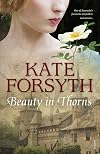
I love the attention to detail and history in Kate Forsyth’s novels. It’s like reading history come to life. With the addition of a fairy tale (in this case, Sleeping Beauty), her stories really sparkle. I love how she combines the fairy tale with an unlikely setting – who would have thought that the Pre-Raphaelite painters could have this story within their lives? It’s masterful and intricate.
Now I must admit that I’m not terribly big on paintings and drawings (in fact, the last show more time I went to an art gallery it was for a book launch) so I wasn’t familiar with most of the real life characters. Lizzie Siddal and Dante Gabriel Rossetti I had read about in other fiction, but I’d never heard of the other painters in ‘the Firm’ and their wives. I ended up being quite fascinated with what they looked like because they all painted pictures of each other (plus Lizzie and Janey were originally artists’ models). I tried to keep away from Googling their lives because I wanted to be surprised by the story. Boy, was I! The six main characters are all so entwined with friendships and romantic relationships, hidden or open. The plot follows their lives from jubilant youth to old age. Initially, it focuses on Lizzie Siddal, a young girl who dreams of being an artist. She acts as an artists’ model in her spare time to try and fund a painting course. It’s there that she meets Dante Gabriel Rossetti, who will be her great love and also her downfall. Lizzie is the most complex character in the book and one of the most interesting. She has a weakness for laudanum, is hurt by criticism and has a burning love for Gabriel. He doesn’t quite feel the same way, being more of a ladies’ man than the love of one lady. Lizzie and Gabriel have an odd relationship, portrayed as desperate, argumentative and passionate. Lizzie hangs on his every word, but Gabriel is more casual. It can only be a recipe for disaster…
While Gabriel is the initial one of the group the women all swoon over, it’s Ned Morris who provided the money initially for the Pre-Raphaelites to fund their quest for love and beauty. Topsy, as he’s known, is more stable and less volatile than Gabriel. He’s caring, particularly to their young model Janey in Oxford. He knows Janey will never love him the way she longs after Gabriel, but he tells himself he’s happy to marry her anyway. Janey is glad of a release from poverty and misery, and determined to make Topsy proud by educating herself.
Ned Burne-Jones makes up the third artist of the trio. He’s shy, quiet and riddled with doubt. He loves to paint, but procrastinates at every possible step to keep the people he loves close. His wife Georgie has loved him since she was a child and first told her the story of Briar Rose. Will Ned keep their own Sleeping Beauty, daughter Margot, asleep? Or will he let her be awakened by her Prince?
It’s a testament to Kate Forsyth’s strength as a writer that I can remember all these details of character traits and places after finishing the book. Her work is so intricate and carefully researched that it shines through on every page. I didn’t feel the Briar Rose story stuck out in the narrative; it only became clear to me as Margot was sitting as the model for her father’s Briar Rose paintings. That’s probably a good thing – I was so swept up in the relationships between the characters! I did get a bit sick of Lizzie and Gabriel’s tumultuous relationship but I felt the portrayal of Lizzie was very sensitively done as she battles anorexia/bulimia. I really felt for Lizzie and I wanted to give Gabriel a good smack for being so callous! It’s easy to see from my ramblings how much the characters come to life at Kate Forsyth’s hand. Please don’t miss this book if you’re a lover of historical fiction or just wanting some history through a wonderful story.
Thank you to Penguin Random House for the copy of this book. My review is honest.
http://samstillreading.wordpress.com show less
Now I must admit that I’m not terribly big on paintings and drawings (in fact, the last show more time I went to an art gallery it was for a book launch) so I wasn’t familiar with most of the real life characters. Lizzie Siddal and Dante Gabriel Rossetti I had read about in other fiction, but I’d never heard of the other painters in ‘the Firm’ and their wives. I ended up being quite fascinated with what they looked like because they all painted pictures of each other (plus Lizzie and Janey were originally artists’ models). I tried to keep away from Googling their lives because I wanted to be surprised by the story. Boy, was I! The six main characters are all so entwined with friendships and romantic relationships, hidden or open. The plot follows their lives from jubilant youth to old age. Initially, it focuses on Lizzie Siddal, a young girl who dreams of being an artist. She acts as an artists’ model in her spare time to try and fund a painting course. It’s there that she meets Dante Gabriel Rossetti, who will be her great love and also her downfall. Lizzie is the most complex character in the book and one of the most interesting. She has a weakness for laudanum, is hurt by criticism and has a burning love for Gabriel. He doesn’t quite feel the same way, being more of a ladies’ man than the love of one lady. Lizzie and Gabriel have an odd relationship, portrayed as desperate, argumentative and passionate. Lizzie hangs on his every word, but Gabriel is more casual. It can only be a recipe for disaster…
While Gabriel is the initial one of the group the women all swoon over, it’s Ned Morris who provided the money initially for the Pre-Raphaelites to fund their quest for love and beauty. Topsy, as he’s known, is more stable and less volatile than Gabriel. He’s caring, particularly to their young model Janey in Oxford. He knows Janey will never love him the way she longs after Gabriel, but he tells himself he’s happy to marry her anyway. Janey is glad of a release from poverty and misery, and determined to make Topsy proud by educating herself.
Ned Burne-Jones makes up the third artist of the trio. He’s shy, quiet and riddled with doubt. He loves to paint, but procrastinates at every possible step to keep the people he loves close. His wife Georgie has loved him since she was a child and first told her the story of Briar Rose. Will Ned keep their own Sleeping Beauty, daughter Margot, asleep? Or will he let her be awakened by her Prince?
It’s a testament to Kate Forsyth’s strength as a writer that I can remember all these details of character traits and places after finishing the book. Her work is so intricate and carefully researched that it shines through on every page. I didn’t feel the Briar Rose story stuck out in the narrative; it only became clear to me as Margot was sitting as the model for her father’s Briar Rose paintings. That’s probably a good thing – I was so swept up in the relationships between the characters! I did get a bit sick of Lizzie and Gabriel’s tumultuous relationship but I felt the portrayal of Lizzie was very sensitively done as she battles anorexia/bulimia. I really felt for Lizzie and I wanted to give Gabriel a good smack for being so callous! It’s easy to see from my ramblings how much the characters come to life at Kate Forsyth’s hand. Please don’t miss this book if you’re a lover of historical fiction or just wanting some history through a wonderful story.
Thank you to Penguin Random House for the copy of this book. My review is honest.
http://samstillreading.wordpress.com show less
This is the first time I have read a novel by Kate Forsyth and I was drawn to the book as it was re-imagination of the Rapunzel fairy tale. I love fairy tales and I love how authors are revisiting these wonderful tales.
What Kate Forsyth has achieved in this novel is quite remarkable as she has blended history, fantasy, magic, religion and romance into an enthralling tale about three women. From the first page you are drawn into this wonderful world that lifts off the page.
The central show more character is Charlotte Rose de la Force who having been banished to a convent after a series of scandalous love affairs during the reign of the Sun King Louis XIV. As Charlotte attempts to come to terms with her banishment she recounts her lovers, the trials and tribulations of court life and her own desires to be a free woman who can write and earn a living.
Margherita’s tale is entwined with that of Selena as they make their living in Vienna during the Renaissance. Margherita is the innocent, stolen from her parents at a young age and finds herself at the mercy of Selena. Selena is a courtesan and a woman with the most interesting past. It is their story that is the basis of the Rapunzel retelling.
I do not want to expose too much about the characters because they are all complex, flawed, have beautiful background stories and as a reader it is a wonderful journey of discovery that you undertake learning about the characters. This is one of the pure joys of the novel is the discovery of the characters and how they grow and develop.
The research in this novel is exquisite and it is so beautifully folded into the story. You feel that you are In Louis’s court with all the intrigue. The characterisation of the role of women in society is captured perfectly. Women are powerful, yet powerless and are a tradeable commodity.
This book is rich in detail, rich in imagination and an amazing read. It is hard to find the right superlatives to describe this book so I will not. Read it and be immersed in Forsyth’s world. show less
What Kate Forsyth has achieved in this novel is quite remarkable as she has blended history, fantasy, magic, religion and romance into an enthralling tale about three women. From the first page you are drawn into this wonderful world that lifts off the page.
The central show more character is Charlotte Rose de la Force who having been banished to a convent after a series of scandalous love affairs during the reign of the Sun King Louis XIV. As Charlotte attempts to come to terms with her banishment she recounts her lovers, the trials and tribulations of court life and her own desires to be a free woman who can write and earn a living.
Margherita’s tale is entwined with that of Selena as they make their living in Vienna during the Renaissance. Margherita is the innocent, stolen from her parents at a young age and finds herself at the mercy of Selena. Selena is a courtesan and a woman with the most interesting past. It is their story that is the basis of the Rapunzel retelling.
I do not want to expose too much about the characters because they are all complex, flawed, have beautiful background stories and as a reader it is a wonderful journey of discovery that you undertake learning about the characters. This is one of the pure joys of the novel is the discovery of the characters and how they grow and develop.
The research in this novel is exquisite and it is so beautifully folded into the story. You feel that you are In Louis’s court with all the intrigue. The characterisation of the role of women in society is captured perfectly. Women are powerful, yet powerless and are a tradeable commodity.
This book is rich in detail, rich in imagination and an amazing read. It is hard to find the right superlatives to describe this book so I will not. Read it and be immersed in Forsyth’s world. show less
Inspired by early Italian and French versions of the fairy tale "Rapunzel," Kate Forsyth's novel sets out to tell us the "true" story of the girl in the tower (similar to the film "Ever After") and pin it in a ravishing and luscious historical time period with a dash of fantasy thrown in. This it succeeds at with flying colors. Split between two interwoven narratives, Renaissance Italy and France come vividly to life within the novel as do a bevy of interesting characters.
Much psychological show more complexity is brought to these characters as well; Margherita, the book's "Rapunzel" character, being especially noteworthy. At its heart the story of "Rapunzel" is one of child abduction and Forsyth does not shy away from the torment and suffering of the subject. At first battered and torn after being wrenched away from the life and family she knew, Margherita slowly finds a fire within herself to escape and find her own freedom. It's clear that Forsyth does not view the story of "Rapunzel" as one of female subjugation but liberation.
If the book has a flaw it is perhaps that the central plot revolving around Charlotte-Rose de Caumont de la Force (the author of one of the earliest extant versions of "Rapunzel") is not nearly as interesting as the fictional Margherita's story, but the vivid historical recreation of King Louis the Sun King's Parisian Court makes up for most of that, and in the end the two divergent stories do tie nicely together.
For me, "Bitter Greens" joins the ranks of Robin McKinley's "Beauty," Carolyn Turgeon's "Mermaid" and Tanith Lee's "White as Snow" as one of the very best contemporary fairy tale retellings. I'm definitely going to hunt down Forsyth's other books, especially her recent non-fiction work about Rapunzel's history. show less
Much psychological show more complexity is brought to these characters as well; Margherita, the book's "Rapunzel" character, being especially noteworthy. At its heart the story of "Rapunzel" is one of child abduction and Forsyth does not shy away from the torment and suffering of the subject. At first battered and torn after being wrenched away from the life and family she knew, Margherita slowly finds a fire within herself to escape and find her own freedom. It's clear that Forsyth does not view the story of "Rapunzel" as one of female subjugation but liberation.
If the book has a flaw it is perhaps that the central plot revolving around Charlotte-Rose de Caumont de la Force (the author of one of the earliest extant versions of "Rapunzel") is not nearly as interesting as the fictional Margherita's story, but the vivid historical recreation of King Louis the Sun King's Parisian Court makes up for most of that, and in the end the two divergent stories do tie nicely together.
For me, "Bitter Greens" joins the ranks of Robin McKinley's "Beauty," Carolyn Turgeon's "Mermaid" and Tanith Lee's "White as Snow" as one of the very best contemporary fairy tale retellings. I'm definitely going to hunt down Forsyth's other books, especially her recent non-fiction work about Rapunzel's history. show less
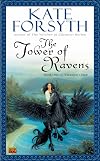
Apparently I stumbled into the first book of the next series after Forsyth’s Witches of Eileanan books, which I have not read. However, that did not affect my ability to ‘get’ this book. There is a full glossary in the back and anything that happened before this story begins was explained as much as it had to be – I was not lost.
I was expecting one of those, what I call – Girly Fantasy books. You know the kind. A soft, kind of spiritual heroine who spends most of the story show more tripping around the forest, dosing everyone with feverfew and comfrey and communing with a pantheon of Celtic-type goddesses before meeting the love interest. This does not describe Rhiannon – a half-human, half satyricorn girl who flees from her herd (read ‘family’) on a horned and winged black horse. I was not sure what, exactly, a satyricorn was. The glossary defines them as being “a race of fierce horned faeries” and they are certainly that, the full-blooded ones having horns and upwards of six breasts (just the women). They are also very bloodthirsty creatures. Indeed, this book is populated with a wide variety of faeries of quite diverse types and none of them could be described as Tinkerbell. A number of them are formidable creatures – even the small ones - and they are beings that you don’t really want to screw around with.
Rhiannon (known only as No-Horn at the beginning of the book) flees from her herd; she fears they will turn on her because she is hornless and weak in comparison to the rest. She isn’t really very weak though for while still with her herd she kills a human man with her bow and arrow. The herd, which is mostly made up of females, often takes men captive in order to mate with them, but this male, a messenger of the king, forces the issue by trying to escape and Rhiannon has to kill him in order to prove herself to the herd and win some time for herself. Afterward she wastes no time in capturing and then and tying herself onto the winged black horse. She then flies out of the satyricorns’ territory and into the wider world. She ends up in the company of witches and soon finds herself on her way to the capitol of Eileanan in order to attend kind of a young witches’ university.
At this point, as Rhiannon and the mixed group of young witches set out in the company of a husband and wife jongleurs, I was a little afraid that the story was going to go girly on me, but it didn’t. Rhiannon is dangerous and angry and severely out of place with these people. She is non-cooperative. She does not get much of what they talk about; indeed the language she speaks is almost a pidgin-language. She is attracted to Lewen, one of the students, but doesn’t go all mushy on us. I liked her very much.
The balance of the book is taken up with the journey to the capitol and the trouble they have getting there. In the interests of saving time, Iven, one of the jongleurs, is anxious to get there in order to inform the king of the death of his messenger (the man Rhainnon killed) and so they travel through a part of the realm where things have gone very bad. There are rumors of ghosts, zombies and missing children, but they go that way anyway. Time is of the essence. As they travel, Rhiannon is anxious to keep her guilty secret from these people for she has come to like them.
O.K. That’s as much as I’m going to tell you.
For me the story held up through ‘til the end and I look forward to reading the next book in the series. And the Witches of Eileanan series. In a world of what seems like hundreds of less than mediocre fantasy novels, The Tower of Ravens was a very pleasant discovery. Forsyth has just been elevated to number 4 on my tiny list of excellent fantasy writers where she joins Martin, Flewelling and Hobb. Maybe she’ll go a little higher. show less
I was expecting one of those, what I call – Girly Fantasy books. You know the kind. A soft, kind of spiritual heroine who spends most of the story show more tripping around the forest, dosing everyone with feverfew and comfrey and communing with a pantheon of Celtic-type goddesses before meeting the love interest. This does not describe Rhiannon – a half-human, half satyricorn girl who flees from her herd (read ‘family’) on a horned and winged black horse. I was not sure what, exactly, a satyricorn was. The glossary defines them as being “a race of fierce horned faeries” and they are certainly that, the full-blooded ones having horns and upwards of six breasts (just the women). They are also very bloodthirsty creatures. Indeed, this book is populated with a wide variety of faeries of quite diverse types and none of them could be described as Tinkerbell. A number of them are formidable creatures – even the small ones - and they are beings that you don’t really want to screw around with.
Rhiannon (known only as No-Horn at the beginning of the book) flees from her herd; she fears they will turn on her because she is hornless and weak in comparison to the rest. She isn’t really very weak though for while still with her herd she kills a human man with her bow and arrow. The herd, which is mostly made up of females, often takes men captive in order to mate with them, but this male, a messenger of the king, forces the issue by trying to escape and Rhiannon has to kill him in order to prove herself to the herd and win some time for herself. Afterward she wastes no time in capturing and then and tying herself onto the winged black horse. She then flies out of the satyricorns’ territory and into the wider world. She ends up in the company of witches and soon finds herself on her way to the capitol of Eileanan in order to attend kind of a young witches’ university.
At this point, as Rhiannon and the mixed group of young witches set out in the company of a husband and wife jongleurs, I was a little afraid that the story was going to go girly on me, but it didn’t. Rhiannon is dangerous and angry and severely out of place with these people. She is non-cooperative. She does not get much of what they talk about; indeed the language she speaks is almost a pidgin-language. She is attracted to Lewen, one of the students, but doesn’t go all mushy on us. I liked her very much.
The balance of the book is taken up with the journey to the capitol and the trouble they have getting there. In the interests of saving time, Iven, one of the jongleurs, is anxious to get there in order to inform the king of the death of his messenger (the man Rhainnon killed) and so they travel through a part of the realm where things have gone very bad. There are rumors of ghosts, zombies and missing children, but they go that way anyway. Time is of the essence. As they travel, Rhiannon is anxious to keep her guilty secret from these people for she has come to like them.
O.K. That’s as much as I’m going to tell you.
For me the story held up through ‘til the end and I look forward to reading the next book in the series. And the Witches of Eileanan series. In a world of what seems like hundreds of less than mediocre fantasy novels, The Tower of Ravens was a very pleasant discovery. Forsyth has just been elevated to number 4 on my tiny list of excellent fantasy writers where she joins Martin, Flewelling and Hobb. Maybe she’ll go a little higher. show less
Lists
French Books (1)
Off on a Quest (1)
Farm Boy Fantasy (1)
Awards


You May Also Like


Associated Authors
Statistics
- Works
- 64
- Also by
- 5
- Members
- 9,574
- Popularity
- #2,513
- Rating
- 3.9
- Reviews
- 178
- ISBNs
- 327
- Languages
- 4
- Favorited
- 26