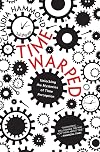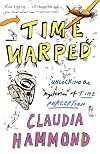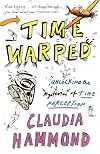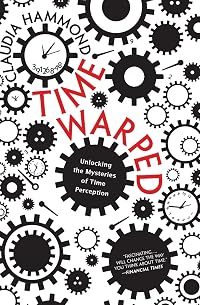
Time Warped: Unlocking the Mysteries of Time Perception
by Claudia Hammond
On This Page
Description
Drawing on the latest research from the fields of psychology, neuroscience, and biology, writer and broadcaster Claudia Hammond explores the mysteries of our perception of time in her book Time Warped.Why does life seem to speed up as we get older? Why does the clock in your head move at a different speed from the one on the wall? Why is it almost impossible to go a whole day without checking your watch? Is it possible to retrain our brains and improve our relationship with it?
In Time show more Warped, Claudia Hammond offers insight into how to manage our time more efficiently, how to speed time up and slow it down at will, how to plan for the future with more accuracy, and she teaches how to use the warping of time to our own benefit.
. show less
Tags
Recommendations



Member Reviews
The problem, for me, with this book is that it never attempts to get to grips with the question, 'What is time?'.
We have a chapter on synisthesia - the mixing of our senses whereby some people see colours when they hear music and associate a specific colour with each day of the week, etc..
We are told that day dreaming is good; it is evolutions method allowing us to prepare for possible futures. Each time we buy a lottery ticket we dream of what we would do were our numbers to come up and are thus more prepared in the (very) unlikely event that such occurs. Next, we are told that we do not use this information well; we skew our use to only the last time that we considered the prospect. In a sentence, the useful nature of day dreams, show more built up over a chapter, is shattered.
We gain advice as to how to slow down time, if one feels it is running away from one, or speed it up if time palls. Both solutions are more interesting than practical and the whole concept of concerning oneself with the attempt has slightly less value than it would have been to issue each passenger on the Titanic with a tea cup and suggest that they start to bail.
The book is well presented and Claudia Hammond has a pleasing style, although her little homilies, whilst designed to relegate the author to 'no better than the reader', came across as invented, rather than drawn from life. She tells the story of a programme she made for Radio in which she 'remembers' taking part in an experiment whereby one plunges one's arm in iced water to discover how long one can bear the pain. Having mentioned this to a fellow broadcaster, the tape is checked: she watched others, but did not take part herself. Ms. Hammond admits to false memory syndrome (one cannot be mistaken!). I know that I would fight harder for my belief that I had completed the experiment - " it must have been cut out of the final programme", "I must have done it prior to, or post production", are but the two responses that would immediately spring to my tongue.
Quite an entertaining read, but do not expect a wiser perspective upon time. show less
We have a chapter on synisthesia - the mixing of our senses whereby some people see colours when they hear music and associate a specific colour with each day of the week, etc..
We are told that day dreaming is good; it is evolutions method allowing us to prepare for possible futures. Each time we buy a lottery ticket we dream of what we would do were our numbers to come up and are thus more prepared in the (very) unlikely event that such occurs. Next, we are told that we do not use this information well; we skew our use to only the last time that we considered the prospect. In a sentence, the useful nature of day dreams, show more built up over a chapter, is shattered.
We gain advice as to how to slow down time, if one feels it is running away from one, or speed it up if time palls. Both solutions are more interesting than practical and the whole concept of concerning oneself with the attempt has slightly less value than it would have been to issue each passenger on the Titanic with a tea cup and suggest that they start to bail.
The book is well presented and Claudia Hammond has a pleasing style, although her little homilies, whilst designed to relegate the author to 'no better than the reader', came across as invented, rather than drawn from life. She tells the story of a programme she made for Radio in which she 'remembers' taking part in an experiment whereby one plunges one's arm in iced water to discover how long one can bear the pain. Having mentioned this to a fellow broadcaster, the tape is checked: she watched others, but did not take part herself. Ms. Hammond admits to false memory syndrome (one cannot be mistaken!). I know that I would fight harder for my belief that I had completed the experiment - " it must have been cut out of the final programme", "I must have done it prior to, or post production", are but the two responses that would immediately spring to my tongue.
Quite an entertaining read, but do not expect a wiser perspective upon time. show less
A book about time perception, the central thesis kind of investigating why when we go on holiday we feel like we're there forever, doing millions of activities, but afterwards feel like it's flown by. A feeling I know all too well. It was interesting and held my attention when I was reading it on the train. It delves into self-help a little at the end, too, warning people not to try and have too many "new" experiences, which can be exhausting and mess with our perception of time (advice which I wasn't following).
A bit repetitive overall but fine
A bit repetitive overall but fine
I don’t generally read a lot of non-fiction but the description for this book caught my attention, as I certainly feel I am ruled by time (rather than the other way round). Even on holiday, I am always checking my watch and I allow my feelings about what the time is to dictate what I do next. (I hadn’t really given this any thought before, but it seems a bit pathetic now that I have noticed!)
So, I thought, this is definitely the book for me! And yes, I found it fascinating! I loved the insights into our own psyche, and the understanding it gave me of why we behave the way we do around time. And I particularly enjoyed the stories about the experiences of various people who did extraordinary, and fascinating things as part of their show more researches into their perceptions of time.
This book gave me plenty to think about. Whether it affects my behaviours in the long term remains to be seen, but it has certainly given me a lot to think about in relation to how I can manage my time better. show less
So, I thought, this is definitely the book for me! And yes, I found it fascinating! I loved the insights into our own psyche, and the understanding it gave me of why we behave the way we do around time. And I particularly enjoyed the stories about the experiences of various people who did extraordinary, and fascinating things as part of their show more researches into their perceptions of time.
This book gave me plenty to think about. Whether it affects my behaviours in the long term remains to be seen, but it has certainly given me a lot to think about in relation to how I can manage my time better. show less
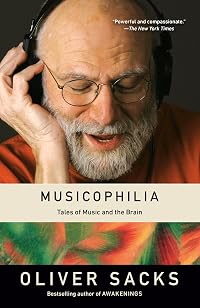
I think learning about how people think and how they use their brains is endlessly fascinating. That is why I am such a big fan of Oliver Sacks who writes about diseases of the brain that he has studied throughout his career as a neurologist. Claudia Hammond has written a book about what is really just a small part of how we use our brain i.e. how we perceive time but there is lots to sink your teeth into. I have spent the last couple of days asking people one of the questions that is posed in this book. The question is "Next Wednesday's meeting has had to be moved forward two days. What day is the meeting on now?" When I read this I said to myself "Monday of course" and I was astonished to read that some people answer that question show more with Friday. I've now asked 6 people this same question and 4 have answered Friday, 1 has answered Monday and 1 answered Saturday (which is just plain weird). Supposedly the people that answer with Monday see the future as approaching them while the people that answered Friday see themselves as approaching the future. Who knew?
That's just one of the fascinating nuggets that I picked up from this book. My biggest complaint about the book is that I found her writing to be very repetitive. She deals in a chapter about why time seems to progress faster as we age but in almost every chapter up to that point she tells us that people find time goes faster as they get older. She alludes to the fact that she will be discussing it in a future chapter a number of times. Is this to keep our interest? Does she think we might forget that this is a common perception? Claudia Hammond is a broadcaster by trade so maybe that has something to do with this constant repetition, like the old adage about public speaking about telling the audience what you are going to say, then say it, then tell them what you said. Maybe that's important in an oral presentation but I don't think it is in a book.
That said I would encourage anyone interested in how our minds work to pick this book up. You will come away with at least some idea of what makes us "tick". show less
That's just one of the fascinating nuggets that I picked up from this book. My biggest complaint about the book is that I found her writing to be very repetitive. She deals in a chapter about why time seems to progress faster as we age but in almost every chapter up to that point she tells us that people find time goes faster as they get older. She alludes to the fact that she will be discussing it in a future chapter a number of times. Is this to keep our interest? Does she think we might forget that this is a common perception? Claudia Hammond is a broadcaster by trade so maybe that has something to do with this constant repetition, like the old adage about public speaking about telling the audience what you are going to say, then say it, then tell them what you said. Maybe that's important in an oral presentation but I don't think it is in a book.
That said I would encourage anyone interested in how our minds work to pick this book up. You will come away with at least some idea of what makes us "tick". show less
This is a really interesting topic, but I had to skim sections of it because I was short on time (lol.) I would love to see an updated version w/ info on how smartphone use affects our time perception. I suspect they contribute to the feeling of time flying.
TLDR - If you want time to go slower, disrupt your routine occasionally and do lots of different things. The more memories we make, the longer time seems to last. That was mostly what I was here for, since time is beginning to fly by for me at an alarming rate!
TLDR - If you want time to go slower, disrupt your routine occasionally and do lots of different things. The more memories we make, the longer time seems to last. That was mostly what I was here for, since time is beginning to fly by for me at an alarming rate!
This was very readable, I enjoyed it a lot. The author tackles the subject of how neurologists are studying the issue of how people perceive time. It's an interesting topic, and the author does a good job of presenting it in general terms using examples that are clear and intriguing. Topics include how time is linked to memory, and how it is linked to the ability to imagine the future.
A few quibbles - the author is British and makes some assumptions about how people perceive time that seem very culturally rooted and she doesn't quite seem aware of that. She writes about how rare it is to talk about distance in terms of time ... which is so, so typical in the U.S. ("How far away is it?" "Oh, about 2 hours.")
On a more individual note, show more she has framed the book around an example of going on vacation -- while you are there, it seems like your time is rushing by (which I agree with) but when you return home, it seems like you have been gone for a very long time ... which, I don't know about that at all. Whenever I get back from vacation, it feels like I was gone for only a flash, almost like I never left. By the end of the book, as she has linked this example to more specific things, I felt like I had a somewhat better idea of what she was talking about (like it is true that one tends to do more exciting things than usual during a vacation, so you have having more memorable times in general) but I will still never describe it as lasting for a long time. show less
A few quibbles - the author is British and makes some assumptions about how people perceive time that seem very culturally rooted and she doesn't quite seem aware of that. She writes about how rare it is to talk about distance in terms of time ... which is so, so typical in the U.S. ("How far away is it?" "Oh, about 2 hours.")
On a more individual note, show more she has framed the book around an example of going on vacation -- while you are there, it seems like your time is rushing by (which I agree with) but when you return home, it seems like you have been gone for a very long time ... which, I don't know about that at all. Whenever I get back from vacation, it feels like I was gone for only a flash, almost like I never left. By the end of the book, as she has linked this example to more specific things, I felt like I had a somewhat better idea of what she was talking about (like it is true that one tends to do more exciting things than usual during a vacation, so you have having more memorable times in general) but I will still never describe it as lasting for a long time. show less
The concept for the book is appealing, beginning to understand why time flies by when you're having fun as opposed to spending a day clock watching. There are one or two key parts of the book that were enjoyable to read about and I learned about our body clocks from these - such as Michel Siffre who spent two months in an ice cave in complete darkness and also Philip Zimbardo's Time Perspective Inventory was equally as interesting.
Where I became restless in my reading was the repeated references to suicide and conditions of the brain - as it appeared in most chapters it bcame too repetitive. Overall it was an easy to understand read and I was able to skip aspects that didn't interest me. Where I've dropped stars is because I don't feel show more (as claimed) that the book showed me 'how to manage [my] time more efficiently, speed time up and slow it down at will, plan for the future with more accuracy and, ultimately, use the warping of time to [my] own advantage.' show less
Where I became restless in my reading was the repeated references to suicide and conditions of the brain - as it appeared in most chapters it bcame too repetitive. Overall it was an easy to understand read and I was able to skip aspects that didn't interest me. Where I've dropped stars is because I don't feel show more (as claimed) that the book showed me 'how to manage [my] time more efficiently, speed time up and slow it down at will, plan for the future with more accuracy and, ultimately, use the warping of time to [my] own advantage.' show less
Members
- Recently Added By
Author Information

12 Works 634 Members
Claudia Hammond is an award-winning broadcaster, writer, and psychology lecturer. She is the host of All in the Mind and Mind Changers on BBC Radio 4 and Health Check on BBC World Service Radio and BBC World News TV. She is a columnist for BBC.com and regularly appears on Impact on BBC World News to discuss research in psychology. Claudia is on show more the part-time faculty at Boston University's London base, where she lectures in health and social psychology. show less
Some Editions
Awards and Honors
Series
Belongs to Publisher Series
Common Knowledge
- Original title
- Time Warped : Unlocking the Mysteries of Time Perception
- Original publication date
- 2012; 2013 [Italia]
- Original language*
- Inglese
*Some information comes from Common Knowledge in other languages. Click "Edit" for more information.
Classifications
Statistics
- Members
- 335
- Popularity
- 95,135
- Reviews
- 12
- Rating
- (3.48)
- Languages
- 8 — Dutch, English, Estonian, German, Italian, Japanese, Polish, Russian
- Media
- Paper, Ebook
- ISBNs
- 16
- ASINs
- 4