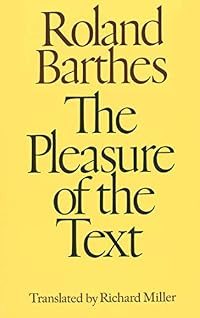
The Pleasure of the Text
by Roland Barthes
On This Page
Description
"What is it that we do when we enjoy a text? What is the pleasure of reading? The French critic and theorist Roland Barthes's answers to these questions constitute "perhaps for the first time in the history of criticism ... not only a poetics of reading ... but a much more difficult achievement, an erotics of reading ... Like filings which gather to form a figure in a magnetic field, the parts and pieces here do come together, determined to affirm the pleasure we must take in our reading as show more against the indifference of (mere) knowledge."--Richard Howard. show lessTags
Recommendations













Member Reviews
A Barthes lo de leer le causa un intenso placer, erótico de hecho, una quemadura en la entrepierna que al parecer solo sofoca escribiendo impenetrables tratados sobre lo orgásmico de la lectura. Respeto los fetiches de los intelectuales franceses, y no me voy a involucrar en un kink-shaming de algo tan inocuo como esto: hay gente que deriva inmenso gozo de explotar las burbujas de plástico de los envoltorios de paquetes frágiles, y no por ello creo que haya que considerarlos bichos raros. Y admiro, de hecho, la capacidad tántrica de Barthes de prolongar su clímax durante 70 páginas: de no haber sido académico podría haberse dedicado perfectamente a la mamporrería.
A lo largo del texto, Barthes habla del vínculo entre autor y show more lector, y ojalá realmente se estableciera esa unión tan real y física, porque si pudiera atravesar las páginas y darle un puñetazo al amigo Roland, un puñetazo metafísico pero en el cielo de la boca, lo haría. Me importa tres pimientos si pretendía que este fuera un texto de placer o de gozo. Supongo que de gozo, que él identifica con el shock, el abandono del lector como sujeto pasivo, y oh, me hace querer ser de todo menos pasivo, desde luego. Pero de ser gozo lo que pretende, ¿no sería imposible hablar de esta obra, según él? Porque yo me veo hablando, vaya si me veo. Lo que es es una jerigonza insufrible, que cuando deja vislumbrar tímidos rayos de inteligibilidad los vuelve a ocultar con alguna palabra en griego que le parecía bien utilizar en ese momento.
¿Acaso he caído en la red de Barthes? ¿Era esto lo que pretendías, provocar mi ira? Porque yendo aún por la mitad de este tratado no se me ocurre cómo vas a ser capaz de llevarme al huerto antes de la última página. Miedo me da su "Le discours amoureux" como este "Le plaisir du texte" sea representativo de sus habilidades seductoras. Si no es a mí, ¿a quién está intentando camelar? Tendrá que ser a alguien que comprenda su intrincada prosa, y no se me ocurre que pueda suceder tal cosa. Veo a Barthes, beodo, gritando al oído sus teorías literarias a algún pobre muchacho aburrido en alguna boîte: "LA SUBVERSIÓN DEBE PRODUCIR SU PROPIO CLAROSCURO, ¿SABES?", exclama, como si algo de eso tuviera algún sentido con menos de cuatro litros de alcohol en sangre, mientras su oyente reprime su instinto de reventarle una botella en la frente.
Seguramente Barthes se opondría rotundamente a la idea de que es posible comunicar este tipo de conceptos sin recurrir a la glosolalia, porque si no imagino que lo habría intentado. Me pregunto qué opinaría de esta llamémosle reseña, si le produciría placer o gozo o ninguna de las dos. En cualquier caso, dudo que le entendiera. show less
A lo largo del texto, Barthes habla del vínculo entre autor y show more lector, y ojalá realmente se estableciera esa unión tan real y física, porque si pudiera atravesar las páginas y darle un puñetazo al amigo Roland, un puñetazo metafísico pero en el cielo de la boca, lo haría. Me importa tres pimientos si pretendía que este fuera un texto de placer o de gozo. Supongo que de gozo, que él identifica con el shock, el abandono del lector como sujeto pasivo, y oh, me hace querer ser de todo menos pasivo, desde luego. Pero de ser gozo lo que pretende, ¿no sería imposible hablar de esta obra, según él? Porque yo me veo hablando, vaya si me veo. Lo que es es una jerigonza insufrible, que cuando deja vislumbrar tímidos rayos de inteligibilidad los vuelve a ocultar con alguna palabra en griego que le parecía bien utilizar en ese momento.
¿Acaso he caído en la red de Barthes? ¿Era esto lo que pretendías, provocar mi ira? Porque yendo aún por la mitad de este tratado no se me ocurre cómo vas a ser capaz de llevarme al huerto antes de la última página. Miedo me da su "Le discours amoureux" como este "Le plaisir du texte" sea representativo de sus habilidades seductoras. Si no es a mí, ¿a quién está intentando camelar? Tendrá que ser a alguien que comprenda su intrincada prosa, y no se me ocurre que pueda suceder tal cosa. Veo a Barthes, beodo, gritando al oído sus teorías literarias a algún pobre muchacho aburrido en alguna boîte: "LA SUBVERSIÓN DEBE PRODUCIR SU PROPIO CLAROSCURO, ¿SABES?", exclama, como si algo de eso tuviera algún sentido con menos de cuatro litros de alcohol en sangre, mientras su oyente reprime su instinto de reventarle una botella en la frente.
Seguramente Barthes se opondría rotundamente a la idea de que es posible comunicar este tipo de conceptos sin recurrir a la glosolalia, porque si no imagino que lo habría intentado. Me pregunto qué opinaría de esta llamémosle reseña, si le produciría placer o gozo o ninguna de las dos. En cualquier caso, dudo que le entendiera. show less
Barthes approaches reviewing and criticism as joyful acts, hence the title of the small book, the Pleasure of the Text. Inspired by Severo Sarduy’s Cobra, a novel about a Cuban drag queen who transforms into a Tibetan bardo during an orgy with leatherclad biker studs, Barthes wrote down mini-essays in alphabetic order. The essays focused on how a text can bring pleasure to the reader. He elucidates the much-misunderstood concept of the Death of the Author. The concept, maligned by the likes of Harold Bloom and Camille Paglia, does not involve turning a literary work into an amalgamation of social forces, thus negating the author. The explanation is much more prosaic.
The Death of the Author is thus: After the Author has finished his show more or her work; he has no control over it. The Author’s interpretative power is negated. This is because the Reader is not consuming the Author’s Interpretation, but simply a Text. (Barthes’s book can be seen as a precursor to the current discipline of Reader Reception Theory.)
The book also focuses on the concept of pleasure as it relates to the practice of reading. He asserts that literature does not require a moral component to be pleasurable to the reader. As an American subject to High School English classes, there was the tendency to examine works with a Major Moral Lesson, whether it was Grapes of Wrath or Heart of Darkness. Literary consumption became analogous to an annual teeth cleaning: painful, tedious, and instructive. But knowing the Moral Lesson made one feel good, or at least pass the quiz. What became a rarity was how to enjoy the texts as objects of pleasure. (Unfortunately, Americans have a schizophrenic relationship with pleasure and morality.)
Readers should be able to enjoy the language of the narrative without having to endure horse pills of morality. An appreciation can be made on how the author formulates the language in the same way art can be appreciated once one becomes aware of specific brushstrokes and manipulation of pigments. Appreciating books just on their moral level is stunningly pedestrian.
Roland Barthes was revolutionary both in what he reviewed and how he reviewed. He began as an orthodox Marxist but evolved a personal philosophy that embraced many things. Ecumenical and joyful, his approach to the review showed a writer both erudite and expansive.
http://driftlessareareview.com/2012/04/14/the-art-of-reviewing-roland-barthes/ show less
The Death of the Author is thus: After the Author has finished his show more or her work; he has no control over it. The Author’s interpretative power is negated. This is because the Reader is not consuming the Author’s Interpretation, but simply a Text. (Barthes’s book can be seen as a precursor to the current discipline of Reader Reception Theory.)
The book also focuses on the concept of pleasure as it relates to the practice of reading. He asserts that literature does not require a moral component to be pleasurable to the reader. As an American subject to High School English classes, there was the tendency to examine works with a Major Moral Lesson, whether it was Grapes of Wrath or Heart of Darkness. Literary consumption became analogous to an annual teeth cleaning: painful, tedious, and instructive. But knowing the Moral Lesson made one feel good, or at least pass the quiz. What became a rarity was how to enjoy the texts as objects of pleasure. (Unfortunately, Americans have a schizophrenic relationship with pleasure and morality.)
Readers should be able to enjoy the language of the narrative without having to endure horse pills of morality. An appreciation can be made on how the author formulates the language in the same way art can be appreciated once one becomes aware of specific brushstrokes and manipulation of pigments. Appreciating books just on their moral level is stunningly pedestrian.
Roland Barthes was revolutionary both in what he reviewed and how he reviewed. He began as an orthodox Marxist but evolved a personal philosophy that embraced many things. Ecumenical and joyful, his approach to the review showed a writer both erudite and expansive.
http://driftlessareareview.com/2012/04/14/the-art-of-reviewing-roland-barthes/ show less
A series of very short essays (mostly 100-200 words each - the whole book is only about 90 pages long) which often read more like prose-poems than literary theory. Barthes speculates about the relationship between reading and pleasure, and tries to pin down a distinction between the culturally-mediated plaisir and the erotic jouissance and locate this in different families of texts. Of course it's also a game in which he is also trying to manipulate the reader's plaisir and jouissance by deploying the same textual strategies he's writing about (he calls literary studies the Kamasutra of the text), and playfulness often wins over clarity, but no-one is likely to mind that much. A book you can read with great enjoyment (of whatever kind!) show more and also a useful source of quotations to back up just about any argument you might be trying to make in your own essays... show less
One particularly lovely piece:
If I read this sentence, this story, or this word with pleasure, it is because they were written with pleasure (such pleasure does not contradict the writer’s complaints). But the opposite? Does writing in pleasure guarantee–guarantee me, the writer–the reader’s pleasure? Not at all. I must seek out this reader (must “cruise” him) without knowing where he is. A site of bliss is then created. It is not the reader’s “person” that is necessary to me, it is this site: the possibility of a dialectics of desire, of an unpredictability of bliss: the bets are not placed, there can still be a game.
If I read this sentence, this story, or this word with pleasure, it is because they were written with pleasure (such pleasure does not contradict the writer’s complaints). But the opposite? Does writing in pleasure guarantee–guarantee me, the writer–the reader’s pleasure? Not at all. I must seek out this reader (must “cruise” him) without knowing where he is. A site of bliss is then created. It is not the reader’s “person” that is necessary to me, it is this site: the possibility of a dialectics of desire, of an unpredictability of bliss: the bets are not placed, there can still be a game.
Que livro delicioso! Com uma escrita descomplicada e de fácil compreensão - li numa sentada, Barthes vai alinhavando psicanálise e o papel dialético do escritor/leitor em seu prazer dual. Meu único porém quanto a esta edição é que o tradutor preferiu traduzir jouissance como fruição e não como gozo, este que seria mais pertinente ao conteúdo da obra que busca dialogar com a psicanálise.
Creo que todo estudioso (o incluso aficionado) de la literatura debería leer este libro. Incluso aunque no llegues a entender del todo la terminología ni la exposición del autor (como fue, en muchas ocasiones, mi caso). Barthes es un excelente ensayista, y su forma tan apasionada y crítica a la vez de explicar su tema resulta muy conmovedora. Además, en la "Lección inaugural", se puede leer una de las mejores definiciones de literatura que yo me he encontrado en cualquier texto académico.
In the middle of reading this short book (66 pages), I remembered a time, a long time ago--I might still have been in high school, when I was invited by the neighbor who taught me French to a talk by a French author at UCI. I could hold my own in a conversation, going beyond basic introductory forms, and I had read a few novels (short ones) in French. The author, whose name I've completely forgotten, was a woman and my neighbor was quite enthused that she was at UCI. I expected not to understand everything, but I was not prepared for how little I did understand.
At first I listened very attentively, trying to catch as much meaning as I could, after a while--exhausted from that effort, I decided just to listen without trying to show more understand, and even that became unbearable. I concentrated on the speaker's face and gestures and the reactions of everyone in the room, and this struck me as extremely hilarious. It was all I could do to keep from bursting out in unstoppable peals of laughter. The absurdity of everything was so acute, and it went on for so long! This is how I felt reading Barthes' "The Pleasure of the Text."
I'm no novice at reading literary criticism and theoretical writings, but this was all but incomprehensible to me. Our department in Graduate school was firmly in the Structuralism and Semiology camp, the Slavic variety. We had heard of Deconstruction and Derrida and even Barthes, but they were never discussed in our literary seminars--for that you had to visit the French and English departments of our stately university. So this manner of discussing literature and the examples (if you can call them that) he gives made no sense at all to me. There were times where it seemed like I was grasping the gist, and then he would make a statement that made all the meaning dissipate for me. I understood the underlying/blatant metaphor of his text (where 'pleasure' and 'bliss' are sexual/sensual concepts), but it never really came to fruition for me. The whole thing seemed too much like my experience with the French writer. It was over my head. show less
At first I listened very attentively, trying to catch as much meaning as I could, after a while--exhausted from that effort, I decided just to listen without trying to show more understand, and even that became unbearable. I concentrated on the speaker's face and gestures and the reactions of everyone in the room, and this struck me as extremely hilarious. It was all I could do to keep from bursting out in unstoppable peals of laughter. The absurdity of everything was so acute, and it went on for so long! This is how I felt reading Barthes' "The Pleasure of the Text."
I'm no novice at reading literary criticism and theoretical writings, but this was all but incomprehensible to me. Our department in Graduate school was firmly in the Structuralism and Semiology camp, the Slavic variety. We had heard of Deconstruction and Derrida and even Barthes, but they were never discussed in our literary seminars--for that you had to visit the French and English departments of our stately university. So this manner of discussing literature and the examples (if you can call them that) he gives made no sense at all to me. There were times where it seemed like I was grasping the gist, and then he would make a statement that made all the meaning dissipate for me. I understood the underlying/blatant metaphor of his text (where 'pleasure' and 'bliss' are sexual/sensual concepts), but it never really came to fruition for me. The whole thing seemed too much like my experience with the French writer. It was over my head. show less
Members
- Recently Added By
Author Information

188+ Works 22,239 Members
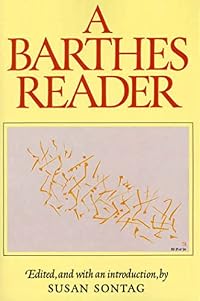
Roland Barthes (1915-1980), a French critic and intellectual, was a seminal figure in late twentieth-century literary criticism. Barthes's primary theory is that language is not simply words, but a series of indicators of a given society's assumptions. He derived his critical method from structuralism, which studies the rules behind language, and show more semiotics, which analyzes culture through signs and holds that meaning results from social conventions. Barthes believed that such techniques permit the reader to participate in the work of art under study, rather than merely react to it. Barthes's first books, Writing Degree Zero (1953), and Mythologies (1957), introduced his ideas to a European audience. During the 1960s his work began to appear in the United States in translation and became a strong influence on a generation of American literary critics and theorists. Other important works by Barthes are Elements of Semiology (1968), Critical Essays (1972), The Pleasure of the Text (1973), and The Empire of Signs (1982). The Barthes Reader (1983), edited by Susan Sontag, contains a wide selection of the critic's work in English translation. (Bowker Author Biography) show less
Some Editions
Series
Belongs to Publisher Series
Common Knowledge
- Canonical title*
- Le plaisir du texte
- Original title
- Le Plaisir du Texte; Lecon Inagurale de la Chaire de Sémiologie Litéraire du Collège de France
- Original publication date
- 1973; 1974-6 (Argentina) (Argentina)
- Epigraph
- Atque metum tantum concepit tunc mea mater
Ut paretet geminos, meque metumque simul.
--Hobbes - First words
- The pleasure of the text: like Bacon's simulator, it can say: never apologize, never explain.
- Last words
- (Click to show. Warning: May contain spoilers.)In fact, it suffices that the cinema capture the sound of speech close up (this is, in fact, the generalized definition of the “grain” of writing) and make us hear in their materiality, their sensuality, the breath, the gutturals, the fleshiness of the lips, a whole presence of the human muzzle (that the voice, that writing, be as fresh, supple, lubricated, delicately granular and vibrant as an animal’s muzzle), to succeed in shifting the signified a great distance and in throwing, so to speak, the anonymous body of the actor into my ear: it granulates, it crackles, it caresses, it grates, it comes: that is bliss.
- Blurbers
- Sontag, Susan
- Original language
- French
*Some information comes from Common Knowledge in other languages. Click "Edit" for more information.
Classifications
- Genres
- Literature Studies and Criticism, Nonfiction, Philosophy
- DDC/MDS
- 801.93 — Literature & rhetoric Literature, rhetoric & criticism Philosophy and theory Nature and character Literary Aesthetics
- LCC
- PN45 .B2813 — Language and Literature Literature (General) Literature (General) Theory. Philosophy. Esthetics
- BISAC
Statistics
- Members
- 1,479
- Popularity
- 15,642
- Reviews
- 18
- Rating
- (3.88)
- Languages
- 21 — Catalan, Czech, Danish, Dutch, English, Estonian, Finnish, French, German, Greek, Hungarian, Italian, Japanese, Latvian, Lithuanian, Norwegian (Bokmål), Polish, Portuguese, Slovak, Spanish, Turkish
- Media
- Paper, Ebook
- ISBNs
- 46
- ASINs
- 10