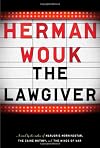
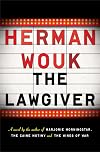
The Lawgiver: A Novel
by Herman Wouk
On This Page
Description
Margo Solovei, a brilliant young writer-director has rejected her rabbinical father's strict Jewish upbringing to pursue a career in the arts. When an Australian multi-billionaire promises to finance a movie about Moses if the script meets certain standards, Margo does everything she can to land the job, including a reunion with her estranged first love, an influential lawyer with whom she still has unfinished business.Tags
Recommendations




















Member Reviews
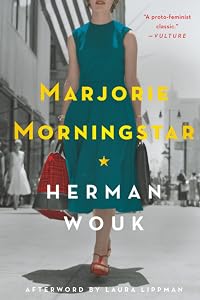
As I mentioned when I started reading this book, the name Herman Wouk didn't mean much to me. Yes, I have a goal to read all of the Pulitzer Prize winning novels, so the title of The Caine Mutiny is familiar to me. But when I look at the list, I see titles not authors. Even The Winds of War rings a bell, but as a movie (maybe on TV?). I read The End of Your Life Book Club and Marjorie Morningstar is mentioned a few times, but again...title, not author, is what stuck with me.
So as you can see, I didn't pick this book up because of the 97-year-old author. Nope. It was because I heard it was an epistolary novel. After the great find that was Where'd You Go, Bernadette earlier this year, I was very excited to find another novel told through show more emails, letters, Skype, texts, etc. I even learned a few things along the way -- Google was my friend more than once while reading The Lawgiver. (Uluru tents? Guadalupe Dunes? Bais Yaakov?)
You're in for a treat with this book. It's just great writing and a sweet story about a group of people attempting to make a movie about Moses. We learn about their lives, their loves, and their friendships. One character in particular is given a lot of attention: the screenwriter, Margo. And I laughed out loud more than once -- which surprised me because I wasn't expecting funny.
I also wasn't expecting tears, but those didn't come until the last page.
A great, fast-paced read. show less
So as you can see, I didn't pick this book up because of the 97-year-old author. Nope. It was because I heard it was an epistolary novel. After the great find that was Where'd You Go, Bernadette earlier this year, I was very excited to find another novel told through show more emails, letters, Skype, texts, etc. I even learned a few things along the way -- Google was my friend more than once while reading The Lawgiver. (Uluru tents? Guadalupe Dunes? Bais Yaakov?)
You're in for a treat with this book. It's just great writing and a sweet story about a group of people attempting to make a movie about Moses. We learn about their lives, their loves, and their friendships. One character in particular is given a lot of attention: the screenwriter, Margo. And I laughed out loud more than once -- which surprised me because I wasn't expecting funny.
I also wasn't expecting tears, but those didn't come until the last page.
A great, fast-paced read. show less
Hollywood, Jews, & Hollywood Jews
Ninety-seven-year-old Herman Wouk (or a fictionalized version of him) is minding his own business. And his business, as you know, is writing novels. He’s finally tackling the ambitious project he’s wanted to write for decades, the story of Moses. It is a huge coincidence, therefore, when a hot Hollywood producer finagles a meeting insisting that he’s the only man for the job of writing a Moses screenplay.
Well, Mr. Wouk wants nothing to do with this. Meetings are refused until a rabbi intervenes. Ultimately, it is revealed that the epic film’s funding—through unconventional sources—rests upon Wouk’s participation. Under duress, he agrees to act as a consultant to the film, with final script show more approval. A screenwriter for this all-but-unwritable film must be found. Enter Margo Solovei, a young, independent film auteur who has eschewed her orthodox Jewish upbringing. And it is actually Margo who is at the novel’s heart, as she pursues this project while dealing with producers, directors, actors, Herman Wouk, and any number of people tying her to her roots.
I doubt I can express how much I loved this novel! Oh, how I laughed! It’s true that I am Jewish, and that I have worked in the film industry, so it’s possible that the tale “spoke” to me more than it might to some, but Wouk’s satire is dead on. Not just of an industry, but of human nature. I guess nearly a century of life gives a man some perspective. Also, as the Booklist reviewer astutely pointed out, there are subtle reflections of Wouk’s classic 1955 coming of age novel, Marjorie Morningstar, adding an additional layer of pleasure for fans such as myself. It’s really quite amazing the various themes and commentaries that Mr. Wouk manages to work into this slender novel. It’s playful as hell, but still whip smart.
Oh, yeah, I should mention that this is an epistolary novel, always a fun and inventive way to tell a tale. It’s comprised of letters, emails, faxes, IMs, Skypes, transcripts, voicemails, and so forth. Through the correspondence of the characters’ personal and professional lives, a web of connections is formed. And in the end, The Lawgiver is a romantic comedy. I rooted for lovers to find their way. I rooted for unsavory characters to get their comeuppance. And I rooted for Mr. Wouk, who has proved that at 97 he is as sharp as he ever was. I was moved by the novel’s epilogue, and I shall be waiting with anticipation for his next two novels. show less
Ninety-seven-year-old Herman Wouk (or a fictionalized version of him) is minding his own business. And his business, as you know, is writing novels. He’s finally tackling the ambitious project he’s wanted to write for decades, the story of Moses. It is a huge coincidence, therefore, when a hot Hollywood producer finagles a meeting insisting that he’s the only man for the job of writing a Moses screenplay.
Well, Mr. Wouk wants nothing to do with this. Meetings are refused until a rabbi intervenes. Ultimately, it is revealed that the epic film’s funding—through unconventional sources—rests upon Wouk’s participation. Under duress, he agrees to act as a consultant to the film, with final script show more approval. A screenwriter for this all-but-unwritable film must be found. Enter Margo Solovei, a young, independent film auteur who has eschewed her orthodox Jewish upbringing. And it is actually Margo who is at the novel’s heart, as she pursues this project while dealing with producers, directors, actors, Herman Wouk, and any number of people tying her to her roots.
I doubt I can express how much I loved this novel! Oh, how I laughed! It’s true that I am Jewish, and that I have worked in the film industry, so it’s possible that the tale “spoke” to me more than it might to some, but Wouk’s satire is dead on. Not just of an industry, but of human nature. I guess nearly a century of life gives a man some perspective. Also, as the Booklist reviewer astutely pointed out, there are subtle reflections of Wouk’s classic 1955 coming of age novel, Marjorie Morningstar, adding an additional layer of pleasure for fans such as myself. It’s really quite amazing the various themes and commentaries that Mr. Wouk manages to work into this slender novel. It’s playful as hell, but still whip smart.
Oh, yeah, I should mention that this is an epistolary novel, always a fun and inventive way to tell a tale. It’s comprised of letters, emails, faxes, IMs, Skypes, transcripts, voicemails, and so forth. Through the correspondence of the characters’ personal and professional lives, a web of connections is formed. And in the end, The Lawgiver is a romantic comedy. I rooted for lovers to find their way. I rooted for unsavory characters to get their comeuppance. And I rooted for Mr. Wouk, who has proved that at 97 he is as sharp as he ever was. I was moved by the novel’s epilogue, and I shall be waiting with anticipation for his next two novels. show less
"God was right about Adam: for a man to live alone is not good. I can't spare a rib."
Herman Wouk (yes, that Herman Wouk) has been trying to write a novel about Moses for fifty years. As he finally sits down to start, Hollywood comes hurtling into his life; an eccentric billionaire will bankroll a film about Moses if Wouk will approve the script by unknown ex-Jew Margolit Solovei. Margo's desperation to land the job puts her back in contact with a high school sweetheart and through him, commences a sweet and much-needed confidance with a literary professor. Throw in a naive Australian sheep farmer and a mad English agent; yet somehow romance and creativity prevail over absurdity.
This is really a character study in the somewhat polarised show more and distorted film world. Margo is a fantastic creation - passionate about her work yet insecure, craving the approval of her father, mentor and idols, yet perfectly happy to throw multiple spanners into works. The novel is tightly cast; no one is extraneous and all contribute to both plot and humour. Possibly my favourite character is gentle-natured Perry Pines, accidentally thrown into the whirlwind of Hollywood, yet clinging stubbornly to the farmland of his youth ("Crooked Creek Farm").
The epistolatory/"collection of evidence" style of writing is one which I've only come across a few times before - it worked very well in The Guernsey Literary and Potato Peel Pie Society, and spectacularly in Salmon Fishing in the Yemen, while I wasn't a huge fan of A Visit from the Goon Squad. Suffice to say, the book's got to be quirky before you can think about using this method. Anyhow, it works here - various voices are developed without that inconvenience of having all your characters in one place, or justifying lengthy monologues/stream-of-consciousness.
Similarly, the technique of the author writing himself into the text as a character is both bizarre and gives him an auto-biographical mouthpiece; his anxiety at running out of time is palpable, as is his deep devotion to his wife of 65 years. In a sense, this has aspects of an open love letter to BSW in the same way that The End of Your Life Book Club is an open eulogy. The humour is strong without being forced - I was safe to read this while having my hair cut (no laugh out loud moments) but plenty of little chortles.
I found the deep-running Jewishness at once bizarre and intriguing, isolating, yet with the footnotes, captivating. This is really a novel about being Jewish, as well as being in the film industry (or a reclusive author, or sheep farmer...). I suspect that Jewish readers might find it overly simplistic or even a little insultingly stereotypical, but I'm not Jewish so I can't judge.
Now I have to read Marjorie Morningstar. show less
Herman Wouk (yes, that Herman Wouk) has been trying to write a novel about Moses for fifty years. As he finally sits down to start, Hollywood comes hurtling into his life; an eccentric billionaire will bankroll a film about Moses if Wouk will approve the script by unknown ex-Jew Margolit Solovei. Margo's desperation to land the job puts her back in contact with a high school sweetheart and through him, commences a sweet and much-needed confidance with a literary professor. Throw in a naive Australian sheep farmer and a mad English agent; yet somehow romance and creativity prevail over absurdity.
This is really a character study in the somewhat polarised show more and distorted film world. Margo is a fantastic creation - passionate about her work yet insecure, craving the approval of her father, mentor and idols, yet perfectly happy to throw multiple spanners into works. The novel is tightly cast; no one is extraneous and all contribute to both plot and humour. Possibly my favourite character is gentle-natured Perry Pines, accidentally thrown into the whirlwind of Hollywood, yet clinging stubbornly to the farmland of his youth ("Crooked Creek Farm").
The epistolatory/"collection of evidence" style of writing is one which I've only come across a few times before - it worked very well in The Guernsey Literary and Potato Peel Pie Society, and spectacularly in Salmon Fishing in the Yemen, while I wasn't a huge fan of A Visit from the Goon Squad. Suffice to say, the book's got to be quirky before you can think about using this method. Anyhow, it works here - various voices are developed without that inconvenience of having all your characters in one place, or justifying lengthy monologues/stream-of-consciousness.
Similarly, the technique of the author writing himself into the text as a character is both bizarre and gives him an auto-biographical mouthpiece; his anxiety at running out of time is palpable, as is his deep devotion to his wife of 65 years. In a sense, this has aspects of an open love letter to BSW in the same way that The End of Your Life Book Club is an open eulogy. The humour is strong without being forced - I was safe to read this while having my hair cut (no laugh out loud moments) but plenty of little chortles.
I found the deep-running Jewishness at once bizarre and intriguing, isolating, yet with the footnotes, captivating. This is really a novel about being Jewish, as well as being in the film industry (or a reclusive author, or sheep farmer...). I suspect that Jewish readers might find it overly simplistic or even a little insultingly stereotypical, but I'm not Jewish so I can't judge.
Now I have to read Marjorie Morningstar. show less
Ninety-severn year old revered author Herman Wouk has always dreamed of writing a novel about Moses but has never been able to get a good start on the material. Instead he wrote this delightful fictionalization of the making of a motion picture epic about Moses the lawgiver. He is a character in his own story as he is approached by the money men to approve the script once it is written by the up-and-coming Margo Solovei. Amidst the turmoil of behind the scenes wrangling lies a sweet love story between Margo and Josh, a brilliant young lawyer Margo parted with years ago due to religious differences; he is a devout Jew, Margo not so much. It also features the 60 years loving marriage between Herman and his Betty. The story is written in show more e-mails, Skype chats, memos and notes which makes for a very fast read. It is humorous and witty but definitely not a story about Moses if that is what the reader is looking for. I found it quite fun. show less
This was a very fun, very easy read with a lot of humor. The story is basically the effort being put forth by a group of people, with various motives, who want to get a movie about Moses made in Hollywood.
The main character is Margo Solovei, a writer who grew up in an Orthodox Jewish household, who attended an orthodox Jewish school and whose rabbi father, is less than thrilled with her life choice to become a Hollywood player.
Like a fascinating web that spins out and out, the story is told through Margo’s correspondence, emails, faxes, meeting notes etc. with different people who have a vested interest in the film or a vested interest in Margo.
The project is being financed by a Yiddish Australian tycoon whose reasons are never show more entirely clear for making the film. Herman Wouk and his wife are major characters and at the end of the book is a very touching tribute by Wouk to his wife, with her picture. One could almost say she was his muse.
Other characters are Margo’s childhood sweetheart, a friend of a friend who becomes a good friend, producers, directors, charlatans and a reluctant low profile Aussie sheep station owner and reluctant but very good actor.
There was one very entertaining sub-story involving a friend from Jewish School and her orthodox husband and their marital highs and lows. Shirley and Avram were thoroughly entertaining and a much needed break in the wheeling and dealing part of the story that centered on Hollywood.
This is a quick read and an easy one. I actually read it in between other books when I needed a quick break from something heavier. This is a pretty fun read. Three and a half stars. show less
The main character is Margo Solovei, a writer who grew up in an Orthodox Jewish household, who attended an orthodox Jewish school and whose rabbi father, is less than thrilled with her life choice to become a Hollywood player.
Like a fascinating web that spins out and out, the story is told through Margo’s correspondence, emails, faxes, meeting notes etc. with different people who have a vested interest in the film or a vested interest in Margo.
The project is being financed by a Yiddish Australian tycoon whose reasons are never show more entirely clear for making the film. Herman Wouk and his wife are major characters and at the end of the book is a very touching tribute by Wouk to his wife, with her picture. One could almost say she was his muse.
Other characters are Margo’s childhood sweetheart, a friend of a friend who becomes a good friend, producers, directors, charlatans and a reluctant low profile Aussie sheep station owner and reluctant but very good actor.
There was one very entertaining sub-story involving a friend from Jewish School and her orthodox husband and their marital highs and lows. Shirley and Avram were thoroughly entertaining and a much needed break in the wheeling and dealing part of the story that centered on Hollywood.
This is a quick read and an easy one. I actually read it in between other books when I needed a quick break from something heavier. This is a pretty fun read. Three and a half stars. show less
Herman Wouk has assured his place in literary history through receiving the first Lifetime Achievement Award from the Library of Congress. The author of twelve novels, three plays, and three nonfiction books, including, MARJORIE MORNINGSTAR, WAR AND REMEMBRANCE, THE CAINE MUTINY COURT-MARTIAL and THIS IS MY GOD, wrote in 2000 that “There was no greater theme for a novel...than the life of Moses” and had conceived the idea more than 50 years ago when he was writing THE CAINE MUTINY. Now, at age 97, he attains his goal although not in the way he envisioned it.
THE LAWGIVER begins when someone contacts Wouk to write a movie about Moses and says he has a financial backer. Wouk,doesn’t want to do it, but finally agrees to serve as a show more consultant without any screen credit. The remainder of the novel follows the choice of the writer (Margo Solovei), the development of the script, and financing the project along with a lawsuit over the ownership of a process of turning algae into oil, and the interactions of a small group of people who knew each other when they attended an orthodox school. Margo has long ago left the Chasidic world in which she was raised, which caused a rift between her and her father, who is a rabbi. Wouk and his wife and partner Betty, who died while he was writing the book, appear as characters as well.
THE LAWGIVER is a multi-media novel. It is presented as letters, memos, minutes, e-mail, SKYPE transcripts, faxes and newspaper articles. It’s fast paced, witty, and sent me to the dictionary and Google to verify if some of the facts he presented were really true or were fiction. (They were true.) I found the way Margo depicts Moses to be very interesting, especially the explanation of why he broke the first set of Commandments.
I wish he had included dates for the entries to help keep track of how much time elapsed between the chapters.
I think most people would find the book enjoyable. show less
THE LAWGIVER begins when someone contacts Wouk to write a movie about Moses and says he has a financial backer. Wouk,doesn’t want to do it, but finally agrees to serve as a show more consultant without any screen credit. The remainder of the novel follows the choice of the writer (Margo Solovei), the development of the script, and financing the project along with a lawsuit over the ownership of a process of turning algae into oil, and the interactions of a small group of people who knew each other when they attended an orthodox school. Margo has long ago left the Chasidic world in which she was raised, which caused a rift between her and her father, who is a rabbi. Wouk and his wife and partner Betty, who died while he was writing the book, appear as characters as well.
THE LAWGIVER is a multi-media novel. It is presented as letters, memos, minutes, e-mail, SKYPE transcripts, faxes and newspaper articles. It’s fast paced, witty, and sent me to the dictionary and Google to verify if some of the facts he presented were really true or were fiction. (They were true.) I found the way Margo depicts Moses to be very interesting, especially the explanation of why he broke the first set of Commandments.
I wish he had included dates for the entries to help keep track of how much time elapsed between the chapters.
I think most people would find the book enjoyable. show less
A rare modern example of the antique genre of the epistolary novel. But while the epistolary novels of the 17th and 18th Centuries took the form of a series of letters and/or diary entries, this is the 21st Century. Thus, this plot proceeds via modern media--e-mails, text messages, voicemails, memos, transcripts of business meetings.
Nonagerian author Herman Wouk (best known for The Caine Mutiny Court Martial) weaves a strange story here in which the real Herman Wouk plays a role. The idea is floated to produce a modern retelling of the story of Moses and the exodus of his people from Egypt. Unlike the famous Cecille B. DeMille production of The Ten Commandments, though, this one is intended to strictly adhere to the biblical account. show more Respected Jewish author Wouk is brought in to validate the authenticity of the script as it evolves. Wouk really doesn't want to do it (he's a 96 year old man hoping to finish one last book of his own before his time runs out), but he's coerced into doing. He tries to distance himself from the project, despite being impressed by the woman who's brought in to write the script.
There's a dynamic religious tension throughout the book. Wouk is a practicing Orthodox Jew. The scriptwriter was raised as one, but she drifted from that path long ago. As the story evolves, however, thing happen.
I was raised in what could have been described as a pretty much homogeneous white bread WASP community (except that most of us were Roman Catholics rather than Protestants), so I've spent the last several years familiarizing myself with Jewish culture in order to better understand that thread that runs through American culture. This book provided a lot of insights.
Worth reading. show less
Nonagerian author Herman Wouk (best known for The Caine Mutiny Court Martial) weaves a strange story here in which the real Herman Wouk plays a role. The idea is floated to produce a modern retelling of the story of Moses and the exodus of his people from Egypt. Unlike the famous Cecille B. DeMille production of The Ten Commandments, though, this one is intended to strictly adhere to the biblical account. show more Respected Jewish author Wouk is brought in to validate the authenticity of the script as it evolves. Wouk really doesn't want to do it (he's a 96 year old man hoping to finish one last book of his own before his time runs out), but he's coerced into doing. He tries to distance himself from the project, despite being impressed by the woman who's brought in to write the script.
There's a dynamic religious tension throughout the book. Wouk is a practicing Orthodox Jew. The scriptwriter was raised as one, but she drifted from that path long ago. As the story evolves, however, thing happen.
I was raised in what could have been described as a pretty much homogeneous white bread WASP community (except that most of us were Roman Catholics rather than Protestants), so I've spent the last several years familiarizing myself with Jewish culture in order to better understand that thread that runs through American culture. This book provided a lot of insights.
Worth reading. show less
Members
- Recently Added By
Lists

Books Read in 2013
1,630 works; 51 members

Exodus in literature
12 works; 3 members
Author Information

83+ Works 19,265 Members
Herman Wouk was born in the Bronx, New York on May 27, 1915. He received a bachelor's degree in comparative literature and philosophy from Columbia University. In 1936, he became a staff writer for the radio comedian Fred Allen. He enlisted in the Navy immediately after Pearl Harbor and was posted as a radio officer in the South Pacific. His debut show more novel, Aurora Dawn, was published in 1947. His other novels included The City Boy, Marjorie Morningstar, Youngblood Hawke, Don't Stop the Carnival, The Winds of War, War and Remembrance, The Hope, The Gift, A Hole in Texas, and The Lawgiver. He received the Pulitzer Prize for fiction in 1952 for The Caine Mutiny. He received the first Library of Congress Lifetime Achievement Award for the Writing of Fiction in 2008. His nonfiction books included This Is My God, The Language God Talks, and Sailor and Fiddler: Reflections of a 100-Year-Old Author. Several of his books were adapted into movies including The Caine Mutiny and Marjorie Morningstar. He adapted the courtroom sections of The Caine Mutiny into the Broadway play The Caine Mutiny Court-Martial. His other Broadway shows included The Traitor and Nature's Way. He died on May 17, 2019 at the age of 103. (Bowker Author Biography) show less
Some Editions
Awards and Honors
Awards
Common Knowledge
- Original publication date
- 2012-10
- Epigraph
- A scuffed file in my desk drawer labeled The Lawgiver contains a few typed yellow pages turning brown with age. When I was writing Caine Mutiny, it occurred to me that there was no greater theme for a novel, if I could rise ... (show all)to it, than the life of Moses. The file dates to that time. The years have rolled over me. I have not quailed at large tasks. World War Two and the wars of Israel were sizable challanges, but I took them on. The Lawgiver remains unwritten. I have never found the way to do it.. Other ideas for books I have set aside (no time, no time!), but I still hope against hope for a bolt of lightning, which will yet inspire me to pen my own picture of Maysheh Rabben, the Rav of mankind. __From The Will to Live On, published May 2000
- First words
- (Interoffice Memo, 11:20 A.M.) BSW LITERARY AGENCY HW: Sorry to trouble you.
- Last words
- (Click to show. Warning: May contain spoilers.)See you under the canopy! Forever Yours, Margo aka the brazen wench
Classifications
Statistics
- Members
- 223
- Popularity
- 146,572
- Reviews
- 11
- Rating
- (3.44)
- Languages
- English
- Media
- Paper, Audiobook, Ebook
- ISBNs
- 13
- ASINs
- 1