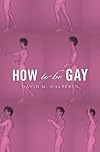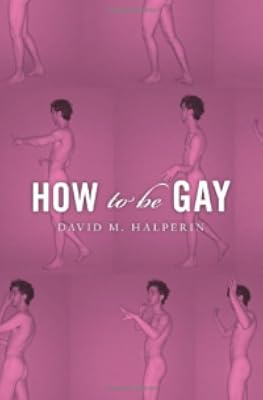
How To Be Gay
by David M. Halperin
On This Page
Description
No one raises an eyebrow if you suggest that a guy who arranges his furniture just so, rolls his eyes in exaggerated disbelief, likes techno music or show tunes, and knows all of Bette Davis's best lines by heart might, just possibly, be gay. But if you assert that male homosexuality is a cultural practice, expressive of a unique subjectivity and a distinctive relation to mainstream society, people will immediately protest. Such an idea, they will say, is just a stereotype-ridiculously show more simplistic, politically irresponsible, and morally suspect. The world acknowledges gay male culture as a fact but denies it as a truth. David Halperin, a pioneer of LGBTQ studies, dares to suggest that gayness is a specific way of being that gay men must learn from one another in order to become who they are. Inspired by the notorious undergraduate course of the same title that Halperin taught at the University of Michigan, provoking cries of outrage from both the right-wing media and the gay press, How To Be Gay traces gay men's cultural difference to the social meaning of style. Far from being deterred by stereotypes, Halperin concludes that the genius of gay culture resides in some of its most despised features: its aestheticism, snobbery, melodrama, adoration of glamour, caricatures of women, and obsession with mothers. The insights, impertinence, and unfazed critical intelligence displayed by gay culture, Halperin argues, have much to offer the heterosexual mainstream. show lessTags
Recommendations






























Member Reviews
Within this admittedly over-long book is a slim but forceful gym-bunny of a tract against both essentialism and identity politics; there is, alongside it, a gossipy ageing queen of a treatise about Hollywood melodrama; and there is a wider exploration - inoffensive, so it seemed to me - of the rather queer nature of gay femininity, or 'femininity', and, indeed, of what those inverted commas themselves might denote. Not - [silent screams] - that David Halperin thinks any of his readers might themselves be 'inverted': no, no, NO!!!
Let me at this juncture avow my own machismo: I only ever once watched 'Mildred Pierce', and loathed it. I understand why so many middle class and middle-aged gays, in their country sitting rooms, and in show more (sometimes very shrill) asides across the weekend newspapers to their husbands, have protested - as if all homophobia is past - that NONE of what David Halperin describes in this book relates to them. So let me say it: much of this made me cringe too.
It is that process itself - that instinct to cringe - which seems to me to be the focus of quite a lot of what this book is all about. Some of us, clearly, have a sense of having grown out of the stereotypes which the book describes; but there are still young men who use them as a means to grow into their own gayness now. That's what struck me most: I was reminded - rather fondly, in fact - of younger gay men among my friends who, with the piercing bitchiness through which affection sometimes becomes more real, continue to adore Bette Davis (yes: they do!) and those films which we all know to be absurd. That made me laugh: the French ( - and David Halperin occasionally remembers a world beyond the USA - ) might even have spoken of 'jouissance'....
But I would have laughed more had the book been only half the length; and I would have been persuaded more completely had the slightly overwrought final chapters been omitted altogether.
[I think it right to add, as I write this on World AIDS Day, that I am moved not least by the eloquence of David Halperin's reflections on the impact of HIV and AIDS on the issues which his book describes.] show less
Let me at this juncture avow my own machismo: I only ever once watched 'Mildred Pierce', and loathed it. I understand why so many middle class and middle-aged gays, in their country sitting rooms, and in show more (sometimes very shrill) asides across the weekend newspapers to their husbands, have protested - as if all homophobia is past - that NONE of what David Halperin describes in this book relates to them. So let me say it: much of this made me cringe too.
It is that process itself - that instinct to cringe - which seems to me to be the focus of quite a lot of what this book is all about. Some of us, clearly, have a sense of having grown out of the stereotypes which the book describes; but there are still young men who use them as a means to grow into their own gayness now. That's what struck me most: I was reminded - rather fondly, in fact - of younger gay men among my friends who, with the piercing bitchiness through which affection sometimes becomes more real, continue to adore Bette Davis (yes: they do!) and those films which we all know to be absurd. That made me laugh: the French ( - and David Halperin occasionally remembers a world beyond the USA - ) might even have spoken of 'jouissance'....
But I would have laughed more had the book been only half the length; and I would have been persuaded more completely had the slightly overwrought final chapters been omitted altogether.
[I think it right to add, as I write this on World AIDS Day, that I am moved not least by the eloquence of David Halperin's reflections on the impact of HIV and AIDS on the issues which his book describes.] show less
(the strand, NYC, 25 Nov 2016)
One of the two books we lost in the great apartment flood of July 2017. (It could've been a lot worse.) Now I need another copy, though. :(
One of the two books we lost in the great apartment flood of July 2017. (It could've been a lot worse.) Now I need another copy, though. :(
Ratings
Members
- Recently Added By
Lists

Reading list
170 works; 1 member

Books recommended by Calgary Public Library staff
1,588 works; 4 members
Author Information

22+ Works 1,468 Members
David M. Halperin is W. H. Auden Distinguished University Professor of the History and Theory of Sexuality at the University of Michigan, Ann Arbor.
Some Editions
Awards and Honors
Common Knowledge
- Original publication date
- 2012
- Epigraph
- Let the pagans beget
and the Christians baptize. - First words
- The first hint of trouble came in the form of an e-mail message. It reached me on Friday, March 17, 2000, at 4:09 pm. The message was from a guy named Jeff in Erie, Pennsylvania, who was otherwise unknown to me. (He readily p... (show all)rovided his full name and e-mail address, but I have suppressed them here, as a courtesy to him.) -Chapter 1, Diary of a Scandal
- Canonical DDC/MDS
- 306.76
- Canonical LCC
- HQ76.H2795
Classifications
- Genres
- Nonfiction, Sexuality and Gender Studies, LGBTQ+, General Nonfiction, Literature Studies and Criticism
- DDC/MDS
- 306.76 — Society, government, & culture Social sciences, sociology & anthropology Social Behavior - Dating, Marriage, Divorce Sexual relations Sexual orientation, transgender identity, intersexuality
- LCC
- HQ76 .H2795 — Social sciences The family. Marriage, Women and Sexuality The Family. Marriage. Women Sexual life Homosexuality. Lesbianism
- BISAC
Statistics
- Members
- 173
- Popularity
- 190,603
- Reviews
- 3
- Rating
- (3.94)
- Languages
- English
- Media
- Paper, Ebook
- ISBNs
- 5
- ASINs
- 1