
Merle Miller (1919–1986)
Author of Plain Speaking: An Oral Biography of Harry S. Truman
About the Author
Image credit: Courtesy of the NYPL Digital Gallery (image use requires permission from the New York Public Library)
Works by Merle Miller
On Being Different: What It Means to Be a Homosexual (Penguin Classics) (1971) 273 copies, 3 reviews
Only You, Dick Daring or How to Write One Television Script and Make $50,000,000 (1964) 26 copies, 2 reviews
Secret Understanding 1 copy
Associated Works
Tagged
Common Knowledge
- Birthdate
- 1919-05-17
- Date of death
- 1986-06-10
- Gender
- male
- Education
- University of Iowa
University of London (London School of Economics) - Occupations
- writer
novelist - Organizations
- Yank
Time
Harper's Magazine - Nationality
- USA
- Birthplace
- Montour, Iowa, USA
- Places of residence
- Montour, Iowa, USA
Marshalltown, Iowa, USA
Danbury, Connecticut, USA - Place of death
- Danbury, Connecticut, USA
- Associated Place (for map)
- USA
Members
Reviews
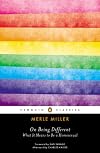
The prejudice one has for homosexuals borders on insane, yet it exists. Why anyone would see a link between homosexuality and communism is beyond me. Same with thinking marriage could be a potential "cure" for homosexuality. These are the beliefs of the ignorant. It took Miller fifty years to come out of the closet. That is an unimaginable length of time to hide one's true self yet it happens all the time. Miller's essay "On Being Different" is a valiant attempt to respond to the ignorant show more and expose the human side of love. He discusses the prejudices and fears without flinching. There is grace threaded throughout his anger. show less
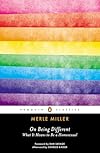
Read for my 20th century queer project, for the year of 1971.
Do I go into how Merle Miller’s essay was a response to a homophobic article published by Harper’s, written by Joseph Epstein? Do I get into the fact that this seemingly mild-mannered, well educated writer, biographer and war correspondent was “sick and tired of reading and hearing such goddamn, demeaning, degrading bullshit about me and my friends?”
In both the foreword and afterword, written respectively by Dan Savage and show more Charles Kaiser, they speak of his anger. But first I noticed Miller’s tenderness, his gentleness. I heard his pleas. He saw queer activists organising, becoming militant in their demand for rights and immovable in the face of bigotry. But he felt, despite taking part in meetings and speaking with them, that he couldn’t force himself to be so uncompromising.
He wanted to be respected, liked. Loved, even. And it shows.
The essay itself is very readable, very easy, very accessible, even if some of the historical context, names and protests went over my head. Miller’s quips everyone worrying about homosexual sons when no one’s thought about lesbian daughters, or lesbians at all for that matter, had me laughing. Lesbian culture has been shot down historically from people in positions of power for thousands of years.
People simply refused to acknowledge it existed. Queen Victoria refused to even entertain the idea. Hitler also refused to believe it was a thing, which meant that lesbian culture, bars, zines and dating scenes flourished during the WWII in Berlin. The American military at the time, while having questions about men’s sexual preferences, never asked women the same questions and as a result the (unmarried, childless) women who joined were often queer.
So the fact that Merle was like, “Is nobody going to think of the lesbians?” was hilarious, especially considering he then only continues to talk from his own experience (which, in his defence, is more than fair).
So yes, Miller was angry. But he was a great many other things besides.
To hear him speak of E.M. Forster as someone he communicated with (in real life) was a darling moment. E.M. Forster really does feel far, far away from me. It is nice to know he was not so far.
Perhaps the most beautiful thing about Miller’s essay is that what happened to him happened to many of us. We could no longer shoulder the burden of being closeted.
Despite the risks, despite the eventual fallout amongst friends, family and loved ones, he came out.
He had no choice. So he came out at 52, after being married, divorced and working as writer. Stunning but not surprising, that this revolutionary essay should receive a little more than a cursory mention in his Wikipedia article.
And so, rather than see his anger, I saw a man who was tired of carrying his burden, set it down, and, in amongst the veritable turmoil caused by his article, found his friends amongst the crowd.
And what an admirable thing he did.
tw: mention of racial slurs, queer slurs show less
Do I go into how Merle Miller’s essay was a response to a homophobic article published by Harper’s, written by Joseph Epstein? Do I get into the fact that this seemingly mild-mannered, well educated writer, biographer and war correspondent was “sick and tired of reading and hearing such goddamn, demeaning, degrading bullshit about me and my friends?”
In both the foreword and afterword, written respectively by Dan Savage and show more Charles Kaiser, they speak of his anger. But first I noticed Miller’s tenderness, his gentleness. I heard his pleas. He saw queer activists organising, becoming militant in their demand for rights and immovable in the face of bigotry. But he felt, despite taking part in meetings and speaking with them, that he couldn’t force himself to be so uncompromising.
He wanted to be respected, liked. Loved, even. And it shows.
The essay itself is very readable, very easy, very accessible, even if some of the historical context, names and protests went over my head. Miller’s quips everyone worrying about homosexual sons when no one’s thought about lesbian daughters, or lesbians at all for that matter, had me laughing. Lesbian culture has been shot down historically from people in positions of power for thousands of years.
People simply refused to acknowledge it existed. Queen Victoria refused to even entertain the idea. Hitler also refused to believe it was a thing, which meant that lesbian culture, bars, zines and dating scenes flourished during the WWII in Berlin. The American military at the time, while having questions about men’s sexual preferences, never asked women the same questions and as a result the (unmarried, childless) women who joined were often queer.
So the fact that Merle was like, “Is nobody going to think of the lesbians?” was hilarious, especially considering he then only continues to talk from his own experience (which, in his defence, is more than fair).
So yes, Miller was angry. But he was a great many other things besides.
To hear him speak of E.M. Forster as someone he communicated with (in real life) was a darling moment. E.M. Forster really does feel far, far away from me. It is nice to know he was not so far.
Perhaps the most beautiful thing about Miller’s essay is that what happened to him happened to many of us. We could no longer shoulder the burden of being closeted.
Despite the risks, despite the eventual fallout amongst friends, family and loved ones, he came out.
He had no choice. So he came out at 52, after being married, divorced and working as writer. Stunning but not surprising, that this revolutionary essay should receive a little more than a cursory mention in his Wikipedia article.
And so, rather than see his anger, I saw a man who was tired of carrying his burden, set it down, and, in amongst the veritable turmoil caused by his article, found his friends amongst the crowd.
And what an admirable thing he did.
tw: mention of racial slurs, queer slurs show less
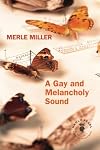
How to describe A Gay and Melancholy Sound? It is easy to dislike Joshua Bland. As a child genius his life has been the antithesis of his name. His mother always strove for fame and recognition through her son to the point of mental abuse. His father abandoned the situation, leaving Josh to be raised by a hostile and unhappy stepfather. When Josh crumbles under the demands and suffers his first major disappointment it sends his future into a tailspin of apathy and low expectation. He goes on show more to become a World War II veteran, a bestselling author and a successful producer without any accomplishment touching his life in any meaningful way. He is so disconnected from his feelings that he decides it's time to commit suicide. Before he does he needs to write his memoirs as one last gift to the world from the prodigy who used to have lofty aspirations. show less
Probably like others, I became aware of Merle Miller’s 1961 novel, “A Gay and Melancholy Sound” through librarian Nancy Pearl and her Book Lust Rediscovery series. In the novel, Joshua Bland (born in 1921) narrates the story of his life in flashbacks that move back and forth in time as he dictates events into a tape recorder. Josh is either a former child prodigy with an IQ of 186 (when tested as a child) or perhaps merely highly gifted with an IQ of 132 (when tested at Fort Dix on show more entering military service during World War II). Regardless, Mr. Bland is a highly cynical man who is critical of most people he encounters in his career as a successful theatrical producer. Beyond merely being cynical, he has a pathologic inability to give or receive love. What’s worse, he has an inexplicable need to hurt those who try to love him. Whereas Joshua’s superior intellect may have predisposed him to cynicism, his inability to love seems to have had its roots in his childhood relationship with his mother and stepfather Pavan. His mother is primarily interested in capitalizing on Josh’s intellect for her own vanity and financial gain. She is exasperated when he fails to win the $10,000 first prize in the Harvey Jordan O’Conner “cranium derby,” and shows no sympathy for him when he is hospitalized for nervous exhaustion. Her next step is to market him as a contestant on a quiz show called “Can You Top Them?” when Josh is 11 years old. Josh is befriended by his philosophy teacher, Orion Bernstein, while a student in the experimental school at Pegasus College in 1936. In a betrayal of this friendship, Josh forges a letter of recommendation for a scholarship in London.
While relating his story, Mr. Bland refers to people in four households where he witnessed love: neighbor and childhood friend Hughie Larrabee, two lesbian teachers (Miss Parkinson and Miss Auerbach) who take a personal interest in his early education, his Aunt Mettabel and Uncle Dick who own a farm where Josh works one summer, and Professor Hollis Lindsay and his wife Kathyrn in London. Josh experiences some happiness while picking strawberries, grooming horses and keeping the books on Uncle Dick’s farm one summer. However he is despondent when Uncle Dick and Aunt Mettabel explain that they cannot simply “adopt” him, and he must return to his mother and stepfather at the end of the summer. In two other situations, Josh’s inability to accept love results in tragic consequences. He argues with his friend Hughie (accusing him of jealously) just before leaving for London to study and the two never see each other again after Hughie enlists and is shot down over the Pacific near Gaudalcanal. While Josh is in England, Orion Bernstein volunteers for the Spanish civil war and is killed. Hollis and Kathyrn Lindsay take Josh into their own home and show him the kind of love they felt for their own son Ronnie, who died many years ago. They leave for a trip to Greece and Josh is to follow, but he receives word that his mother and Pavan have died in a house fire and he prepares to leave for home. On his way out, he smashes a treasured Chinese statue of Kathyrn’s and takes Ronnie’s picture and treasured butterfly collection (inspiration for the cover photo on the Book Lust Rediscoveries edition of the novel). On the boat back to New York, Josh rips the photo to pieces and scatters it on the ocean and then he dumps the butterfly collection overboard.
Josh’s first wife Letty comes from poverty and is determined to become successful and wealthy whatever it takes. Their relationship ends in divorce and Letty makes sure that Josh and their daughter Taffy remain estranged until the end. Letty submits Josh’s fictionalized war letters to a publisher, and Josh achieves fame as the author of “Prodigy as Private.” He becomes a celebrity soldier and is paraded around the country on tours promoting the sale of army bonds until his drunkenness at one event results in his being reassigned to combat, an outcome he secretly wanted. Josh’s war experience with his friend Nick Contino is reminiscent of what happens to Yossarian with the B25 turret gunner Snowden in “Catch 22” (also published in 1961). Nick is decapitated by a German 88 mm anti-tank artillery gun at the siege of Bastogne in Belgium while Josh is running from enemy fire.
Josh’s final attempt to find love with Charley, a woman who is moved by his anti-war speech at a party, as expected, also doesn’t work out. On leaving, she says: “I’m sorry you never had a childhood. I’m sorry for all the hurts you felt and feel. I’m sorry that when somebody reaches out to caress you, you hit them before they can. I thought maybe I could help you, but I can’t. Nobody ever will.” Overall, the book is bleak, and it is hard to sympathize with Bland’s cynicism and self-hatred. It is well-written and kept my interest for the full 570 pages, but I wouldn’t count it among my “top 10” favorite novels. show less
While relating his story, Mr. Bland refers to people in four households where he witnessed love: neighbor and childhood friend Hughie Larrabee, two lesbian teachers (Miss Parkinson and Miss Auerbach) who take a personal interest in his early education, his Aunt Mettabel and Uncle Dick who own a farm where Josh works one summer, and Professor Hollis Lindsay and his wife Kathyrn in London. Josh experiences some happiness while picking strawberries, grooming horses and keeping the books on Uncle Dick’s farm one summer. However he is despondent when Uncle Dick and Aunt Mettabel explain that they cannot simply “adopt” him, and he must return to his mother and stepfather at the end of the summer. In two other situations, Josh’s inability to accept love results in tragic consequences. He argues with his friend Hughie (accusing him of jealously) just before leaving for London to study and the two never see each other again after Hughie enlists and is shot down over the Pacific near Gaudalcanal. While Josh is in England, Orion Bernstein volunteers for the Spanish civil war and is killed. Hollis and Kathyrn Lindsay take Josh into their own home and show him the kind of love they felt for their own son Ronnie, who died many years ago. They leave for a trip to Greece and Josh is to follow, but he receives word that his mother and Pavan have died in a house fire and he prepares to leave for home. On his way out, he smashes a treasured Chinese statue of Kathyrn’s and takes Ronnie’s picture and treasured butterfly collection (inspiration for the cover photo on the Book Lust Rediscoveries edition of the novel). On the boat back to New York, Josh rips the photo to pieces and scatters it on the ocean and then he dumps the butterfly collection overboard.
Josh’s first wife Letty comes from poverty and is determined to become successful and wealthy whatever it takes. Their relationship ends in divorce and Letty makes sure that Josh and their daughter Taffy remain estranged until the end. Letty submits Josh’s fictionalized war letters to a publisher, and Josh achieves fame as the author of “Prodigy as Private.” He becomes a celebrity soldier and is paraded around the country on tours promoting the sale of army bonds until his drunkenness at one event results in his being reassigned to combat, an outcome he secretly wanted. Josh’s war experience with his friend Nick Contino is reminiscent of what happens to Yossarian with the B25 turret gunner Snowden in “Catch 22” (also published in 1961). Nick is decapitated by a German 88 mm anti-tank artillery gun at the siege of Bastogne in Belgium while Josh is running from enemy fire.
Josh’s final attempt to find love with Charley, a woman who is moved by his anti-war speech at a party, as expected, also doesn’t work out. On leaving, she says: “I’m sorry you never had a childhood. I’m sorry for all the hurts you felt and feel. I’m sorry that when somebody reaches out to caress you, you hit them before they can. I thought maybe I could help you, but I can’t. Nobody ever will.” Overall, the book is bleak, and it is hard to sympathize with Bland’s cynicism and self-hatred. It is well-written and kept my interest for the full 570 pages, but I wouldn’t count it among my “top 10” favorite novels. show less
Lists
Awards


You May Also Like


Associated Authors
Statistics
- Works
- 25
- Also by
- 1
- Members
- 1,855
- Popularity
- #13,873
- Rating
- 3.9
- Reviews
- 22
- ISBNs
- 57
- Languages
- 2