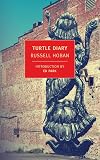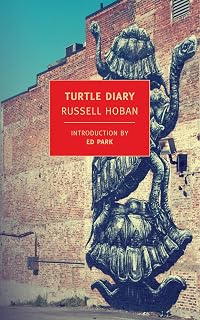
Turtle Diary (New York Review Books Classics)
by Russell Hoban
On This Page
Description
In this wise and touching classic by the author of Riddley Walker, two lonely Londoners bond over a plan to free the sea turtles at the city zoo.Life in a city can be atomizing, isolating. And it certainly is for William G. and Neaera H., the strangers at the center of Russell Hoban’s surprisingly heartwarming novel Turtle Diary. William, a clerk at a used-book store, lives in a rooming house after a divorce that has left him without home or family. Neaera is a successful writer of show more children’s books, who, in her own estimation, “looks like the sort of spinster who doesn’t keep cats and is not a vegetarian. Looks…like a man’s woman who hasn’t got a man.” Entirely unknown to each other, they are both drawn to the turtle tank at the London zoo with “minds full of turtle thoughts,” wondering how the turtles might be freed. And then comes the day when Neaera walks into William’s bookstore, and together they form an unlikely partnership to make what seemed a crazy dream become a reality. show less
Tags
Recommendations

























Member Reviews
A bit different from the (five) other Hoban novels I've read, this is a mostly naturalistic narrative with only hints of magic. Two middle-aged individuals, each leading their own kind of big-city solitary existence, are drawn independently to the sea turtles in the zoo and form an almost intuitive pact to liberate them off the coast of Cornwall. Sounds schmaltzy, but Hoban's eye for everyday detail keeps it grounded, and the connections that emerge between the two are not what you would expect. The turtle motif didn't really do much for me, but I loved the background detail, the glimpses into the lives of the minor characters and the depiction of 1970's London. Fine writing, although I prefer his more pyrotechnical novels like show more Pilgermann and of course Riddley Walker. show less
‘Two minds full of turtle thoughts’
Quirky middle-aged single introverts ✅ mild existential introspection ✅ environmentally conscious anti-establishment animal rescue ✅ Turtle Diary by Russell Hoban couldn’t fail in seducing me with it’s heartwarming tale. The two said introverts coincidentally (due to the fact they don’t know each other) decide at the same time to do something about the two giant sea turtles at their local zoo which are kept cramped in a tiny tank. The turtles serve as the fulcrum to the lives of Neaera H. a scatty children’s author and new owner of a stolid water beetle and William G. a hard-up divorcee who has lost everything to his ex-wife, but this isn’t a particularly sentimental or predictable show more tale. It is rather an examination on middle age, loneliness, authenticity and self awareness.
The second role of the turtles is a metaphorical one: they are a symbol of being true to oneself, of concentrating on what is important in your life and accepting who you are. I have collected a lot of Hoban’s works after I read a review drawing comparisons between him and #kurtvonnegut. After my first venture I wouldn’t particularly agree with this, however there is no doubt he was a talented writer and I’m looking forward to the ten or so others of his books I’ve bought, happy in the knowledge he’s good and my unrestrained purchasing seems like it won’t end up being foolish! show less
Quirky middle-aged single introverts ✅ mild existential introspection ✅ environmentally conscious anti-establishment animal rescue ✅ Turtle Diary by Russell Hoban couldn’t fail in seducing me with it’s heartwarming tale. The two said introverts coincidentally (due to the fact they don’t know each other) decide at the same time to do something about the two giant sea turtles at their local zoo which are kept cramped in a tiny tank. The turtles serve as the fulcrum to the lives of Neaera H. a scatty children’s author and new owner of a stolid water beetle and William G. a hard-up divorcee who has lost everything to his ex-wife, but this isn’t a particularly sentimental or predictable show more tale. It is rather an examination on middle age, loneliness, authenticity and self awareness.
The second role of the turtles is a metaphorical one: they are a symbol of being true to oneself, of concentrating on what is important in your life and accepting who you are. I have collected a lot of Hoban’s works after I read a review drawing comparisons between him and #kurtvonnegut. After my first venture I wouldn’t particularly agree with this, however there is no doubt he was a talented writer and I’m looking forward to the ten or so others of his books I’ve bought, happy in the knowledge he’s good and my unrestrained purchasing seems like it won’t end up being foolish! show less
I think of the turtles swimming steadily against the current all the way to Ascension. I think of them swimming through all that golden-green water over the dark, over the chill of the deeps and the jaws of the dark. And I think of the sun over the water, the sun through the water, the eye holding the sun, being held by it with no thought and only the rhythm of the going, the steady wing-strokes of the flippers in the water. Then it doesn’t seen hard to believe. It seems the only way to do it, the only way in fact to be : swimming, swimming, the eye held by the sun, no sharks in the mind, nothing in the mind.
Two strangers, William G. and Neaera H., become obsessed with freeing the sea turtles at London Zoo, and the head reptile keeper show more agrees to help them do it. Both lonely and living aimless lives, they are gripped by the long journey of the sea turtles across the oceans, and the fact that the turtles know exactly where they are going and can navigate their way across vast oceans to one particular small island. It is quite a sad book, about two people whose plotting doesn’t bring them closer together, as they realise that they are too similar to be a good fit, but by the end of the book there are some hopeful signs for their future. I enjoyed it a lot. show less
Two strangers, William G. and Neaera H., become obsessed with freeing the sea turtles at London Zoo, and the head reptile keeper show more agrees to help them do it. Both lonely and living aimless lives, they are gripped by the long journey of the sea turtles across the oceans, and the fact that the turtles know exactly where they are going and can navigate their way across vast oceans to one particular small island. It is quite a sad book, about two people whose plotting doesn’t bring them closer together, as they realise that they are too similar to be a good fit, but by the end of the book there are some hopeful signs for their future. I enjoyed it a lot. show less
Review published in 3:AM Magazine: http://www.3ammagazine.com/3am/turtle-zen/
It would be understandable to expect Russell Hoban’s Turtle Diary to be a light-hearted romantic comedy, one where two lonely protagonists come together over a crazy caper, a plan to set free the sea turtles in the London Zoo, fall in love, and live happily ever after. Fortunately, Hoban’s 1975 novel bears little resemblance to this simplistic narrative. Instead, Turtle Diary is a quiet, thoughtful examination of the loneliness of middle age and the quest to break free of it. William G. is divorced, 45, living alone in a small flat. He is estranged from his ex-wife and his two daughters, works in a bookshop and searches for ways to fill his empty hours. show more Neaera H., a writer and illustrator of children’s books, is single, 43, living a solitary life in which she works late into the night, and goes days without talking to another person. They both seek solace in visits to the London Zoo, where they independently arrive at the same plan: to set free three large sea turtles that are confined in a small area in the zoo’s aquarium. After meeting in William’s bookshop over books about turtles, they eventually share their “turtle thoughts” with each other, and embark on a plan to set the turtles free off the coast of Polperro, Cornwall. Turtle Diary explores both the turtles’ significance as symbols of a different way to live, and William and Neaera’s respective struggles to reshape their lives. This is a novel that focuses not so much on William and Neaera’s freeing the turtles, as on their attempts to free themselves.
The novel’s structure provides rich opportunities to get to know both characters’ thoughts and fears, as its chapters are alternating diary entries written by each character. Hoban creates internal monologues that weave together observations of settings, recollections of interactions with others, philosophical musings, passages from novels and poems, memories, and the minutiae of daily tasks. Both William and Neaera are frozen by fear of being hurt. Although they are lonely, they veer from contact with others. And their loneliness bears the weight of time lost with little to show for it. As William notes,
I used to think when I shaved and looked at my face that that bit of time didn’t count, was just the time in between things. Now I think it’s the time that counts most. It’s those times that all the other times are in between. It’s the time when nothing helps and the great heavy boot of the past is planted squarely in your back and showing you forward. Sometimes my mind gives me a flash of road I’ll never see again, sometimes a face that’s gone, gone. Moments like grains of sand but the beach is empty. Millions of moments in forty-five years. Letters in boxes, photos in drawers.
For both William and Neaera, sea turtles represent a different way to live. No regrets, no hesitation, no existential struggles. Throughout their diary entries, William and Neaera marvel at the sea turtles’ uncanny ability to navigate through thousands of miles, swimming through ocean currents to Ascension Island to breed. The turtles live by instincts, and their actions embody what they are. As Neaera notes, “[The turtles] were compacted of finding, finding was embodied in them.” In one passage, William jumps from his speculations about shamans to this reflection about the sea turtles,
Could I be a turtle? Could I through an act of ecstasy swim unafraid and never lost, finding, finding? Swimming with Pangaea printed on my brain and bones, the ancient continent that was before the land masses drifted apart. That’s part of it too: there were no seas between, the land was one, there was one thing, unbroken. Now there are thousands of miles of open water and the strong ones, the swimmers, the unlost, are driven to trace the paths between, maintain the ancient connection. I don’t know whether I can keep going. A turtle doesn’t have to decide every morning whether to keep on bothering, it just carries on. Maybe that’s why man kills everything: envy.
William and Neaera cringe to see the turtles and other animals caged at the zoo, yet another example of humans’ callousness. Throughout the novel, animals are juxtaposed with humans. Animals represent a kind of integrity, an ability to live in the moment and to act without agonizing over potential dangers. In one passage, Neaera considers the behavior of the wading birds at the zoo:
The birds were all quite good-natured and reasonable about it, they seemed more grown-up than the Zoo management, as if they’d been caught and caged not because they weren’t clever enough to avoid it but because they simply didn’t think in terms of nets and cages, those were things for cunning children. So here they all were, interned for none of them knew how long. They made the best of it, better than people would have done I think, and all of them appeared to get on rather neatly together…. I felt dissatisfied, as one does when morally strong preconceptions have to be questioned. The birds were not silent prisoners wasting away like Dr. Manette in the Bastille nor were they beating pitiful wings against the wire mesh of their captivity. Their understanding of the whole thing seemed deeper and simpler than mine.
William describes the gibbons as “Zen-like” as they swing from bar to bar, not appearing to be bothered by their confinement. In another example, Neaera marvels at Arabella, a spider on Sky Lab-2 that had successfully spun a web in space, in spite of not knowing which end was up, literally. Even a dead tomcat gives William inspiration, “He looked as if he’d been flying high until he was brought down. I’ve never seen such a lively-looking dead cat.”
William and Neaera are not the only people who have lessons to learn from animals. Some of the supporting characters in Turtle Diary reflect other ways to suffer from loneliness. Mrs. Inchcliffe, William’s landlady, spends evenings in her lumber-room, remembering her former boyfriend who used to refurbish antiques there. Mr. Sandor, an immigrant who lives next to William, describes his feeling of invisibility: “You make effort, put fake smile on face, make politeness. You nod hello but you don’t look at foreigner like regular human person.” And Miss Neap, his upstairs neighbor, rushes in and out of their building, clasping theatre tickets or rushing to see her parents, but without having any substantial interaction with her neighbors other than smiling and saying a quick hello. There are some moments of humor in William’s interactions with his neighbors, but also poignant scenes in which William has to confront the consequences of a life lived without meaningful relationships with others.
Of all the characters in Turtle Diary, George Fairbairn, the Head Keeper at London Zoo, is the only person living a harmonious life. Early in the novel, William and Neaera both meet him and discuss the turtles with him. George plays a small but meaningful role in the novel, especially as Neaera gets to know him better.
George Fairbairn had been a background person until now. Now he was the dot before my face, the face before my face. Knowing that I should never see the whole picture I didn’t bother to ask myself what it was. He had seemed so medium, so unspecially placed between the top and bottom of life that I hadn’t really given him full human recognition…. He had a clean look and a clean clear feel, nothing muddy. That was enough. There was about him the smell or maybe just the idea of dry grass warm in the sun.
Neaera, whose life is even more isolated than William’s, immerses herself in details. She lacks perspective on her life, how lonely she is, because she could not step back to see herself in the context of a wider world. Just as William’s challenge is to live fully in the present, Neaera’s is to gain the perspective to see her life, and the people around her, in context.
In Turtle Diary, Hoban refuses to present simple solutions or pat endings. Their plan to free the turtles is a catalyst for change in William and Neaera’s lives, rather than serving as the novel’s focus. This is one of the novel’s strengths: exploring loneliness in all its complexity. Although Turtle Diary was originally published in 1975, Hoban’s exploration of William and Neaera’s loneliness feels like it could have been published in 2013. This relevance comes in part from Hoban’s ability to depict interior lives, to weave existential speculation and emotions through quotidian tasks and quirky observations. In part, it stems from the persistence of Hoban’s main concerns: coming to terms with middle-age; learning to live fully in the present; gaining true perspective on a life, past, present, and future. It seems we still have lessons to learn from Hoban’s sea turtles. show less
It would be understandable to expect Russell Hoban’s Turtle Diary to be a light-hearted romantic comedy, one where two lonely protagonists come together over a crazy caper, a plan to set free the sea turtles in the London Zoo, fall in love, and live happily ever after. Fortunately, Hoban’s 1975 novel bears little resemblance to this simplistic narrative. Instead, Turtle Diary is a quiet, thoughtful examination of the loneliness of middle age and the quest to break free of it. William G. is divorced, 45, living alone in a small flat. He is estranged from his ex-wife and his two daughters, works in a bookshop and searches for ways to fill his empty hours. show more Neaera H., a writer and illustrator of children’s books, is single, 43, living a solitary life in which she works late into the night, and goes days without talking to another person. They both seek solace in visits to the London Zoo, where they independently arrive at the same plan: to set free three large sea turtles that are confined in a small area in the zoo’s aquarium. After meeting in William’s bookshop over books about turtles, they eventually share their “turtle thoughts” with each other, and embark on a plan to set the turtles free off the coast of Polperro, Cornwall. Turtle Diary explores both the turtles’ significance as symbols of a different way to live, and William and Neaera’s respective struggles to reshape their lives. This is a novel that focuses not so much on William and Neaera’s freeing the turtles, as on their attempts to free themselves.
The novel’s structure provides rich opportunities to get to know both characters’ thoughts and fears, as its chapters are alternating diary entries written by each character. Hoban creates internal monologues that weave together observations of settings, recollections of interactions with others, philosophical musings, passages from novels and poems, memories, and the minutiae of daily tasks. Both William and Neaera are frozen by fear of being hurt. Although they are lonely, they veer from contact with others. And their loneliness bears the weight of time lost with little to show for it. As William notes,
I used to think when I shaved and looked at my face that that bit of time didn’t count, was just the time in between things. Now I think it’s the time that counts most. It’s those times that all the other times are in between. It’s the time when nothing helps and the great heavy boot of the past is planted squarely in your back and showing you forward. Sometimes my mind gives me a flash of road I’ll never see again, sometimes a face that’s gone, gone. Moments like grains of sand but the beach is empty. Millions of moments in forty-five years. Letters in boxes, photos in drawers.
For both William and Neaera, sea turtles represent a different way to live. No regrets, no hesitation, no existential struggles. Throughout their diary entries, William and Neaera marvel at the sea turtles’ uncanny ability to navigate through thousands of miles, swimming through ocean currents to Ascension Island to breed. The turtles live by instincts, and their actions embody what they are. As Neaera notes, “[The turtles] were compacted of finding, finding was embodied in them.” In one passage, William jumps from his speculations about shamans to this reflection about the sea turtles,
Could I be a turtle? Could I through an act of ecstasy swim unafraid and never lost, finding, finding? Swimming with Pangaea printed on my brain and bones, the ancient continent that was before the land masses drifted apart. That’s part of it too: there were no seas between, the land was one, there was one thing, unbroken. Now there are thousands of miles of open water and the strong ones, the swimmers, the unlost, are driven to trace the paths between, maintain the ancient connection. I don’t know whether I can keep going. A turtle doesn’t have to decide every morning whether to keep on bothering, it just carries on. Maybe that’s why man kills everything: envy.
William and Neaera cringe to see the turtles and other animals caged at the zoo, yet another example of humans’ callousness. Throughout the novel, animals are juxtaposed with humans. Animals represent a kind of integrity, an ability to live in the moment and to act without agonizing over potential dangers. In one passage, Neaera considers the behavior of the wading birds at the zoo:
The birds were all quite good-natured and reasonable about it, they seemed more grown-up than the Zoo management, as if they’d been caught and caged not because they weren’t clever enough to avoid it but because they simply didn’t think in terms of nets and cages, those were things for cunning children. So here they all were, interned for none of them knew how long. They made the best of it, better than people would have done I think, and all of them appeared to get on rather neatly together…. I felt dissatisfied, as one does when morally strong preconceptions have to be questioned. The birds were not silent prisoners wasting away like Dr. Manette in the Bastille nor were they beating pitiful wings against the wire mesh of their captivity. Their understanding of the whole thing seemed deeper and simpler than mine.
William describes the gibbons as “Zen-like” as they swing from bar to bar, not appearing to be bothered by their confinement. In another example, Neaera marvels at Arabella, a spider on Sky Lab-2 that had successfully spun a web in space, in spite of not knowing which end was up, literally. Even a dead tomcat gives William inspiration, “He looked as if he’d been flying high until he was brought down. I’ve never seen such a lively-looking dead cat.”
William and Neaera are not the only people who have lessons to learn from animals. Some of the supporting characters in Turtle Diary reflect other ways to suffer from loneliness. Mrs. Inchcliffe, William’s landlady, spends evenings in her lumber-room, remembering her former boyfriend who used to refurbish antiques there. Mr. Sandor, an immigrant who lives next to William, describes his feeling of invisibility: “You make effort, put fake smile on face, make politeness. You nod hello but you don’t look at foreigner like regular human person.” And Miss Neap, his upstairs neighbor, rushes in and out of their building, clasping theatre tickets or rushing to see her parents, but without having any substantial interaction with her neighbors other than smiling and saying a quick hello. There are some moments of humor in William’s interactions with his neighbors, but also poignant scenes in which William has to confront the consequences of a life lived without meaningful relationships with others.
Of all the characters in Turtle Diary, George Fairbairn, the Head Keeper at London Zoo, is the only person living a harmonious life. Early in the novel, William and Neaera both meet him and discuss the turtles with him. George plays a small but meaningful role in the novel, especially as Neaera gets to know him better.
George Fairbairn had been a background person until now. Now he was the dot before my face, the face before my face. Knowing that I should never see the whole picture I didn’t bother to ask myself what it was. He had seemed so medium, so unspecially placed between the top and bottom of life that I hadn’t really given him full human recognition…. He had a clean look and a clean clear feel, nothing muddy. That was enough. There was about him the smell or maybe just the idea of dry grass warm in the sun.
Neaera, whose life is even more isolated than William’s, immerses herself in details. She lacks perspective on her life, how lonely she is, because she could not step back to see herself in the context of a wider world. Just as William’s challenge is to live fully in the present, Neaera’s is to gain the perspective to see her life, and the people around her, in context.
In Turtle Diary, Hoban refuses to present simple solutions or pat endings. Their plan to free the turtles is a catalyst for change in William and Neaera’s lives, rather than serving as the novel’s focus. This is one of the novel’s strengths: exploring loneliness in all its complexity. Although Turtle Diary was originally published in 1975, Hoban’s exploration of William and Neaera’s loneliness feels like it could have been published in 2013. This relevance comes in part from Hoban’s ability to depict interior lives, to weave existential speculation and emotions through quotidian tasks and quirky observations. In part, it stems from the persistence of Hoban’s main concerns: coming to terms with middle-age; learning to live fully in the present; gaining true perspective on a life, past, present, and future. It seems we still have lessons to learn from Hoban’s sea turtles. show less
Told in chapters with alternating narration, William G and Neaera are both middle aged, lonely, and alone in greater London. Each is attracted to the sea turtle exhibit at the zoo. They end up partnering with the turtles' keeper to set them free.
An unusual story, with two lonely people--one a divorced father, the other a successful but very single children's book author--who join up for an escapade. For me, the most relatable part was the stress and worry each feels after they commit to setting the turtles free. And both stick to it, and it does actually affect how each lives their lives in the aftermath. In William's case, we see where his life might have gone. Neaera, meanwhile, takes a chance on love. This book is both sad and sweet show more and hopeful--a testament to lonely modern life and where it can lead, and the importance of taking chances. show less
An unusual story, with two lonely people--one a divorced father, the other a successful but very single children's book author--who join up for an escapade. For me, the most relatable part was the stress and worry each feels after they commit to setting the turtles free. And both stick to it, and it does actually affect how each lives their lives in the aftermath. In William's case, we see where his life might have gone. Neaera, meanwhile, takes a chance on love. This book is both sad and sweet show more and hopeful--a testament to lonely modern life and where it can lead, and the importance of taking chances. show less
A quiet, understated story of how two people discover themselves and each other while saving some turtles. They are both transformed by their revolutionary act, and their diary entries transform us.
"I had always assumed that I was the central character in my own story, but now it occurred to me that I might in fact be only a minor character in someone else's."--William
"I was in my ocean, this was the only ocean there was for me, the dry streets of London and my square without a fountain. No one could make me free by putting me somewhere else."--Neara
Two lonely middle-aged Londoners come together to rescue the sea turtles at Regents Park Zoo and release them back into the ocean. The story in narrated in alternating chapters by Neara, a children's book author and illustrator, and William, a recently divorced bookstore employee. Even though they do not meet until fairly far along in the book, it is eerie how their entries frequently show more mirror each other. The book is touching, and hopeful, even though it doesn't go for the easy ending.
First Line William: "I don't want to go to the zoo anymore."
Last Line William: "I took a taxi back to the shop, it was that kind of day."
First Line Neara: "I fancied a China castle for the aquarium but they had none at the shop, so I contented myself with a smart plastic shipwreck."
Last Line Neara: "Before going up to the flat I went into the square, played hopscotch in it just as it was, with no fountain."
3 1/2 stars
This was a reread for me. I read it back in the 1970's or early 80's after seeing a very good movie based on the book starring Glenda Jackson. show less
"I was in my ocean, this was the only ocean there was for me, the dry streets of London and my square without a fountain. No one could make me free by putting me somewhere else."--Neara
Two lonely middle-aged Londoners come together to rescue the sea turtles at Regents Park Zoo and release them back into the ocean. The story in narrated in alternating chapters by Neara, a children's book author and illustrator, and William, a recently divorced bookstore employee. Even though they do not meet until fairly far along in the book, it is eerie how their entries frequently show more mirror each other. The book is touching, and hopeful, even though it doesn't go for the easy ending.
First Line William: "I don't want to go to the zoo anymore."
Last Line William: "I took a taxi back to the shop, it was that kind of day."
First Line Neara: "I fancied a China castle for the aquarium but they had none at the shop, so I contented myself with a smart plastic shipwreck."
Last Line Neara: "Before going up to the flat I went into the square, played hopscotch in it just as it was, with no fountain."
3 1/2 stars
This was a reread for me. I read it back in the 1970's or early 80's after seeing a very good movie based on the book starring Glenda Jackson. show less
Members
- Recently Added By
Lists

wilfully eccentric little england (cosy read novels, england)
45 works; 15 members

Books Read in 2015
3,299 works; 129 members

BingoDOG - Animals in Adult Fiction
78 works; 20 members

Reading LIst
648 works; 1 member
Author Information

111+ Works 30,642 Members
Russell Hoban was born in Lansdale, Pennsylvania on February 4, 1925. He attended art school in Philadelphia and during World War II, he served in the Army and earned a Bronze Star. He taught art in New York and Connecticut, and also worked as an advertising copywriter and a freelance illustrator before beginning his career as a writer. He began show more publishing children's books in the late 1950s, including What Does It Do and How Does It Work?, Bedtime for Frances and the six other books featuring Frances, The Story of Hester Mouse Who Became a Writer, What Happened When Jack and Daisy Tried to Fool the Tooth Fairies, and The Mouse and His Child, which was adapted as an animated film in 1977. In 1973, he published his first adult novel, The Lion of Boaz-Jachin and Jachin-Boaz. His other books for adults include Turtle Diary, Pilgermann, and Ridley Walker. He received the John W. Campbell Memorial Award and the Australian Science Fiction Achievement Award for Ridley Walker. He died on December 13 at the age of 86. In 2015 he made the Kate Greenaway Medal shortlist for his title Jim's Lion wth illlustrator Alexis Deacon. (Bowker Author Biography) show less
Some Editions
Awards and Honors
Distinctions
The Guardian Book of the Day (2021-05-04)
Series
Belongs to Publisher Series
Work Relationships
Is contained in
Has the adaptation
Common Knowledge
- Canonical title*
- Diario della tartaruga
- Original publication date
- 1975
- Important places
- London, England, UK
- Related movies
- Turtle Diary (1985 | IMDb)
- Dedication
- To Ben
- First words
- I don't want to go to the Zoo anymore.
- Last words
- (Click to show. Warning: May contain spoilers.)I took a taxi back to the shop, it was that kind of day.
*Some information comes from Common Knowledge in other languages. Click "Edit" for more information.
Classifications
Statistics
- Members
- 723
- Popularity
- 39,291
- Reviews
- 20
- Rating
- (4.05)
- Languages
- 8 — Catalan, Dutch, English, German, Italian, Norwegian (Bokmål), Spanish, Swedish
- Media
- Paper, Ebook
- ISBNs
- 25
- UPCs
- 1
- ASINs
- 5