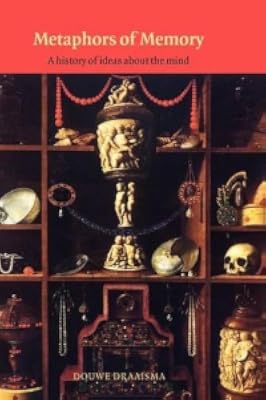
Metaphors of Memory: A History of Ideas about the Mind
by Douwe Draaisma
On This Page
Description
What is memory? It is at the same time ephemeral, unreliable and essential to everything we do. Without memory we lose our sense of identity, reasoning, even our ability to perform simple physical tasks. Yet it is also elusive and difficult to define, and throughout the ages philosophers and psychologists have used metaphors as a way of understanding it. First published in 2000, this fascinating book takes the reader on a guided tour of these metaphors of memory from ancient times to the show more present day. Crossing continents and disciplines, it provides a compelling history of ideas about the mind by exploring the way these metaphors have been used - metaphors often derived from the techniques and instruments developed over the years to store information, ranging from wax tablets and books to photography, computers and even the hologram. Accessible and thought-provoking, this book should be read by anyone who is interested in memory and the mind. show lessTags
Recommendations























Member Recommendations
Member Reviews
4.0 out of 5 stars Our memory of memory research, April 19, 2010
By Emre Sevinc "Software Developer, Cognitive Sc... (Antwerp, Belgium) - See all my reviews
This review is from: Metaphors of Memory: A History of Ideas about the Mind (Hardcover)
This is a highly accessible account of the history of brain research that focuses on memory and how our views on memory changed throughout the ages as we invented new metaphors while 'forgetting' some old ones. The author tracks the subtle changes in the use of metaphors in describing the nature of memory and he compares the explanatory power of metaphors using beautiful examples. He also touches upon the point of whether using metaphors are really useful in explaining scientific theories and then show more provides some surprising examples from the writings of Hooke. I owe the author my enlightenment on the topic of Hooke's memory research. I certainly was not aware of some very interesting papers by Robert Hooke in which he tried to describe the functioning of human memory. This example alone is more than enough to show the depth of Douwe Draaisma's research into the history of psychology. But he does not stop there and goes on to provide astonishing parts from that history, especially in the chapters related to the period before and after Hermann Ebbinghaus.
While keeping a very strong narrative on the history of memory, Draaisma never forgets to touch upon the psychological and socio-economical dynamics that shape the scientists and the world they live in. The part about the connections between the holographic memory theory and the modern connectionism / neural network theories is worth reading more than once because it is a very good example of science history, a history that is still alive.
This book will probably satisfy both the layman and the educated reader, both will learn different things and gain a better perspective on the deep and humane subject of memory. show less
By Emre Sevinc "Software Developer, Cognitive Sc... (Antwerp, Belgium) - See all my reviews
This review is from: Metaphors of Memory: A History of Ideas about the Mind (Hardcover)
This is a highly accessible account of the history of brain research that focuses on memory and how our views on memory changed throughout the ages as we invented new metaphors while 'forgetting' some old ones. The author tracks the subtle changes in the use of metaphors in describing the nature of memory and he compares the explanatory power of metaphors using beautiful examples. He also touches upon the point of whether using metaphors are really useful in explaining scientific theories and then show more provides some surprising examples from the writings of Hooke. I owe the author my enlightenment on the topic of Hooke's memory research. I certainly was not aware of some very interesting papers by Robert Hooke in which he tried to describe the functioning of human memory. This example alone is more than enough to show the depth of Douwe Draaisma's research into the history of psychology. But he does not stop there and goes on to provide astonishing parts from that history, especially in the chapters related to the period before and after Hermann Ebbinghaus.
While keeping a very strong narrative on the history of memory, Draaisma never forgets to touch upon the psychological and socio-economical dynamics that shape the scientists and the world they live in. The part about the connections between the holographic memory theory and the modern connectionism / neural network theories is worth reading more than once because it is a very good example of science history, a history that is still alive.
This book will probably satisfy both the layman and the educated reader, both will learn different things and gain a better perspective on the deep and humane subject of memory. show less
Ratings
Members
- Recently Added By
Author Information

44+ Works 978 Members
Douwe Draaisma is Heymans Professor of the History of Psychology University of Groningen. He is the author of several internationally acclaimed books, including Disturbances of the Mind (2006) and Why Life Speeds Up As You Get Older (2004). He lives in Groningen, Netherlands.
Awards and Honors
Awards
Classifications
- Genres
- Nonfiction, General Nonfiction, Science & Nature, History
- DDC/MDS
- 153.12 — Philosophy & psychology Psychology Conscious mental processes and intelligence Learning, Memory, And Motivation Memory
- LCC
- BF371 .D6813 — Philosophy, Psychology and Religion Psychology Psychology Consciousness. Cognition
- BISAC
Statistics
- Members
- 122
- Popularity
- 266,396
- Reviews
- 1
- Rating
- (4.13)
- Languages
- 8 — Czech, Dutch, English, French, German, Polish, Portuguese, Turkish
- Media
- Paper
- ISBNs
- 10