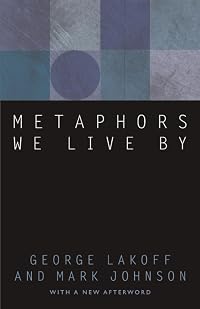
Metaphors We Live By
by George Lakoff, Mark Johnson (Author)
On This Page
Description
The now-classic Metaphors We Live By changed our understanding of metaphor and its role in language and the mind. Metaphor, the authors explain, is a fundamental mechanism of mind, one that allows us to use what we know about our physical and social experience to provide understanding of countless other subjects. Because such metaphors structure our most basic understandings of our experience, they are "metaphors we live by"-metaphors that can shape our perceptions and actions without our show more ever noticing them. In this updated edition of Lakoff and Johnson's influential book, the authors supply an afterword surveying how their theory of metaphor has developed within the cognitive sciences to become central to the contemporary understanding of how we think and how we express our thoughts in language. show lessTags
Recommendations





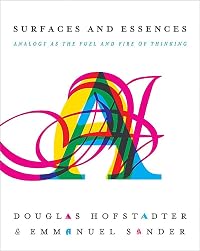


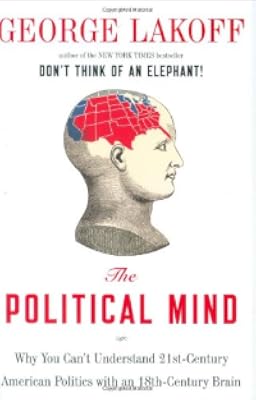
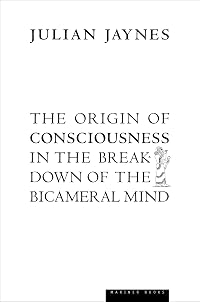
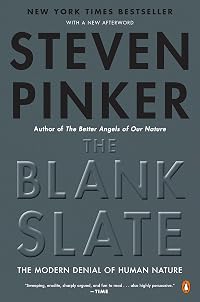
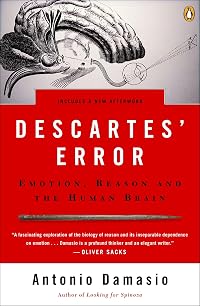
Member Recommendations
Member Reviews
I found this book to be a little duplicitous, in that I absolutely adored the first 60% and uncontrollably hated the second half. The first half focuses on the very strong and well-argued thesis that humans live by metaphor, and indeed that metaphor is our only means of understanding abstract, non-directly-experiential concepts. It's repetitive at times, but not distractingly so.
The second half, however, is where everything falls apart. The authors ironically fail to notice their mind-projection of human-understanding-as-metaphor to the external world, and spend the remainder of the book arguing that because humans experience the universe through metaphor that there can be no absolute truth in the universe. It's nice that Lakoff and show more Johnson are arguing against the contemporary philosophical stance on this, and, while they get some things right, they're significantly further off-course than the Bayesians on the same subject matter.
Perhaps more heinously, the authors spend a good deal of the second half of the book arguing with straw-man objectivists in an attempt to drive home their conclusions, at one point quoting philosophers as far back as Plato to argue their claims (despite the fact that one of their central arguments is that western philosophy is impossibly flawed as it stands). It's a terribly disappointing end to an otherwise fantastic book.
If I had the ability, I'd rate this 3.5 stars, but alas, I do not. show less
The second half, however, is where everything falls apart. The authors ironically fail to notice their mind-projection of human-understanding-as-metaphor to the external world, and spend the remainder of the book arguing that because humans experience the universe through metaphor that there can be no absolute truth in the universe. It's nice that Lakoff and show more Johnson are arguing against the contemporary philosophical stance on this, and, while they get some things right, they're significantly further off-course than the Bayesians on the same subject matter.
Perhaps more heinously, the authors spend a good deal of the second half of the book arguing with straw-man objectivists in an attempt to drive home their conclusions, at one point quoting philosophers as far back as Plato to argue their claims (despite the fact that one of their central arguments is that western philosophy is impossibly flawed as it stands). It's a terribly disappointing end to an otherwise fantastic book.
If I had the ability, I'd rate this 3.5 stars, but alas, I do not. show less
The main thesis of Metaphors We Live By is that metaphor, rather than being a matter of language to be used to provide style and aid rhetoric, is a key element in thought and understanding. Consider the ARGUMENT IS WAR metaphor: we talk of winning or losing an argument, as well as attacking positions and devising argument strategies. These are not just stylistic choices; they’re how we understand the concept of an argument. You can imagine a culture where arguments are not understood in terms of a struggle that could be won or lost, where perhaps the goal of the argument is to reach mutual understanding, but then someone from our culture would probably not perceive it as an argument at all.
he book then goes on to establish the notion show more of conceptual metaphor and give several more examples (such as TIME IS MONEY, MORE IS UP and IDEAS ARE FOOD). I’ve found the idea of conceptual metaphors to be very enlightening and it made me realize how much of the way we think about our everyday life is full of metaphors. Later in the book, the authors develop a whole theory using metaphors as a base, suggesting that we generally understand the world through metaphor, the reason being that they are the way to understand more abstract things in terms of more concrete things. I’m curious how well their theory fits into more recent cognitive science research.
In the last few chapters of the book, the authors propose a new theory of knowledge which they call experientialism, and which posits that truth is always relative to a conceptual system based on metaphor. They contrast it with Kantian objectivism and also more subjectivist views such as phenomenology. I found the discussion a bit vague, but as I understand it, there’s a more detailed exploration in the later book Philosophy in the Flesh.
Some more things I found lacking: I wish they talked a bit more about how conceptual metaphors play out in different languages. All of their examples are in English and a lot of them don’t translate to other languages. Given that the main point of the book is that metaphors are fundamental to thought rather than being a mere matter of language, I was surprised at the short treatment given to other languages and cultures here.
There’s also little written about the mechanism for metaphors, that is, how they might have initially been formed. I understand that this would probably have to be a bit speculative but it’s important for corroborating their thesis. In the 2003 afterword, they issue a correction to the ARGUMENT IS WAR metaphor. They talk about the fact that the metaphors is dubious because most people learn about war only after they experience arguments. The correct metaphor, they say, is ARGUMENT IS STRUGGLE. They explain that early in life, we experience struggle in conflicts with our parents and that’s also when the first arguments in our life take place, and that’s when the metaphor is established. I’d have liked to see more examples like that. show less
he book then goes on to establish the notion show more of conceptual metaphor and give several more examples (such as TIME IS MONEY, MORE IS UP and IDEAS ARE FOOD). I’ve found the idea of conceptual metaphors to be very enlightening and it made me realize how much of the way we think about our everyday life is full of metaphors. Later in the book, the authors develop a whole theory using metaphors as a base, suggesting that we generally understand the world through metaphor, the reason being that they are the way to understand more abstract things in terms of more concrete things. I’m curious how well their theory fits into more recent cognitive science research.
In the last few chapters of the book, the authors propose a new theory of knowledge which they call experientialism, and which posits that truth is always relative to a conceptual system based on metaphor. They contrast it with Kantian objectivism and also more subjectivist views such as phenomenology. I found the discussion a bit vague, but as I understand it, there’s a more detailed exploration in the later book Philosophy in the Flesh.
Some more things I found lacking: I wish they talked a bit more about how conceptual metaphors play out in different languages. All of their examples are in English and a lot of them don’t translate to other languages. Given that the main point of the book is that metaphors are fundamental to thought rather than being a mere matter of language, I was surprised at the short treatment given to other languages and cultures here.
There’s also little written about the mechanism for metaphors, that is, how they might have initially been formed. I understand that this would probably have to be a bit speculative but it’s important for corroborating their thesis. In the 2003 afterword, they issue a correction to the ARGUMENT IS WAR metaphor. They talk about the fact that the metaphors is dubious because most people learn about war only after they experience arguments. The correct metaphor, they say, is ARGUMENT IS STRUGGLE. They explain that early in life, we experience struggle in conflicts with our parents and that’s also when the first arguments in our life take place, and that’s when the metaphor is established. I’d have liked to see more examples like that. show less
Libro abbastanza tipico della collana "strumenti", senza dubbio più riuscito nella seconda parte maggiormente teorica (in cui si argomenta a partire dall'opposizione all'oggettivismo filosofico occidentale e alla sua visione negativa del sapere metaforico) che nella prima maggiormente (e spesso eccessivamente) tassonomica.
My biggest take away is becoming aware of the metaphors that shape my experience. Thinking about what they hide and highlight, thinking about why I use those metaphors and what other metaphors I could be using.
Beyond that, there's a whole lot of set up for big shots against objectivist and subjectivist views of truth. Not sure I understand it well enough to talk about it. Seems like there's something worthwhile in here but I need to let it stew for a bit and come back later.
Beyond that, there's a whole lot of set up for big shots against objectivist and subjectivist views of truth. Not sure I understand it well enough to talk about it. Seems like there's something worthwhile in here but I need to let it stew for a bit and come back later.
A classic work that extends the boundaries of the idea of metaphor. The idea that metaphor can shape our thinking and view of the world is just the starting point for the discourses in this excellent tome.
Starts off slow as the authors give numerous instances of how metaphors are used. I get more excited about larger philosophical ideas so all these instances were slow reading for me. If, like me, you are not someone working in the field then you will need to wait till chapter 21 before the bigger picture starts to emerge. But then the interesting ideas really start flying around.
"New metaphors have the power to create a new reality" - pg. 145
"New metaphors have the power to create a new reality" - pg. 145
Metaphors We Live By is an excellent read. Lakoff and Johnson clearly present a compelling argument about the nature of thought and language. I generally don't make commands about works people *should* read, but I make an exception for this book. All writers (any genre or medium), writing teachers, and students of language should read this book. You will not view composition in the same way after having done so. And you may just discover lifelong foundations for your own composing work.
Members
- Recently Added By
Lists

Great Books About Language
73 works; 48 members

Metaphors, etc.
16 works; 3 members

Non-Fiction Worth Reading
1,016 works; 255 members

Reading list
170 works; 1 member

Mind Expanding Books by hackerkid
581 works; 8 members

My wishlist
85 works; 1 member

Story/Myth Reading List
25 works; 1 member

The Venus Project Recommended Books - Contemporary sources
53 works; 2 members

Books in the Bibliography of The Mind in the Cave by David Lewis-Williams
257 works; 1 member

1980 great books
63 works; 1 member
Author Information

37+ Works 9,748 Members
George Lakoff is distinguished professor of cognitive science and linguistics at the University of California, Berkeley. He is the author or coauthor of numerous books, including Metaphors We Live By and Women, Fire, and Dangerous Things, both also published by the University of Chicago Press.

Some Editions
Awards and Honors
Notable Lists
Work Relationships
Inspired
Common Knowledge
- Original publication date
- 1980
- Dedication
- For Andy and The Gherkin
- First words
- Metaphor is for most people a device of the poetic imagination and the rhetorical flourish - a matter of extraordinary rather than ordinary language.
This book grew out of the concerns, on both our parts, with how people understand their language and their experience. -Preface - Last words
- (Click to show. Warning: May contain spoilers.)The blind acceptance of the metaphor can hide degrading realities, whether meaningless blue-collar and white-collar industrial jobs in "advanced" societies or virtual slavery around the world.
- Blurbers
- McCawley, James D.; Lawler, John M.; Greene, Robert
- Canonical DDC/MDS
- 401
- Canonical LCC
- P106
Classifications
Statistics
- Members
- 2,838
- Popularity
- 6,407
- Reviews
- 19
- Rating
- (3.95)
- Languages
- 12 — Czech, Danish, Dutch, English, Estonian, French, German, Italian, Norwegian (Bokmål), Polish, Spanish, Turkish
- Media
- Paper, Ebook
- ISBNs
- 25
- UPCs
- 2
- ASINs
- 13