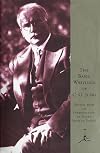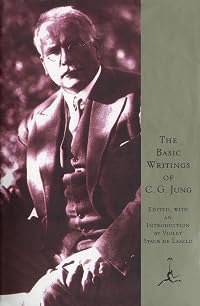
The Basic Writings of C.G. Jung
by C. G. Jung
On This Page
Description
In exploring the manifestations of human spiritual experience both in the imaginative activities of the individual and in the formation of mythologies and of religious symbolism in various cultures, C.G. Jung laid the groundwork for a psychology of the spirit. The excerpts here illuminate the concept of the unconscious, the central pillar of his work, and display ample evidence of the spontaneous spiritual and religious activities of the human mind. This compact volume will serve as an ideal show more introduction to Jung's basic concepts. Part I of this book, "On the Nature and Functioning of the Psyche," contains material from four works: "Symbols of Transformation," "On the Nature of the Psyche," "The Relations between the Ego and the Unconscious," and "Psychological Types." Also included in Part I are "Archetypes of the Collective Unconscious" and "Psychological Aspects of the Mother Archetype." Part II, "On Pathology and Therapy," includes "On the Nature of Dreams," "On the Pathogenesis of Schizophrenia," and selections from "Psychology of the Transference." In Part III appear "Introduction to the Religious and Psychological Problems of Alchemy" and two sections of "Psychology and Religion." Part IV, called "On Human Development," consists of the essay "Marriage as a Psychological Relationship."--Publisher description show lessTags
Recommendations











Member Reviews
I love these Modern Library collections. Sampling excerpts from an author both gives you a broader view of his work and points you to which works you might be interested in fully reading when you have the opportunity. Jung's thought is broad in range, and this anthology covers the main areas well. It can be difficult to convey the essential unity of much of Jung's thought, especially given the wandering writing style he possessed, but bringing excerpts together helps to do this.
This serves as an excellent introduction to the depth and scope of Jung's ideas. Covering such topics as the unconscious, mythologies, transference, and more, the book goes beyond a mere textbook. Some of my favorite essays discuss the psyche and aspects of the Mother Archetype. Jung's massive scholarship shines through it all.
The Basic Writings of C.G. Jung
edited by Violet Staub de Laszlo
Nov 30, 2009 10:05 AM
I read parts of this massive collection after finishing Jung: A Very Short Introduction, in order to sample the original prose style, at least in translation. It is dense, very learned, at times mystical. I read “Archetypes of the Collective Unconsciousness” and gained some idea of what Jung means about symbols: “It is sufficient to know that there is not a single important idea or view that does not possess historical antecedants”. I also read the “Introduction to the Religious and Psychological Problems of Alchemy”. This is more about defending Jung’s position on religion than about alchemy, and about the practice of psychoanalysis show more “...for the true physician does not stand outside his work but is altogether involved in it”. He cites Tertullian as having great spiritual strength, abandoning reason to belief (Tertullian: “And the son of God is dead, which is worthy of belief because it is absurd. And when buried He rose again, which is certain because it is impossible” - see also The Closing of the Western Mind). Christianity has brought the duality of good and evil into the world, and struggles to resolve the two into a third, relating it to the long tradition in alchemy of mixtures of opposites resulting in a synthesis, and resolution. I skimmed through the abridged general description of psychological types, and read “On the Nature of Dreams” admiring the doctrine of continuous development of the psyche over the life span - “Man reaches his zenith in power at about age 36 but is unconscious of this fact”. Dreams provide symbols that properly interpreted by the analyst allow the person to understand his conflicts and develop according to the archetype. show less
edited by Violet Staub de Laszlo
Nov 30, 2009 10:05 AM
I read parts of this massive collection after finishing Jung: A Very Short Introduction, in order to sample the original prose style, at least in translation. It is dense, very learned, at times mystical. I read “Archetypes of the Collective Unconsciousness” and gained some idea of what Jung means about symbols: “It is sufficient to know that there is not a single important idea or view that does not possess historical antecedants”. I also read the “Introduction to the Religious and Psychological Problems of Alchemy”. This is more about defending Jung’s position on religion than about alchemy, and about the practice of psychoanalysis show more “...for the true physician does not stand outside his work but is altogether involved in it”. He cites Tertullian as having great spiritual strength, abandoning reason to belief (Tertullian: “And the son of God is dead, which is worthy of belief because it is absurd. And when buried He rose again, which is certain because it is impossible” - see also The Closing of the Western Mind). Christianity has brought the duality of good and evil into the world, and struggles to resolve the two into a third, relating it to the long tradition in alchemy of mixtures of opposites resulting in a synthesis, and resolution. I skimmed through the abridged general description of psychological types, and read “On the Nature of Dreams” admiring the doctrine of continuous development of the psyche over the life span - “Man reaches his zenith in power at about age 36 but is unconscious of this fact”. Dreams provide symbols that properly interpreted by the analyst allow the person to understand his conflicts and develop according to the archetype. show less
The Basic Writings of C. G. Jung is a collection of the writings of Carl Gustav Jung. It covers his most important points about the nature of the psyche and the collective unconscious. Considering the thickness of the book I thought it would be harder to read and get into, but I was wrong about that. In some cases, half of the page is covered in footnotes. Recently, I have been in a mood where I feel like reading stuff by Jung in general. I realized long ago that he was someone that made a name for themselves, but I did not know exactly how and in what capacity. This book is an attempt to display Jung’s primary thought and main ideas.
Reading through a lot of this, I can see that Jungian psychology is at the core of a video game, show more surprisingly. This game, or rather this series of games, is the Persona series by Atlus. Much of that game deals with the shadow, the collective unconscious, the persona that a person uses to get through life, and so on. Then with the idea that the gods and goddesses of ancient times are all manifestations of the collective unconscious is also really interesting. I have never played a Persona game, but that is only because I don’t own a PlayStation.
Back on topic though, the book was edited by Violet Staub de Laszlo. I don’t know who that is, but maybe she was a student of his? The name sounds familiar somehow, but I am bad with names. The book is made up of excerpts from the works of Jung, so while it isn’t exactly complete, it isn’t like there are glaring gaps or holes in the logic and cohesion of the works. As I mentioned, it covers all of Jung’s basic ideas; so it also includes the anima/animus, extraverted(sic) and introverted types, the persona, the shadow, archetypes and so on. All of the ideas are introduced in the original context with examples from Jung’s practice. The ideas on comparative religion are especially fascinating.
In any case, this book was pretty easy to breeze through. Some words I had to look up, but it wasn’t too bad. show less
Reading through a lot of this, I can see that Jungian psychology is at the core of a video game, show more surprisingly. This game, or rather this series of games, is the Persona series by Atlus. Much of that game deals with the shadow, the collective unconscious, the persona that a person uses to get through life, and so on. Then with the idea that the gods and goddesses of ancient times are all manifestations of the collective unconscious is also really interesting. I have never played a Persona game, but that is only because I don’t own a PlayStation.
Back on topic though, the book was edited by Violet Staub de Laszlo. I don’t know who that is, but maybe she was a student of his? The name sounds familiar somehow, but I am bad with names. The book is made up of excerpts from the works of Jung, so while it isn’t exactly complete, it isn’t like there are glaring gaps or holes in the logic and cohesion of the works. As I mentioned, it covers all of Jung’s basic ideas; so it also includes the anima/animus, extraverted(sic) and introverted types, the persona, the shadow, archetypes and so on. All of the ideas are introduced in the original context with examples from Jung’s practice. The ideas on comparative religion are especially fascinating.
In any case, this book was pretty easy to breeze through. Some words I had to look up, but it wasn’t too bad. show less
unreadable - jung is a terrible writer. he doesn't need an editor, he needs a translator.
Ratings
Members
- Recently Added By
Author Information

902+ Works 42,878 Members
Carl Gustav Jung was born in Switzerland on July 26, 1875. He originally set out to study archaeology, but switched to medicine and began practicing psychiatry in Basel after receiving his degree from the University of Basel in 1902. He became one of the most famous of modern psychologists and psychiatrists. Jung first met Sigmund Freud in 1907 show more when he became his foremost associate and disciple. The break came with the publication of Jung's Psychology of the Unconscious (1912), which did not follow Freud's theories of the libido and the unconscious. Jung eventually rejected Freud's system of psychoanalysis for his own "analytic psychology." This emphasizes present conflicts rather than those from childhood; it also takes into account the conflict arising from what Jung called the "collective unconscious"---evolutionary and cultural factors determining individual development. Jung invented the association word test and contributed the word complex to psychology, and first described the "introvert" and "extrovert" types. His interest in the human psyche, past and present, led him to study mythology, alchemy, oriental religions and philosophies, and traditional peoples. Later he became interested in parapsychology and the occult. He thought that unidentified flying objects (UFOs) might be a psychological projection of modern people's anxieties. He wrote several books including Studies in Word Association, Flying Saucers: A Modern Myth of Things Seen in the Skies, and Psychology and Alchemy. He died on June 6, 1961 after a short illness. (Bowker Author Biography) show less
Some Editions
Series
Belongs to Publisher Series
Common Knowledge
- Canonical title
- The Basic Writings of C.G. Jung
- People/Characters
- Carl Jung (1875-1961, Swiss psychotherapist & psychiatrist, founder of analytical psychology)
- First words
- Introduction -- This volume is intended to present as fully as possible some of the most important areas of Jung's conception of the nature and functioning of the human psyche. It is intended as a basic reader for those who w... (show all)ish to acquaint themselves with the original structure of his conception.
Classifications
Statistics
- Members
- 615
- Popularity
- 47,615
- Reviews
- 5
- Rating
- (3.97)
- Languages
- English
- Media
- Paper, Ebook
- ISBNs
- 6
- ASINs
- 12